
Form of government · Ancient Near East
Chiefdom
At a glance
- A chiefdom joins several villages under a hereditary paramount chief who rules through kinship, ritual and tribute, without the officials, standing army or written law of a state.
- Chiefdoms arose independently in Mesopotamia, Europe, the Americas, Africa and Polynesia, and some, like Cahokia and the Hawaiian chiefdoms, raised great monuments and fed large followings.
- Anthropologists named the type in the 1950s and still argue over it, while chiefs remain a recognised tier of local government from Sierra Leone and Botswana to Samoa.
Timeline
- c. 5000 BCETemple towns of the Ubaid period rise in southern Mesopotamia; many archaeologists see them as early chiefdoms
- c. 4500 BCEA few richly furnished graves on Bulgaria’s Black Sea coast reveal one of Europe’s first hereditary elites
- c. 1050Cahokia, near present-day St Louis, grows rapidly into the largest chiefly centre north of Mexico
- 1492Columbus reaches the Taíno chiefdoms of the Caribbean; Spanish conquest destroys them within a generation
- 1540Hernando de Soto’s expedition passes through Cofitachequi and Coosa, paramount chiefdoms of the South-East
- 1607English colonists at Jamestown meet Wahunsenacawh, paramount chief of some thirty peoples of Tidewater Virginia
- 1795Kamehameha I conquers Oʻahu at the Battle of Nuʻuanu; by 1810 he rules all the Hawaiian Islands
- 1955Kalervo Oberg names the chiefdom as a type; Elman Service sets it between tribe and state in 1962
How It Works
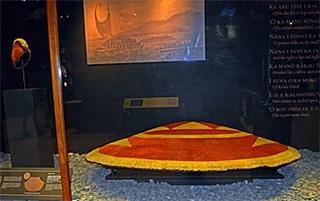
A chiefdom is a polity in which several villages or communities accept the permanent rule of one chief. The anthropologist Robert Carneiro defined it in 1981 as “an autonomous political unit comprising a number of villages or communities under the permanent control of a paramount chief”. In a simple chiefdom a central village and its chief stand over a cluster of smaller settlements, each with a headman of its own; in a complex chiefdom a paramount chief rules lesser chiefs, who rule village leaders in turn, so that two or three tiers of command separate him from the farmer or fisherman. Rank runs through kinship. In Polynesia, the classic case, order of birth fixed each person’s place within a descent group, and chiefs came from its senior lines, a pattern the anthropologist Paul Kirchhoff called the conical clan. Chiefs and commoners formed hereditary strata, and the Hawaiian chiefdoms had as many as four.
The chiefly household lived on tribute. Lesser chiefs collected food, cloth, valuables or labour from those below them and passed a share upward, and the paramount gave much of it away again in feasts and in gifts to warriors, priests and craftsmen. Elman Service called chiefdoms “redistribution societies with a permanent central agency of coordination”, but when Timothy Earle restudied Hawaii he found the communities largely self-sufficient: chiefs handed out prestige goods to their followers rather than food to those in need. Chiefs led in war, settled disputes, organised communal work on fields, terraces, fishponds and mounds, and performed rites that only they could perform, often as descendants of gods; in Hawaii they were protected by kapu, sacred prohibitions whose breach could be punished by death.
No written law, police or salaried officials stood behind a chief. His authority rested on kinsmen who might back a rival, on councils of elders and public assemblies such as the Tswana kgotla, and on his ability to keep goods flowing to his followers. This sets the chief apart from the Melanesian “big man” described by Marshall Sahlins in 1963, who won influence by persuasion and competitive giving and could not hand it on, and the chiefdom apart from the state: the archaeologist Henry Wright defined chiefdoms by decision-making that was centralised but not divided among specialised offices, as it is in a state. At the margin the line blurs, and the largest Hawaiian polities have been called both chiefdoms and kingdoms.
Origins
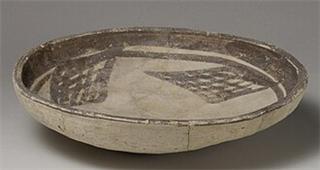
Chiefdoms appeared wherever farming or rich fisheries yielded a surplus that a leader could gather and give away, and archaeologists find their traces long before writing. The earliest widely accepted examples come from the Ubaid period (c. 6500–3800 BCE) in southern Mesopotamia and the neighbouring plain of Susiana in south-western Iran. By about 5000 BCE towns such as Eridu had grown up around temples rebuilt on the same spot for generations, and larger centres stood over clusters of villages. Archaeologists such as Gil Stein have read this as a landscape of chiefdoms whose leaders drew their authority from ritual more than from wealth, since Ubaid graves differ little in their contents. In Europe a cemetery of about 4500 BCE on Bulgaria’s Black Sea coast, excavated from 1972, gives one of the earliest clear signs of a hereditary elite: a few of its graves held most of its thousands of gold objects, while most held few or none.
Why chiefdoms formed is disputed. Robert Carneiro argued in 1970 that where farmland was hemmed in by mountains, deserts or the sea, growing populations fought over it and the victors absorbed the defeated, first into chiefdoms and then into states. Others stress the management of irrigation and long-distance exchange, or the way ambitious lineages turned feasting and ritual into lasting rank. Timothy Earle has argued that chiefs combined economic, military and ideological power, and that chiefdoms lasted longest where chiefs could control a bottleneck in the economy, such as irrigated land or a trade route.
The English word chief comes through Old French chef, “head”, from Latin caput. Observers described chiefly rule long before anyone named it. Tacitus, describing the Germanic peoples in 98 CE, noted that they chose their kings for noble birth and their war leaders for courage, and that the chiefs decided lesser matters while the assembled warriors decided great ones; Spanish chroniclers such as Gonzalo Fernández de Oviedo described the caciques of the Caribbean. The modern concept is anthropological. Kalervo Oberg used “chiefdom” for a type of society in 1955, writing on the lowland peoples of South and Central America; Elman Service’s Primitive Social Organization (1962) placed it in the sequence band, tribe, chiefdom, state; and Morton Fried’s The Evolution of Political Society (1967) described the matching stage of “ranked” society, between egalitarian and stratified ones.
Through History

In the Near East chiefdoms gave way after 4000 BCE to the cities and states of the Uruk period, but elsewhere chiefly rule long remained usual. The Wessex culture of southern Britain, with its rich barrow burials near Stonehenge from around 2000 BCE, the gold and bronze of Bronze Age Denmark and the princely graves of the Hallstatt culture, such as the Hochdorf Chieftain’s Grave of about 530 BCE, are widely read as the work of chiefs. Many anthropologists class as chiefdoms the Germanic peoples who took over the western Roman Empire in the 5th century, with their kings, warrior aristocracy, free men, serfs and slaves, and in the Scottish Highlands clan chiefs kept courts of their own until the Heritable Jurisdictions Act of 1746.
Chiefdoms arose independently in the Americas. Around 1050 CE Cahokia, by the Mississippi near present-day St Louis, grew within decades into a centre of perhaps 10,000 to 20,000 people around Monks Mound, the largest prehistoric earthen structure in the Americas; it declined after 1200 and was largely deserted by about 1350. Paramount chiefdoms centred on Moundville and Etowah rose and fell across the South-East, and Hernando de Soto’s expedition marched through Cofitachequi and Coosa in 1540. In 1607 the English at Jamestown met Wahunsenacawh, known as Powhatan, paramount chief of some thirty peoples of Tidewater Virginia. Columbus had reached the Taíno chiefdoms of the Caribbean in 1492: their caciques included Guacanagarí, who helped him when the Santa María was wrecked, and Anacaona, whom the governor Nicolás de Ovando had hanged in 1503.
Polynesian chiefdoms were among the largest. Paramount chiefs ruled whole Hawaiian islands, divided into land units called ahupuaʻa that lesser chiefs managed for them. James Cook reached the islands in 1778 and was killed at Kealakekua Bay in 1779 after trying to take Kalaniʻōpuʻu, ruler of Hawaiʻi Island, hostage. After Kalaniʻōpuʻu’s death in 1782 Kamehameha I defeated his heir, conquered Maui, Molokaʻi and, at the Battle of Nuʻuanu in 1795, Oʻahu, and by 1810 ruled all the islands as king. Before colonial conquest many African peoples lived in chiefdoms or kingdoms, others in societies without chiefs. Colonial governments ruled through chiefs, called the rulers they recognised paramount chiefs so that only their own monarch bore the title of king, as Britain did with the Swazi king from 1903, and appointed “warrant chiefs” where there had been none, as among the Igbo of south-eastern Nigeria.
Strengths

Students of chiefdoms stress how much chiefs achieved without the apparatus of a state. Colin Renfrew argued in 1973 that the great monuments of Neolithic Wessex, Stonehenge among them, were raised by labour that chiefs mobilised from wide territories, and the mounds and plazas of Cahokia were built in the same way. Hawaiian chiefs directed the building and upkeep of irrigated taro terraces and stone-walled fishponds, and Earle has argued that control of such works was a foundation of their power. By joining many villages into one polity, chiefs could field larger forces against outsiders, and their judgement could settle disputes that would otherwise have become feuds between villages.
Defenders of chiefly government stress its reciprocity. A chief had to be generous: Sahlins described Polynesian chiefs whose standing depended on returning to their people, in feasts and gifts, much of what they received, and a chief who hoarded risked desertion. Among the Tswana of southern Africa the kgosi decided great matters in the kgotla, the public assembly, after hearing the men of the morafe, the community, in open debate, and a Tswana saying held that a chief is a chief through his people. Kinship gave every member of the community a place, a claim on the chief’s protection and a voice through the heads of the lineages.
The form has also proved durable. Chiefly authority survived colonial rule across Africa and the Pacific, and many states after independence gave it a formal place: Botswana’s Ntlo ya Dikgosi, the House of Chiefs, Ghana’s National House of Chiefs and South Africa’s houses of traditional leaders advise elected governments, and Sierra Leone’s local government rests on its chiefdoms. Afrobarometer surveys analysed by the political scientist Carolyn Logan have found broad support for traditional leaders in many African countries, often among the same people who support elected government, and defenders value chiefs who settle land and family disputes cheaply and close to home.
Weaknesses
Chiefdoms were unstable. Archaeologists find them prone to cycles of growth, fragmentation and renewal: in his study of the Savannah River valley in the American South-East, David Anderson traced how Mississippian paramount chiefdoms rose, broke apart and re-formed within a few generations, a pattern he called cycling. Because rank depended on genealogy, several close kinsmen often had strong claims to succeed, and a chief’s death could bring war, as in Hawaii in 1782. Sahlins noted that Polynesian chiefs who demanded too much provoked rebellions, and without officials or a standing army a paramount could rarely hold distant districts for long.
The order was unequal and could be cruel. Nobles in complex chiefdoms did no farming and consumed much of what passed up the hierarchy as tribute, while Hawaiian commoners worked land held at the pleasure of chiefs and could lose their lives for breaking a kapu. At Cahokia the burials of Mound 72, from around 1050, include dozens of young women who had been put to death, and when the Natchez war chief Tattooed Serpent died in 1725 his wives and retainers were killed to accompany him, as the French settler Antoine-Simon Le Page du Pratz recorded. Warfare between chiefdoms was endemic, and captives were often enslaved or sacrificed.
Colonial and modern critics have pointed to the dangers of hereditary rule answerable to no electorate. Colonial governments made chiefs agents of taxation and forced labour: in 1929 thousands of women in south-eastern Nigeria rose against the warrant chiefs and the threat of taxation in the Aba Women’s War, and colonial troops killed more than fifty of them. Mahmood Mamdani, in Citizen and Subject (1996), described rule through chiefs as a decentralised despotism that gave them powers they had not held before colonial rule and left a legacy of unaccountable local authority. Critics of chieftaincy today add that hereditary office and customary law can sit uneasily with equal citizenship, especially for women.
Impact & Legacy

The chiefdom has had a long and contested life in scholarship. Service’s sequence of band, tribe, chiefdom and state shaped archaeology for decades and sent field projects from Wessex to the Andes in search of the moment when chiefdoms became states. It has also been fiercely criticised. Norman Yoffee argued in 1993 that the early states of Mesopotamia did not evolve from chiefdoms in any simple sequence, and Timothy Pauketat’s Chiefdoms and Other Archaeological Delusions (2007) called the type a limiting category inherited from the 19th-century evolutionism of Lewis Henry Morgan, which treated societies without states as underdeveloped; his own case was Cahokia, which he described as a civilisation. Critics replied that Pauketat offered no workable alternative. Most archaeologists now use the word loosely, for a varied family of middle-range societies rather than a fixed stage, and accept that many chiefdoms lasted for centuries without becoming states.
Chiefs remain part of government in much of Africa and the Pacific. Sierra Leone is divided into chiefdoms, each headed by a paramount chief chosen for life from its ruling houses, and paramount chiefs sit in its parliament. In South Sudan the paramount chief of each payam works alongside an administrator appointed by the government. Botswana’s first president, Seretse Khama, was heir to the chieftainship of the Bangwato, and Nelson Mandela was brought up at the court of the regent of the Thembu. In Samoa the matai, the titled heads of extended families, govern village life through village councils, and every head of state since independence in 1962 has held one of the country’s paramount titles.
Elsewhere the chiefly order was dismantled. In Hawaii the chiefs became the nobility of a kingdom whose Great Māhele of 1848 divided their lands and opened the way to private ownership, and conquest ended most chiefdoms of the Americas centuries earlier. Historians and anthropologists now treat chiefly government less as a primitive stage than as a political form with a logic of its own, which managed land, labour, ritual and war for millions of people over several thousand years.
The chiefdom was the form in which many farming and fishing peoples first lived under permanent rulers: a hereditary chief at the head of ranked kin, fed by tribute and upheld by ritual rather than by officials. From Ubaid Mesopotamia to Cahokia and Hawaii it raised monuments, managed land and waged war, and chiefs still govern local life within many modern states.
Test yourself
5 questions on this page, from its key events and facts.
The questions open here once the page has loaded.
References
- Carneiro, R. L. (1981) "The Chiefdom: Precursor of the State", in Jones, G. D. and Kautz, R. R. (eds) The Transition to Statehood in the New World. Cambridge: Cambridge University Press, pp. 37–79.
- Earle, T. K. (ed.) (1991) Chiefdoms: Power, Economy, and Ideology. Cambridge: Cambridge University Press.
- Earle, T. K. (1997) How Chiefs Came to Power: The Political Economy in Prehistory. Stanford: Stanford University Press.
- Kirch, P. V. (2010) How Chiefs Became Kings: Divine Kingship and the Rise of Archaic States in Ancient Hawaiʻi. Berkeley: University of California Press.
- Pauketat, T. R. (2007) Chiefdoms and Other Archaeological Delusions. Lanham, MD: AltaMira Press.
- Service, E. R. (1962) Primitive Social Organization: An Evolutionary Perspective. New York: Random House.