Europe
County of Hohenzollern
At a glance
- A small county in the Swabian Jura, ruled from Zollern castle and Hechingen by the Swabian branch of the Zollern dynasty.
- Its Franconian cousins became Burgraves of Nuremberg and later rulers of Brandenburg, Prussia and Germany.
- The Catholic counts rose through Habsburg service, gaining Haigerloch and Sigmaringen before dividing the county in 1576.
Rise & Fall
- 1061The counts of Zollern are first mentioned in a chronicle
- c. 1218The sons of Burgrave Frederick I divide the Franconian and Swabian lands
- 1403The Schalksburg line sells its lands to Württemberg
- 1423The Swabian imperial cities take and raze Zollern castle
- 1454Rebuilding of Zollern castle begins under Jos Niklas I
- 1497Eitel Friedrich II acquires the lordship of Haigerloch
- 1534Charles I receives Sigmaringen and Veringen as Austrian fiefs
- 1576The county is divided into Hechingen, Sigmaringen and Haigerloch
Foundation

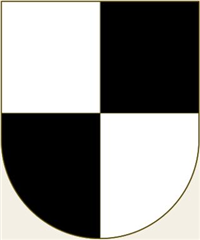
The counts of Zollern appear in the historical record in 1061, when the chronicler Berthold of Reichenau noted the deaths of Burchard and Wezil of Zollern. Their castle stood on the steep Zollern hill, an outlier of the Swabian Jura above the town of Hechingen, and from it the family built up rights over lands and churches between the upper Neckar and the Danube. Around 1191–1192 Count Frederick III of Zollern, a follower of the Staufer emperors, acquired the office of Burgrave of Nuremberg through his marriage to Sophia of Raabs, ruling there as Frederick I. After his death, around 1200–1204, his sons Conrad and Frederick at first held the inheritance together and then divided it, probably by about 1218: Conrad took the burgraviate of Nuremberg and founded the Franconian line, which later ruled Brandenburg, Prussia and the German Empire, while Frederick kept the ancestral Swabian lands as Count of Zollern. The county that emerged was a small lordship of the Holy Roman Empire, centred on the castle and on Hechingen. It had already been narrowed by an earlier division, for a twelfth-century branch of the family had become the counts of Hohenberg, and it would be divided again when a line based on the Schalksburg near Balingen split off around 1288.
Socioeconomy
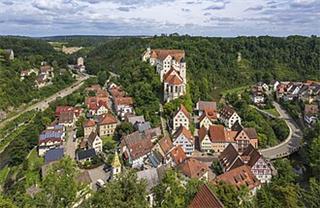
The county was a rural territory of villages, farms and forests on the limestone uplands and valleys of the Swabian Jura, where peasants grew spelt, oats and other grains, kept livestock and owed rents, tithes and labour services to the counts, to monasteries and to lesser nobles. Many were serfs, bound to their lords by forms of personal dependence that persisted into the early modern period. Hechingen, below the castle, developed as the county’s market town and administrative centre, and Haigerloch and later Sigmaringen added further small towns after their acquisition. The counts drew their income from demesne lands, rents, tolls, courts and forest rights, but their resources were modest, and divisions of the inheritance, dowries and the costs of service at court and in war often forced them to pawn or sell lands. Religious life centred on parish churches and monastic foundations; the counts were patrons of the Dominican convent of Stetten near Hechingen, where members of the family were buried. Unlike their Franconian cousins, who adopted Lutheranism, the Swabian counts and their subjects remained Catholic through the Reformation, and the county lay within the diocese of Constance. Its people lived among a patchwork of small territories, among them Württemberg, the Austrian lands in Swabia and the imperial cities, whose markets, courts and quarrels shaped their lives.
Military

As a minor county, Zollern had no standing army: the counts raised small forces of mounted vassals and peasant levies, and their military significance lay in service to greater lords. Members of the family followed the Staufer and later the Habsburgs on campaign, and by the fifteenth century they were closely tied to the Austrian dukes, who held extensive lands in Swabia. The county’s castles, above all Zollern itself, were its main defence in an age of endemic feuding. The gravest crisis came in the early fifteenth century, when Count Frederick, known as the Öttinger, quarrelled bitterly with his brother Eitel Friedrich I and came into conflict with the Swabian imperial cities. The cities besieged Zollern castle, and after its surrender in 1423 the fortress was razed, a humiliation for the dynasty. Rebuilding began in 1454 under Count Jos Niklas I, with support from the family’s Franconian relatives, and the new castle was larger and stronger than the old. Later counts made their careers as commanders and councillors in Habsburg service. Eitel Friedrich II took part in the wars of Maximilian I, and his son Eitel Friedrich III died at Pavia in 1525, during the Italian campaign in which the imperial army defeated and captured Francis I of France.
Governance & Law

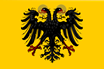
The county was an immediate territory of the Holy Roman Empire, its core lands around Hechingen held under the emperor, while other possessions were held as fiefs from neighbouring princes, notably the Habsburgs. Government was personal and patrimonial. The count ruled from his castle and from Hechingen through a small household of officials, among them bailiffs (Vögte) who administered districts, collected revenues and presided over local courts, and a modest chancery that kept charters and accounts. Partible inheritance repeatedly weakened the house, as lands were shared among sons, and the sale of the Schalksburg line’s lands to Württemberg in 1403 showed the danger of fragmentation. The counts’ standing rose sharply under Eitel Friedrich II (d. 1512), a trusted adviser of Maximilian I, who in 1495 became the first presiding judge of the new Imperial Chamber Court, and who in 1497 exchanged his lordship of Rhäzüns in the Alps for the Austrian lordship of Haigerloch. Under Charles I (r. 1525–1576), who was brought up at the court of Emperor Charles V, the Habsburgs granted the counties of Sigmaringen and Veringen to the house as Austrian fiefs in 1534–1535, after the extinction of the counts of Werdenberg. The counts sat with the Swabian counts in the Imperial Diet, belonged to the Swabian Imperial Circle and increasingly used the name Hohenzollern.
Global & Regional Impact

The County of Hohenzollern matters above all as the ancestral home of one of Europe’s most important dynasties. The Franconian line descended from Burgrave Conrad acquired the Margraviate of Brandenburg in 1415, when Emperor Sigismund invested Burgrave Frederick VI of Nuremberg as elector, and his descendants became dukes of Prussia in 1618, kings in Prussia from 1701 and German emperors from 1871 to 1918. Although the two branches developed separately, and the Franconian line turned Protestant while the Swabian line stayed Catholic, they continued to recognise their common origin, and the castle on the Zollern hill became a symbol of the whole dynasty. The Swabian line also had a European career of its own. Its Sigmaringen branch, created in the division of 1576, produced Charles Anthony, minister-president of Prussia from 1858 to 1862, and his son Charles, who became Prince of Romania in 1866 and King Carol I in 1881, founding the Romanian royal house. In 1870 the candidacy of another son, Leopold, for the Spanish throne provoked the diplomatic crisis that led to the Franco-Prussian War. Through these lines the name of a small Swabian county passed into the history of Prussia, Germany and Romania, and the county itself is a typical example of the hundreds of small lordships that made up the political map of the Holy Roman Empire.
Decline & Fall

The county did not fall to a conqueror but was divided by its own rulers. When Charles I died in 1576, his lands were partitioned among his sons: Eitel Friedrich IV received Hechingen and the ancestral county, Charles II received Sigmaringen and Veringen, and Christoph received Haigerloch. The result was three small territories rather than one, though the branches remained linked by family agreements and a common Catholic loyalty to the Habsburgs. The Haigerloch line died out in the 1630s and its lands passed to Sigmaringen, while Hechingen and Sigmaringen were raised to the rank of principalities in 1623. Both survived the Thirty Years War and the Napoleonic reorganisation of Germany, escaping mediatisation by joining the Confederation of the Rhine in 1806, and later became members of the German Confederation. After the revolutions of 1848–1849, the two princes ceded their principalities to their kinsman, King Frederick William IV of Prussia, and the territories were transferred in 1850, forming the Prussian Hohenzollern Lands. Frederick William IV then rebuilt Hohenzollern Castle between 1850 and 1867 in Gothic Revival style as a monument to the dynasty. The lands of the former county lie today in the German state of Baden-Württemberg, and the castle remains in the joint ownership of the Prussian and Swabian branches of the family.
The County of Hohenzollern was a small Catholic lordship in the Swabian Jura whose counts rose through Habsburg service, but it matters above all as the ancestral home of the dynasty that ruled Brandenburg, Prussia and Germany, and of the Sigmaringen line that gave Romania its kings.
References
- Neugebauer, W. (1996) Die Hohenzollern. Band 1: Anfänge, Landesstaat und monarchische Autokratie bis 1740. Stuttgart: Kohlhammer.
- Clark, C. (2006) Iron Kingdom: The Rise and Downfall of Prussia, 1600–1947. London: Allen Lane.
- Whaley, J. (2012) Germany and the Holy Roman Empire. Volume I: Maximilian I to the Peace of Westphalia, 1493–1648. Oxford: Oxford University Press.
- Wilson, P.H. (2016) Heart of Europe: A History of the Holy Roman Empire. Cambridge, MA: Belknap Press of Harvard University Press.
Connections
Open the full connections map →