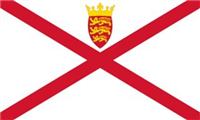
Europe
Bailiwick of Jersey
At a glance
- The largest Channel Island, it stayed with the English crown when King John lost Normandy to France in 1204.
- It keeps Norman customary law, its Royal Court and its own parliament, the States, as a Crown Dependency outside the UK.
- Once a fortified frontier against France, it became a cod-trading, farming and later financial centre.
Rise & Fall
- 1204King John loses Normandy, but Jersey stays with the English crown
- 1461The French take Mont Orgueil and hold Jersey until 1468
- 1481Pope Sixtus IV grants the Channel Islands neutrality in wartime
- 1649Charles II is proclaimed king in Saint Helier
- 1781A French invasion is defeated at the Battle of Jersey
- 1940German forces occupy the island
- 1945Jersey is liberated on 9 May
- 2005Ministerial government with a Chief Minister is introduced
Foundation
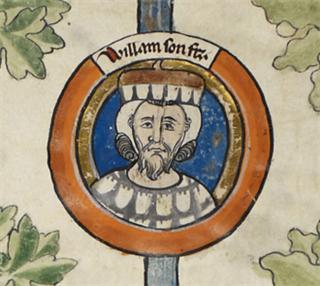
Jersey, the largest of the Channel Islands at about 118 square kilometres, lies some 22 kilometres off the Cotentin peninsula of Normandy. The islands are traditionally said to have been annexed to the Duchy of Normandy in 933 by Duke William Longsword, and when Duke William II conquered England in 1066 Jersey became part of an Anglo-Norman realm. The bailiwick was born of its separation from the mainland. In 1204 King Philip II of France conquered continental Normandy from King John of England, but the Channel Islands, which John’s forces held or soon recovered with the help of the English fleet, remained with the English crown. The Treaty of Paris of 1259, in which Henry III renounced his claim to Normandy, left the islands in English hands. John and his successors placed them under a Warden of the Isles, and during the thirteenth century separate administrations emerged for Jersey and Guernsey, each with a bailiff presiding over a Royal Court of jurats. The islanders’ privileges, above all the right to be judged by their own court under Norman custom, were traditionally traced to the so-called Constitutions of King John, which are in fact known from a royal inquiry of 1248, and were confirmed by a long series of later royal charters.
Socioeconomy

For most of its history Jersey was a rural society of small owner-occupied farms grouped in twelve parishes, whose people spoke Jèrriais, a variety of Norman, while French remained the language of law and government into the twentieth century. Land passed according to Norman custom. The medieval economy combined farming, fishing and the gathering of seaweed, known as vraic, as fertiliser. From the late sixteenth century the hand-knitting of woollen stockings and sweaters became so widespread that the island’s name became a word for a knitted garment. From the seventeenth century Jersey merchants and seamen joined the Newfoundland cod fishery, and in the eighteenth and nineteenth centuries firms such as that of Charles Robin ran fishing stations on the Gaspé coast of Canada, linking the island to markets in Europe and the Americas, while wartime privateering brought further profits. In the nineteenth century the island developed the Jersey breed of dairy cattle, kept pure by a ban on imported cattle from 1789, early potatoes such as the Jersey Royal, and tourism, while Saint Helier grew with English settlers and retired officers. After the Second World War low taxation, legal autonomy and political stability turned Jersey into an offshore financial centre, and banking, trusts and fund administration became the core of an economy supporting about 100,000 people.
Military

Jersey was a frontier fortress of the English crown for six centuries. Mont Orgueil Castle at Gorey, begun soon after 1204, withstood repeated French attacks, including a raid in 1294 and the assaults of the Hundred Years War, when French fleets ravaged the island in 1338–1339 but failed to take the castle. In 1461, during the Wars of the Roses, Mont Orgueil was handed to the French under an agreement made by Margaret of Anjou with Pierre de Brézé, and the island remained under French control until Sir Richard Harliston recovered it in 1468. Artillery made the old castle vulnerable, and Elizabeth Castle was built on a tidal islet off Saint Helier from the 1590s. Defence rested on the island militia, in which able-bodied men were obliged to serve, supported by English garrisons. During the English Civil War Jersey held out for the king under Sir George Carteret until Parliamentary forces under Admiral Robert Blake and Colonel James Heane conquered it in 1651. The last French invasion came on 6 January 1781, when Baron de Rullecourt seized Saint Helier, but British regulars and militia under Major Francis Peirson defeated him in the Battle of Jersey, in which both commanders were killed. Coastal towers and Fort Regent were built against Napoleon. In 1940 Britain demilitarised the island, which Germany then fortified as part of the Atlantic Wall.
Governance & Law
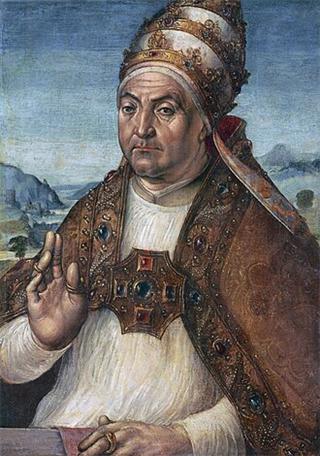
Jersey’s government grew out of its medieval courts. The Crown was represented by a warden, later a governor and, from the nineteenth century, a lieutenant governor, while the Bailiff, appointed by the Crown, presided over the Royal Court, whose twelve jurats were elected for life by the islanders and judged according to Norman customary law. From around 1500 the jurats, the rectors of the twelve parishes and the parish constables began to meet as the States of Jersey, which gradually became the island’s legislature; an Order in Council of 1771 confirmed that laws were to be passed by the States rather than by the Royal Court alone. In 1481 Pope Sixtus IV, at the request of Edward IV, issued a bull of neutrality that protected the Channel Islands and ships in their waters during wars between England and France, a privilege that lasted until 1689. Elected deputies were added to the States in 1856, and the reforms of 1948 removed the jurats from the legislature and introduced elected senators. Ministerial government under a Chief Minister replaced the old committee system in 2005, and the office of senator was abolished from the election of 2022. As a Crown Dependency, Jersey has never been part of the United Kingdom: it makes its own laws and sets its own taxes, while the British government is responsible for its defence and international relations.
Global & Regional Impact
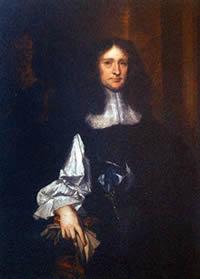
Jersey preserved a body of Norman customary law and institutions descended from the medieval duchy long after Normandy itself had been absorbed into France, and islanders still toast the monarch as Duke of Normandy. The loyalty of the Carteret family to the Stuarts had a lasting legacy across the Atlantic. Prince Charles found refuge on the island in 1646 and again in 1649–1650, and he was proclaimed king in Saint Helier on 17 February 1649; after the Restoration his brother James, Duke of York, granted Sir George Carteret and Lord Berkeley lands in America that were named New Jersey in 1664. Jersey merchants helped build the cod fisheries of Newfoundland and the Gaspé, Jersey cattle spread around the world as a leading dairy breed, and the island gave its name to the knitted jersey. In the nineteenth century it offered refuge to political exiles, among them Victor Hugo, who lived there from 1852 until his expulsion in 1855, and the actress Lillie Langtry, the Jersey Lily, carried its name into Victorian society. The German occupation of 1940–1945, when the Channel Islands were the only British territory in Europe held by Germany, remains central to island memory. Since the late twentieth century Jersey has become a significant international financial centre, whose low-tax regime has drawn both investment and criticism in debates on offshore finance.
Into the Present

Jersey was never absorbed into another state, and its modern form developed gradually out of its medieval privileges. The nineteenth century brought English immigration, a large garrison, steamship links and the spread of the English language, while the reform of 1856 began the shift towards an elected legislature. The gravest crisis came in the Second World War. After Britain demilitarised the island, German forces occupied it on 1 July 1940. The island’s authorities, led by the Bailiff Alexander Coutanche, continued to govern under German control; more than a thousand English-born residents were deported to internment camps in Germany in 1942, forced labourers of the Organisation Todt built massive fortifications, and civilians went hungry after the Allied invasion of Normandy in 1944 cut supplies. The island was liberated on 9 May 1945, still marked as Liberation Day. The reforms of 1948 modernised the States, and when the United Kingdom joined the European Economic Community in 1973 Jersey stayed outside it, with a special arrangement for trade in goods under Protocol 3 of the Accession Treaty. Low taxes and political stability then built the finance industry, which overtook farming and tourism. Today Jersey is a self-governing Crown Dependency of about 100,000 people, with its own parliament, the States Assembly, its own courts, banknotes and tax system, while the United Kingdom remains responsible for its defence and international affairs.
The Bailiwick of Jersey shows how a small island could keep its own laws and institutions for more than eight centuries: a frontier of the English crown against France since 1204, it preserved Norman custom, gave its name to New Jersey, endured German occupation and became a self-governing Crown Dependency and financial centre.
References
- Syvret, M. and Stevens, J. (1998) Balleine’s History of Jersey. Chichester: Phillimore.
- Everard, J.A. and Holt, J.C. (2004) Jersey 1204: The Forging of an Island Community. London: Thames & Hudson.
- Cruickshank, C. (1975) The German Occupation of the Channel Islands. London: Oxford University Press.
- Bunting, M. (1995) The Model Occupation: The Channel Islands under German Rule, 1940–1945. London: HarperCollins.
Connections
Open the full connections map →