Europe
Duchy of Normandy
At a glance
- A Viking settlement on the lower Seine, granted to Rollo in 911, that became a French duchy ruled from Rouen.
- Its dukes kept unusually firm control over castles, barons and the Church, and its abbeys such as Bec led European learning.
- Duke William conquered England in 1066; Philip II of France annexed the duchy in 1204.
Rise & Fall
- 911Charles the Simple grants the Viking leader Rollo lands around Rouen
- c. 1034Herluin founds the abbey of Bec, later home to Lanfranc and Anselm
- 1047William II defeats rebel barons at the Battle of Val-ès-Dunes
- 1066Duke William defeats Harold Godwinson at Hastings and becomes King of England
- 1106Henry I of England defeats Robert Curthose at the Battle of Tinchebray
- 1144Geoffrey Plantagenet takes Rouen and is recognised as duke
- 1204Philip II of France takes Château Gaillard and Rouen and annexes Normandy
Foundation

The Duchy of Normandy grew out of a Viking settlement on the lower Seine. Scandinavian raiders had attacked the river valley since the 840s, and by the early tenth century a band led by Rollo had established itself around Rouen. After Rollo’s failed attack on Chartres in 911, King Charles the Simple of West Francia granted him lands around Rouen in return for defending the Seine against other raiders and accepting baptism. The agreement is traditionally called the Treaty of Saint-Clair-sur-Epte, although no text survives and its terms are known mainly from the later account of Dudo of Saint-Quentin. Rollo, baptised with the name Robert, extended his territory, and in 924 King Rudolph of West Francia granted the Normans further lands, including the Bessin around Bayeux. Rollo’s son William Longsword received more territory in the west in 933, probably the Cotentin and the Avranchin, giving Normandy roughly the borders it kept for centuries. The settlers were relatively few. They intermarried with the Frankish population and adopted Christianity and, within a few generations, the French language, although Scandinavian place names ending in -bec, -tot and -fleur still mark the landscape. The rulers were styled counts or princes at first; Richard II was the first to use the title of duke regularly, early in the eleventh century.
Socioeconomy
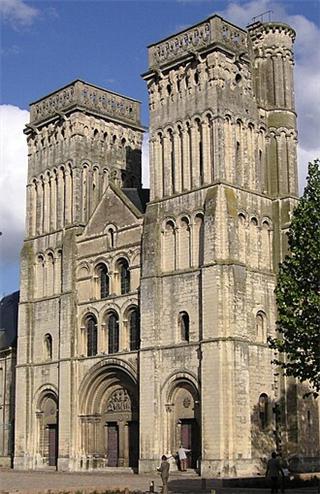
Normandy was one of the most fertile and densely settled regions of northern France, with grain lands in the Pays de Caux and the plain of Caen, pasture in the Pays d’Auge and the Cotentin, and the Seine as its main highway. Rouen, the capital and seat of the archbishop, was among the largest towns of northern Europe, trading wine, grain and salt with England and the Low Countries, and its merchants were already trading in London around 1000. Caen grew rapidly under William the Conqueror, and its fine building stone was later shipped to England for cathedrals and castles. Society came to resemble that of other Frankish lands: a warrior aristocracy of new families such as the Beaumonts, Montgomerys and Tosnys held lands from the duke, while peasants worked the soil in a province where serfdom seems to have faded comparatively early. A peasant revolt crushed under Richard II in the 990s is recorded by the chronicler William of Jumièges. The Church was rebuilt after the Viking disruption. The dukes restored Jumièges and Fécamp, Benedictine monks were installed at Mont-Saint-Michel in 966, and William of Volpiano reformed Fécamp from 1001. Herluin founded Bec around 1034, and under Lanfranc and Anselm it became one of the leading schools of Europe. William and his wife Matilda of Flanders founded the two great abbeys of Caen in the 1060s.
Military

The Norman dukes owed their success to mounted knights, castles and forceful leadership. The young William II, who succeeded his father Robert I in 1035 at the age of about seven or eight, survived a decade of baronial violence and, with the help of King Henry I of France, defeated rebel lords at the Battle of Val-ès-Dunes in 1047. When Henry turned against him, William defeated French invasions at the Battle of Mortemer in 1054 and the Battle of Varaville in 1057, and in 1063 he completed the conquest of the county of Maine. His greatest enterprise followed the death of Edward the Confessor. Claiming the English throne, William assembled a fleet at Dives-sur-Mer, crossed from Saint-Valery-sur-Somme in late September 1066, and on 14 October defeated and killed Harold Godwinson at the Battle of Hastings. Later dukes fought for the duchy itself: Henry I of England defeated his brother Robert Curthose at the Battle of Tinchebray in 1106 and Louis VI of France at the Battle of Brémule in 1119. Castles, from earth-and-timber mottes to stone keeps at Rouen, Caen, Falaise and Arques, held the countryside and the frontier with France. Richard the Lionheart built Château Gaillard above the Seine at Les Andelys in 1196–1198, one of the most advanced fortresses of its day, which the French took after a long siege in March 1204.
Governance & Law
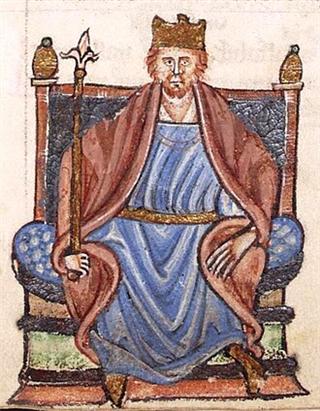
By the mid-eleventh century Normandy was one of the most tightly governed principalities in France. The duke held the counties, controlled the appointment of bishops and abbots, and drew revenues from extensive demesne lands, tolls, mints and forests. Local administration lay with vicomtes, who collected revenues and kept order in their districts, and later also with bailiffs. Ducal rights were set down in an inquest held at Caen in 1091, the Consuetudines et Iusticie, which restricted the building of castles, private warfare and the minting of coin without the duke’s consent, and the Truce of God was proclaimed at a council near Caen in 1047. The duke’s court, attended by great lords and churchmen, settled disputes and approved grants. Under the Anglo-Norman kings government became more bureaucratic: an Exchequer of Normandy, sitting at Caen, audited the accounts of local officials, and its earliest surviving roll dates from 1180. Henry II of England and his officials extended the use of sworn inquests and written writs, and justiciars governed the duchy when the duke was in England. Norman customary law was written down around 1200 in the Très ancien coutumier and later in the Grand coutumier de Normandie, which in revised form remained the law of the province until the French Revolution and still underlies law in the Channel Islands.
Global & Regional Impact

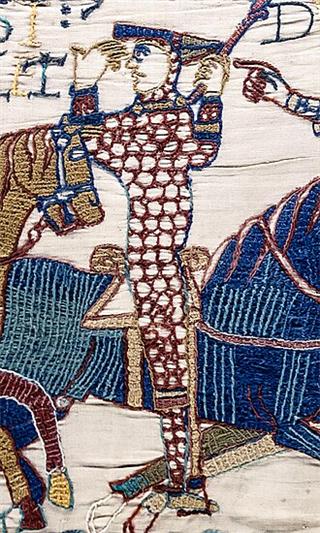
The Duchy of Normandy had an influence far beyond its size. The Norman Conquest of 1066 transformed England: it replaced almost the entire English aristocracy and higher clergy with Normans and other Frenchmen, introduced new forms of castle and church building, produced Domesday Book in 1086, and made French the language of the English court, law and nobility for some three centuries, leaving a deep mark on the English language. For almost 140 years England and Normandy were ruled together, binding English politics to France. Independently of the dukes, Norman adventurers built states in the Mediterranean. The Hauteville brothers Robert Guiscard and Roger I conquered southern Italy and Sicily between the 1040s and 1091, Roger II was crowned King of Sicily in 1130, and Bohemond of Taranto founded the Principality of Antioch during the First Crusade. Norman Romanesque architecture, seen at Jumièges, at Saint-Étienne in Caen and in the cathedrals of England, shaped building across the Anglo-Norman world. The duchy also produced a rich historical literature, from Dudo of Saint-Quentin and William of Jumièges to Orderic Vitalis, while the Bayeux Tapestry, probably made in England in the 1070s, tells the story of the conquest. After 1204 Normandy kept a distinct identity within France, confirmed by the Norman Charter granted by Louis X in 1315.
Decline & Fall
After 1087 the union with England became a source of conflict. William the Conqueror left Normandy to his eldest son Robert Curthose and England to William Rufus; Robert’s weak rule ended when his youngest brother, Henry I of England, defeated and imprisoned him in 1106. The drowning of Henry’s only legitimate son, William Adelin, in the wreck of the White Ship off Barfleur in 1120 led, after Henry’s death in 1135, to a contested succession between Stephen of Blois and Henry’s daughter, the Empress Matilda. Matilda’s husband Geoffrey Plantagenet, count of Anjou, conquered the duchy, entering Rouen in 1144, and in 1150 he handed it to their son Henry, who became King Henry II of England in 1154. Normandy thus became a core province of the Angevin Empire. Its end came under King John. After John’s marriage to Isabella of Angoulême, the court of Philip II of France declared his continental fiefs forfeit in 1202, and John’s suspected role in the death of his nephew Arthur of Brittany cost him the loyalty of many barons. Philip took Château Gaillard in March 1204, and Rouen surrendered in June when no relief came. Normandy was annexed to the French royal domain, and Henry III of England formally renounced his claim in the Treaty of Paris of 1259. Only the Channel Islands remained with the English crown.
The Duchy of Normandy turned a Viking settlement on the Seine into one of the most tightly governed principalities of medieval Europe, and its duke’s conquest of England in 1066 reshaped English society, language and government, while Norman adventurers founded kingdoms and principalities in southern Italy, Sicily and the Levant.
Test yourself
5 questions on this page, from its key events and facts.
The questions open here once the page has loaded.
References
- Bates, D. (1982) Normandy before 1066. London: Longman.
- Douglas, D.C. (1964) William the Conqueror: The Norman Impact upon England. London: Eyre & Spottiswoode.
- Haskins, C.H. (1918) Norman Institutions. Cambridge, MA: Harvard University Press.
- Power, D. (2004) The Norman Frontier in the Twelfth and Early Thirteenth Centuries. Cambridge: Cambridge University Press.
- Powicke, F.M. (1913) The Loss of Normandy, 1189–1204. Manchester: Manchester University Press.
- Searle, E. (1988) Predatory Kinship and the Creation of Norman Power, 840–1066. Berkeley: University of California Press.
Connections
Open the full connections map →