Central & East Asia
Gokturk Empire
At a glance
- The first state to bear the name Turk, a steppe khaganate that at its peak stretched from Manchuria towards the Black Sea.
- It protected Silk Road trade, drew vast silk tribute from China and left the Orkhon Inscriptions, the oldest major Turkic texts.
- Rival claimants under lateral succession and Chinese divide-and-rule broke it twice; the Uyghurs ended it for good in 744.
Rise & Fall
- 552Bumin destroys the Rouran and declares himself Qaghan of the Turks
- 568The Gokturks send their first embassy to Constantinople, led by the Sogdian Maniakh
- 576Gokturk forces reach the Crimea and besiege the Byzantine city of Bosporus
- c. 603The First Khaganate splits into eastern and western halves
- 630Tang China conquers the Eastern Khaganate and captures Illig Qaghan
- 682Ilterish Qaghan founds the Second Khaganate through guerrilla warfare
- 734Bilge Qaghan is poisoned by one of his own ministers
- 744Uyghurs, Karluks and Basmyls seize Otuken and kill the last Gokturk qaghan
Foundation
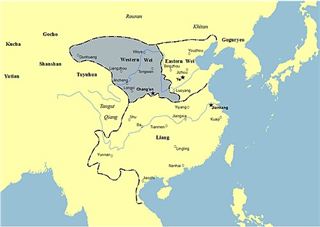
The Göktürk Empire was born from an insult. Bumin, leader of the Ashina clan and a vassal of the Rouran Khaganate, crushed a revolt of the Tiele tribes in 546 CE and asked for a Rouran princess as reward. The khagan refused, calling him a blacksmith slave. Bumin allied with Western Wei China, married a Wei princess, and in 552 CE destroyed the Rouran in a decisive battle, declaring himself Qaghan and establishing the first state to bear the name Türk. He died within months. Under his son Muqan Qaghan (553–572), expansion was extraordinary: the remaining Rouran were crushed, the Khitans defeated in the east, and Bumin's brother Istämi, ruling the western wing, destroyed the Hephthalites in alliance with Sasanian Persia and pushed towards the Caspian. In 568 CE, the Göktürks sent their first embassy to Constantinople, led by the Sogdian Maniakh, proposing alliance against the Sasanian Empire. The eastern court extracted around 100,000 rolls of silk annually from the Northern Zhou dynasty. By 576 CE, Göktürk forces had reached the Crimea, besieging the Byzantine city of Bosporus. The First Khaganate at its peak was likely the largest contiguous territorial entity on earth.
Socioeconomy
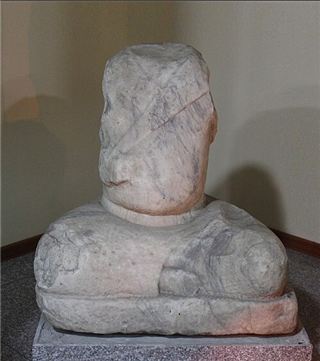
The Göktürk economy rested on tribute extraction and Silk Road management. Sogdian merchant partners handled long-distance commercial logistics under Göktürk military protection, making the khaganate indispensable to Silk Road commerce without requiring nomadic Göktürks to administer markets directly. Tribute from China was the single most valuable income stream. The khaganate extracted silk, grain, and manufactured goods from successive Chinese dynasties in a relationship the Chinese framed as gifts but which functioned as payment to avoid military devastation. Under Bilge Qaghan, Tang Emperor Xuanzong agreed to an annual frontier market at which Turkish horses were exchanged for large quantities of silk, a trade that illustrates the extraction mechanism precisely. Pastoralism remained the economic base of the tribal population, with horse breeding and seasonal migration sustaining the military manpower that made all other income streams possible.
Military
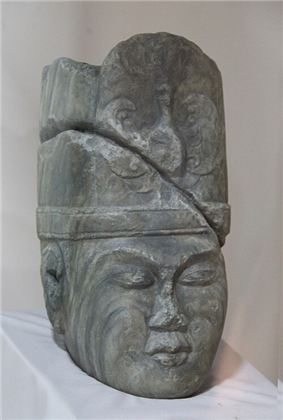
Göktürk military power rested on mobile cavalry capable of rapid strategic concentration across vast steppe distances. The First Khaganate extracted tribute simultaneously from the rival Northern Zhou and Northern Qi dynasties, whose rulers Taspar Qaghan reportedly dismissed as his two dutiful sons in the south. Qapaghan Qaghan (691–716), the foremost military ruler of the Second Khaganate, raided deep into northern China repeatedly in the 690s and 700s, forcing Tang concessions, and in 706 his forces defeated a Tang army at the Battle of Ming Sha. Around 710, Göktürk armies led by Tonyukuk and Kül Tigin crushed the Yenisei Kyrgyz and killed their qaghan, and campaigns soon carried Göktürk influence from Manchuria to the Syr Darya. The empire's central military vulnerability was institutional: lateral succession, passing power among brothers before sons, guaranteed a crisis at nearly every transition. The Sui strategist Zhangsun Sheng articulated the Chinese response explicitly: befriend the distant and attack the near, divide the strong and unite the weak, never letting the barbarians combine.
Governance & Law

The Göktürk state was a tribal confederation organised around the supremacy of the Ashina clan, whose divine mandate was expressed through the concept of heaven-granted qut, or royal fortune. The qaghan commanded subordinate tribal leaders who owed military service and tribute in exchange for protection and a share of extracted wealth, with the realm divided into eastern and western wings under shad and yabghu princes. The Second Khaganate produced the Orkhon Inscriptions, erected chiefly in the 720s and 730s, the earliest substantial written records in any Turkic language. These monuments are simultaneously a governance document, a legitimacy claim, and a warning against Chinese cultural assimilation, condemning Turkic nobles who had adopted Chinese titles and abandoned their own. The inscriptions reveal a regime acutely aware of its own fragility, using permanent stone monuments to enforce political loyalty that military power alone could not guarantee. Administration beyond the Mongolian heartland was exercised through subordinate tribal leaders rather than appointed governors, a structural limitation that made the empire's cohesion dependent on the personal authority of the reigning qaghan.
Global & Regional Impact
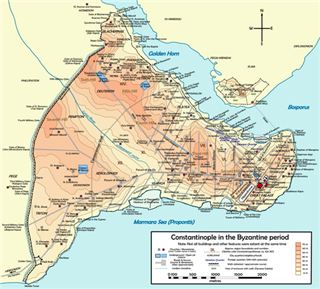
The Göktürk Empire's significance extends far beyond its 192-year span. The First Khaganate presided over a period of unusual security on the Silk Road, enabling the movement of goods, religions, and ideas between China, Persia, Byzantium, and India under a single protective military umbrella. The Orkhon script, the first writing system used for a Turkic language, created a literary tradition that influenced subsequent steppe civilisations. The Ashina clan's confederation model was inherited by the Uyghur and Khazar khaganates, and the broader Turkic political tradition eventually flowed into the Seljuk and Ottoman empires. The 568 CE embassy to Constantinople established a direct diplomatic relationship between the steppe world and Byzantium that shaped Byzantine foreign policy for a generation. The Orkhon Inscriptions remain the foundational texts of Turkic literary heritage, studied today as the earliest window into Turkic political thought.
Decline & Fall
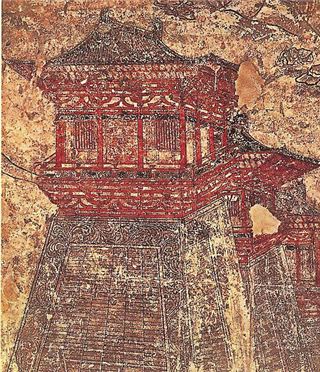
The First Khaganate broke apart in the decades after 581 through the mechanism its enemies had cultivated: lateral succession produced simultaneous rival claimants, the Sui exploited the divisions, and by around 603 the unified empire had split into eastern and western halves. The Eastern Khaganate was conquered by Tang China in 630 CE after the general Li Jing's surprise attack, and its ruler Illig Qaghan was captured. The Western Khaganate fell in 657 CE. Between 679 and 681, revolts failed and fifty-four Göktürk nobles were publicly executed in the eastern market of Chang'an. The resurrection came in 682 CE, when Ilterish Qaghan, according to the inscriptions starting with just seventeen men in the Yin Shan mountains, rebuilt the Second Khaganate through guerrilla warfare, an achievement extended under Qapaghan and consolidated under Bilge. The deaths of Tonyukuk in the mid-720s, Kül Tigin in 731, and Bilge himself in 734, poisoned by one of his own ministers, removed the entire governing cohort within a decade. In 744 CE, the Uyghurs, Karluks, and Basmyls seized Ötüken, killed the last Göktürk qaghan, and sent his head to the Tang court.
The Göktürk Empire's enduring significance lies in its destruction and resurrection: a nomadic people with no cities and, at first, no written language built one of the largest empires on earth, lost it entirely to foreign conquest, rebuilt it from seventeen men, and left a civilisational legacy that shaped every major Turkic state for the next thousand years.
References
- Beckwith, C.I. (2009) Empires of the Silk Road: A History of Central Eurasia from the Bronze Age to the Present. Princeton: Princeton University Press.
- De la Vaissière, É. (2005) Sogdian Traders: A History. Translated by J. Ward. Leiden: Brill.
- Findley, C.V. (2005) The Turks in World History. Oxford: Oxford University Press.
- Golden, P.B. (1992) An Introduction to the History of the Turkic Peoples. Wiesbaden: Harrassowitz.
- Sinor, D. (ed.) (1990) The Cambridge History of Early Inner Asia. Cambridge: Cambridge University Press.
- Skaff, J.K. (2012) Sui-Tang China and Its Turko-Mongol Neighbors: Culture, Power, and Connections, 580–800. Oxford: Oxford University Press.
Connections
Open the full connections map →