Sub-Saharan Africa
Merina Kingdom
At a glance
- A highland kingdom of central Madagascar, reunited by Andrianampoinimerina, who made Antananarivo its capital around 1794.
- Radama I's alliance with Britain from 1817 let it conquer much of the island as the Kingdom of Madagascar.
- France invaded in 1883–85 and 1895 and abolished the monarchy in 1897, exiling Queen Ranavalona III.
Rise & Fall
- c. 1540Andriamanelo traditionally founds the Merina royal line
- c. 1787Andrianampoinimerina seizes power at Ambohimanga and begins reuniting Imerina
- 1817Radama I's treaty with Britain ends slave exports and brings arms and training
- 1835Ranavalona I bans Christianity; the Malagasy Bible is published
- 1869Ranavalona II and Rainilaiarivony are baptised; the royal talismans are burned
- 1881The Code of 305 Articles is promulgated
- 1895French troops under General Duchesne take Antananarivo
- 1897France abolishes the monarchy and exiles Ranavalona III
Foundation

The Merina, the people of the central highlands of Madagascar around Antananarivo, descend from the island's Austronesian settlers, whose ancestors probably crossed the Indian Ocean from the region of Borneo during the first millennium. In the highlands small chiefdoms competed for the marshy valleys suited to irrigated rice. Royal traditions, the Tantara ny Andriana compiled in the nineteenth century, credit Andriamanelo, conventionally dated to the mid-sixteenth century, with subduing the earlier Vazimba inhabitants with iron-tipped spears and founding the line of Merina kings, and his son Ralambo with giving the kingdom its name, its royal talismans and its customs of cattle sacrifice. Andrianjaka is remembered as the king who first occupied the hill of Analamanga, renamed Antananarivo. Around 1700 Andriamasinavalona ruled an enlarged Imerina but divided it among his sons, beginning a century of rivalry between four kingdoms. Reunification came under Andrianampoinimerina, who seized power at Ambohimanga around 1787, defeated his rivals and by about 1794 had made Antananarivo his capital. Declaring that the sea would be the border of his rice field, he left his son Radama I a programme of conquest. Radama's alliance with Britain from 1817 turned Imerina into the Kingdom of Madagascar, which by 1828 controlled much of the island.
Socioeconomy

The Merina economy rested on irrigated rice grown in the valleys and marshes around Antananarivo. Andrianampoinimerina organised communal labour to drain and dike the Betsimitatatra plain, and rice became the basis of royal power, taxation and population growth. Society was divided into the andriana, ranked noble descent groups; the hova, free commoners organised in local descent groups and village assemblies, the fokonolona; and the andevo, enslaved people, whose numbers grew sharply through war and purchase. All free subjects owed the crown fanompoana, unpaid labour service, which the nineteenth-century state extended to building, mining, porterage and soldiering so heavily that many fled or resisted. Markets were regulated by royal authority, and payments were made in Spanish and French silver dollars cut into small pieces and weighed on scales. In the late eighteenth century the sale of captives to French planters of Réunion and Mauritius financed Andrianampoinimerina's rise, as Pier Larson has shown; Radama I's treaty with Britain banned the export of slaves in 1817, though slavery within Madagascar continued until the French abolished it in 1896. Religion centred on royal talismans, the sampy, and on the ancestors, honoured in elaborate family tombs. Protestant Christianity, spread by the London Missionary Society, became the established religion of the court after 1869.
Military
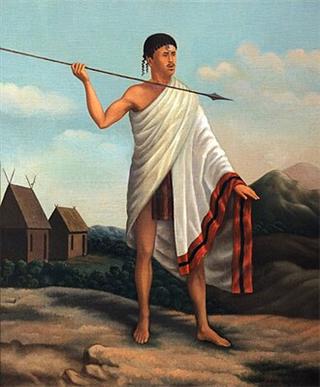
Andrianampoinimerina reunified Imerina with armies of free subjects raised through the village communities and with muskets bought from European traders in exchange for captives. His son Radama I (r. 1810–1828) transformed this force. Under the treaty of 1817 Britain supplied arms, uniforms and instructors, and with the help of the British agent James Hastie Radama built a standing army of several thousand regular soldiers drilled on European lines, supported by mass levies. With it he took the east-coast port of Toamasina in 1817, campaigned against the coastal and southern peoples, and in 1824 captured Mahajanga, the chief port of the Sakalava kingdom of Boina. By his death Merina garrisons, many in fortified hilltop posts, held the central highlands and much of the east and north, though the Sakalava of Menabe and the peoples of the far south were never fully subdued. Ranavalona I continued conscription and campaigns, and in 1845 her forces repelled a joint British and French attack on Toamasina. Later reforms under Rainilaiarivony introduced general conscription and hired foreign officers, but the army remained poorly paid and supplied. It held off France in the war of 1883–85 but collapsed before the expedition of 1895 under General Jacques Duchesne, which marched from Mahajanga to the capital and shelled it into surrender on 30 September 1895.
Governance & Law
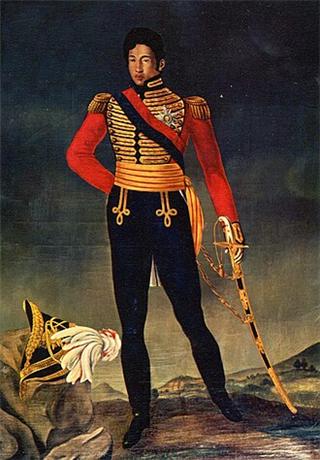
Merina kingship combined sacred authority with an increasingly bureaucratic state. Andrianampoinimerina governed through public assemblies, the kabary, at which he proclaimed laws in elaborate oratory, through the fokonolona of each village, and through officials who supervised land, labour and justice; his laws punished theft, regulated markets and defined the obligations of each descent group. Radama I introduced a system of numbered military and civil ranks, the 'honours', and with the help of missionaries a written administration in Malagasy, using the Latin alphabet adopted in the 1820s. Ranavalona I (r. 1828–1861) relied on powerful hova ministers and officers, used the tangena poison ordeal against suspected enemies, expelled the missionaries and from 1835 banned Christianity, executing a number of converts. After the brief reign of Radama II, killed in 1863, real power passed to the prime minister Rainilaiarivony, who held office from 1864 to 1895 and married three successive queens, Rasoherina, Ranavalona II and Ranavalona III. He built a modern state on paper and partly in practice: ministries on European lines and the Code of 305 Articles in 1881, provincial governors, registers of land and population, and compulsory schooling. Ranavalona II's baptism in 1869 and the public burning of the royal sampy made Protestantism an instrument of government, with church and school networks reaching across the highlands.
Global & Regional Impact

The Merina kingdom created the first state that claimed, and largely achieved, authority over most of Madagascar, and its capital, language and institutions became the core of the modern nation. Standard written Malagasy developed from the Merina dialect, which missionaries and the court fixed in the Latin alphabet; the complete Bible was published in Malagasy in 1835, one of the first full Bible translations in sub-Saharan Africa, and literacy spread more widely in nineteenth-century Imerina than in most of the continent. Antananarivo grew from a hilltop royal town into the island's capital, crowned by the Rova, whose palace of Manjakamiadana was built in timber by the Frenchman Jean Laborde and later encased in stone by the missionary architect James Cameron. The royal hill of Ambohimanga is a World Heritage Site. The kingdom also left a divided legacy. Its conquests, labour levies and the enslavement of captives from other regions created lasting resentment of Merina dominance among coastal peoples, a division that French colonial rule exploited through its 'politique des races' and that continued to shape Malagasy politics after independence. Its diplomacy with Britain, France and the United States made it one of the few African states of the nineteenth century treated as a sovereign partner in international treaties.
Decline & Fall

The kingdom's fall came from French imperial ambitions, which built on claims dating back to seventeenth-century trading posts and on French influence among the Sakalava of the north-west. In 1883 France attacked, bombarding Mahajanga and Toamasina, and the Franco-Hova War ended with the treaty of December 1885, which gave France Diego Suarez, a large indemnity and a claim to control Madagascar's foreign relations, though the Merina government disputed the meaning of the terms. In 1890 Britain recognised a French protectorate over Madagascar in exchange for French recognition of British control of Zanzibar, leaving the kingdom without a protector. When Rainilaiarivony rejected French demands, France sent an expedition of some 15,000 men under General Jacques Duchesne in 1895. Several thousand French soldiers died, overwhelmingly from disease, but Antananarivo fell on 30 September and Ranavalona III signed a protectorate treaty. Rainilaiarivony was exiled to Algiers, where he died in 1896. The Menalamba ('red shawl') rising against the French and the Christian Merina elite spread through the highlands, and in August 1896 France annexed the island as a colony. Governor-General Joseph Gallieni suppressed the revolt, executed leading Merina officials and on 28 February 1897 abolished the monarchy, sending Ranavalona III into exile on Réunion and later in Algeria, where she died in 1917.
The Merina Kingdom turned a cluster of highland rice-growing chiefdoms into the Kingdom of Madagascar, conquering most of the island with British-trained armies, adopting writing, Protestant Christianity and modern administration, and leaving the capital, language and institutions on which colonial and independent Madagascar were built after France abolished it in 1897.
Test yourself
5 questions on this page, from its key events and facts.
The questions open here once the page has loaded.
References
- Larson, P.M. (2000) History and Memory in the Age of Enslavement: Becoming Merina in Highland Madagascar, 1770–1822. Portsmouth, NH: Heinemann.
- Campbell, G. (2005) An Economic History of Imperial Madagascar, 1750–1895: The Rise and Fall of an Island Empire. Cambridge: Cambridge University Press.
- Ellis, S. (1985) The Rising of the Red Shawls: A Revolt in Madagascar 1895–1899. Cambridge: Cambridge University Press.
- Raison-Jourde, F. (1991) Bible et pouvoir à Madagascar au XIXe siècle. Paris: Karthala.
- Randrianja, S. and Ellis, S. (2009) Madagascar: A Short History. London: Hurst.
Connections
Open the full connections map →