Americas
Neo-Inca State
At a glance
- Founded by Manco Inca in 1537, it kept the Inca monarchy, court and Sun cult alive in the mountains of Vilcabamba until 1572.
- Its rulers combined guerrilla war with diplomacy, and Titu Cusi’s account of 1570 gave an Inca view of the Spanish conquest.
- Viceroy Toledo’s army took Vilcabamba in 1572, and the execution of Túpac Amaru in Cusco ended independent Inca rule.
Rise & Fall
- 1536Manco Inca rebels and besieges Spanish-held Cusco for some ten months
- 1537Manco repulses the Spaniards at Ollantaytambo, then withdraws to Vitcos and Vilcabamba
- 1539Gonzalo Pizarro invades Vilcabamba; Manco escapes but Cura Ocllo is captured
- 1544Manco Inca is murdered at Vitcos by Spanish fugitives he had sheltered
- 1558Sayri Túpac renounces his claims in Lima and settles at Yucay
- 1566Titu Cusi Yupanqui accepts the Treaty of Acobamba
- 1570Titu Cusi dictates his account of the conquest for Philip II of Spain
- 1572Spanish forces take Vilcabamba; Túpac Amaru is captured and executed in Cusco
Foundation
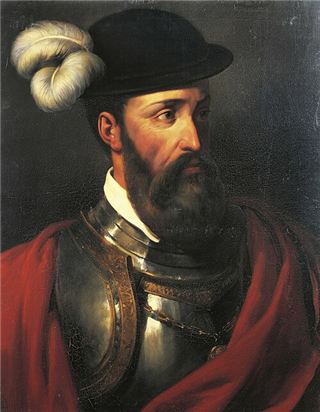
The Neo-Inca State was born of the failure of the great Inca rising against Spanish rule. During the Spanish conquest of the Inca Empire, Francisco Pizarro executed Atahualpa in 1533, entered Cusco and installed Manco Inca, a son of Huayna Capac, as a puppet ruler. Humiliated and abused by the conquerors, Manco escaped from the city in 1536 and raised a great army, which besieged Cusco from May 1536 for some ten months, while his general Quizo Yupanqui destroyed Spanish relief columns in the central highlands and attacked Lima. The siege failed. In January 1537 Manco repulsed a Spanish attack at Ollantaytambo by flooding the plain below its terraces, but the return of Diego de Almagro’s army from Chile in April made the Sacred Valley untenable. He withdrew to Vitcos, a stronghold at about 2,980 metres in the Vilcabamba region north-west of Cusco, and when Rodrigo Orgóñez sacked Vitcos in July 1537 he escaped deeper into the forested mountains. Vilcabamba, in a warm valley at about 1,450 metres, became the capital of a smaller Inca kingdom. There Manco and his successors kept the Inca monarchy, its religion and its court alive for 35 years beyond the reach of Spanish government.
Socioeconomy
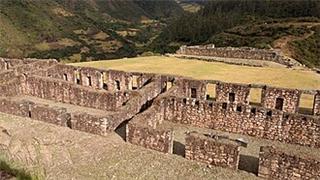
The Neo-Inca State was a small kingdom of rugged mountains and deep, forested valleys between the Apurímac and Urubamba rivers, where the Andes fall towards the Amazon lowlands. Its people included Inca nobles and warriors who had followed Manco from Cusco, local highland communities and probably groups from the forest lowlands. The warm valleys around Vilcabamba yielded maize and tropical crops. Martín Hurtado de Arbieto, the Spanish commander who took the town in 1572, described a settlement of about four hundred houses, built for some thousand warriors as well as their women, children and elders. Inca religion was maintained in its traditional forms. A temple of the Sun stood at Vilcabamba, Manco’s body was kept there after his death, and the court guarded the Punchao, the gold image of the Sun. Near Vitcos the great white rock of Yurak Rumi, also called Ñusta Hisp’ana, remained a major shrine until converts of the Augustinian friars damaged it in 1570. The kingdom’s resources were modest. It lived largely from local farming and, in Manco’s time, from raids on Spanish travellers and on Andean communities allied with the Spaniards, while its later rulers sought Spanish recognition, pardons and estates through negotiation.
Military

The Neo-Inca State was founded in war and survived through guerrilla raids and the protection of its terrain. From Vitcos and Vilcabamba, Manco’s forces attacked Spanish travellers and Andean peoples allied to the Spaniards, such as the Huanca of the Mantaro Valley, and threatened the road between Cusco and Lima; in 1539 the Spaniards founded Huamanga, the modern Ayacucho, partly to guard that road. In the same year Gonzalo Pizarro led about 300 Spaniards and many Andean allies into Vilcabamba and fought Manco’s men at Huayna Pucara. Manco escaped, but his sister-wife Cura Ocllo was captured, and Francisco Pizarro had her executed. Narrow trails, steep valleys and dense forest made large expeditions slow and costly, and for three decades the Spaniards preferred negotiation to invasion. The final campaign came in 1572, when Viceroy Francisco Álvarez de Toledo sent some 250 Spaniards and about 2,000 Andean auxiliaries under Martín Hurtado de Arbieto. After clashes in the valleys, the Spaniards took the fort of Huayna Pucara with the help of artillery and entered Vilcabamba on 24 June 1572, finding it abandoned and partly burned. A detachment under Martín García Óñez de Loyola pursued Túpac Amaru into the forest and captured him.
Governance & Law
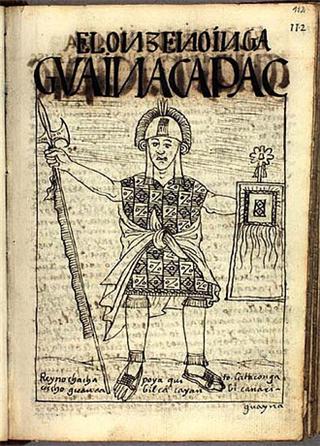
The Neo-Inca rulers claimed to be legitimate Sapa Incas, heirs of Huayna Capac, and kept the forms of Inca kingship: the royal fringe, a court of nobles and military commanders, the cult of the Sun and the veneration of royal ancestors. Four rulers reigned. Manco Inca governed until 1544, when Spanish fugitives from the defeated Almagrist faction, whom he had sheltered at Vitcos after the Battle of Chupas in 1542, murdered him; his guards killed them in turn. His young son Sayri Túpac succeeded under regents, but in 1557 he agreed to leave Vilcabamba and, received in Lima in January 1558 by Viceroy Andrés Hurtado de Mendoza, renounced his claims in exchange for a pardon and the estates of Yucay. His half-brother Titu Cusi Yupanqui, who stayed behind, then led the state. A skilful negotiator, he accepted the Treaty of Acobamba in 1566, by which he recognised the Spanish king as his sovereign, promised peace and agreed to receive a Spanish corregidor and missionaries, while in practice keeping his independence. He was baptised as Diego de Castro around 1568 and relied on a mestizo secretary, Martín de Pando, for his dealings in Spanish. After his death in 1571 his brother Túpac Amaru broke off negotiations and became the last ruler.
Global & Regional Impact
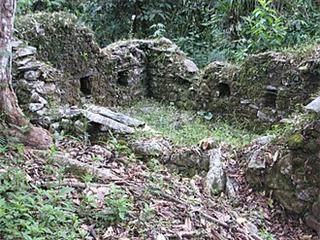
The Neo-Inca State kept an independent Inca monarchy alive for more than a generation after the fall of Cusco, and its existence shaped Spanish policy in the Andes. As long as a Sapa Inca ruled in Vilcabamba, Spanish officials feared that Andean communities might rise again, and much of the diplomacy of the 1550s and 1560s aimed to draw its rulers out of their refuge. Titu Cusi’s account of the conquest, dictated in 1570 to the Augustinian friar Marcos García and written down by Martín de Pando, was addressed to the former governor Lope García de Castro for Philip II of Spain. Telling of Manco’s mistreatment and resistance from an Inca point of view, it is one of the earliest Andean narratives of the Spanish conquest. The execution of Túpac Amaru in Cusco’s main square became a lasting symbol of colonial injustice, and in 1780 José Gabriel Condorcanqui, who took the name Túpac Amaru II, led the great Andean revolt against Spanish rule. The search for the lost capital also shaped modern archaeology: Hiram Bingham III, looking for Vilcabamba in 1911, identified Vitcos and reached Espíritu Pampa but believed that Machu Picchu was the last Inca refuge, and in 1964 Gene Savoy argued that Espíritu Pampa was Vilcabamba, as later research has confirmed.
Decline & Fall
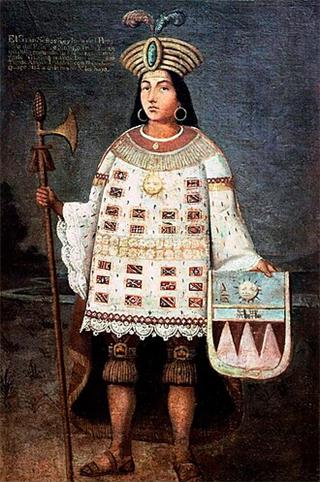
The end of the Neo-Inca State followed the arrival of a determined viceroy. Francisco de Toledo, who took office in Peru in November 1569, set out to reorganise the colony and regarded the independent Inca kingdom as an obstacle to Spanish authority. When Titu Cusi died suddenly in 1571, probably of illness, Inca officials blamed the Augustinian friar Diego Ortiz, who was killed along with Martín de Pando. The new ruler, Túpac Amaru, broke off negotiations, and in March 1572 Toledo’s envoy Atilano de Anaya was killed on the border near the Chuquichaca bridge. Toledo declared war on 14 April 1572. His forces seized the bridge, defeated the Inca defenders and entered Vilcabamba on 24 June. Túpac Amaru fled into the forest with his wife and a few followers but was captured, brought to Cusco and condemned after a brief trial. He was beheaded in the city’s main square in 1572. The Spaniards also seized the Punchao, whose later fate is unknown. Martín Hurtado de Arbieto founded the Spanish town of San Francisco de la Victoria de Vilcabamba, the old capital was abandoned to the forest, and the region was absorbed into the Viceroyalty of Peru. García Óñez de Loyola later married Sayri Túpac’s daughter Beatriz Clara Coya and died as governor of Chile at the Battle of Curalaba in 1598.
The Neo-Inca State, founded by Manco Inca in the mountains of Vilcabamba after his failed siege of Cusco, preserved an independent Inca monarchy for 35 years, bargained with the Spanish authorities for years and left, through Titu Cusi’s account and Túpac Amaru’s execution in 1572, an enduring memory of Andean resistance.
References
- Hemming, J. (1970) The Conquest of the Incas. New York: Harcourt Brace Jovanovich.
- Kubler, G. (1947) ‘The Neo-Inca State (1537–1572)’, Hispanic American Historical Review, 27(2), pp. 189–203.
- MacQuarrie, K. (2007) The Last Days of the Incas. New York: Simon & Schuster.
- Titu Cusi Yupanqui (2005) An Inca Account of the Conquest of Peru. Translated by R. Bauer. Boulder: University Press of Colorado.
Connections
Open the full connections map →