Central & East Asia
Qara Khitai
At a glance
- Yelü Dashi fled the Jin conquest of the Liao in 1124 with the 20,000 troops of the Kedun garrison, took Balasaghun in 1134 and made the Kingdom of Qocho, the Karluks and the Karakhanids his vassals.
- At the Battle of Qatwan on 9 September 1141 the Khitans encircled and destroyed the Seljuk army of Ahmad Sanjar north of Samarkand, winning all of Transoxiana and Khwarazm's tribute.
- The state called itself the Great Liao, kept the Chinese calendar, titles, coins and seals, and was ruled by two empresses in its own right, Xiao Tabuyan and Yelü Pusuwan.
Rise & Fall
- 1124Yelü Dashi flees north-west to the garrison of Kedun on the Orkhon River, wins the allegiance of its 20,000 troops and proclaims himself gurkhan.
- 1134Dashi conquers the Karakhanid city of Balasaghun; the Kankalis, Karluks, Kyrgyz and the Kingdom of Qocho become vassals, while a Khitan attack on the Jin ends in disaster.
- 1141On 9 September the Khitans destroy Ahmad Sanjar's Seljuk army at the Battle of Qatwan north of Samarkand; Transoxiana is lost to the Seljuks and Khwarazm becomes a vassal.
- 1143Yelü Dashi dies; his wife Xiao Tabuyan rules as regent with the titles of empress Gantian, Gurkhan and Dashi.
- 1172The Qara Khitai cross the Amu Darya to defeat Khwarazm for unpaid tribute and install Tekish as Khwarazm Shah on 11 December.
- 1198A Qara Khitai army invading Ghurid lands near Kurzuban is routed in a night attack with 12,000 losses; Balkh passes to the Ghurids.
- 1211The Naiman refugee Kuchlug, married to Yelü Zhilugu's daughter, revolts and captures the gurkhan while he is hunting; Zhilugu remains nominal ruler until his death two years later.
- 1218Pursued by Genghis Khan's general Jebe, Kuchlug is captured and decapitated; the Mongols complete the conquest of the former Qara Khitai lands by 1220.
Foundation
The Qara Khitai was the western remnant of the Liao dynasty of the Khitans, a Sinicized Para-Mongolic people of eastern Mongolia and north-east China, whose empire the Jurchen-led Jin dynasty conquered between 1114 and 1125. In 1122 two groups of Khitans fled west; one was led by Yelü Dashi, who joined the Liao emperor Tianzuo on the Western Xia border. Captured by the Jin in 1123 and forced to guide them to Tianzuo's camp, Dashi later rejoined the emperor, who was himself captured early in 1125 and died at the Jin court in 1128. In 1124 Dashi fled north-west to the garrison of Kedun (Zhenzhou) on the Orkhon River, secured its 20,000 troops and set himself up as gurkhan, 'universal khan', still under the dynastic name Great Liao.
After conquering two Jin tribes in 1129, Dashi led his host west in 1130 and settled a first base by the Emil river; within a year he was suzerain of Qocho and had a foothold in Transoxiana. Repelled at Kashgar in 1131, he extended his authority over Qayaliq and Almaliq, and in 1134 took the Karakhanid city of Balasaghun, which became his capital; the Kankalis, Karluks, Kyrgyz and the Kingdom of Qocho became vassals. A disastrous attack on the Jin the same year ended his hope of recovering northern China. In 1137 he defeated the Western Karakhanids near Khujand and annexed Fergana and Tashkent, his army swollen by 10,000 Khitans formerly subject to the Karakhanids, and went on to take Kashgar, Khotan and Beshbalik.
Socioeconomy
The empire ruled a population quite unlike its rulers. Most subjects were sedentary Muslims, Turkic and Iranian, with significant Buddhist and Nestorian minorities, while the Khitan elite remained nomads, kept their dress, their fire worship and tribal rites such as the sacrifice of a grey ox with a white horse, and followed a mix of Buddhism and traditional religion. Khitan was the language of administration, Chinese remained important, and letters to the Muslims of Transoxiana were written in Persian with Muslim formulas. A census under Yelü Yilie of people over eighteen counted 84,500 households, fewer than Samarkand's 100,000 in the pre-Mongol era, probably because it covered only Balasagun and the region the Khitans ruled directly.
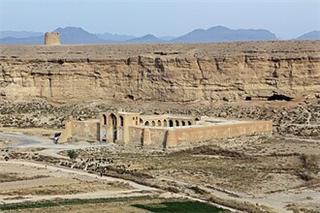
Revenue came largely from vassals. After Qatwan, Erbuz was sent in 1142 to pillage Khwarazm until Atsiz agreed to pay 30,000 dinars a year, and tribute remained the usual relation with Khwarazm, the Karakhanids and the Turkic leaders of Khorasan, who all paid to gain Khitan favour in the 1150s. In an innovation unique to the Qara Khitai, each soldier was paid a salary. The Khitans used Chinese-style coins, porcelain, mirrors and jade; a bronze seal in Khitan large script dated to 1197 was found in 2019 near a caravanserai by the Ustyurt Plateau. Towards the end the population suddenly became more nomadic with the influx of Naimans.
Military

Khitan armies won their first great victory against the Seljuks. When the Western Karakhanid ruler Mahmud II appealed to his Seljuk overlord Ahmad Sanjar, the sultan brought his army to Samarkand in 1141; the Khwarazmians invited the Khitans in, and the Karluks, at war with the Karakhanids, asked them to intervene. Sources put the Khitan force anywhere from 20,000 to 700,000 against 100,000 Seljuks, though some contemporaries say the armies were equal. At the Battle of Qatwan on 9 September 1141, north of Samarkand, the Khitans attacked simultaneously, encircled the Seljuks and drove their centre into the Dargham wadi about 12 kilometres from the city; the army was destroyed, Sanjar barely escaped, his wife and commanders were captured, and the dead were reckoned at 11,000 to 100,000.
Later campaigns were fought over vassals. In 1172 a Khitan army crossed the Amu Darya to punish Khwarazm for unpaid tribute and routed Il-Arslan's forces. In 1198 an invasion of Ghurid lands around Kurzuban, at first victorious, was routed in a night attack with 12,000 losses. In 1204 a force of 10,000 or 40,000 under Tayangu and the Karakhanid rulers Uthman ibn Ibrahim and Taj al-Din Bilge Khan relieved Khwarazm from Muhammad of Ghor, chased the Ghurids to Andkhud and besieged the sultan in its castle until Uthman negotiated his ransom; in 1205 the Ghurid viceroy of Balkh seized Tirmidh and destroyed the Khitan army there.
Governance & Law
From Balasagun the Khitans ruled the central region directly; the rest of the empire was a ring of highly autonomous vassals, Khwarazm, the Karluks, the Kingdom of Qocho, the Kankalis and the Western, Eastern and Fergana Karakhanids, later joined by the Naimans. The rulers inherited Liao institutions: Confucian administration, the Chinese calendar, Chinese imperial and administrative titles, reign names, Chinese-styled coins and imperial seals sent to vassals, alongside local titles such as the Turkic tayangyu and the vizier. They styled themselves gurkhan and 'Chinese emperor'; the Burhan family was left to rule Bukhara and Ibrahim, brother of the defeated Mahmud, was appointed ruler of Samarkand after Qatwan. The elite kept the Liao marriage rule between the Yelü royal clan and the Xiao consort clan.
Women held the throne twice. When Dashi died in 1143 his wife and cousin Xiao Tabuyan became regent for their son Yelü Yilie, using the titles empress Gantian, Gurkhan and Dashi; the History of Liao calls her a regent, but Muslim sources say she held unlimited power. Yilie (r. 1150–1163) named his sister Yelü Pusuwan to succeed him; as Empress Chengtian (r. 1164–1177) she turned the empire westward. Her affair with her husband's brother led her father-in-law Xiao Wolila to surround the palace and kill both her and his son, and he installed Yilie's second son Yelü Zhilugu (r. 1178–1211).
Global & Regional Impact
Qatwan reshaped the Muslim east. The Seljuks lost all of Transoxiana, Khwarazm became a Khitan tributary, and the Oghuz whom the Khitans displaced were pushed into Balkh, where Sanjar's heavy taxes after his defeat provoked the revolt of 1153 in which he was captured and Khorasan plundered. Khitan rule reinforced the view among writers such as Marwazi and Fakhr al-Din Mubarak Shah that Transoxania and the cities of Balasaghun and Kashgar were part of China. The Khitans' adherence to Liao Chinese traditions has been suggested as a reason they never converted to Islam; Tekish of Khwarazm complained in 1182 that the people of Bukhara preferred the rule of non-believers to his Muslim army.
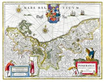
The most enduring trace of Khitan power is a name. Because the Khitans dominated north-east China under the Liao and were seen as Chinese in Central Asia, 'Khitai' came to mean China to the peoples around them, passed through Islamic and Russian sources into medieval Europe as Cathay, and survives in the Russian, Bulgarian, Uzbek, Mongolian, Kazakh and Uyghur names for China, though its use by Turkic speakers inside China is treated as pejorative by the Chinese authorities. The empire's vassals became its conquerors' allies: Qocho's ruler Barchuq Art Tegin and the Karluk Arslan Khan transferred their allegiance to Genghis Khan in 1209–1211, and Khitan troops joined the Mongol army against Kuchlug. The Qara Khitai still appears on the Asia map of Nicolas and Guillaume Sanson of 1669.
Decline & Fall

The empire weakened from the 1170s. Rebellious tribes in the north and east resisted the imperial son-in-law Abensi until 1175, when the Naimans and Kangly surrendered to the Jin. Tekish of Khwarazm, who owed his throne to the Khitans, killed the leader of their emissaries in the mid-1170s, though tribute resumed before 1198. The defeat by the Ghurids in 1198 cost Balkh and 12,000 men, and the Khwarazm Shah Muhammad II, recognised as suzerain of all Khorasan after returning Tirmidh, read that recognition as weakness. In 1207 the notables of Bukhara and Samarkand, unprotected by the court against the rebel Sanjar, turned to Muhammad II, who entered Bukhara; the war that followed was indecisive, and by 1209–10 the chief vizier Mahmud Tai reported that Khwarazm would not pay tribute again.
In 1209 Qocho rebelled, killed the Khitan commissioner and submitted to Genghis Khan; the Karluk Arslan Khan followed in 1211. That year Kuchlug, a Naiman prince welcomed as a refugee in 1208 and married to Zhilugu's daughter, revolted and seized the gurkhan while he was hunting. Zhilugu remained nominal ruler until his death two years later, which many historians take as the end of the Khitan dynasty. In 1216 Genghis sent Jebe against Kuchlug, who fled and in 1218 was captured and decapitated; the Mongols completed the conquest in 1220. A dynasty founded by Buraq Hajib survived in Kirman as a Mongol vassal until the reign of Öljaitü.
The Qara Khitai or Western Liao (1124–1218) was founded by Yelü Dashi, who led Khitan refugees from the Jin conquest into Central Asia, destroyed the Seljuks at Qatwan in 1141 and ruled Muslim vassal states from Balasagun with Chinese titles and Liao customs. Weakened by Khwarazm and the Ghurids, it fell to the Naiman usurper Kuchlug and then to the Mongols, leaving the name Cathay behind.
Test yourself
5 questions on this page, from its key events and facts.
The questions open here once the page has loaded.
References
- Michal Biran, The Empire of the Qara Khitai in Eurasian History: Between China and the Islamic World (Cambridge University Press, 2005)
- Karl A. Wittfogel and Feng Chia-sheng, History of Chinese Society: Liao, 907–1125 (American Philosophical Society, 1949)
Connections
Open the full connections map →