At a glance
- Zengi's capture of the County of Edessa after the siege of 1144 made him a hero in the Muslim world; he was assassinated by a slave two years later.
- Nur ad-Din took Damascus from the Burids in 1154 and, through his general Shirkuh and Shirkuh's nephew Saladin, brought Fatimid Egypt under Zengid dominion in 1169.
- Saladin crushed the armies of Mosul and Aleppo at the Horns of Hama on 13 April 1175 and received Aleppo on 12 June 1183, ending Zengid rule in Syria.
Rise & Fall
- 1127After the murder of Aqsunqur al-Bursuqi, the Seljuk Empire names Zengi, son of Aq Sunqur al-Hajib, atabeg of Mosul.
- 1144Zengi captures the County of Edessa from the Crusaders after the siege of Edessa, a feat that makes him a hero in the Muslim world.
- 1154Nur ad-Din captures Damascus from the Turkic Burid dynasty and rules Syria from there.
- 1169Shirkuh kills the vizier Shawar and seizes Egypt as Fatimid vizier in Nur ad-Din's name; on his death the same year his nephew Saladin succeeds him.
- 1174Nur ad-Din dies on 15 May; his eleven-year-old son as-Salih Ismail inherits, and Saladin enters Damascus on 23 November.
- 1183Imad ad-Din Zangi hands Aleppo to Saladin on 12 June in exchange for Sinjar, Nusaybin and Raqqa, ending Zengid rule in Syria.
- 1234Badr al-Din Lu'lu', atabeg to the child emirs of Mosul, takes the city in his own name, possibly after murdering the last Zengid emir Nasir ad-Din Mahmud.
- 1250Al-Jazira in northern Iraq, the last Zengid territory, falls to an-Nasir Yusuf, the Ayyubid emir of Aleppo.
Foundation
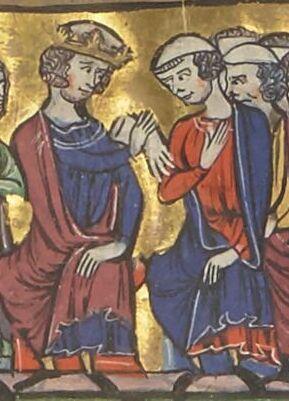
The Zengids were a Turkoman Sunni Muslim dynasty that began as an atabegate of the Seljuk Empire. In 1127, after the murder of Aqsunqur al-Bursuqi, atabeg of Mosul, the Seljuks named Zengi, son of Aq Sunqur al-Hajib, their former governor of Aleppo, as the new atabeg; he had already been a successful Seljuk general and governor in Iraq. Zengi quickly became the chief Turkic potentate of northern Syria and Iraq, taking Aleppo from the squabbling Artuqids in 1128 and, after the siege of Edessa in 1144, capturing the County of Edessa from the Crusaders, a feat that made him a hero in the Muslim world. In 1146 he was assassinated by a slave, and his lands were divided: Mosul and Iraq to his eldest son Saif ad-Din Ghazi I, Aleppo and Edessa to his second son Nur ad-Din.
Nur ad-Din proved as competent as his father. He defeated the Crusaders at Edessa in 1146, beat Raymond of Poitiers, Prince of Antioch, at the battle of Inab in 1149, took the remnants of the County of Edessa west of the Euphrates in 1150, and in 1154 captured Damascus from the Turkic Burid dynasty. After the Seljuk defeats in Khorasan and the death of Ahmad Sanjar in 1157 the Zengids remained Seljuk vassals in name but became essentially independent, and the house branched into lines at Mosul, Aleppo, Damascus, Sinjar, al-Jazira and Shahrazur.
Socioeconomy
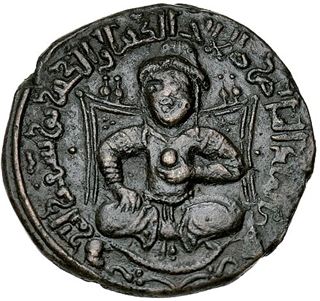
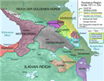
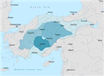
At their widest in 1174 the Zengid lands ran from Tripoli to Hamadan and from Yemen to Sivas, with Egypt held in Nur ad-Din's name and the Artuqids as vassals. Their towns were centres of industry and letters. Mosul developed in the early thirteenth century a flourishing industry of luxury brass inlaid with silver, a technique that had come west from Khurasan and Herat. Mosul brasswork bears more inscriptions than any other class of medieval Islamic object, and from 1220 to 1240 the craft saw “rapid innovations in technique, decoration, and composition”. The geographer Ibn Sa'id noted around 1250 “many crafts in the city, especially inlaid brass vessels which are exported (and presented) to rulers”, goods only the wealthiest could afford.
Aleppo's wealth showed in the citadel stores Saladin bought from the departing Zangi in 1183, and at Amid that year the Ayyubids took 80,000 candles, a tower of arrowheads and 1,040,000 books. The region's Christians lived through a general decline under Arabisation and Islamisation, yet Syriac Christianity passed through a “Syriac Renaissance” in which discriminatory rules were lifted, especially after the death of the conservative Nur al-Din in 1174, and illustrated Gospels were made at Mar Mattai near Mosul around 1220. The Kitab al-Diryaq of 1198–1199 and the Kitab al-Aghani of 1218–1219 belong to an “explosion of figural art” shared with Syriac manuscripts.
Military
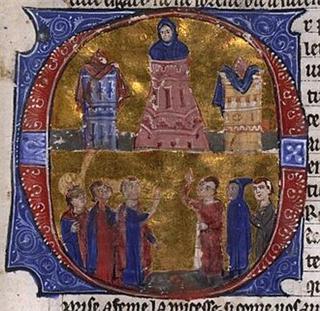
The Zengid army continued Seljuk traditions, combining professional askar and ghulam troops with mercenaries and Turcoman and Kurdish tribal auxiliaries. Nur al-Din's army was mainly Turcoman horse archers and Kurdish spear-armed horsemen, with professional ghulams, Bedouin cavalry and large bodies of infantry; the ruler's askar numbered 1,000 to 3,000 and the auxiliaries 10,000 to 15,000. Dense arrow volleys could pierce armour and stop a Crusader charge, and the Zengids were skilled in siege warfare. Saladin and his successors kept the model.
Their fame rested on war with the Crusader states: Zengi's capture of Edessa in 1144, Nur ad-Din's victory at Inab in 1149 and the capture of Raynald of Châtillon. From 1163 Nur ad-Din contested Egypt with Amalric of Jerusalem: Shirkuh, with his nephew Saladin, won the Battle of al-Babein in 1167, relieved Cairo in 1168 and in 1169 killed the vizier Shawar and seized Egypt for Nur ad-Din. The dynasty then fought its own protégé. At the Horns of Hama on 13 April 1175 Saladin's outnumbered veterans surrounded and crushed the combined armies of Mosul and Aleppo; at the Sultan's Mound in 1176 the Zengids broke his left wing before his charge routed them, and Saif ad-Din barely escaped. Saladin's siege of Mosul in 1182 stalled, Sinjar fell after fifteen days, and the coalition that met him at Harran in February 1183 asked for peace: “like men they advanced, like women they vanished”.
Governance & Law
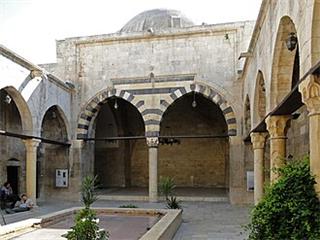
The Zengids ruled as atabegs and emirs under a nominal Seljuk suzerainty until 1194 and then as a Seljuk successor-state. Power was divided among the family by appanage, and the head of the house in Mosul regarded Syria and Mesopotamia as the family estate; minors ruled through guardians, as the eleven-year-old as-Salih Ismail did at Aleppo under the emir Gumushtigin from 1174. Nur ad-Din governed as a builder of institutions: his funerary madrasa of 1167, the first such complex in Damascus; the Nur al-Din Bimaristan, a hospital, in 1154; the Great Mosque of al-Nuri at Mosul in 1172–1173; and at Aleppo the fortified citadel, rebuilt walls, a palace and a racecourse.
Religion legitimised rule. The Zengids were Sunni, and Shirkuh and Saladin held Egypt as Fatimid viziers in Nur ad-Din's name until Saladin, after al-Adid's death in 1171, switched Egypt to the Abbasid caliph. The caliphate arbitrated the family's later wars: Mosul appealed to an-Nasir against Saladin in 1182, while Saladin's letters accused the Zengids of backing the Seljuks and obstructing the holy war. After Hama Saladin suppressed as-Salih's name in Friday prayers and on coins; the truce of 1176 left as-Salih in Aleppo as his vassal, and the treaty of 1186 left Mosul to Mas'ud on condition of military support. In Mosul the commander Badr al-Din Lu'lu', made atabeg in 1211, ruled through three child emirs and murdered the last in 1234.
Global & Regional Impact

The Zengid atabegate became famous in the Islamic world for its successes against the Crusader states and as the house from which Saladin emerged. Zengi's capture of Edessa in 1144 made him a hero; Nur ad-Din's unification of Aleppo and Damascus held back the Crusaders' repeated assaults on both cities, and Shirkuh's seizure of Egypt in 1169 brought the Fatimid state under Zengid dominion. The Zengid military model of askar, ghulams and tribal cavalry passed to the Ayyubids, and the yellow eagle banner Saladin flew was apparently inherited from the Zengids. Saladin's own career was framed by his old masters: he hesitated to attack Syria because taking a land that had belonged to his master was forbidden by the Islamic principles he held, and he waited eight years for Aleppo, “the eye of Syria”.
Culturally the dynasty's cities set standards. Mosul was the leading centre of inlaid brass in the early thirteenth century, and the Mosul painters' Kitab al-Diryaq and Kitab al-Aghani stand near the beginning of Arabic illustrated books. Nur ad-Din's madrasa and hospital in Damascus and his mosque at Mosul remained in use, and his fortification of the citadel of Aleppo, where Joscelin II of Edessa and Baldwin II of Jerusalem were held, shaped one of the great castles of the Levant. Under the late Zengids and Badr al-Din Lu'lu' the Syriac “Renaissance” produced illustrated Gospels that are now a reference for the arms and armour of classical Islam.
Decline & Fall
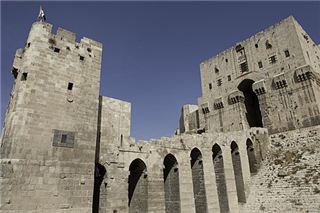
The Zengids were undone by the man they made. When Nur ad-Din died on 15 May 1174 his power passed to his eleven-year-old son as-Salih Ismail al-Malik, taken to Aleppo under the emir Gumushtigin. Gumushtigin's bid to unseat his rivals drove the emir of Damascus to call on Saladin, who entered Damascus on 23 November 1174 and defeated the armies of Mosul and Aleppo at the Horns of Hama in 1175 and the Sultan's Mound in 1176. As-Salih kept Aleppo as Saladin's vassal until his death in 1181, when it passed to Imad ad-Din Zangi. In 1182 Kukbary of Harran defected and invited Saladin into the Jazira: its cities fell one by one, and on 12 June 1183 Zangi handed Aleppo to Saladin for Sinjar, Nusaybin and Raqqa, ending Zengid rule in Syria.
Mosul held out. Saladin's last offensive in late 1185 failed before the city's resistance and his own illness, and the treaty of March 1186 left Mas'ud in Mosul bound to supply troops. Ayyubid attacks in 1204 and 1209 forced Nur ad-Din Arslan Shah I to acknowledge Ayyubid suzerainty on his coins. Dying with young sons, he made his commander Badr al-Din Lu'lu' their atabeg in 1211; Lu'lu' ruled through three child emirs until 1234, when he took Mosul in his own name, and held it until 1259, accepting Mongol suzerainty after 1243. The last Zengid line, the emirs of al-Jazira, ended in 1250 when Mahmud al-Malik al-Zahir's lands fell to an-Nasir Yusuf, the Ayyubid emir of Aleppo.
The Zengids rose from Zengi's appointment as Seljuk atabeg of Mosul in 1127 to rule Aleppo, Edessa, Damascus and, through Shirkuh and Saladin, Egypt, holding back the Crusaders; after Nur ad-Din's death in 1174 Saladin took Syria from them, and their last emirs in Mosul and al-Jazira gave way to Badr al-Din Lu'lu' in 1234 and the Ayyubids in 1250.
Test yourself
5 questions on this page, from its key events and facts.
The questions open here once the page has loaded.
References
- Thomas Asbridge, The Crusades: The War for the Holy Land (Simon & Schuster, 2012)
- C. E. Bosworth, The New Islamic Dynasties: A Chronological and Genealogical Manual (Columbia University Press, 1996)
- Taef El-Azhari, Zengi and the Muslim Response to the Crusades (Routledge, 2006)
- Stephen Humphreys, From Saladin to the Mongols: The Ayyubids of Damascus, 1193–1260 (SUNY Press, 1977)
- Malcolm Cameron Lyons and D. E. P. Jackson, Saladin: The Politics of the Holy War (Cambridge University Press, 1982)
- Stanley Lane-Poole, Saladin and the Fall of the Kingdom of Jerusalem (G. P. Putnam's Sons, 1906)
Connections
Open the full connections map →