Americas
United Provinces of the Río de la Plata
At a glance
- The Primera Junta swore loyalty to the captive Ferdinand VII but refused the authority of Spain's Council of Regency, and historians still debate whether the "Mask of Ferdinand" hid independence as the goal from the start.
- The Assembly of the Year XIII freed the children of slaves, abolished the Inquisition, torture, noble ranks and the mit'a, encomienda and yanaconazgo, and approved the anthem and arms of Argentina, yet rejected Artigas's deputies and their demand for independence and federalism.
- On 9 July 1816 the Congress of Tucumán declared independence from Ferdinand VII, his successors and metropole, in Spanish, Quechua and Aymara; San Martín's Army of the Andes then won Chacabuco and Maipú, while at home the Directory fell to the federal caudillos at Cepeda in 1820.
Rise & Fall
- 1810The May Revolution: an Open Cabildo dismisses Viceroy Cisneros and the Primera Junta takes power in Buenos Aires in the name of the captive Ferdinand VII.
- 1811On 20 June the First Upper Peru campaign ends in the Disaster of Huaqui; Paraguay has already repelled Belgrano and Montevideo's fleet has destroyed the Junta's squadron at San Nicolás.
- 1813On 31 January the Assembly of the Year XIII opens, abolishing the Inquisition, noble ranks and Indigenous labour drafts and freeing the children of slaves.
- 1814On 20 June after William Brown's victories at Martín García and Buceo, Montevideo surrenders and Alvear occupies the last royalist capital of the viceroyalty.
- 1816On 9 July the Congress of Tucumán declares the United Provinces in South America independent of Ferdinand VII, his successors and metropole.
- 1818On 5 April San Martín's United Army defeats the royalists at the Battle of Maipú, consolidating the independence of Chile.
- 1820The federal armies of López and Ramírez rout Rondeau's Directorial troops at Cepeda; on 11 February the Congress dissolves and the national government ends.
- 1828The Eastern Bank becomes independent as Uruguay after British intervention in the Cisplatine War; the Federal Pact of 1831 follows.
Foundation
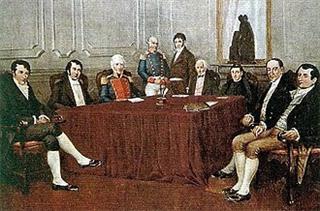
The United Provinces grew out of the collapse of Spanish authority. Napoleon's capture of Ferdinand VII left the Viceroyalty of the Río de la Plata under Baltasar Hidalgo de Cisneros. The criollos, legally Spanish but excluded from the great offices and moved by Enlightenment, popular sovereignty and liberal ideas, demanded his dismissal under the principle that sovereignty returned to the people when the king was absent. On 24 or 25 May 1810 an Open Cabildo in Buenos Aires removed him, and the Primera Junta was formed on 25 May under Cornelio Saavedra, with Mariano Moreno and Juan José Paso as secretaries.
The Junta swore loyalty to Ferdinand VII and rejected Joseph Bonaparte's puppet government, but refused the Council of Regency of Spain and the Indies, in which no Spanish American had taken part, and sent circulars asking the cities of the former viceroyalty for deputies. Moreno and his friends, inspired by the French Revolution and called Jacobins by their opponents, drove its policies; Saavedra's followers were more moderate. Córdoba's counter-revolution under the former viceroy Santiago de Liniers was crushed and he was shot, but Paraguay and Montevideo swore to the Regency and the Viceroyalty of Peru annexed Upper Peru, so the Junta sent armies against all three: the beginning of the Argentine War of Independence, before any independence was declared.
Socioeconomy

The revolution divided society by interest as well as idea. Against it stood the ecclesiastical elite, the viceregal bureaucracy and the rich merchants of the Spanish commercial monopoly, entrenched in the Royal Audiencia and the Cabildo of Buenos Aires. For it were a petty bourgeoisie of lawyers such as Moreno, Castelli, Belgrano and Paso, popular priests, doctors and common workers like Domingo French and Antonio Beruti, and a new merchant bourgeoisie of criollo and British houses whose trade with other countries, long treated as smuggling, had been legalised in 1809 in the crisis of Spain's fall. Moreno kept tariffs on imports despite British pressure, which set the merchants against him.
The Primera Junta set up a fund for mining, redistributed land in the Pampas, limited the concentration of great estates, and launched enterprises to make rifles in Buenos Aires and Tucumán and gunpowder in Córdoba. The Assembly of the Year XIII reshaped society by law: the Law of Wombs made the children of slaves free, any slave entering the territory was freed, the mit'a, encomienda and yanaconazgo were abolished and Indigenous people declared citizens with equal rights, noble ranks disappeared, and the wealthy paid 500 pesos a year to finance the state and army. The Pampas and Patagonia were Mapuche, Ranquel and Puelche country, the Gran Chaco Guaycuru.
Military

The war began badly. The Paraguay campaign under Belgrano was repelled, Montevideo's fleet destroyed the Junta's first squadron at the Battle of San Nicolás, and the First Upper Peru campaign ended on 20 June 1811 in the Disaster of Huaqui. Belgrano held Tucumán in 1812 and won at Salta, but lost at Vilcapugio and Ayohuma; Rondeau's Third campaign lost Upper Peru for good at Viluma on 29 November 1815. In the Eastern Bank the Oriental Revolution of José Gervasio Artigas besieged Montevideo. José de San Martín, arrived from London in 1812, formed the Mounted Grenadiers and won their first fight at San Lorenzo on 3 February 1813.
William Brown's squadron destroyed Montevideo's fleet at Buceo on 17 May 1814 and the city surrendered on 20 June. From Cuyo, where he governed from 1814, San Martín built the Army of the Andes, crossed the Andes in six columns in January 1817, won Chacabuco on 12 February and Maipú on 5 April 1818, securing Chile. He refused to turn that army against fellow citizens. The civil war against Artigas's Federal League opened at El Espinillo on 22 February 1814; Guayabos on 10 January 1815 gave the League the whole Oriental Province, and five Directorial campaigns against Santa Fe and Entre Ríos failed. The Army of the North refused the civil war at Arequito, and at Cepeda on 1 February 1820 López and Ramírez surrounded and routed Rondeau's 2,000 men.
Governance & Law

Government changed hands constantly. The Primera Junta gave way on 18 December 1810 to the Junta Grande, which admitted the provincial deputies and sidelined Moreno, sent to London and dead at sea; after the defeats of 1811 the Cabildo imposed the First Triumvirate on 23 September 1811, which issued the 1811 Provisional Statute with freedom of the press. San Martín's Lautaro Lodge and the Patriotic Society overthrew it on 8 October 1812 for the Second Triumvirate, which convened the General Constituent and Sovereign Assembly of 1813. The Assembly created the Directory on 31 January 1814, a Supreme Director for two years, and chose Posadas first. Alvear's 95 days in 1815 brought spies, executions without trial and a death penalty for critics until the Mutiny of Fontezuelas drove him into exile.
A Junta of Observation and the 1815 Provisional Statute followed, and the Congress of Tucumán, opened on 24 March 1816, elected Pueyrredón Supreme Director on 3 May and declared independence on 9 July; Belgrano's Inca Plan for an Indigenous monarch was shelved. Its Constitution of 1819, sanctioned on 22 April, vested sovereignty in the nation alone and leaned to monarchy; the provinces rejected it, Pueyrredón resigned on 9 June and Rondeau's Directory ended with the Congress's dissolution on 11 February 1820. Artigas's League of the Free Peoples, with its own Congress of Oriente in 1815, had offered the federal alternative throughout.
Global & Regional Impact

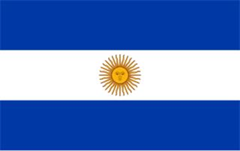
The United Provinces carried the Spanish American revolution across half a continent. Their armies freed Chile at Chacabuco and Maipú; their northern campaigns, though they lost Upper Peru, kept Salta, Jujuy and Tucumán for Argentina. The Declaration of 9 July 1816, circulated in Spanish, Quechua and Aymara, gave the country its independence day, and the Assembly of 1813 its anthem, the Marcha patriótica, its coat of arms, the motto En unión y libertad and the cockade and flag Belgrano had made from light blue and white. The name United Provinces of the Río de la Plata remains an official name of Argentina under Article 35 of its constitution.
Its failures shaped its neighbours. The treaty of October 1811 recognised Paraguay's independence from Buenos Aires; Upper Peru, lost at Viluma, became Bolivia; and the Oriental Province, abandoned to the Luso-Brazilian invasion of 1816 that Manuel García had encouraged to end the "federal disease", passed to Portugal in 1820 and emerged as Uruguay in 1828 after the Cisplatine War and British intervention, by a Treaty of Montevideo that asked no Oriental's opinion and left the borders undrawn, to Brazil's later gain. The quarrel between Buenos Aires's unitary governments and Artigas's federalism began the Argentine Civil Wars and set the terms of Argentine politics for decades.
Decline & Fall
The national government destroyed itself in the civil war. Buenos Aires's Directories chose to fight the federalists rather than Spain or Brazil: Alvear offered Britain a protectorate in 1815, Pueyrredón let the Luso-Brazilians take Montevideo in 1817, and Rondeau asked them to chase "the common enemy" into Entre Ríos. The Constitution of 1819 completed the breach. Tucumán's garrison overthrew its governor on 11 November 1819 and Bernabé Aráoz broke with the Directory; the Army of the North revolted at Arequito and Córdoba proclaimed its sovereignty; San Martín would not bring the Army of the Andes home.
With Francisco Ramírez and Estanislao López marching to "oust the despots", Rondeau took 2,000 men to Cepeda and was routed on 1 February 1820. The federalists would accept no peace that left a national government standing, and on 11 February 1820 the Congress dissolved and Rondeau resigned, ending the national government of the United Provinces. The provinces governed themselves through the Anarchy of the Year XX. The constitution of 1826 adopted the name Argentine Republic and a first presidency, but it fell into disuse in 1827 amid the war with Brazil over the Oriental Province, which the Treaty of Montevideo made independent as Uruguay. The Federal Pact of 1831 bound the provinces as the Argentine Confederation; fourteen of them later formed the Argentine Republic, while Bolivia, Uruguay and Paraguay went their own ways.
The United Provinces of the Río de la Plata, formed by the May Revolution of 1810, declared independence at Tucumán on 9 July 1816 and freed Chile under San Martín, but lost Paraguay, Upper Peru and the Eastern Bank and fell to its own federalists at Cepeda in 1820; the Federal Pact of 1831 made it the Argentine Confederation.
Test yourself
5 questions on this page, from its key events and facts.
The questions open here once the page has loaded.
References
- John Lynch, The Spanish American Revolutions, 1808–1826 (Weidenfeld & Nicolson, 1973)
- John A. Crow, The Epic of Latin America, 4th ed. (University of California Press, 1992)
- Norberto Galasso, Breve historia argentina (Colihue, 2024)
Connections
Open the full connections map →