Europe
Achaean League
At a glance
- A federation of Greek cities with shared citizenship, coinage and foreign policy, led by an annually elected general.
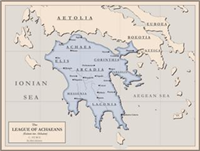
- Under Aratus and Philopoemen it grew from four Achaean towns to the whole Peloponnese by 191 BCE.
- Rome dissolved it after the war of 146 BCE and the sack of Corinth; Polybius made it a model for later federal thinkers.
Rise & Fall
- 280 BCEDyme, Patrae, Tritaia and Pharai renew the Achaean League
- 251 BCEAratus frees Sicyon and brings it into the league
- 243 BCEAratus seizes Acrocorinth from the Macedonians
- 224 BCEThe league cedes Acrocorinth to Antigonus III Doson for help against Sparta
- 207 BCEPhilopoemen defeats Machanidas of Sparta at Mantinea
- 191 BCEWith Messene and Elis, the league unites the whole Peloponnese
- 167 BCEAbout 1,000 Achaeans, including Polybius, are deported to Italy
- 146 BCERome defeats the league and Lucius Mummius sacks Corinth
Foundation
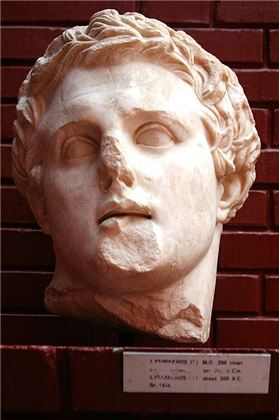
The Achaeans of the narrow coastal strip on the southern shore of the Gulf of Corinth had formed a league of twelve small cities since at least the fifth century BCE, with a common sanctuary of Zeus Homarios near Aigion. Under the Macedonian kings after Alexander this older league broke apart, its cities held by garrisons or tyrants. Around 280 BCE, while the Macedonian kingdoms were in turmoil after the deaths of Lysimachus and Seleucus I, four western Achaean cities, Dyme, Patrae, Tritaia and Pharai, renewed the league. Aigion joined about five years later after expelling its garrison, followed by Bura and Keryneia, whose tyrant Iseas resigned. At first the league had two generals and a common secretary; from 255 BCE a single general (strategos) led it, the first being Margus of Keryneia. The decisive expansion beyond Achaea began in 251 BCE, when the young Aratus overthrew the tyrant Nicocles of Sicyon and brought his city, which was not Achaean, into the league. In 243 BCE Aratus captured Acrocorinth from its Macedonian garrison in a night assault, and Corinth, Megara, Troezen and Epidaurus joined. Megalopolis followed in 235 BCE and Argos in 229 BCE, making the league the leading power of the Peloponnese.
Socioeconomy
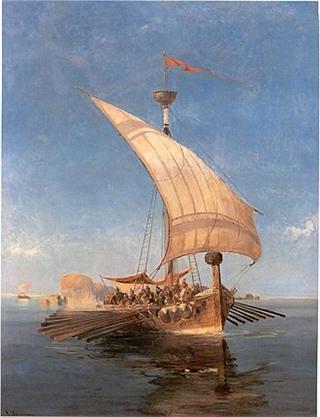
The member cities were mostly modest agricultural communities producing grain, olives, wine and livestock, though the league came to include important commercial centres such as Corinth, with its two harbours on the Isthmus, Sicyon and Argos. Federal membership brought practical benefits. Polybius stresses that the members used the same laws, weights, measures and coinage, and citizens of one city probably enjoyed rights such as owning property and marrying in the others. The federal silver coins, small triobols bearing the head of Zeus and the monogram of the Achaeans, were struck by many member cities. Achaean society was dominated by landowning families, who supplied the generals, cavalry commanders and envoys; Polybius, the son of the federal general Lycortas, came from such a family in Megalopolis. Tensions between rich and poor were acute in the third century BCE, and the programme of Cleomenes III of Sparta, with its promise of debt cancellation and land redistribution, attracted support in several Achaean cities, which helps explain why the league's leaders preferred alliance with Macedon to defeat by Sparta. Religion bound the league together through the federal cult of Zeus Homarios near Aigion, where the federal assemblies traditionally met, while the member cities kept their own cults and festivals, such as the Isthmian Games at Corinth.
Military

The league's army was a citizen militia drawn from the member cities, supplemented by mercenaries paid from federal funds, with a cavalry force under a federal hipparch and a small fleet under a navarch. Under Aratus it was weak in pitched battle: he excelled at night attacks and surprises such as the capture of Acrocorinth, but the league suffered a series of defeats at the hands of Cleomenes III, at Mount Lykaion, Ladokeia and the Hekatombaion near Dyme in 227–226 BCE, which forced Aratus to call in Antigonus III Doson of Macedon. The army was transformed by Philopoemen of Megalopolis, who as hipparch and then, from 208 BCE, as general retrained the cavalry, re-equipped the infantry as a Macedonian-style phalanx with long pikes and larger shields, and fostered a martial pride among the citizens. At the Battle of Mantinea in 207 BCE he defeated the Spartan ruler Machanidas, reportedly killing him with his own hand. He later fought Nabis of Sparta, and after Nabis was murdered in 192 BCE he brought Sparta into the league. The army's final campaign, in 146 BCE, ended in disaster: Critolaus was defeated by Quintus Caecilius Metellus at Scarpheia in Locris, and Diaeus by Lucius Mummius on the Isthmus, after which Corinth was sacked.
Governance & Law
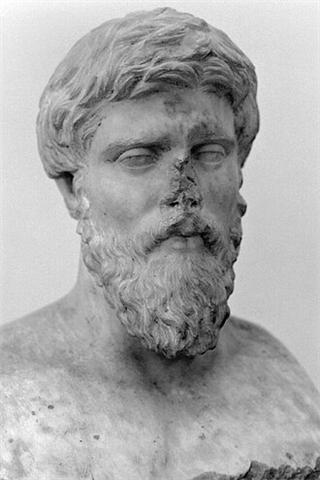
The Achaean League was a true federal state, admired in antiquity and since. Member cities kept their own laws, magistrates and courts, but federal citizenship, foreign policy, war and federal finances belonged to the league. Its chief officer was the general (strategos), elected annually, who commanded the army and presided over the assemblies; he could not hold office in consecutive years, so leaders such as Aratus, general seventeen times by Plutarch's count, served in alternate years. He was assisted by ten damiourgoi, a hipparch, a secretary and a federal council. Regular assemblies (synodoi) met several times a year, at first at Aigion; their exact composition is debated, but they involved the council and citizens over thirty, while extraordinary assemblies (synkletoi), open to all citizens and voting by city, were summoned to decide on war and alliances. Around 188 BCE Philopoemen had the meetings rotated among the member cities. The league arbitrated disputes between members and sent and received embassies as a single state. Its weakness was that larger members, especially Sparta and Messene, had joined unwillingly and repeatedly sought to secede, giving outsiders, first Macedon and later Rome, an opening to intervene in federal affairs.
Global & Regional Impact
At its height in 191 BCE the Achaean League united the entire Peloponnese under a single government for the first time, something neither Sparta nor Macedon had achieved by force. It was the most successful of the Hellenistic federal states, alongside its rival the Aetolian League, and it showed that Greek cities could pool sovereignty without losing local self-government. Its fame owes much to Polybius, who served as federal cavalry commander before being deported to Rome as a hostage in 167 BCE, and whose Histories praise the league's equality and freedom of speech as a model of union. Through Polybius and Plutarch's lives of Aratus and Philopoemen, the league became a reference point in modern political thought. In The Federalist No. 18, James Madison, writing with Alexander Hamilton, examined the Achaean League as an example of a federal republic and of the dangers that foreign intervention posed to loose unions. The Victorian historian Edward Augustus Freeman made it the centrepiece of his History of Federal Government. Philopoemen, called by a Roman, according to Plutarch, ‘the last of the Greeks’, became a symbol of Greek independence, and the league's coinage and inscriptions remain central evidence for the study of ancient federalism.
Decline & Fall
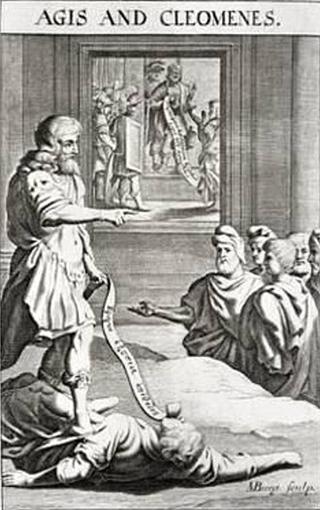
The league's decline came from its dependence on stronger powers. To defeat Cleomenes III it surrendered Acrocorinth to Macedon in 224 BCE and joined Antigonus Doson's Hellenic alliance, and Aratus, who had built the league on resistance to Macedon, ended his life as Philip V's ally; he died in 213 BCE, according to Plutarch poisoned on Philip's orders. In 198 BCE the league changed sides and joined Rome against Philip, which brought it Corinth again and the support it needed to absorb Sparta, Messene and Elis. Roman friendship came with Roman supervision. Spartan resentment, which Philopoemen inflamed by abolishing the laws of Lycurgus in 188 BCE, gave Rome repeated grounds to intervene, and Philopoemen himself was captured and forced to take poison during a Messenian revolt in 183 BCE. After the Third Macedonian War the pro-Roman politician Callicrates denounced his rivals, and about 1,000 leading Achaeans were deported to Italy. When disputes over Sparta revived and Rome demanded in 147 BCE that Sparta, Corinth, Argos and other cities be detached, the generals Critolaus and Diaeus led the league into war. After their defeats in 146 BCE Mummius sacked Corinth and the league was dissolved; a much smaller Achaean league later revived with only local and religious functions.
The Achaean League, a federation of Peloponnesian cities led by Aratus and Philopoemen, was the most successful federal state of ancient Greece, uniting the whole Peloponnese in 191 BCE before Rome crushed it in 146 BCE; through Polybius it became a model for modern federal thinkers, including the authors of The Federalist.
References
- Errington, R.M. (1969) Philopoemen. Oxford: Clarendon Press.
- Freeman, E.A. (1863) History of Federal Government. London: Macmillan.
- Larsen, J.A.O. (1968) Greek Federal States: Their Institutions and History. Oxford: Clarendon Press.
- Mackil, E. (2013) Creating a Common Polity: Religion, Economy, and Politics in the Making of the Greek Koinon. Berkeley: University of California Press.
- Polybius (2010) The Histories, trans. W.R. Paton, rev. F.W. Walbank and C. Habicht. Cambridge, MA: Harvard University Press.
- Walbank, F.W. (1933) Aratos of Sicyon. Cambridge: Cambridge University Press.
Connections
Open the full connections map →