Ancient Near East
Kingdom of Pontus
At a glance
- A Hellenistic kingdom on the southern Black Sea, ruled by a dynasty of Persian origin from Amaseia and later Sinope.
- Rich in metals, timber and Greek ports, it built a Black Sea empire under Mithridates VI Eupator.
- Mithridates VI fought Rome in three wars from 89 to 63 BCE before Pompey destroyed the kingdom.
Rise & Fall
- 281 BCEMithridates I Ktistes takes the title of king
- 183 BCEPharnaces I captures Sinope and makes it his capital
- c. 110–107 BCEDiophantus brings Chersonesus and the Bosporan Kingdom under Pontic rule
- 88 BCEMithridates VI overruns Roman Asia and orders the massacre of Romans and Italians
- 85 BCEPeace of Dardanus ends the First Mithridatic War
- 72–71 BCELucullus defeats Mithridates at Cabira and occupies Pontus
- 66 BCEPompey routs Mithridates on the Lycus river
- 63 BCEMithridates VI dies at Panticapaeum; Pompey divides Pontus
Foundation

The Kingdom of Pontus grew out of the turmoil that followed the death of Alexander the Great. Its founder, Mithridates I Ktistes (‘the Founder’), belonged to a noble family of Persian origin that had ruled the Greek city of Kios on the Sea of Marmara. Around 302 BCE, fearing Antigonus I Monophthalmus, who had put a kinsman to death, he fled east with a few followers to the stronghold of Kimiata in Paphlagonia and built up a following among the peoples of north-eastern Anatolia. He took the royal title in 281 BCE, in the confusion after the Battle of Corupedium, and his kingdom, centred on the valleys of the Iris and Lycus rivers, took its name from the Greek word for the Black Sea, Pontos. The early capital was Amaseia, a fortress city in a deep gorge of the Iris, where the kings’ tombs were carved into the cliffs below the citadel. His successors Ariobarzanes, Mithridates II and Mithridates III extended their control towards the coast and married into the Seleucid dynasty. Pharnaces I captured the great Greek port of Sinope in 183 BCE and made it the royal capital, turning Pontus into a Black Sea power.
Socioeconomy

Pontus combined very different worlds. Along the coast lay old Greek colonies such as Sinope, Amisos and Trapezus, centres of trade, fishing and shipbuilding, while the interior was a land of villages, fortresses and great temple estates. The temple of the goddess Ma at Comana Pontica, served according to Strabo by more than 6,000 temple slaves and ruled by a high priest second in rank only to the king, was among the richest sanctuaries of Anatolia, and the moon god Men Pharnakou and Zeus Stratios, probably a Greek form of an Iranian deity, were also widely honoured. The ruling class mixed Persian aristocratic traditions, including Iranian names and cults, with Greek language and culture, and royal coins and inscriptions were in Greek. The land was rich in resources: grain and fruit from the river valleys, timber from the forested mountains, iron from the territory of the Chalybes, silver, copper and alum, and tunny fish from the Black Sea. These resources, together with the grain and slave trade of the Black Sea, paid for armies, fleets and an ambitious court. Strabo, who was born at Amaseia around 64 BCE into a family that had served the kings, gives a detailed description of the country in his Geography.
Military
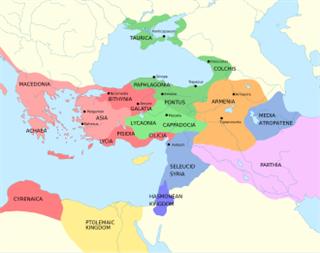
Under its early kings Pontus was a second-rank power, but Mithridates VI Eupator made it the most dangerous enemy Rome faced in the east. His general Diophantus campaigned in the Crimea against the Scythians around 110–107 BCE, bringing the Greek city of Chersonesus and the Bosporan Kingdom under Pontic rule, and Colchis and Lesser Armenia were also annexed. The royal army combined a phalanx on the Macedonian model, cavalry, scythed chariots and large contingents of allies and mercenaries from Thrace, Scythia, Sarmatia and Galatia, while the Pontic navy dominated the Black Sea. Ancient writers credit Mithridates with enormous forces at the start of the First Mithridatic War, such as Appian’s 250,000 infantry, 40,000 cavalry and 300 decked warships, figures that are probably inflated. In 88 BCE he overran the Roman province of Asia and sent armies into Greece, but failed to take Rhodes, and Sulla defeated his generals at Chaeronea and Orchomenus in 86–85 BCE. In the Third Mithridatic War Lucullus broke his siege of Cyzicus in 73–72 BCE and defeated him at Cabira, and Pompey crushed his army on the Lycus river in 66 BCE, near the site where he then founded the city of Nicopolis.
Governance & Law
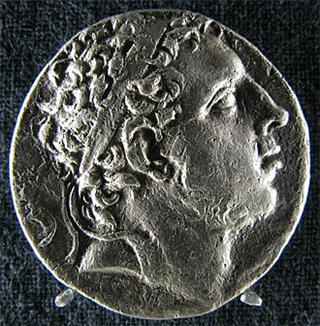
Pontus was a hereditary monarchy in which the king stood at the centre of power, surrounded by a court of ‘friends’, relatives and officials in the Hellenistic manner, with Persian elements in its titles and rituals. The dynasty claimed descent from the Achaemenid royal house, and Mithridates VI also boasted descent from Alexander the Great and the Seleucids, presenting himself as heir to both Persian and Macedonian kingship. The interior was governed through royal fortresses and districts under appointed officials, while the Greek cities kept their own councils and magistrates under royal supervision and the great temple states remained semi-autonomous under their priests. The kings used marriage and diplomacy to secure their position: Mithridates II married a Seleucid princess, Mithridates V sent help to Rome in the Third Punic War and against Aristonicus in Asia and was rewarded with Phrygia, which Rome later withdrew, and Mithridates VI married his daughter Cleopatra to Tigranes the Great of Armenia. Mithridates VI himself came to power after a regency of his mother Laodice, whom he imprisoned around 113 BCE. Succession disputes and court intrigue remained frequent, and the kings relied heavily on Greek generals, admirals and advisers to run their wars and their finances.
Global & Regional Impact
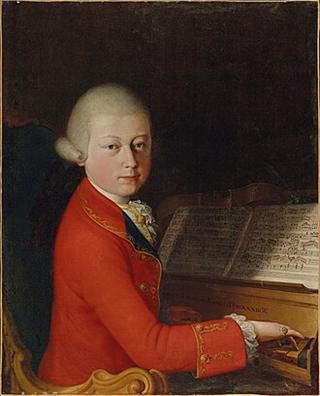
Pontus mattered most as the base of Mithridates VI, whose wars against Rome lasted, with intervals, from 89 to 63 BCE and shaped the politics of the late Roman Republic. The First Mithridatic War gave Sulla the command and the army that he turned against Rome itself, and the Third made the careers of Lucullus and Pompey; the extraordinary command granted to Pompey under the Lex Manilia in 66 BCE was a milestone in the concentration of power that ended the Republic. Mithridates’ order in 88 BCE to kill the Romans and Italians in Asia, the so-called Asiatic Vespers, in which ancient sources claim that 80,000 or more people died, became notorious, and the welcome he received as a liberator in Greek cities such as Athens showed how resented Roman rule had become. Pompey’s settlement joined western Pontus to Bithynia to form the province of Bithynia et Pontus and gave the rest to client rulers. The king himself became a legend: his supposed immunity to poison, built up by taking small doses, gave the word mithridatism, and the antidote called mithridatium was prescribed in European medicine for centuries. He inspired works from Racine’s Mithridate to Mozart’s opera Mitridate, re di Ponto.
Decline & Fall
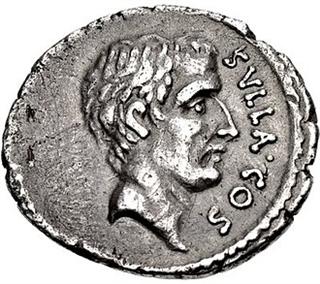
The end of the Kingdom of Pontus followed Mithridates VI’s third war with Rome. After Sulla’s campaigns the king had to give up his conquests under the Peace of Dardanus in 85 BCE, but he kept his kingdom and rebuilt his strength, survived a short Second Mithridatic War against the Roman governor Murena in 83–81 BCE, and in 73 BCE went to war again after Rome inherited Bithynia. Lucullus defeated him, forced him to take refuge with Tigranes in Armenia in 71 BCE and occupied Pontus, but Mithridates returned in 68–67 BCE and destroyed a Roman army at Zela. Pompey, given the command in 66 BCE, routed him on the Lycus. Mithridates escaped through Colchis and round the eastern Black Sea to the Bosporan Kingdom, where he planned to invade Italy by land. His army and his son Pharnaces II turned against him, and in 63 BCE at Panticapaeum he died after a failed attempt to poison himself, reportedly killed at his own request by a Gallic officer named Bituitus. Pompey annexed western Pontus and distributed the rest among client rulers. Pharnaces II kept the Bosporus and later tried to recover his father’s kingdom, but Julius Caesar defeated him at Zela in 47 BCE, the victory he summed up as ‘veni, vidi, vici’.
The Kingdom of Pontus fused Persian dynastic tradition with Greek city culture on the southern Black Sea coast, and under Mithridates VI became Rome’s most persistent eastern enemy, whose three wars helped make Sulla and Pompey and reshaped the politics of the late Roman Republic.
References
- Højte, J.M. (ed.) (2009) Mithridates VI and the Pontic Kingdom. Aarhus: Aarhus University Press.
- Mayor, A. (2010) The Poison King: The Life and Legend of Mithradates, Rome’s Deadliest Enemy. Princeton: Princeton University Press.
- McGing, B.C. (1986) The Foreign Policy of Mithridates VI Eupator, King of Pontus. Leiden: Brill.
- Sherwin-White, A.N. (1984) Roman Foreign Policy in the East, 168 B.C. to A.D. 1. London: Duckworth.
Connections
Open the full connections map →