Egypt & North Africa
Kingdom of Morocco
At a glance
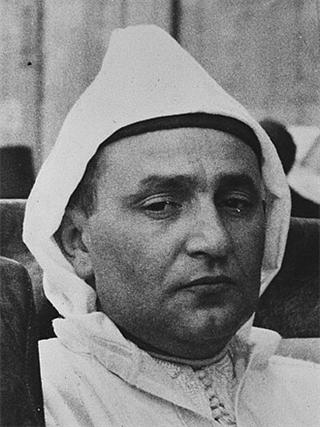
- Morocco regained its independence from France in March 1956 and from Spain a month later, and Sultan Mohammed V became King in 1957; the Alawi dynasty that had seized power in 1631 still reigns.
- Under Hassan II (1961–1999) a truth commission later confirmed nearly 10,000 cases of abuse, from death in detention to forced exile, in the 'Years of Lead'; in 1975 his Green March sent 350,000 civilians into the Spanish Sahara, which Morocco has occupied ever since.
- Mohammed VI answered the protests of 2011 with a new constitution, rejoined the African Union in 2017 and normalised relations with Israel in 2020 in exchange for American recognition of Moroccan sovereignty over Western Sahara.
Rise & Fall
- 1957Sultan Mohammed V, restored from exile in 1955 and sovereign of an independent Morocco since March 1956, takes the title of King.
- 1961Hassan II becomes King on 3 March; he holds the first general elections in 1963, then declares a state of emergency and suspends parliament in 1965.
- 1975On 6 November some 350,000 civilians cross into the Spanish Sahara in the Green March; Spain cedes the territory to Morocco and Mauritania and Moroccan forces occupy it.
- 1991A UN-monitored ceasefire ends fifteen years of war with the Polisario Front in Western Sahara, leaving the territory's status undecided.
- 1999Hassan II dies and is succeeded by his son Mohammed VI, who sets up the Equity and Reconciliation Commission to examine his father's abuses.
- 2011Thousands rally for reform during the Arab Spring; the King wins a landslide in a July referendum on a new constitution, and the Justice and Development Party's Abdelilah Benkirane heads the government.
- 2020On 10 December Morocco normalises relations with Israel, and the United States becomes the first Western state to back Moroccan sovereignty over Western Sahara.
- 2026After the general election of 23 September, Fatima Ezzahra El Mansouri is appointed the first woman prime minister on 29 September.
Foundation
Morocco counts its statehood from the Idrisid dynasty founded by Idris I in 788 and ranks among the world's oldest continuously existing states. The Almoravids and Almohads ruled the Maghreb and al-Andalus in the eleventh and twelfth centuries; the Saadi sultans destroyed the Portuguese Aviz dynasty at the Battle of Alcácer Quibir in 1578 and crushed the Songhay Empire in 1591; and the Alawi dynasty, which seized power in 1631, reigns to this day. Morocco alone in North Africa escaped Ottoman rule. In 1912 the Treaty of Fez made it a French protectorate, with Spanish zones in the north and the Sahara and Tangier an international zone; the sultan kept formal sovereignty under colonial control, and tens of thousands of settlers took the richest farmland. The Rif rose under Abd el-Krim in 1921–1926: Spain lost more than 13,000 soldiers at Annual, answered with bombing of civilians and mustard gas, and about 10,000 Riffians died.
The Istiqlal Party, founded in 1943, led the nationalist movement and lobbied at the United Nations. France's exile of Sultan Mohammed V to Madagascar in 1953 set off active resistance to both protectorates, with the worst violence at Oujda. France allowed the sultan back in 1955, and in March 1956 Morocco regained its independence as the Kingdom of Morocco; Spain gave up its northern protectorate a month later but kept Ceuta and Melilla, which Morocco claims still. In 1957 the sultan took the title of King Mohammed V.
Socioeconomy
Morocco's population grew from 11.6 million in 1960 to 36,828,330 at the census of 2024. Its people are Arabs and Berbers, the latter estimated at 35–60 percent and the largest Berber population in the world; 92.7 percent speak Arabic and 24.8 percent an Amazigh variety, and French remains the language of administration and business. The half-million Europeans and the Jewish community of 265,000 in 1948 have largely gone, the Jews to about 3,500 by 2022, while more than a million Moroccans live in France and 700,000 in Spain. Literacy stood at 75.2 percent in 2024 and health insurance covered 85 percent of the people in 2025.
The economy is liberal, privatised since 1993, the sixth-largest in Africa by purchasing power and, by the African Development Bank's count in 2025, the continent's leading industrial economy. Growth ran at 4–5 percent a year from 2000 to 2007 as workers moved from the fields to industry. Tourism, 7 percent of GDP, drew a record 14.5 million visitors in 2023 and nearly 16 million in 2024; Tanger-Med is the largest port in Africa and the Mediterranean, handling over 9 million containers, and Africa's first high-speed railway opened between Tangier and Casablanca in 2018. The Rif grows the cannabis that supplied 80 percent of Europe's hashish by a 2006 French count. Renewable water fell from 2,560 to about 620 cubic metres a head between 1960 and 2020, and youth unemployment was 35.8 percent in 2025.
Military
The Royal Armed Forces comprise the Army, the largest branch, the Navy, the Air Force, the Royal Guard, the Royal Gendarmerie and the Auxiliary Forces, with the King as commander-in-chief. Their first war was the Sand War of 1963 against Algeria over Moroccan claims to Algerian territory, ended by a peace agreement in February 1964 that left relations strained; the Spanish enclave of Ifni was returned in 1969. The army twice turned on the throne, in the failed coups of 1971 and 1972 that sought to found a republic.
The long war was in the south. The Polisario Front, formed in 1973 to win independence for the Spanish Sahara, fought Morocco and Mauritania after Spain withdrew in 1975 and Moroccan forces occupied the territory; Mauritania gave up its claim in 1979, and Polisario claimed to have killed more than 5,000 Moroccan soldiers between 1982 and 1985 in a war that drained the treasury and drove some 165,000 Sahrawi refugees into Algeria. A UN-monitored ceasefire began in 1991, policed by the MINURSO mission, and Morocco now holds about two-thirds of Western Sahara with a large garrison against an estimated 5,000 Polisario fighters. In November 2020 the Polisario leader Brahim Ghali declared the ceasefire over, and the next month Morocco began military cooperation with Israel. At home political violence has been rare, the exception the Casablanca bombings of 2003, which killed 45 people; the border with Algeria has been closed since 1994.
Governance & Law
Morocco is a unitary semi-constitutional monarchy with an elected parliament. The King is both secular ruler and Amir al-Mu'minin, Commander of the Faithful; he appoints the prime minister, issues dahirs with the force of law and may dissolve parliament. Hassan II, king from 3 March 1961, held the first general elections in 1963, suspended parliament under a state of emergency in 1965 and cancelled elections in 1983. His reign saw the 'Years of Lead', with secret camps such as Tazmamart and a truth commission later confirming nearly 10,000 cases of abuse and 592 people killed. Reforms of the 1990s created a bicameral legislature, and after the elections of 1998 the socialist Abderrahmane Youssoufi led the first government drawn from the opposition in modern Arab politics.
Mohammed VI, king since 1999, is a cautious moderniser who set up the Equity and Reconciliation Commission. The constitution he put to referendum in July 2011, after the Arab Spring protests, trimmed his executive powers and enlarged the prime minister's; the Justice and Development Party then won a plurality under Abdelilah Benkirane. The Economist's Democracy Index rates Morocco a hybrid regime, the highest-ranked in the Arab world in 2025 despite backsliding since 2011; criticising the King is a crime, and homosexual acts and proselytising for any faith but Islam are illegal. On 29 September 2026 Fatima Ezzahra El Mansouri became the first woman prime minister.
Global & Regional Impact
Morocco wields influence in both Africa and the Arab world. It belongs to the Arab League, the Arab Maghreb Union and the Organisation of Islamic Cooperation; it left the Organisation of African Unity in 1984 when the Sahrawi Arab Democratic Republic was admitted and rejoined the African Union in 2017. Its oldest friendship is with the United States, which it recognised in 1777: Washington gave more than $400 million in aid between 1957 and 1963, made Morocco a major non-NATO ally in 2004 and in 2020 became the first Western country to back its sovereignty over Western Sahara, in return for normalisation with Israel. France and Spain remain the chief trading partners and investors, and the European Union accounts for about 73.5 percent of foreign investment.
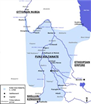
The Western Sahara dispute shapes the region: Morocco occupies about two-thirds of the territory it calls its Southern Provinces, and the autonomy plan it presented to the UN in 2007 was rejected by the Polisario, which runs the Free Zone from Tindouf in Algeria. Morocco reaches Europe through its diaspora, its hashish and the migrants who storm the fences of Ceuta and Melilla. Al-Qarawiyin in Fes, founded by Fatima al-Fihri in 859, is held by UNESCO to be the world's oldest university; Nawal El Moutawakel became in 1984 the first woman from an Arab or Islamic country to win Olympic gold, the national team reached the World Cup semi-finals in 2022, and Morocco will co-host the 2030 World Cup.
Into the Present
Since independence Morocco has remained comparatively stable, and its present is the reign of Mohammed VI, which has brought economic and social liberalisation without yielding the monarchy's command. The protests of 2011–2012 won a new constitution but demonstrators continued to demand deeper reform, and the Democracy Index records backsliding since. A Moroccan resident of Qatar was sentenced in August 2023 to five years' imprisonment for criticising the King on Facebook, and Sahrawi activists are detained as prisoners of conscience. The Western Sahara deadlock has hardened: the Polisario ended the ceasefire in November 2020, Algeria severed relations in August 2021, and the normalisation with Israel drew criticism after the Gaza war of October 2023.
The kingdom's strengths are real: it ranks high on the Human Development Index, was named Africa's leading industrial economy in 2025, received nearly 16 million tourists in 2024, and runs the continent's largest port and first high-speed railway. Its weaknesses are as plain: an earthquake of magnitude 6.8 southwest of Marrakesh killed more than 2,800 people on 8 September 2023; renewable water has fallen to about 620 cubic metres a head; only 13 percent of collected wastewater is treated; and the protests of 2025 rose from youth unemployment of 35.8 percent, allegations of corruption and social inequality. Fatima Ezzahra El Mansouri's government, appointed in September 2026, inherits them all.
The Kingdom of Morocco, independent since 1956 and a kingdom under the Alawi dynasty from 1957, passed from the repression of Hassan II's 'Years of Lead' to the cautious liberalisation of Mohammed VI, built Africa's leading industrial economy and largest port, and has occupied Western Sahara since 1975, a dispute that still divides it from Algeria.
Test yourself
5 questions on this page, from its key events and facts.
The questions open here once the page has loaded.
References
- C. R. Pennell, Morocco: From Empire to Independence (Oneworld Publications, 2013)
- David Stenner, Globalizing Morocco: Transnational Activism and the Postcolonial State (Stanford University Press, 2019)
- Lorena Gazzotti, Immigration Nation: Aid, Control, and Border Politics in Morocco (Cambridge University Press, 2021)
- Bernard Lugan, Histoire du Maroc (Perrin, 2000)
- Michel Abitbol, Histoire du Maroc (Perrin, 2009)
Connections
Open the full connections map →