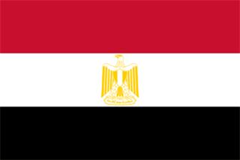
Egypt & North Africa
Republic of Egypt
At a glance
- The Free Officers' coup of 22–23 July 1952 ended the monarchy, and on 18 June 1953 Egypt was declared a republic with Muhammad Naguib as president and Gamal Abdel Nasser as prime minister; Nasser took the presidency in 1956.
- Egypt fought Israel in 1948, 1956, 1967 and 1973, lost the Sinai Peninsula and the Gaza Strip in the Six-Day War, and under Anwar Sadat made peace in 1979, regaining Sinai by 1982 at the cost of expulsion from the Arab League.
- The revolution of 25 January 2011 toppled Hosni Mubarak after thirty years, but the military removed the elected president Mohamed Morsi on 3 July 2013, and Abdel Fattah el-Sisi has ruled since, winning a third six-year term in December 2023.
Rise & Fall
- 1953On 18 June the monarchy is abolished and Egypt declared a republic, with Muhammad Naguib as president and Gamal Abdel Nasser as prime minister.
- 1956Nasser becomes president in June, the last British troops leave the Canal Zone on 13 June, and on 26 July he nationalises the Suez Canal, provoking the Suez Crisis.
- 1967In the Six-Day War Israel captures the Sinai Peninsula and the Gaza Strip; an Emergency Law expanding police powers is enacted and stays in force until 2012.
- 1973Sadat coordinates with Syria in the Fourth Arab-Israeli War to reclaim Sinai, restoring Arab morale and his own legitimacy.
- 1979The Egypt–Israel peace treaty is signed after Sadat's 1977 visit to Jerusalem; Egypt is temporarily expelled from the Arab League.
- 1981Sadat is assassinated by an Islamic extremist; Hosni Mubarak succeeds him in a referendum in which he is the sole candidate.
- 2011After 18 days of protests centred on Tahrir Square, Mubarak resigns on 11 February and the military takes control.
- 2013The military removes President Mohamed Morsi on 3 July; the dispersal of pro-Morsi camps on 14 August kills 595, the deadliest day in modern Egyptian history.
Foundation
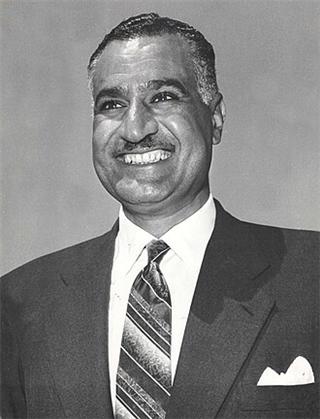
Modern Egypt was built by Muhammad Ali Pasha, who seized power in 1805 and founded a dynasty that ruled until 1952. His successors won formal autonomy under the Ottomans in 1867 and opened the Suez Canal in 1869, but debt forced the sale of the canal shares to Britain in 1875, and after the Urabi revolt Britain occupied the country in 1882. The exile of Saad Zaghloul in March 1919 set off the first modern revolution, and on 22 February 1922 Britain declared Egypt independent as a kingdom under Fuad I. Defeat in the First Arab-Israeli War of 1948 turned feeling against the monarchy; in 1951 Egypt renounced the 1936 treaty, and in January 1952 British troops killed 43 Egyptian policemen at Ismailia, provoking the Black Saturday riots in Cairo.
On 22–23 July 1952 the Free Officers Movement, led by Muhammad Naguib and Gamal Abdel Nasser, seized power. King Farouk abdicated in favour of his infant son Fuad II, but authority lay with the Revolutionary Command Council, which banned all political parties. On 18 June 1953 the monarchy was formally abolished, the 1923 constitution suspended and the Republic of Egypt declared, with Naguib as its first president and Nasser as prime minister. Naguib's presidency lasted less than a year and a half: Nasser, the principal architect of the movement, forced him to resign in 1954 and placed him under house arrest, and the presidency stayed vacant until Nasser was formally elected in June 1956.
Socioeconomy
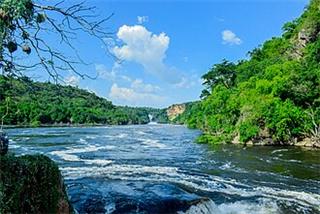
Egypt's people live where the water is: about 99 percent of more than 107 million inhabitants occupy some 5.5 percent of the land, along the Nile Valley and Delta. Nasser's republic remade the social order it inherited, in which half a million Egyptians were upper class, four million middle class and seventeen million poor: land reform, free education, school enrolment more than doubling between 1953 and 1966 and public-sector jobs created a new middle class, though by the late 1960s the economy stagnated. Emigration, liberalised in 1971, sent an estimated 2.7 million Egyptians abroad, 70 percent to Arab countries, and their remittances reached a record $36.5 billion in 2024/25.
Today Egypt has the second-largest economy in Africa and its largest manufacturing sector, about 22 percent of the continent's total, with textiles employing 2.5 million people, and steel output of 9.8 million tons in 2022. Oil peaked at 941,000 barrels a day in 1993 and the country became a net importer by 2008–2009, turning to gas: the Zohr field found by Eni in 2015 holds about 30 trillion cubic feet. Tourism brought 15.7 million visitors and $14.1 billion in 2024, and gold exports doubled to $2.17 billion. Yet Egypt imports roughly 45 percent of its food, the Nile's 55 billion cubic metres a year, fixed since 1954, meet barely half of demand, adult literacy was 74.5 percent in 2022, and an $8 billion IMF programme began in 2024.
Military
The Egyptian Armed Forces, the Army, Navy, Air Force and Air Defence Forces, number 438,500 active personnel and 479,000 reservists, one of the largest and best-equipped militaries of the region, raised by conscription. The arsenal comes from the United States, France, Russia, China, Germany and Italy, supplemented by a domestic industry making small arms, armoured vehicles and naval vessels. The military operates autonomously, exempt from many civilian laws, its budget and size state secrets, and runs infrastructure, consumer-goods and property businesses through the National Service Projects Organization; since 1979 the United States has paid it about $1.3 billion a year in military aid.
Its wars were fought with Israel. When Nasser nationalised the Suez Canal on 26 July 1956, Israel, France and Britain invaded Sinai and the Canal until American and Soviet pressure restored the status quo. In May 1967 the deployment of troops to Sinai, the expulsion of UN peacekeepers and the closure of the Straits of Tiran precipitated the Six-Day War, in which Israel took Sinai and Gaza. The October war of 1973, coordinated with Syria, was militarily mixed but restored Arab morale and led to the peace of 1979. Since then the army has faced Islamist insurgency: Al-Gama'a al-Islamiyya's attacks on officials, foreigners and Copts, the Luxor massacre of 62 in 1997, and the killing of at least 305 at a Sufi mosque in Sinai in November 2017.
Governance & Law
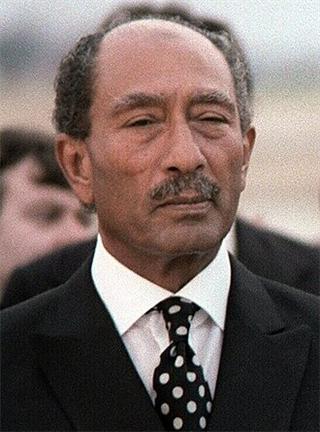
Nasser ruled a one-party state under military control; after 1967 an Emergency Law expanded police powers, restricted constitutional rights and legalised censorship, and it remained in force until 2012. Anwar Sadat, president from 1970, renamed the state the Arab Republic of Egypt in 1971 and made Islam the official religion and Sharia the principal source of legislation. Hosni Mubarak, confirmed in 1981 as sole candidate, governed for thirty years through the National Democratic Party and laws of 1993, 1995 and 1999 curbing syndicates, the press and NGOs; Human Rights Watch and Amnesty International documented torture and Egypt's use as a 'torture hub' in the war on terror.
The revolution of 2011 produced Egypt's first democratic election, won on 24 June 2012 by Mohamed Morsi of the Muslim Brotherhood, whose constitution, approved by 64 percent on a 33 percent turnout, split the country. The military removed him on 3 July 2013 and installed the chief justice Adly Mansour; a new constitution was approved by 98.1 percent on 18 January 2014, and Abdel Fattah el-Sisi won the presidency in June 2014 with 96.1 percent. Terms were extended to six years in 2019, and el-Sisi took a third in December 2023. The 27 governorates answer to Cairo; Freedom House scored political rights 6 of 40 in 2024, 'Not Free'; an estimated 60,000 political prisoners are held, and Reporters Without Borders ranked Egypt 160th of 180 in 2017.
Global & Regional Impact
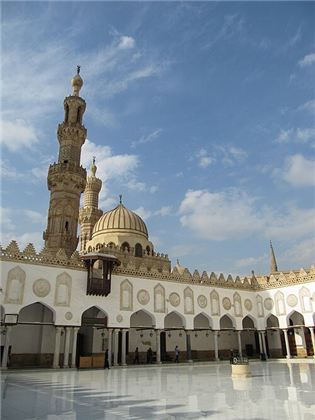
Egypt is a regional power in the Middle East, North Africa and the Muslim world. It was a founding member of the United Nations, the Non-Aligned Movement, the Arab League, the African Union and the Organisation of Islamic Cooperation, and is a member of BRICS. Under Nasser it led the Arab world: Sudan gained independence from the Anglo-Egyptian Condominium on 1 January 1956, Egypt joined Syria in the United Arab Republic from 1958 until Syria's secession in 1961, and the Voice of the Arabs radio called for unity and revolution across the region. Sadat's peace with Israel cost it the Arab League's seat, which moved to Tunis from 1978 to 1989, but made the United States a key partner, naming Egypt a major non-NATO ally in 1989.
Cairo is the cultural trendsetter of the Arabic-speaking world. Egyptian cinema, the oldest in Africa and the Arab world, has made more than 4,000 films, three quarters of all Arab production, earning the name 'Arab Hollywood' in the golden age of the 1940s to 1960s. Al-Azhar is the pre-eminent seat of Islamic learning, Naguib Mahfouz was the first Arabic-language Nobel laureate in literature, and the republic's singers became central to Arab identity. Egypt hosts over 9 million migrants, 4 million of them Sudanese, mediates ceasefires in Gaza, and its canal, widened in 2015 to pass 97 ships a day, remains the shipping link between Europe and Asia.
Into the Present
The republic's seventh decade has tested its founding bargain of order for freedom. On 25 January 2011 protests against corruption and repression filled Tahrir Square, and after 18 days Mubarak resigned; the military dissolved parliament and the first free elections followed. The Muslim Brotherhood's year in power ended with the coup of 3 July 2013, and on 14 August security forces killed 595 protesters at pro-Morsi sit-ins, the deadliest day in modern Egyptian history. Since then thousands of Brotherhood members have been jailed in mass trials, an estimated 60,000 political prisoners remain, and el-Sisi, widely described as a dictator, has won elections international observers call neither free nor fair, extending terms to six years in 2019 and taking a third in December 2023.
The state's answer has been construction and gas. Blackouts of up to six hours a day in 2014 drove subsidy cuts and the rapid development of Zohr, and Benban, the world's fourth-largest solar park, followed. A new capital announced in March 2015 houses the Octagon command centre, and the Grand Egyptian Museum opened on 1 November 2025. But the population passed 120 million in 2026, the Nile's fixed share of 55 billion cubic metres leaves each Egyptian 570 cubic metres a year, far below the scarcity line, demand for food is met 45 percent by imports, climate change brings drought and rising seas, and the 2024 IMF programme requires the state to curb the public works that employ so many.
The Republic of Egypt, born of the Free Officers' coup and declared on 18 June 1953, led the Arab world under Nasser, lost Sinai in 1967 and regained it by peace in 1982, and after the revolution of 2011 returned to military rule under Abdel Fattah el-Sisi, governing the most populous Arab state, the Suez Canal and the cultural capital of the Arabic-speaking world.
Test yourself
5 questions on this page, from its key events and facts.
The questions open here once the page has loaded.
References
- Afaf Lutfi al-Sayyid Marsot, A History of Egypt: From the Arab Conquest to the Present, 2nd ed. (Cambridge University Press, 2007)
- Robert Springborg, Egypt (Polity, 2018)
Connections
Open the full connections map →