Americas
Republic of Ecuador
At a glance
- An Andean republic formed in 1830 when Gran Colombia’s Southern District, centred on Quito, Guayaquil and Cuenca, became independent.
- Politics long pitted Catholic, conservative Quito against liberal, commercial Guayaquil, from García Moreno to Eloy Alfaro.
- Cacao, bananas and then Amazon oil drove its economy; it lost most of its Amazon claim to Peru in 1942 and adopted the dollar in 2000.
Rise & Fall
- 1830A Quito assembly declares the Southern District of Gran Colombia independent
- 1832Ecuador annexes the Galápagos Islands
- 1875Gabriel García Moreno is assassinated in Quito
- 1895The Liberal Revolution brings Eloy Alfaro to power
- 1908The Guayaquil–Quito railway reaches Quito
- 1942The Rio Protocol assigns most of the disputed Amazon to Peru
- 1972Oil exports begin through the Trans-Ecuadorian pipeline
- 2000Ecuador replaces the sucre with the US dollar
Foundation

The Republic of Ecuador grew out of the Royal Audiencia of Quito, the Spanish colonial jurisdiction covering the northern Andes between New Granada and Peru. Quito’s creole elite formed one of the earliest Spanish American juntas on 10 August 1809, but royalist forces suppressed it, and independence came only with the campaign of Antonio José de Sucre, whose victory at the Battle of Pichincha on 24 May 1822 freed Quito. The territory was then incorporated into Simón Bolívar’s Gran Colombia as its Southern District. Resentment of distant government in Bogotá, heavy war taxes and the union’s own disintegration led an assembly of notables in Quito to declare the district independent on 13 May 1830, and Guayaquil and Cuenca followed within days. A constituent congress at Riobamba adopted a first constitution that September and named the new state after the equator, a neutral name that avoided the regional pride attached to Quito. The Venezuelan-born general Juan José Flores, who had married into the Quito aristocracy, became its first president. In 1832 Ecuador annexed the Galápagos Islands, and the constitution of 1835 adopted the title of republic. The new state was poor, regionally divided and burdened with a share of Gran Colombia’s foreign debt.
Socioeconomy

Ecuador’s history has been shaped by three regions: the densely settled Andean highlands (the Sierra), the tropical Pacific coast (the Costa) and the Amazonian lowlands (the Oriente). In the Sierra, great haciendas bound indigenous labourers through debt servitude known as concertaje and through the huasipungo system, in which families worked the estate in return for a small plot of their own; the special tribute levied on indigenous people was abolished only in 1857, and the huasipungo only by the agrarian reform of 1964. On the coast, Guayaquil exported cacao grown on large plantations, and between about 1880 and 1920 Ecuador was among the world’s leading cacao producers until plant disease and falling prices ruined the trade in the 1920s. After 1948 bananas transformed the coast, and by the early 1950s Ecuador had become the world’s largest banana exporter, a position it has held for most of the time since. Oil from the Amazon, flowing through the Trans-Ecuadorian pipeline from 1972, then became the main source of export and state revenue, funding roads, schools and a larger middle class but also bringing debt and pollution. The Catholic Church long dominated education and social life. Today Ecuador has about 18 million people, mostly mestizo, with large indigenous, Afro-Ecuadorian and montubio minorities, and remittances from emigrants in Spain and the United States are an important source of income.
Military

For most of its history Ecuador’s armed forces mattered more in domestic politics than in foreign war. Early presidents depended on veterans of the independence wars, many of them Venezuelan or Colombian officers, and civil wars between Quito and Guayaquil factions recurred throughout the nineteenth century. In the crisis of 1859–1860, when the country split among rival governments and Peru blockaded Guayaquil, Gabriel García Moreno and Flores retook the port in September 1860 and restored a single government. Eloy Alfaro’s Liberal Revolution of 1895 was likewise won in campaigns from the coast into the Sierra. The great external threat was Peru, which disputed the Amazonian territories that Ecuador claimed as heir of the Audiencia of Quito. In July 1941 Peruvian forces invaded El Oro province and defeated the much smaller Ecuadorian army at the Battle of Zarumilla; the Rio de Janeiro Protocol of January 1942, guaranteed by Argentina, Brazil, Chile and the United States, assigned most of the disputed Amazon to Peru. Ecuador later declared the protocol null, and fighting flared again in the Paquisha War of 1981 and the Cenepa War of 1995, in which Ecuadorian forces held their positions. The Brasília Presidential Act of October 1998 finally fixed the border. The military ruled directly in 1963–1966 and 1972–1979, and in recent years it has been deployed against organised crime.
Governance & Law
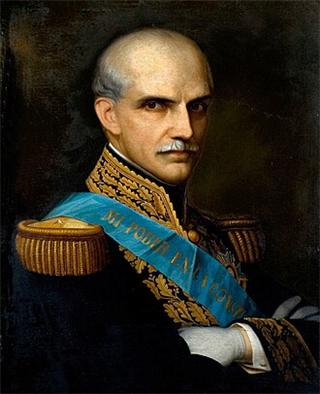
Ecuador has been a presidential republic throughout, but one of unusual constitutional instability: it has adopted some twenty constitutions since 1830, the latest in 2008. In the nineteenth century politics turned on the rivalry between conservative, clerical Quito and liberal, commercial Guayaquil. Gabriel García Moreno, president in 1861–1865 and again from 1869, built the most coherent state of the century on Catholic foundations: a concordat with the Holy See gave the church control of education, the constitution of 1869 made Catholicism a condition of citizenship, and in 1873 he consecrated the nation to the Sacred Heart of Jesus. He also built roads and schools and founded the Escuela Politécnica Nacional before his assassination in Quito on 6 August 1875. Eloy Alfaro, president in 1895–1901 and 1906–1911, and his Liberal allies reversed this programme with civil marriage and divorce (1902), secular public education and the constitution of 1906, which separated church and state. After the Julian Revolution of 1925, a reformist government advised by the American economist Edwin Kemmerer created the Central Bank of Ecuador in 1927. José María Velasco Ibarra held the presidency five times between 1934 and 1972 but completed only one full term, and was overthrown four times. Since 1979 Ecuador has been a democracy, though three elected presidents were removed before the end of their terms between 1997 and 2005.
Global & Regional Impact
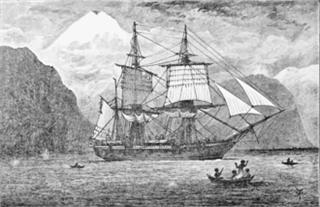
Ecuador’s influence has been regional rather than global, but several of its contributions reached far. The Galápagos Islands, visited by Charles Darwin aboard HMS Beagle in 1835, supplied observations that later shaped his theory of evolution by natural selection, and in 1978 the islands and the historic centre of Quito were among the first sites inscribed on UNESCO’s World Heritage List. Ecuadorian writers and artists, from the essayist Juan Montalvo, García Moreno’s fiercest liberal critic, to Jorge Icaza, whose novel Huasipungo (1934) exposed the exploitation of highland indigenous labourers, and the painter Oswaldo Guayasamín, gave the country a distinctive voice in Latin American culture. From 1990 the Confederation of Indigenous Nationalities of Ecuador (CONAIE), founded in 1986, became one of the most powerful indigenous movements in the Americas: its uprising of June 1990 forced indigenous land and cultural rights onto the national agenda, and its mobilisations helped to topple presidents in 1997 and 2000. The constitution of 2008 was the first in the world to grant enforceable rights to nature, or Pachamama, and declared Ecuador a plurinational state, ideas that have since been widely studied and imitated by environmental lawyers. Ecuador’s adoption of the US dollar in 2000 also made it a leading example of full dollarisation by a sovereign state.
Into the Present

Ecuador still exists, and its present form took shape after the military handed power back to civilians. A referendum approved a new constitution in 1978, and Jaime Roldós took office in 1979 as the first president of the democratic era, dying in an air crash in 1981. The oil-financed boom gave way to the debt crisis of the 1980s, and in 1998–1999 falling oil prices, El Niño floods and a banking collapse led the government of Jamil Mahuad to freeze bank deposits. In January 2000 Mahuad announced that the national currency, the sucre, would be replaced by the US dollar; days later indigenous protesters and junior officers forced him from office, but dollarisation went ahead. Rafael Correa, president from 2007 to 2017, used high oil revenues for public investment, defaulted on part of the foreign debt in 2008 and promoted the Montecristi constitution of 2008, while concentrating power and clashing with the press and indigenous organisations. His successors faced debt and mass protests, and in 2023 Guillermo Lasso dissolved the National Assembly under the constitutional clause known as muerte cruzada. Ecuador, once relatively peaceful, has since become a major transit route for cocaine; after the murder of the presidential candidate Fernando Villavicencio in August 2023, President Daniel Noboa declared an internal armed conflict against criminal gangs in January 2024.
Ecuador shows how a small Andean republic, born from the break-up of Gran Colombia and long divided between Quito and Guayaquil, was remade by successive export booms in cacao, bananas and oil, and became a testing ground for indigenous politics, dollarisation and the legal rights of nature.
Test yourself
5 questions on this page, from its key events and facts.
The questions open here once the page has loaded.
References
- Clark, A.K. (1998) The Redemptive Work: Railway and Nation in Ecuador, 1895–1930. Wilmington, DE: Scholarly Resources.
- de la Torre, C. and Striffler, S. (eds) (2008) The Ecuador Reader: History, Culture, Politics. Durham, NC: Duke University Press.
- Henderson, P.V.N. (2008) Gabriel García Moreno and Conservative State Formation in the Andes. Austin: University of Texas Press.
- Rodríguez, L.A. (1985) The Search for Public Policy: Regional Politics and Government Finances in Ecuador, 1830–1940. Berkeley: University of California Press.
- Striffler, S. (2002) In the Shadows of State and Capital: The United Fruit Company, Popular Struggle, and Agrarian Restructuring in Ecuador, 1900–1995. Durham, NC: Duke University Press.
- Becker, M. (2008) Indians and Leftists in the Making of Ecuador’s Modern Indigenous Movements. Durham, NC: Duke University Press.
Connections
Open the full connections map →