Europe
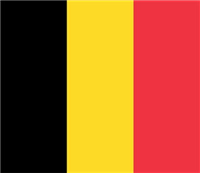
Kingdom of Belgium
At a glance
- Born of the 1830 revolution against the United Kingdom of the Netherlands, it was recognised as neutral by the great powers in 1839.
- It was continental Europe’s first industrial nation and, through Leopold II, the ruler of the Congo, where forced labour cost countless lives.
- Conflict between Dutch and French speakers turned it into a federal state in 1993, while Brussels became home to the EU and NATO.
Rise & Fall
- 1830Revolution in Brussels; a provisional government declares independence
- 1831Leopold I takes the oath as first King of the Belgians
- 1839The Treaty of London recognises Belgium and guarantees its neutrality
- 1885The powers recognise Leopold II’s Congo Free State
- 1914Germany invades; the Belgian army holds the Yser front until 1918
- 1960The Belgian Congo becomes independent
- 1993A constitutional reform makes Belgium a federal state
Foundation

The Kingdom of Belgium arose from the southern provinces of the United Kingdom of the Netherlands, which the Congress of Vienna had joined to the north in 1815 under William I. Catholics resented a Protestant king’s control of education, liberals resented his autocratic style, and the south felt under-represented in the army and administration and burdened by Dutch language policy and taxes. On 25 August 1830 a performance of the opera La Muette de Portici in Brussels sparked riots; in the September Days Dutch troops failed to retake the city, and on 4 October a provisional government declared independence. A National Congress adopted a constitution on 7 February 1831 and, after the great powers vetoed a French prince, chose Leopold of Saxe-Coburg, a German prince who had been the widower of Britain’s heir Princess Charlotte. He took the oath on 21 July 1831, now the national day. The London Conference of the great powers recognised Belgian independence, and French armies twice protected the new state: against the Dutch Ten Days’ Campaign of August 1831 and at the siege of the citadel of Antwerp in 1832. William I finally accepted the separation in the Treaty of London of 1839, which fixed the frontiers, divided Limburg and Luxembourg, and guaranteed Belgium’s perpetual neutrality.
Socioeconomy

Belgium was the first country on the European continent to industrialise on the British model. Coal from the Borinage, the Centre and the Liège basin fed ironworks such as John Cockerill’s at Seraing, the textile mills of Ghent and Verviers, and later glass, zinc and engineering industries. The state built a national railway network, opening the line from Brussels to Mechelen in 1835, the first steam passenger railway in continental Europe, and the Société Générale and other banks financed industry at home and abroad. Antwerp grew into one of the great ports of Europe after the Scheldt toll was bought off in 1863. Prosperity was unequal: Flanders suffered a severe crisis in the 1840s when its linen industry collapsed and potato blight struck, and industrial workers in Wallonia lived in harsh conditions that erupted in the strikes and riots of 1886. Society was divided between Catholics and anticlerical liberals and later socialists, organised into rival ‘pillars’ of parties, unions, schools and cooperatives. The language question shaped everything: French dominated government, courts, education and the elite, while most of the population spoke Dutch dialects in Flanders. In the twentieth century economic weight shifted from declining Walloon heavy industry to Flanders, with its port, chemicals and services, reversing the old balance between the regions.
Military

Belgium’s neutrality, guaranteed in 1839 by Britain, France, Prussia, Austria and Russia, defined its military position for most of the nineteenth century. Its main works were fortifications: the national redoubt of Antwerp, built from the 1850s, and the ring forts of Liège and Namur designed by Henri Alexis Brialmont in the 1880s. In August 1914 Germany demanded passage for its armies, and when King Albert I’s government refused, Germany invaded on 4 August, bringing Britain into the First World War. The forts of Liège delayed the Germans for some days before falling to heavy siege artillery, and the German advance was marked by massacres of civilians at Dinant and Leuven, where the university library was burned. The Belgian army held the last corner of the country behind the River Yser from October 1914 until the liberation offensive of 1918, while the rest of Belgium endured four years of occupation. After the war Belgium abandoned neutrality and allied with France, then returned to an independent policy in 1936. On 10 May 1940 Germany invaded again; after eighteen days King Leopold III surrendered the army on 28 May, against the wishes of his ministers, who continued the war from London. Belgian troops also fought in Africa, notably at Saïo in Ethiopia in 1941, and a Belgian battalion served in the Korean War.
Governance & Law
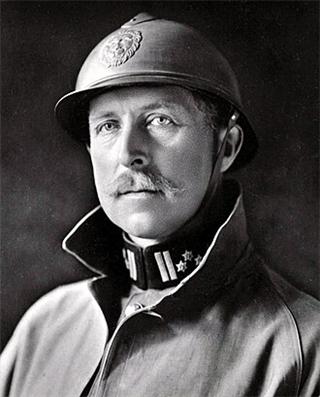
The constitution of 1831 was one of the most liberal of its time, establishing a hereditary constitutional monarchy, ministerial responsibility, a two-chamber parliament and guarantees of freedom of religion, the press, education and association; it became a model for constitutions elsewhere in Europe. Voting rights were at first restricted to a small number of taxpayers. Parliamentary politics was dominated by the Catholic and Liberal parties, which clashed over schools, notably in the ‘school war’ of 1879–84, and the Belgian Workers’ Party, founded in 1885, campaigned for democracy. A general strike in 1893 forced universal male suffrage with plural votes for the wealthy and educated, replaced in 1919 by equal male suffrage; women gained the vote in national elections in 1948. The kings held real influence over foreign and military affairs. Leopold I (1831–1865) was a respected European diplomat, Leopold II (1865–1909) pursued colonial ambitions, Albert I (1909–1934) became a national hero of the First World War, and Leopold III (1934–1951) provoked the ‘Royal Question’ by his conduct in 1940. He was succeeded by Baudouin (1951–1993), Albert II (1993–2013) and Philippe, king since 2013. From 1970 a series of state reforms divided the unitary state into language communities and regions, and in 1993 the constitution declared Belgium a federal state.
Global & Regional Impact
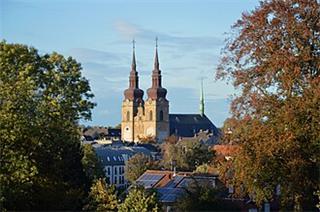
Belgium’s influence far exceeded its size. Its constitution of 1831 inspired liberal constitutions across Europe, and its early railways and industrial firms spread technology and capital abroad, from Russia to China. Its colonial rule had the gravest consequences. Leopold II obtained recognition of the Congo Free State as his personal possession in 1885; its regime of forced labour for rubber and ivory, enforced by violence and mutilation, caused enormous loss of life and provoked the international Congo reform movement, until Belgium annexed the territory as the Belgian Congo in 1908. After the First World War Belgium gained Eupen and Malmedy from Germany and the League of Nations mandate of Ruanda-Urundi, where its administration hardened the distinction between Hutu and Tutsi. After 1945 Belgium became a builder of the new Europe: Paul-Henri Spaak was a leading architect of the Treaty of Rome, Belgium co-founded Benelux, NATO and the European Communities, and Brussels became the main seat of the European Commission and the Council and, from 1967, of NATO’s headquarters. Belgian culture has been prolific, from the painters James Ensor and René Magritte and the Art Nouveau of Victor Horta to the comics of Hergé, while Adolphe Sax invented the saxophone and Georges Lemaître proposed the theory of the expanding universe.
Into the Present

Belgium has not ended, but it has been transformed from a unitary, French-dominated monarchy into a federal state of language communities. The Flemish Movement won Dutch equal status in law in 1898, a Dutch-speaking university at Ghent in 1930 and the language laws of 1932, and the language frontier was fixed in 1962–63. The Royal Question divided the country along the same lines: in the referendum of 1950 a majority voted for Leopold III’s return, carried by Flanders but rejected in Wallonia and Brussels, and after violent protests he abdicated in favour of Baudouin in 1951. Decolonisation was abrupt: the Congo became independent on 30 June 1960 and descended into crisis, and Rwanda and Burundi followed in 1962. The splitting of the Catholic University of Leuven in 1968 and the division of the national parties along linguistic lines led to the state reforms of 1970, 1980, 1988–89 and 1993, which created the Flemish, French and German-speaking communities and the regions of Flanders, Wallonia and Brussels-Capital; further reforms followed in 2001 and 2011–14. Forming governments became increasingly difficult, most notably after the 2010 election, when the country went 541 days without a new government. Today Belgium is a federal constitutional monarchy of about 11.8 million people under King Philippe, a founding member of the euro area.
Belgium, created by revolution in 1830 and guaranteed as neutral by the great powers, became continental Europe’s first industrial nation, ruled the Congo through one of the most notorious colonial regimes, endured two German occupations and turned its divisions between Dutch and French speakers into a federal state at the heart of the European Union.
Test yourself
5 questions on this page, from its key events and facts.
The questions open here once the page has loaded.
References
- Witte, E., Craeybeckx, J. and Meynen, A. (2009) Political History of Belgium from 1830 Onwards. Brussels: ASP.
- Kossmann, E.H. (1978) The Low Countries, 1780–1940. Oxford: Clarendon Press.
- Hochschild, A. (1998) King Leopold’s Ghost: A Story of Greed, Terror, and Heroism in Colonial Africa. Boston: Houghton Mifflin.
- Deschouwer, K. (2009) The Politics of Belgium: Governing a Divided Society. Basingstoke: Palgrave Macmillan.
Connections
Open the full connections map →