Sub-Saharan Africa
South African Republic
At a glance
- A Boer republic north of the Vaal River, founded by Voortrekkers and recognised by Britain in the Sand River Convention of 1852.
- Gold found on the Witwatersrand in 1886 made it the richest state in Africa and created the city of Johannesburg.
- Conflict with Britain over the gold fields and the rights of foreign uitlanders led to the Second Boer War and its end in 1902.
Rise & Fall
- 1852The Sand River Convention recognises Boer independence north of the Vaal
- 1860Pretoria becomes the seat of government
- 1877Britain annexes the bankrupt republic
- 1881The Boers defeat a British force at Majuba Hill and regain self-government
- 1886Gold is discovered on the Witwatersrand and Johannesburg is founded
- 1896The Jameson Raid ends in surrender at Doornkop
- 1899The Second Boer War begins after a Transvaal ultimatum expires
- 1902The Treaty of Vereeniging makes the republic the Transvaal Colony
Foundation
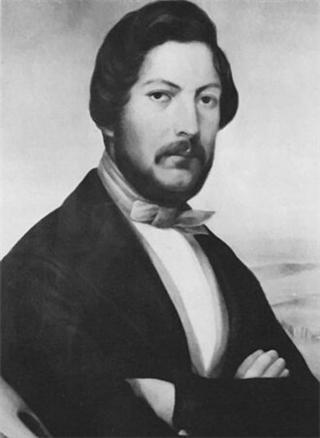
The South African Republic grew out of the Great Trek of the 1830s, when several thousand Dutch-speaking farmers, the Voortrekkers, left the Cape Colony to escape British rule. After Britain annexed Natal in 1843 and proclaimed the Orange River Sovereignty in 1848, many trekkers moved north of the Vaal River and settled in scattered communities around Potchefstroom, Lydenburg, Zoutpansberg and Utrecht. In the Sand River Convention of 17 January 1852, negotiated on the Boer side by Andries Pretorius, Britain recognised the independence of the emigrant farmers beyond the Vaal and undertook not to ally with African peoples north of it. Unity came slowly, because the communities quarrelled over leadership and church affairs, and Lydenburg long went its own way. Marthinus Wessel Pretorius, son of Andries, was elected the first president in 1857, and a constitution, the Grondwet, was adopted in 1858. Pretoria, founded in 1855 and named after Andries Pretorius, became the seat of government in 1860, the year Lydenburg rejoined. Pretorius’s attempt to unite the Transvaal with the Orange Free State, whose presidency he also held from 1860, contributed to a civil war between 1861 and 1864, which ended with all the communities, including Zoutpansberg, acknowledging a single government.
Socioeconomy

For its first three decades the republic was a poor, thinly settled pastoral society. White farmers held large farms, raised cattle and sheep and hunted for ivory and hides, while trade ran by ox-wagon to Natal and the Cape and, less reliably, to Delagoa Bay in Mozambique. The state had little cash income, paid officials irregularly and was close to bankruptcy by the 1870s. African communities, who formed the great majority of the population, were treated as subjects without political rights; many lived as labour tenants on white farms, others in chiefdoms that paid tribute, and the forced apprenticeship of captured children, the so-called inboekelinge, was widespread in the early decades. The Dutch Reformed churches shaped public life, and the Nederduitsch Hervormde Kerk was recognised as the state church. Everything changed with the discovery of the Main Reef gold deposits on the Witwatersrand in 1886. Johannesburg, founded that year, had more than 100,000 inhabitants by 1896, and by the late 1890s the Rand produced roughly a quarter of the world’s gold. Deep-level mining required heavy capital from London and continental Europe and a vast migrant workforce of black men, many from Mozambique, housed in closed compounds and controlled by pass laws.
Military

The republic had no standing army in its early years. Defence rested on the commando system, under which every burgher between sixteen and sixty was obliged to serve when called out by his field cornet, bringing his own horse, rifle and provisions. Mounted riflemen of this kind were effective in raids and open country but struggled to take fortified positions. A campaign against the Pedi king Sekhukhune in 1876 failed before his mountain strongholds, and the setback, together with the empty treasury, gave Britain the pretext to annex the Transvaal in 1877. The Boers rose in December 1880, and in the First Boer War they defeated British forces at Laing’s Nek and routed a column on Majuba Hill on 27 February 1881, killing its commander, Major-General Sir George Pomeroy Colley. Gold revenue later paid for modernisation: the State Artillery (Staatsartillerie) acquired Krupp and Creusot guns, including the 155 mm Creusot pieces known as ‘Long Toms’, forts were built around Pretoria and Johannesburg after 1896, and the burghers were armed with Mauser rifles. In the 1890s the republic subdued the remaining independent African polities of its north, including the Venda under Mphephu in 1898. When war with Britain came in 1899, Transvaal commandos besieged Mafeking and, with Free State forces, Ladysmith and Kimberley.
Governance & Law

The Grondwet of 1858 vested legislative power in an elected Volksraad and executive power in a president elected by the burghers for five years and assisted by an executive council. Citizenship and the vote were confined to white men, and the constitution declared that the people would permit no equality between white and coloured inhabitants in church or state. Administration was rudimentary until the 1880s: districts were run by landdrosts, and field cornets combined military, police and registration duties. Thomas François Burgers, president from 1872, tried to modernise the state with a railway to Delagoa Bay and non-denominational schooling, but his plans outran its finances. After independence was restored, the Pretoria Convention of 1881 left Britain a vague suzerainty, which the London Convention of 1884 reduced to a veto over treaties with foreign states. Paul Kruger, president from 1883 until 1902, dominated the later republic. His government built a more professional civil service, guided from 1888 by the State Secretary Willem Johannes Leyds, but it also sold monopolies, notably the dynamite concession, that angered the mining industry. Fearing that newcomers would outnumber the burghers, Kruger raised the residence requirement for the full franchise to fourteen years in 1890 and created a second Volksraad with limited powers for the foreign uitlanders.
Global & Regional Impact

The South African Republic changed the course of southern African history twice. Its victory in 1881 showed that Britain could be resisted, and the survival of the republic became a symbol for Dutch-speaking whites throughout the region, feeding a growing Afrikaner national consciousness. Then the gold of the Witwatersrand shifted the economic centre of South Africa from the Cape to the Transvaal, drew railways from Cape Town, Durban and Delagoa Bay to the Rand, and created Johannesburg, which became the country’s largest city. The mining industry pioneered the migrant labour system, closed compounds and an industrial colour bar that later shaped segregation and apartheid. The conflict between Kruger’s government, the mining magnates, Cecil Rhodes and the British High Commissioner Alfred Milner drew the great powers into the region, and the telegram of congratulation that Kaiser Wilhelm II sent Kruger after the Jameson Raid strained Anglo-German relations. The war of 1899–1902, in which the British Empire deployed some 450,000 troops against two small republics, was Britain’s most expensive conflict between the Napoleonic Wars and the First World War and provoked fierce criticism at home, above all over the concentration camps. Men formed in the republic’s service, among them Louis Botha and Jan Smuts, went on to lead the Union of South Africa.
Decline & Fall
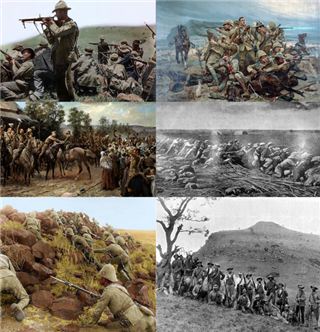
The republic’s wealth made it both stronger and more exposed. Britain wished to bring the Rand within a British-led South African federation, while the uitlanders, many of them British subjects, resented heavy taxes and their exclusion from the vote. At the end of 1895 Leander Starr Jameson led about 500 mounted men of the British South Africa Company into the Transvaal, expecting an uitlander rising in Johannesburg; the rising never came, and the raiders surrendered at Doornkop on 2 January 1896. The Jameson Raid discredited Rhodes but hardened Kruger’s suspicion, and in 1897 the republic concluded a defensive alliance with the Orange Free State. Talks with Milner at the Bloemfontein Conference in 1899 broke down over the franchise, and on 11 October 1899, after a Transvaal ultimatum expired, the Second Boer War began. Early Boer successes gave way to the British advance under Lord Roberts: Johannesburg fell on 31 May and Pretoria on 5 June 1900, and Britain proclaimed the annexation of the Transvaal on 1 September 1900. Kruger left for Europe and died in exile in 1904. Commandos under Louis Botha and Koos de la Rey fought on, but farm burning and the camps, where about 26,000 Boer women and children and many thousands of black Africans died, forced the Treaty of Vereeniging on 31 May 1902, which made the republic the Transvaal Colony.
The South African Republic was the main Boer state of the nineteenth century: a frontier republic of white farmers that defeated Britain in 1881, became the richest state in Africa after the Witwatersrand gold discoveries, and whose destruction in the Second Boer War shaped Afrikaner nationalism and the Union of South Africa.
References
- Giliomee, H. (2003) The Afrikaners: Biography of a People. Charlottesville: University of Virginia Press.
- Nasson, B. (1999) The South African War 1899–1902. London: Arnold.
- Pakenham, T. (1979) The Boer War. London: Weidenfeld & Nicolson.
- Thompson, L. (1990) A History of South Africa. New Haven: Yale University Press.
- Van Onselen, C. (1982) Studies in the Social and Economic History of the Witwatersrand, 1886–1914. 2 vols. Harlow: Longman.
Connections
Open the full connections map →