Ancient Near East
Neo-Sumerian Empire
At a glance
- The Neo-Sumerian Empire, or Third Dynasty of Ur, revived Sumerian rule in southern Mesopotamia after the Akkadian collapse.
- Its bureaucracy recorded the economy on tens of thousands of tablets, and its law code is the oldest that survives.
- Amorite incursions, grain shortages and breakaway governors weakened it until Elam sacked Ur c. 2004 BCE.
Rise & Fall
- c. 2112 BCEUr-Nammu founds the Third Dynasty of Ur after Utu-hegal expels the Gutians
- c. 2094 BCEShulgi becomes king and expands and centralises the state
- c. 2047 BCEShulgi's long reign ends; under his successors the empire begins to decline
- c. 2004 BCEElamite forces sack Ur and carry the last king, Ibbi-Sin, into captivity
Foundation

The Neo-Sumerian Empire, also known as the Third Dynasty of Ur (Ur III), emerged around 2112 BCE following the collapse of the Akkadian Empire and the period of political fragmentation that followed in Mesopotamia. The Gutian rulers who had dominated parts of the south were expelled by Utu-hegal of Uruk, and Ur-Nammu, who governed Ur under Utu-hegal and may have been his kinsman, soon took power in his own right and founded a new dynasty. The collapse of Akkadian central control and the instability that followed created conditions favourable to the rise of a new centralised power. Ur-Nammu consolidated control over key Sumerian cities such as Uruk, Lagash and Nippur, re-establishing Sumerian political and cultural pre-eminence after a period of foreign domination. His reign marked a deliberate revival of Sumerian traditions in language, religion and administration. The empire was further strengthened by his son Shulgi (r. c. 2094–2047 BCE), who expanded and centralised the state, making it one of the most bureaucratically organised empires of the ancient Near East.
Socioeconomy
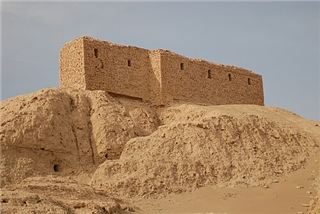
The socioeconomy of the Neo-Sumerian Empire was highly centralised and institutionally managed, reflecting a redistributive system dominated by temple and palace households. Agriculture formed the backbone of the economy, supported by extensive irrigation networks drawing on the Tigris and Euphrates, which enabled the cultivation of barley, dates and other staples. Land was largely controlled by the crown, the temples and elite officials, and labour was organised through dependent workers, including free peasants, temple personnel and enslaved individuals, who were often paid in rations of barley, oil and wool. The administration recorded economic activity in meticulous detail on cuneiform tablets, tens of thousands of which survive from sites such as Umma, Girsu and Puzrish-Dagan, the great livestock collection centre near Nippur. Textile production, metalwork and other crafts were organised in institutional workshops, while long-distance trade brought timber, metals and stone from regions such as the Iranian plateau and the Persian Gulf. Taxation and labour obligations, notably the rotating provincial contributions known as bala, ensured a steady flow of resources to the central authority, which redistributed goods to sustain administrative, religious and military functions.
Military
The military of the Neo-Sumerian Empire was a structured, state-supported force that served both to defend the heartland and to project power into the surrounding highlands. Armies consisted largely of infantry equipped with spears, shields and helmets, organised under a central command that reflected the broader bureaucratic character of the state. The empire inherited and refined earlier Mesopotamian practices, including the use of fortified cities and defensive walls to secure key urban centres. Under Shulgi, the army undertook repeated campaigns in the Zagros against peoples such as the Lullubi and the city of Simurrum, while Susa and parts of Elam were brought under Ur’s control. Soldiers received rations and, in some cases, land allocations in exchange for service, and frontier provinces were placed under military governors. As Amorite pressure mounted, Shu-Sin constructed a long fortification wall, known as the Amorite Wall or the “Repeller of the Tidnum”, to protect the heartland. Despite these measures, the army proved unable to contain sustained external pressure in the empire’s final decades.
Governance & Law
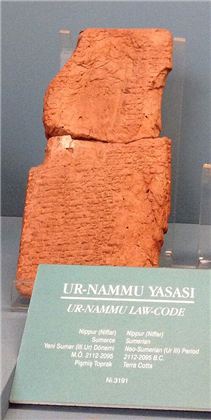
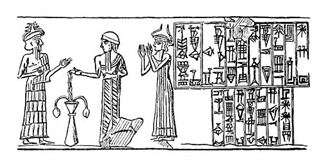
The governance of the Neo-Sumerian Empire was characterised by an advanced bureaucratic system that exercised tight control over economic and administrative life. From Shulgi onwards, the kings were deified during their lifetimes, legitimising their authority through religious ideology and close association with the major temples. The Code of Ur-Nammu, traditionally attributed to the dynasty’s founder though possibly issued by Shulgi, is the oldest surviving law code and set out penalties concerning justice, property and social relations, many of them monetary fines. The core of the empire was divided into provinces administered by civilian governors (ensi), while separate military governors oversaw the frontier zones, all accountable to the central administration. Extensive record-keeping ensured oversight of taxation, labour and resource distribution, with scribes playing a crucial role in maintaining state control. The use of the Sumerian language in official documentation reinforced cultural continuity, while standardised weights, measures and calendars supported efficient government. This highly organised system enabled the state to manage a complex society but also made it heavily dependent on central coordination.
Global & Regional Impact

The Neo-Sumerian Empire had a profound impact on the political and cultural development of Mesopotamia and the wider ancient Near East. It represented a revival of Sumerian identity, preserving linguistic, religious and administrative practices at a time when Akkadian and Amorite speakers were increasingly prominent. Its bureaucratic innovations, including systematic record-keeping and centralised economic management, influenced subsequent Mesopotamian states, particularly the kingdom of Babylon. Its legal tradition, exemplified by the Code of Ur-Nammu, established precedents for later codes, including that of Hammurabi. Royal hymns and literary works composed or patronised at the Ur III court were copied by scribes of the Old Babylonian period, ensuring the survival of much of Sumerian literature. The empire also sustained trade networks connecting Mesopotamia with surrounding regions. Monumental architecture, above all the great ziggurat of Ur begun by Ur-Nammu, symbolised both religious devotion and political authority, leaving a lasting architectural legacy and reinforcing Mesopotamia’s position as a centre of early urban civilisation.
Decline & Fall

The decline of the Neo-Sumerian Empire set in under Shulgi’s successors, as internal and external pressures increasingly strained the state’s administrative and military capacities. The highly centralised system, though efficient, proved vulnerable to disruption, particularly as provincial governors asserted their autonomy during the reign of the last king, Ibbi-Sin. Environmental factors, including possible salinisation of farmland, may have reduced productivity, and surviving correspondence records grain shortages and soaring prices. Amorite incursions from the west disrupted communications and agriculture, and the defensive wall built against them proved ineffective. Ishbi-Erra, an official sent to procure grain, established an independent power base at Isin, while in the east Elam and the highland state of Shimashki broke free of Ur’s control. Around 2004 BCE, Elamite forces captured and sacked Ur and carried Ibbi-Sin into captivity in Anshan, bringing the empire to an end. Its fall ushered in a period of fragmentation in which rival dynasties, notably the Isin and Larsa dynasties, contended for supremacy.
The Neo-Sumerian Empire stands as a defining example of early state centralisation, whose administrative sophistication and cultural revival left an enduring imprint on the development of Mesopotamian civilisation.
References
- Frayne, D. (1997) Ur III Period (2112–2004 BC). Toronto: University of Toronto Press.
- Kuhrt, A. (1995) The Ancient Near East c. 3000–330 BC. London: Routledge.
- Nissen, H.J. (1988) The Early History of the Ancient Near East, 9000–2000 BC. Translated by E. Lutzeier. Chicago: University of Chicago Press.
- Postgate, J.N. (1992) Early Mesopotamia: Society and Economy at the Dawn of History. London: Routledge.
- Roux, G. (1992) Ancient Iraq. 3rd edn. London: Penguin.
- Steinkeller, P. (1991) 'The Administrative and Economic Organization of the Ur III State: The Core and the Periphery', in M. Gibson and R.D. Biggs (eds.) The Organization of Power: Aspects of Bureaucracy in the Ancient Near East. Chicago: Oriental Institute, pp. 15–33.
Connections
Open the full connections map →