Egypt & North Africa
Middle Kingdom of Egypt
At a glance
- Mentuhotep II of Thebes reunited Egypt, and the Twelfth Dynasty ruled it from a new residence, Itjtawy, near el-Lisht.
- Kings built a bureaucratic state, curbed provincial governors, reclaimed the Faiyum and fortified the Nubian frontier at Semna.
- Its literature and Middle Egyptian language became classics, studied by Egyptian scribes for some two thousand years.
Rise & Fall
- c. 2055 BCEMentuhotep II becomes king at Thebes and later reunites Egypt
- c. 1985 BCEAmenemhat I founds the Twelfth Dynasty and the residence of Itjtawy
- c. 1956 BCESenusret I takes sole power and conquers Lower Nubia to the Second Cataract
- c. 1862 BCESenusret III sets up a boundary stele at Semna fixing the Nubian frontier
- c. 1831 BCEAmenemhat III begins a long reign of Faiyum reclamation and pyramid building
- c. 1773 BCESobekneferu, last ruler of the Twelfth Dynasty, ends her reign
- c. 1650 BCEThe Hyksos take Memphis and Itjtawy is abandoned
Foundation
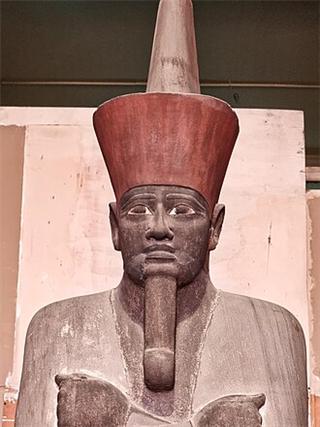
The Middle Kingdom grew out of the divided Egypt of the First Intermediate Period, when a dynasty at Herakleopolis claimed the throne in the north and a line of Theban rulers, the Eleventh Dynasty, built up power in the south. Mentuhotep II (Nebhepetre), who came to the throne at Thebes around 2055 BCE, fought the Herakleopolitans and their allies in Middle Egypt and, probably within the first four decades of a reign of about fifty years, reunited the country; he marked the achievement by taking the Horus name Sematawy, 'he who unites the Two Lands'. His successors Mentuhotep III and Mentuhotep IV ruled from Thebes and sent expeditions to the quarries of the Wadi Hammamat and, by way of the Red Sea, towards Punt. One expedition under Mentuhotep IV was led by a vizier named Amenemhat, who is generally identified with Amenemhat I, founder of the Twelfth Dynasty around 1985 BCE, although how he came to power is unknown. Amenemhat I founded a new royal residence, Amenemhat-itj-tawy ('Amenemhat seizes the Two Lands'), usually shortened to Itjtawy, near el-Lisht at the entrance to the Faiyum, moving the centre of government back towards the old Memphite heartland. The town itself has never been located, but the royal pyramids at Lisht mark its cemetery.
Socioeconomy
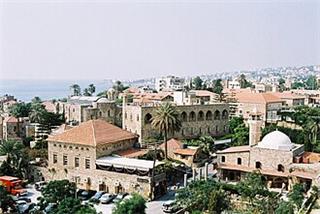
The economy rested on the Nile flood, on grain and flax farming and on the labour of a large peasantry, organised through royal domains, temples and private estates. The letters of Heqanakht, a landowner of the early Middle Kingdom, show a household managing fields, rents and rations of barley and emmer. The pyramid town at el-Lahun (Kahun), built for the cult of Senusret II, preserves a planned settlement of officials and workers, together with papyri on accounts, medicine, veterinary care and household lists. Kings of the late Twelfth Dynasty, above all Senusret II and Amenemhat III, developed the Faiyum depression, controlling the waters of the Bahr Yusuf and bringing new land under cultivation around Shedet, cult centre of the crocodile god Sobek. The state sent expeditions for stone, amethyst, copper and turquoise to the Wadi Hammamat, the Wadi el-Hudi and Serabit el-Khadim in Sinai, and traded with Byblos and the Levant; a caravan of Asiatic traders is painted in the tomb of Khnumhotep II at Beni Hasan. In religion the cult of Osiris at Abydos became a national focus, with many private stelae set up along its processional way, while the Coffin Texts extended to officials hopes of an afterlife once reserved for kings.
Military

Egypt had no large standing army in the later sense: kings relied on royal retainers, levies raised through the provinces and Nubian auxiliaries, among them the Medjay of the Eastern Desert. Soldiers fought on foot with bows, axes, spears and hide shields; the horse and chariot reached Egypt only after this period. Reunification was won by force, and a tomb near the temple of Mentuhotep II at Deir el-Bahri held the bodies of some sixty soldiers killed in battle. The main field of expansion was Lower Nubia. Senusret I campaigned as far as the Second Cataract, and Senusret III led several expeditions south, fixing the frontier at Semna with boundary stelae that forbade Nubians to pass northwards except to trade, and clearing a canal through the First Cataract for his boats. A chain of mud-brick fortresses with bastions, ditches and loopholed walls, including Buhen, Mirgissa, Uronarti, Shalfak, Semna and Kumma, controlled the river and the desert routes and watched the growing kingdom of Kerma further south; the Semna Dispatches, copies of reports from these forts, record their patrols. In the Levant the record is thinner, but the stele of the officer Khusobek mentions a campaign of Senusret III to a place called Sekmem, probably Shechem.
Governance & Law

The king stood at the head of a court and a bureaucracy that grew steadily in size and specialisation. The vizier oversaw justice and administration, the treasurer controlled stores and expeditions, and scribes kept detailed records of land, labour and rations, as the papyri from el-Lahun and the Reisner papyri show. The Twelfth Dynasty is thought to have secured the succession through co-regencies, the reigning king associating his heir on the throne, although how formal this practice was is still debated. In the early Middle Kingdom powerful provincial governors, the nomarchs, ruled their nomes with near-royal display, as the rock-cut tombs at Beni Hasan and the scene of a colossal statue being hauled in the tomb of Djehutyhotep at Deir el-Bersha show. Under Senusret III such great provincial tombs disappear, which is usually explained as a curbing of the nomarchs in favour of central offices, with the country run through departments for the north, the south and the 'head of the south'. Royal ideology was spread through literature: the Instruction of Amenemhat, in which the dead king warns his son after an attack on his life, and the Loyalist Instruction taught service to the crown. Royal statues also changed, showing the heavy-lidded, careworn faces of Senusret III and Amenemhat III.
Global & Regional Impact
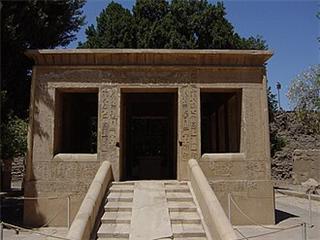
Later Egyptians looked back on the Middle Kingdom as a classical age. Its language, Middle Egyptian, remained the standard for formal inscriptions and religious texts down to Roman times, and its literature was copied in scribal training for centuries. The Tale of Sinuhe, the story of a courtier who flees to the Levant after the death of Amenemhat I and returns home in old age, the Tale of the Eloquent Peasant, the Tale of the Shipwrecked Sailor and the Dialogue of a Man and his Ba are among the earliest masterpieces of narrative and reflective writing. Mathematical texts such as the Moscow Mathematical Papyrus and the original of the Rhind Mathematical Papyrus, which was copied under the Hyksos from a text of Amenemhat III's reign, preserve Egyptian arithmetic and geometry. Jewellery from the burials of royal women at Dahshur and el-Lahun, such as the pectorals of Sithathoriunet, ranks among the finest Egyptian metalwork. Senusret I's obelisk still stands at Heliopolis, and his White Chapel at Karnak was rebuilt in modern times from blocks reused in a later pylon. In the New Kingdom Senusret III was worshipped as a god in Nubia, and Greek writers knew Amenemhat III's mortuary temple at Hawara as the Labyrinth.
Decline & Fall

The Twelfth Dynasty ended with Amenemhat IV and then Sobekneferu, the first woman known for certain to have taken the full titles of a king, around 1773 BCE. The Thirteenth Dynasty that followed kept the residence at Itjtawy and much of the administration, and under kings such as Neferhotep I and Sobekhotep IV Egypt still built, quarried and received the homage of the ruler of Byblos. Yet the Turin King List records several dozen kings in about a century and a half, many with reigns of a few years or less, which suggests that real power lay increasingly with viziers and court families. Meanwhile people of Levantine origin had settled in the eastern Delta around Avaris (Tell el-Dab'a), and a separate line, the Fourteenth Dynasty of Egypt, ruled there in the eighteenth century BCE, from a date estimated between about 1805 and 1725 BCE. In the far south the Second Cataract forts slipped out of Egyptian control, and several later came under the Nubian kingdom of Kerma. Around 1650 BCE the rulers known as the Hyksos, the Fifteenth Dynasty of Egypt, took Memphis and the north, and the residence at Itjtawy was abandoned. Egypt was divided among the Hyksos, a Theban line in the south and probably a short-lived Abydos Dynasty, opening the Second Intermediate Period, until Theban kings reunited the country and founded the New Kingdom.
The Middle Kingdom reunited Egypt after the First Intermediate Period and created the classical forms of Egyptian language, literature and kingship, while its bureaucracy, its reclamation of the Faiyum and its fortified frontier in Nubia set models that the New Kingdom and later Egyptians consciously followed.
Test yourself
3 questions on this page, from its key events and facts.
The questions open here once the page has loaded.
References
- Grajetzki, W. (2006) The Middle Kingdom of Ancient Egypt: History, Archaeology and Society. London: Duckworth.
- Kemp, B.J. (2006) Ancient Egypt: Anatomy of a Civilization. 2nd edn. London: Routledge.
- Lichtheim, M. (1973) Ancient Egyptian Literature, Volume I: The Old and Middle Kingdoms. Berkeley: University of California Press.
- Ryholt, K.S.B. (1997) The Political Situation in Egypt during the Second Intermediate Period, c. 1800–1550 B.C. Copenhagen: Museum Tusculanum Press.
- Shaw, I. (ed.) (2000) The Oxford History of Ancient Egypt. Oxford: Oxford University Press.
Connections
Open the full connections map →