
Europe
Principality of Wallachia
At a glance
- Basarab I's victory over Charles I of Hungary at the Battle of Posada in 1330 consolidated Wallachia as an independent principality.
- Wallachia accepted Ottoman suzerainty in 1417 and kept it until the mid-nineteenth century, yet preserved its own princes, boyars and Orthodox Church throughout.
- Slavery of Roma, attested from 1385, was part of Wallachian society until the law of February 1856 freed all slaves as taxpayers.
Rise & Fall
- 1330Basarab I refuses tribute to Charles I of Hungary and decisively defeats his invasion at the Battle of Posada, consolidating the Wallachian state.
- 1417After Mehmed I takes Turnu Măgurele and Giurgiu, Mircea I accepts a peace treaty and Wallachia submits to Ottoman suzerainty for the first time.
- 1462Vlad III the Impaler is defeated by Mehmed the Conqueror after the Night Attack at Târgoviște and must accept an increased tribute.
- 1600Michael the Brave, having broken with the Ottomans, briefly rules Wallachia, Transylvania and Moldavia in a personal union.
- 1715Nicholas Mavrocordatos brings Phanariote rule to Wallachia; the Ottomans appoint its princes from the Greeks of Constantinople.
- 1821Tudor Vladimirescu's Pandur uprising enters Bucharest on 21 March; the turmoil ends Phanariote rule and restores local princes.
- 1848The Islaz Proclamation of 9 June and a Provisional Government depose Gheorghe Bibescu; Ottoman troops crush the revolution on 13 September.
- 1859Alexander John Cuza, already prince of Moldavia, is voted prince of Wallachia on 5 February, uniting the two principalities.
Foundation
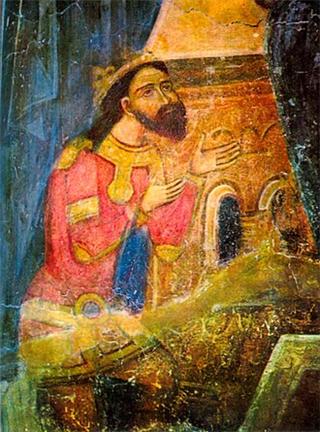
Wallachia lies north of the Lower Danube and south of the Southern Carpathians, divided by the Olt River into Muntenia in the east and Oltenia in the west. The Mongol invasion of 1241 ended the Cumans' domination without putting direct Mongol rule in its place, and the weakening of Hungarian authority during the Mongol attacks left room for new polities. The first written evidence of local Vlach voivodes concerns Litovoi, mentioned in the Diploma of the Joannites in 1247 as ruler of Țara Litua in what is now northern Oltenia; he refused tribute to Ladislaus IV of Hungary and died in battle before 1280.
Local tradition credits the founding of the country to Radu Negru, said to have crossed the Carpathians from Transylvania in 1290 with a large following of Vlachs. He is linked with Basarab I, first mentioned in a Hungarian charter of 1324 as a voivode holding lands south of the Carpathians and paying tribute to Hungary. Through the 1320s Basarab seized the Banate of Severin and raided Transylvania, and by 1330 he ruled both banks of the Olt from Câmpulung, the first of the House of Basarab. When he refused to hand Făgăraș, Almaș and Severin to Charles I of Hungary and to pay tribute, the king invaded and was decisively defeated at the Battle of Posada, which consolidated the Wallachian state. Romanians called it Țara Românească, the Romanian Land; Wallachia is an exonym from the Germanic word for Romans and other foreign speakers.
Socioeconomy

Wallachia was an agrarian principality of some 77,000 square kilometres whose population contemporaries estimated at about 500,000 in the fifteenth century; by 1859 it had reached 2,400,921. Society rested on the boyars, the landowning class whose coalitions made and unmade princes, and on a peasantry whose lot worsened under Ottoman economic hegemony: serfdom was established under Michael the Brave to increase manorial revenues and effectively abolished by Constantine Mavrocordatos in 1746.
Slavery, robie, was part of the social order from before the principality's founding. Most slaves were Roma, first attested in Wallachia in 1385 as ațigani; the bulk of them came from south of the Danube at the end of the fourteenth century, and their arrival made slavery widespread. They were divided among the prince, the Orthodox monasteries and the boyars. Emancipation came in stages: a law of March 1843 freed the state slaves held by the prison authority, the Provisional Government of 1848 demanded dezrobire, and the law of February 1856 freed all slaves as taxpayers.
Trade grew with the Danube ports. Turnu Măgurele and Giurgiu were Ottoman from 1417 to 1829 and Brăila from 1545; the Treaty of Adrianople returned them and let Wallachia trade freely beyond the Ottoman Empire, after which Brăila and Giurgiu grew into major trading cities, and consulates in Bucharest protected Sudiți traders against the local guilds.
Military
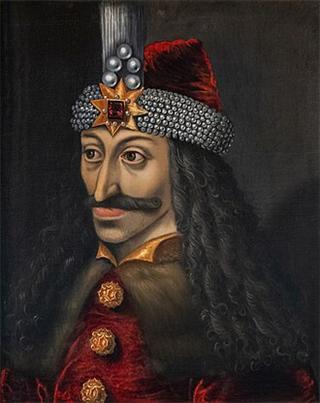
Wallachia fought first the Kingdom of Hungary and then, for four centuries, the Ottoman Empire, as enemy or vassal. Basarab I's victory at the Battle of Posada in 1330 won independence from Charles I of Hungary; the first clash with the Ottomans came under Vladislav I, allied with Ivan Shishman of Bulgaria. Mircea I (r. 1386–1418) beat the Ottomans in several battles, among them the Battle of Rovine in 1394, drove them from Dobruja and briefly held the Danube Delta and Silistra; he accepted peace in 1417 after Mehmed I had taken Turnu Măgurele and Giurgiu. Michael I beat the Ottomans in Severin in 1418–1420 and was killed in the counter-offensive; Dan II defeated Murad II in 1422 with Pippo Spano's help.
Vlad III Dracula, released by the Ottomans to rule in 1448, resisted them fiercely until Mehmed the Conqueror defeated him in 1462 after the Night Attack at Târgoviște, forcing a retreat and a higher tribute. Michael the Brave, from 1593, attacked Murad III's troops north and south of the Danube with Sigismund Báthory of Transylvania and Aron Vodă of Moldavia, the campaign of the Battle of Călugăreni. The Ottomans came to rely on Wallachia to supply their forces, and the local army disappeared under its cost and the plainer efficiency of mercenaries; it was re-established only in 1831 under Russian oversight. From the 1690s the country was the battleground of Habsburg, Russian and Ottoman armies.
Governance & Law
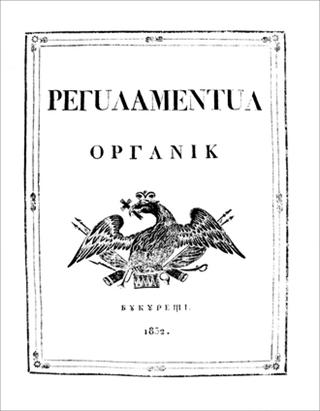
Wallachia was ruled by a prince, the voivode or hospodar, from a court that moved from Câmpulung to Curtea de Argeș, then to Târgoviște and, after the late seventeenth century, to Bucharest. The throne was nominally elective, and the Boyar Divan weighed against the prince: from the peace of 1428 boyar coalitions, beginning with Radu II's, challenged established rulers, and the rival houses of Dănești and Drăculești fought over the succession. The Craiovești, virtually independent rulers of the Oltenian banat, replaced princes with Ottoman backing, and with Neagoe Basarab (1512–1521), a Craiovești, the House of Basarab formally ended.
Ottoman suzerainty, accepted in 1417 and confirmed by Radu de la Afumați at a higher tribute, left internal autonomy but shaped who ruled. After Ștefan Cantacuzino's execution in 1716 the Ottomans dropped the nominal elective system and appointed princes from the Phanariotes of Constantinople, a rule Nicholas Mavrocordatos had brought in 1715. It narrowed the number of taxpayers, raised total taxes and enlarged a boyar circle in the Divan, though Constantine Mavrocordatos merged his treasury with the country's. After 1821 the Porte restored local princes, Grigore IV Ghica the first. The Treaty of Adrianople in 1829 and the Regulamentul Organic gave the two Danubian Principalities common institutions, a semblance of a constitution and a Legislative Assembly, which elected Gheorghe Bibescu in 1842.
Global & Regional Impact
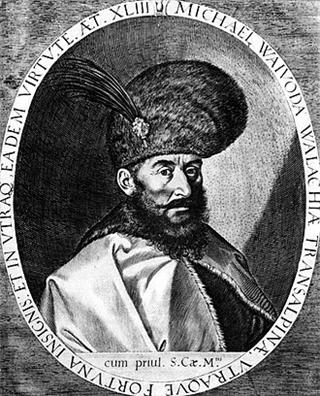
Wallachia stood between the Ottoman Empire and Christian Europe, and its princes' choices mattered beyond its borders. Vlad II Dracul belonged to the Order of the Dragon, whose creed was to repel the Ottoman invasion. Vlad III's fierce resistance, and his quarrel with the Transylvanian Saxons whose control of trade routes his border policy disturbed, produced the Saxon poems and propaganda that demonised him as a drinker of blood; these tales fed vampiric fiction in the West and inspired the main character of Bram Stoker's Dracula in 1897. Michael the Brave's brief rule over Wallachia, Transylvania and Moldavia in 1599–1600 was later read, by Nicolae Bălcescu above all, as the precursor of a modern Romania.
The principality was also a channel for culture. Neagoe Basarab's reign brought the Curtea de Argeș Cathedral and Renaissance influences; Constantin Brâncoveanu's (1688–1714) produced the late-Renaissance Brâncovenesc style. In the eighteenth and nineteenth centuries Wallachia became a prize in the Russo-Turkish wars: the Treaty of Küçük Kaynarca in 1774 let Russia intervene for Orthodox Ottoman subjects, lowered the tribute and opened the country to repeated Russian interventions, and most European states opened consulates in Bucharest to watch Russian expansion. Its union with Moldavia in 1859 laid the foundation of the modern Romanian state, which took the name Romania in 1866 and became a kingdom in 1881.
Decline & Fall

Wallachia did not fall to conquest; it dissolved into a larger state. The Greek War of Independence in 1821 brought Tudor Vladimirescu's Pandur uprising in Oltenia and Alexander Ypsilantis's Filiki Eteria into the country. Vladimirescu entered Bucharest on 21 March 1821, sought terms with the Ottomans and was executed by Ypsilantis, whose forces were then defeated at Bucharest and Drăgășani. Sultan Mahmud II occupied the Principalities and ended Phanariote rule. The Russo-Turkish War of 1828–1829 and the Treaty of Adrianople placed Wallachia under Russian military rule without ending Ottoman suzerainty; Pavel Kiselyov's administration rebuilt the army, reformed taxes and remade Bucharest.
The secret society Frăția, founded in 1843, launched the revolution of 1848: the Islaz Proclamation of 9 June called for political freedoms, independence, land reform and a national guard, and on 11–12 June Bibescu was deposed for a Provisional Government. Pressed by Russia, Ottoman troops entered Bucharest on 13 September and the revolutionaries went into exile. After the Crimean War the Treaty of Paris put the Principalities under a tutelage shared by the Ottomans and the Great Powers. The unionists used a legal ambiguity: Alexander John Cuza, elected in Moldavia on 5 January 1859, was voted prince of Wallachia on 5 February after Bucharest crowds swayed the anti-unionist divan. As Domnitor of the United Principalities he united the two countries.
The Principality of Wallachia, founded by Basarab I and secured at the Battle of Posada in 1330, held a precarious autonomy under Ottoman suzerainty for four centuries, resisted under Mircea the Elder, Vlad the Impaler and Michael the Brave, passed through Phanariote and Russian tutelage, and in 1859 united with Moldavia to form the state that became Romania.
Test yourself
5 questions on this page, from its key events and facts.
The questions open here once the page has loaded.
References
- Gheorghe I. Brătianu, Tradiția istorică despre întemeierea statelor românești (Editura Eminescu, 1980)
- Matei Cazacu, Dracula, ed. Stephen W. Reinert (Brill, 2017)
- Neagu Djuvara, Între Orient și Occident. Țările române la începutul epocii moderne (Humanitas, 1995)
- Constantin Giurescu, Istoria Românilor, Vol. I, 5th edition (Bucharest, 1946)
- Ștefan Ștefănescu, Istoria medie a României, Vol. I (Bucharest, 1991)
Connections
Open the full connections map →