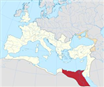
Egypt & North Africa
Vandal Kingdom
At a glance
- Gaiseric took Carthage without a fight in 439, while most of its people were at the races in the hippodrome, and styled himself King of the Vandals and Alans.
- The kingdom's fleet looted the coasts of both Roman empires for decades, sacked Rome in 455 and destroyed a combined imperial fleet at Cape Bon in 468 with fire ships.
- The Vandal kings were Arian Christians: Huneric exiled almost 5,000 Nicene clergy into the desert and in 483 ordered every Nicene church closed and its property confiscated.
Rise & Fall
- 429Gaiseric leads the Vandals and Alans across from Hispania to Africa and besieges Hippo Regius, where Saint Augustine dies on 28 August 430.
- 435A treaty with Valentinian III grants the Vandals coastal Numidia and parts of Mauretania.
- 439Gaiseric breaks the treaty, captures Carthage without a fight and makes it his capital.
- 442A second treaty gives the Vandals Byzacena, Tripolitania and part of Numidia and confirms their hold on Proconsular Africa.
- 455The Vandals sack Rome, carrying off the empress Licinia Eudoxia, her daughters and the spoils of the Temple in Jerusalem.
- 468At Cape Bon the Vandals destroy the Western fleet and part of the Eastern fleet sent to overthrow them.
- 477Gaiseric dies at 88; his son Huneric succeeds and from 482 persecutes Nicene Christians and Manichaeans.
- 534Gelimer, besieged at Mount Pappua after the defeats at Ad Decimum and Tricamarum, surrenders to the Byzantines.
Foundation

The Vandal Kingdom was a confederation of Vandals and Alans planted on the Roman provinces of North Africa. In 429 the Vandals, under their new king Gaiseric, crossed from Hispania to Africa; Procopius put their number at 80,000, a figure some historians doubt, and Peter Heather estimates an army of 15,000 to 20,000. Procopius says they came at the invitation of Bonifacius, the military ruler of the region, though it has also been suggested that they sought safety after a Roman army attacked them in 422. Advancing eastward along the coast, they besieged the walled city of Hippo Regius in 430. Inside, Saint Augustine and his priests prayed for relief; on 28 August 430, three months into the siege, the 75-year-old bishop died. After fourteen months the city fell and became the Vandals' first capital.
Peace came in 435 through a treaty between Valentinian III and Gaiseric, which gave the Vandals coastal Numidia and parts of Mauretania. Gaiseric broke it in 439, invaded Africa Proconsularis and laid siege to Carthage, the most important city in North Africa. The city was captured without a fight: the Vandals entered while most of the inhabitants were at the races in the hippodrome. Gaiseric made it his capital and styled himself King of the Vandals and Alans. Most people in the kingdom considered themselves Roman; the Vandals were always a minority.
Socioeconomy
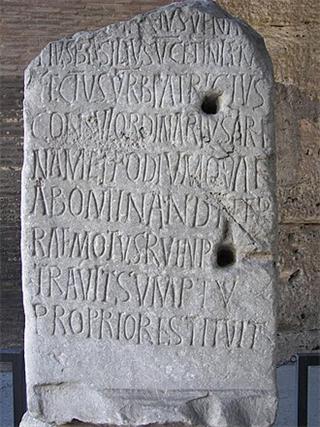
North Africa had been one of the richest parts of the Roman world: Josephus wrote that it fed Rome for eight months of the year, and it was an important source of taxes as well as grain and oil. The Vandals took over this export economy. They confiscated land held by senators and gave it to themselves, though those who lost estates kept their rights and the wealthy kept their wealth and power; a military landowning aristocracy replaced the largely absentee senatorial aristocracy and spent its wealth on luxurious town houses and religious buildings. The treaty of 442 seems to have ensured that grain shipments to Rome continued, though how long they went on is uncertain.
The state of the economy is hard to assess. The Vandals struck no gold coins, and taxes were raised chiefly to pay for an expanding army; from 477 they issued their own bronze and silver small change, leaving the high-denomination imperial money in place, which Andy Merrills reads as a reluctance to usurp the imperial prerogative. Trade continued at lower levels within a general fifth-century decline, but the quantities of African red slip ware of the Vandal period found around the Mediterranean have led Merrills to question the picture of economic instability. The kings supported the building of educational institutions, and Richard Miles counts North Africa the home of many of the most innovative writers and natural scientists of the late Latin West.
Military
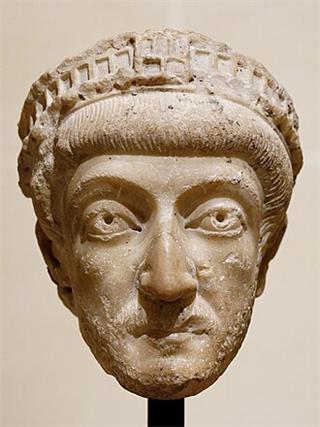
Vandal troops were fashioned on the Roman model, and sea power made the kingdom dangerous far beyond Africa. Gaiseric conquered Sicily, Sardinia, Corsica, Malta and the Balearic Islands. When he raided Sicily in 440 the Western Empire was too occupied with war in Gaul to react, and an expedition sent by Theodosius II in 441 got no further than Sicily. For 35 years Gaiseric used his large fleet to loot the coasts of both empires, and in 455 he sacked Rome. When the emperor Majorian assembled a fleet at Cartagena in 460 to take Mauretania and march on Carthage, Gaiseric scoured the land and poisoned the wells in his path, then defeated the Romans at Cartagena with his own fleet. In 468 both empires launched the most ambitious campaign ever mounted against the Vandal state; the sources speak of 1,113 ships and 100,000 men, though Heather suggests some 30,000 troops. At Cape Bon the Vandals destroyed the Western fleet and part of the Eastern fleet with fire ships.
After Gaiseric's death the kingdom lost ground to the Berbers: the Kingdom of Altava, Masties's kingdom of the Aurès in 483–484, Guenfan's Frexenses south of Thugga in 510 and Cabaon's Laguatan, who took Oea and Sabratha and defeated Thrasamund's expedition of 523. Gunthamund lost large parts of Sicily to Theodoric's Ostrogoths. In 533 Belisarius beat the Vandals at the Battle of Ad Decimum and the Battle of Tricamarum.
Governance & Law

The administration of the kingdom closely resembled the Roman provincial administration of Africa: it was staffed by local Africans, and its currency and taxation were adaptations of Roman models. Gaiseric styled himself King of the Vandals and Alans and promulgated a law of succession by which the oldest male of the royal house was to succeed; it carried the crown to his son Huneric in 477, then to Huneric's cousin Gunthamund, to Thrasamund, Hilderic and Gelimer. Huneric murdered many rival members of the dynasty.
Religion was a matter of state. The Vandals were predominantly Arians and persecuted Nicene Christians, at first, Merrills and Miles argue, to seize the church's wealth. After 435 Gaiseric took the basilicas of three intransigent bishops and expelled them; at Carthage four major churches were confiscated for the Arians, Nicene services were banned wherever Vandals settled, Bishop Quodvultdeus and many clergy were exiled and no replacements could be ordained, and Nicene laymen were excluded from office. Huneric went further after 482: Homoousian books were destroyed, almost 5,000 clergy exiled into the desert, and after a staged debate in 483 all Nicene churches were closed and their property given to the royal fisc or the Arian clergy. Gunthamund restored tolerance, Thrasamund renewed harsh measures against the hierarchy while courting the Romano-African lay elite, and Hilderic granted religious freedom, so that Chalcedonian synods met again.
Global & Regional Impact
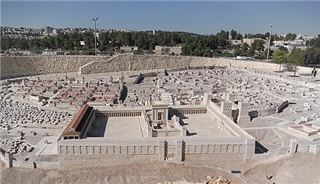
Historians since Edward Gibbon have called the Vandal conquest of North Africa the greatest single blow to the Western Roman Empire. Africa had required only a small share of the empire's forces while supplying much of its taxes and the grain of Rome; its loss, and the piracy that followed, made the destruction of the Vandal state a Roman priority and swallowed two great expeditions. The sack of Rome in 455, when Pope Leo the Great is said by Prosper of Aquitaine to have begged Gaiseric to be content with pillage, carried off countless valuables, among them the spoils of the Temple in Jerusalem brought to Rome by Titus, and the empress Licinia Eudoxia and her daughters, one of whom, Eudocia, married Huneric at Carthage. The episode fixed the Vandals' name to senseless destruction in the word vandalism.
Yet the kingdom was also a working part of the late Roman Mediterranean. After Ricimer's treaty and the perpetual peace Gaiseric concluded with Constantinople in 476, relations assumed a veneer of normality. Averil Cameron suggests the new rule may not have been unwelcome to Africans, since the old landowners were unpopular; African pottery still travelled across the sea, and writers and natural scientists flourished. The Berber kingdoms of Altava, the Aurès and the Dorsale rose in the space Vandal weakness left, and the best Vandal warriors ended as five cavalry regiments, the Vandali Iustiniani, on the Persian frontier of the empire that destroyed them.
Decline & Fall
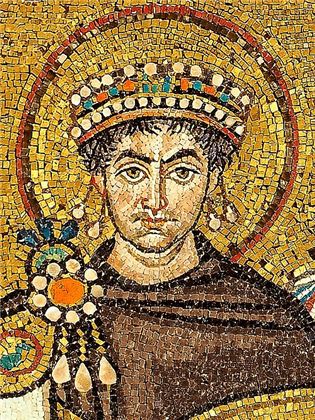
Vandal power declined from Gaiseric's death in 477. The Berbers, held in check in his reign, rose under Huneric's strict religious laws; western Algeria passed to the Kingdom of Altava and the Aurès Mountains to Masties. Gunthamund lost much of Sicily to the Ostrogoths and faced Berber raids that reached the coast; under Thrasamund the Frexenses founded the Kingdom of the Dorsale in 510, the Laguatan took Oea and Sabratha, and the expedition sent against them in 523 ended in disaster. Hilderic left war to his nephew Hoamer, who was decisively beaten by the Frexes under Guenfan and his son Antalas. The Arian faction of the royal family then revolted, and Gelimer became king in 530, imprisoning Hilderic and Hoamer.
Justinian I declared war with the stated aim of restoring Hilderic, whom Gelimer executed in 533 as the Byzantine army approached. Gelimer's brother Tzazo had taken much of the army and navy to Sardinia against the rebel Godas, so Belisarius landed unopposed ten miles from Carthage in the summer of 533. At the Battle of Ad Decimum the Vandals were prevailing until Gelimer's brother Ammatas and nephew Gibamund fell; Gelimer fled and Belisarius took Carthage. On 15 December 533 the Vandals broke at the Battle of Tricamarum when Tzazo was killed, and in 534 Gelimer, besieged at Mount Pappua, surrendered. Africa became a Byzantine province; the remaining Vandals were shipped to Constantinople for the imperial army, and as a people they disappeared.
The Vandal Kingdom, founded when Gaiseric led the Vandals and Alans into Roman Africa and took Carthage in 439, held the grain lands of the empire and the western islands for 99 years, sacked Rome and defeated two imperial fleets, and persecuted the Nicene church until Belisarius destroyed it in the Vandalic War of 533–534.
Test yourself
5 questions on this page, from its key events and facts.
The questions open here once the page has loaded.
References
- Andy Merrills and Richard Miles, The Vandals (Wiley-Blackwell, 2010)
- Victor of Vita, History of the Vandal Persecution, trans. John Moorhead (Liverpool University Press, 1992)
Connections
Open the full connections map →