
Europe
Visigothic Kingdom
At a glance
- Settled as Roman federates in the Garonne valley in 418, the Visigoths under Euric (466–484) took Hispania Tarraconensis, Arles and Marseille and were recognized as an independent kingdom by Julius Nepos in 475.
- After Alaric II fell to the Franks at Vouillé in 507 the kingdom lost Gaul but Septimania; Liuvigild conquered the Suebi in 585 and Swinthila drove the last Byzantine garrisons from Hispania by 625.
- The Liber Iudiciorum of 654 gave Goths and Hispano-Romans one law, based almost wholly on Roman law, and became the basis of Spanish law through the Middle Ages.
Rise & Fall
- 418Honorius rewards his Visigothic federates under King Wallia with land in the Garonne valley of Gallia Aquitania; Toulouse becomes their capital.
- 451Theodoric I fights under Flavius Aetius against Attila at the Battle of the Catalaunian Plains and is killed as the Huns are driven back.
- 475Julius Nepos signs an alliance granting Euric the lands south of the Loire and west of the Rhone; the kingdom is formally independent.
- 507The Franks and Burgundians kill Alaric II at the Battle of Campus Vogladensis (Vouillé) and sack Toulouse; by 508 only Septimania remains in Gaul.
- 589Reccared I renounces Arianism at the Third Council of Toledo and the kingdom becomes Nicene Christian.
- 625Swinthila captures the last Byzantine holdings in Spain; the whole peninsula is Visigothic.
- 654Recceswinth completes the Liber Iudiciorum, begun by Chindaswinth, abolishing separate laws for Goths and Hispano-Romans.
- 711Tariq ibn Ziyad lands with about 7,000 Berbers; Roderic is betrayed and killed at the Guadalete, and the Muslims take Toledo.
Foundation
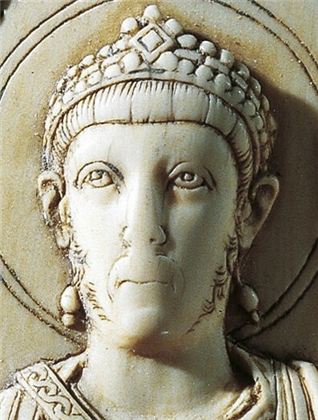
The Visigoths were romanized central Europeans who had moved west from the Danube valley and become foederati of Rome. Under Alaric they sacked Rome in 410, carrying off Galla Placidia, the sister of the emperor Honorius; his successor Athaulf (410–415) took Narbonne and Toulouse in 413 and married Placidia, after which Honorius enlisted the Visigoths against the Vandals, Alans and Suebi in Hispania. In 418 Honorius rewarded his federates under King Wallia (415–418) with land in the Garonne valley of Gallia Aquitania. The settlement probably took place under the system of hospitalitas, and it now seems likely that the Visigoths at first received not great estates but the taxes of the region, which the Gallic aristocrats paid to them instead of to Rome.
With their capital at Toulouse the Visigoths remained de facto independent and soon expanded at the expense of the feeble Western Empire. Theodoric I (418–451) attacked Arles and Narbonne, was beaten by Litorius's Hunnic mercenaries in 436, but won the Battle of Toulouse against Romans and Huns in 439. In 451 Theodoric fought beside Flavius Aetius against Attila at the Battle of the Catalaunian Plains and was killed as the Huns were driven back. Theodoric II (453–466), sent into Hispania by the emperor Avitus, defeated the Suebic king Rechiarius on the river Órbigo in 456, sacked Bracara Augusta and took Baetica, Carthaginiensis and southern Lusitania.
Socioeconomy
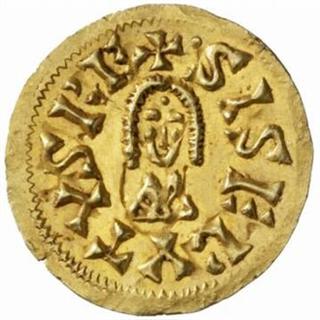
Visigothic settlement was concentrated in the 5th century along the Garonne between Bordeaux and Toulouse, where the Goths held billeting obligations as Roman allies. After Euric's annexations and above all after Vouillé, Goths settled more freely under their clan rulers, the reiks, who received dukedoms or comital offices, around Mérida, Barcelona, Seville, Toledo and Narbonne, the bases of Gothic power, and in the farming country between the upper Douro, Ebro and Tagus, the Campi Gothorum. Little Visigothic settlement occurred elsewhere; the Goths were always a minority among the Hispano-Romans, and by the 7th century the two had become inextricably intertwined, the Gothic language losing its last function as a church language when Arianism was renounced in 589.
Visigothic rule has often been counted part of a dark age, yet the kingdom preserved classical culture. The bathing culture of Andalusia continues Romano-Visigothic practice; Reccopolis and Toledo show heavy Byzantine architectural influence, and the votive crowns of the treasure of Guarrazar, buried during the Muslim invasion, survive from treasures that amazed the conquerors. Nobles were taught reading, writing, science, medicine, law and philosophy, as the Institutionum disciplinae confirms; King Sisebut wrote poems, one on astronomy, and Isidore of Seville's Etymologies, an encyclopaedia of the age's knowledge, was read throughout medieval Europe.
Military
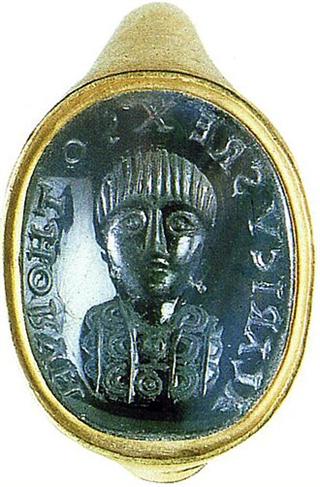
Euric (466–484), who murdered his brother Theodoric II as Theodoric had murdered Thorismund, carried the kingdom to its greatest reach in Gaul. He fought a series of wars with the Suebi, took Emerita Augusta in 469, captured Hispania Tarraconensis, the last bastion of Western Roman rule in Spain, in 472, and by 476 ruled to the Rhone and the Loire, holding Arles and Marseille; Gallo-Roman and Hispano-Roman aristocrats served him as generals and governors. The Franks under Clovis I ended this expansion: in 507, allied with the Burgundians, they killed Alaric II at the Battle of Campus Vogladensis near Poitiers and sacked Toulouse.
In Hispania the kings fought the Byzantines, who carved out the province of Spania during the civil war of 549–554, the Suebi, the Basques, Cantabrians and Asturians, and one another. Liuvigild (569–586) campaigned against the Eastern Romans in the 570s, retook Córdoba, pacified the north without wholly conquering it and in 585 destroyed the Suebic kingdom in a civil war after King Miro's death; Sisebut took Málaga, and Swinthila captured all the Byzantine holdings by 625 while a foothold was gained at Ceuta in Africa. War against the Basques and Asturians never ceased. In 711 Tariq ibn Ziyad landed with about 7,000 Berbers while Roderic was fighting the Basques; at the Guadalete in late July the king was betrayed by his troops and killed.
Governance & Law

The kingdom was formally recognized as independent, no longer foederati, when Julius Nepos signed an alliance with Euric in 475 granting the lands south of the Loire and west of the Rhone in exchange for military service and Provence. The Balti dynasty ended with Amalaric, murdered at Barcelona in 531 after his defeat by Childebert I, and the monarchy became wholly elective; few sons thereafter followed their fathers, and the years 610–631 saw constant regicide. Religious unification under Reccared I made the church councils at Toledo the most powerful institution in the state. The fourth council of 633 excommunicated and exiled Sisenand; the councils regulated the election of kings by Gothic noble senators and churchmen, declared the king's person sacred and met regularly on church and political affairs, yet Chintila and Tulga were both deposed.
The Liber Iudiciorum, promulgated by Chindaswinth and completed by Recceswinth in 654, replaced all older codes and the separate laws of Goths and Hispano-Romans with one law based almost wholly on Roman law; women could inherit land and title, dispose of property by will, bear witness in court at fourteen and arrange their own marriages at twenty. The code dropped the harsh laws against Jews, but Sisebut had forced many Jews to convert, and the 17th council of 694 enslaved many more on the charge of conspiracy.
Global & Regional Impact

The Visigoths carried Roman order into the post-Roman West. Their settlement of 418 made them the first Germanic successor state in Gaul, and their kingdom, unlike Vandal Africa or Ostrogothic Italy, held its independence from the Eastern Roman Empire, whose attempts to restore Roman authority in Hispania remained partial and short-lived. Athanagild's invitation to Justinian I during the civil war of 549 brought a Byzantine province of Spania that lasted until 625.
The kingdom's lasting gifts were legal and ecclesiastical. The Liber Iudiciorum, the Fuero Juzgo of later Spain, became the basis of Spanish law throughout the Middle Ages, and the Councils of Toledo set a pattern of church influence on secular affairs. Isidore of Seville became one of the most quoted scholars of the Middle Ages, and Theodulf of Orléans, fleeing to the Franks, joined the Carolingian Renaissance. The Visigoths founded the only new cities in Western Europe between the 5th and 8th centuries. Their fusion with the Hispano-Romans produced a nobility that thought of itself as one people, the gens Gothorum or Hispani; its remnants fled to Asturias and Septimania, and in Asturias, Joseph F. O'Callaghan writes, joined the native leaders in a new aristocracy. Pelagius's victory at Covadonga in 718 began the Reconquista, and the Kingdom of Asturias traced itself to a Visigothic nobleman elected princeps.
Decline & Fall
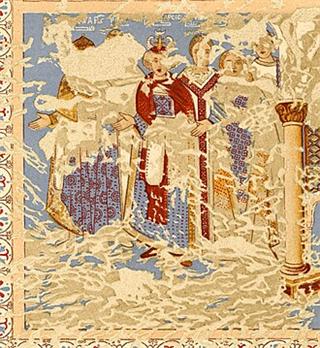
The 7th century was filled with civil wars between factions of the aristocracy and struggles between kings and nobles. Liuva II was deposed by Witteric in 603, Swinthila by the Franks, Sisenand by the fourth council, Chintila in 639 and Tulga in 641, and Wamba fell in a bloodless coup in 680. Egica raised his son Wittiza as co-ruler in 698. On Wittiza's death civil war broke out between his sons Achila and Ardo and King Roderic, who had seized Toledo. The newfound unity of Goths and Hispano-Romans had found expression in ever harsher persecution of outsiders, above all the Jews, many of whom were enslaved after the council of 694.
Into this divided kingdom came the Muslim invasion. In 711 Tariq ibn Ziyad, a Berber client of Musa bin Nusair, landed with about 7,000 men while Roderic fought the Basques in the north. Roderic, betrayed by his troops, died at the Guadalete, and the Muslims took much of southern Spain with little resistance and executed several nobles at Toledo. Musa followed in 712 with 18,000 men, took Mérida in 713 and Zaragoza and León, still held by King Ardo, in 714, leaving his son Abd al-'Aziz in command. By 716 most of the peninsula was under Islamic rule; Agila II held Tarraconensis and Narbonensis until 714 and Ardo Narbonensis until 721, and Septimania fell between 721 and 725. Only Asturias resisted, where Pelagius revolted in 718 and won at Covadonga, and the Franks later raised the Marca Hispanica in the Pyrenees.
The Visigothic Kingdom grew from the federates Rome settled at Toulouse in 418 into the ruler of southern Gaul and all Hispania, lost Gaul to the Franks at Vouillé in 507 and expelled the Byzantines by 625; Nicene since 589 and governed by the Councils of Toledo and the Liber Iudiciorum, it fell to the Umayyad invasion of 711, its last king Ardo holding Narbonensis until 721.
Test yourself
5 questions on this page, from its key events and facts.
The questions open here once the page has loaded.
References
- Roger Collins, Visigothic Spain, 409–711 (Blackwell, 2004)
- E. A. Thompson, The Goths in Spain (Clarendon Press, 1969)
Connections
Open the full connections map →