
Form of government · Central & East Asia
Military junta
At a glance
- A military junta is rule by a committee of officers, usually installed by a coup; it differs from a military strongman, who rules alone, and from civilian governments that merely depend on the army.
- Korea’s Goryeo generals ruled collectively from 1170, but juntas became common only after 1945, governing much of Latin America, Africa and Asia and, for shorter spells, Greece, Turkey and Portugal.
- Juntas usually promised to restore order and then hold elections; many did hand power back, but many also imprisoned, tortured and killed opponents, and one coup often led to another.
Timeline
- 1170Goryeo’s generals seize power in Korea and rule through their council while kings reign as figureheads
- 1653Soldiers expel England’s Rump Parliament; army officers draft a constitution making Oliver Cromwell Lord Protector
- 1808Spaniards form local and national juntas to resist Napoleon’s invasion, the councils from which the modern term derives
- 1967Colonels seize power in Greece and rule until their coup in Cyprus brings their fall in 1974
- 1973The commanders of Chile’s army, navy, air force and police seize power and rule as a junta until 1990
- 1974Ethiopia’s military council, the Derg, deposes Emperor Haile Selassie and rules until 1987
- 1976Argentina’s armed forces seize power; defeat in the Falklands War of 1982 forces them to hold elections in 1983
- 2021Myanmar’s armed forces seize power in a coup on 1 February, their third takeover since 1958
How It Works

A military junta, from the Spanish word for a meeting or council, is government by a committee of military officers. It usually takes power in a coup d’état, typically brings together the commanders of the army, navy and air force and sometimes the head of the police, and governs by decree. Juntas generally suspend the constitution, dissolve parliament and ban political activity, and they present themselves as saviours of the nation under names such as the National Liberation Council in Ghana, the National Security Council in Turkey and the State Law and Order Restoration Council in Myanmar, or simply the Derg, Ge’ez for “committee”, in Ethiopia. One member usually presides and often becomes head of state, and a strong president can turn a junta into a personal dictatorship, as Augusto Pinochet largely did in Chile.
Decisions are made by bargaining among the services and their chiefs, and the chain of command keeps the officers below them in line. The junta’s real constituency is the officer corps rather than the citizens, and its members must keep their own forces loyal and rewarded. Civilian experts often run ministries, but they serve at the officers’ pleasure. Political scientists distinguish open rule, when the junta governs in its own name, from disguised rule, when it works behind a nominally civilian government or civilianises itself by exchanging uniforms for suits and founding a party. They also distinguish corporate coups, carried out by the high command on behalf of the armed forces as an institution, from factional coups by groups of mid-ranking officers. Samuel Finer noted that the median junta had eleven members, while those of Latin America usually had three or four.
A junta differs from a military strongman, a single officer who rules with little check from his colleagues, though one can turn into the other. It differs from civilian governments that rely on the army, and from a pronunciamiento in Edward Luttwak’s sense, in which the military deposes a government only to hand power to new civilians. Eric Nordlinger distinguished military “moderators”, who exercise a veto without ruling, “guardians”, who take power for a few years to correct what they see as civilian failures, and “rulers”, who seek to transform state and society.
Origins

Rule by armed men is as old as the state, but most early military regimes were the rule of one commander. In 193 CE Rome’s Praetorian Guard murdered the emperor Pertinax and sold the throne to Didius Julianus, which is why political scientists speak of “praetorianism” when soldiers make and unmake governments. In China warlords such as Dong Zhuo and Cao Cao seized the central government at the end of the Han dynasty, and in Korea the general Yeon Gaesomun took control of Goguryeo in 642 after having its king killed.
The first clear case of officers ruling as a body came in Korea’s Goryeo kingdom, where civil officials monopolised high office and military officers resented their inferior standing. In 1170 officers led by Jeong Jung-bu, Yi Ui-bang and Yi Go rose during a royal outing, killed many civil officials, deposed King Uijong and placed his brother Myeongjong on the throne as a figurehead. The council of senior generals, the Jungbang, became the centre of government, while its leaders fought and killed one another for supremacy. In 1196 Choe Chung-heon seized power and founded a military house that ruled until 1258, and royal authority was restored only in 1270. In Japan the Kamakura shogunate, founded in 1185, created a warrior government beside the imperial court, and shoguns ruled Japan until 1868.
In England the New Model Army became a political force during the Civil War. Its General Council debated the constitution at Putney in 1647, and in 1653 soldiers expelled the Rump Parliament and army officers drafted the Instrument of Government that made Oliver Cromwell Lord Protector. From 1655 to 1657 England and Wales were divided among major-generals, and in October 1659 the officers again expelled Parliament and governed briefly through a Committee of Safety. The modern term came from Spain, where in 1808 local and national juntas organised resistance to Napoleon’s invasion. These were councils of notables rather than of officers, but the term passed to the military councils that seized power through pronunciamientos, formal declarations of revolt, in 19th-century Spain and Latin America.
Through History
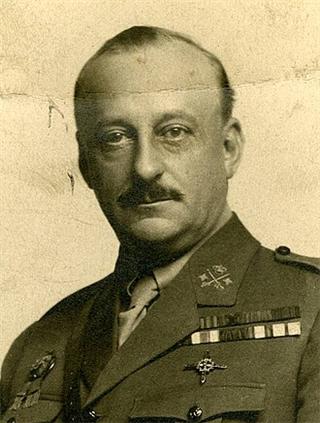
In the 19th century Latin America was the only region where military rule was common. After the wars of independence many republics fell under caudillos, strongmen who usually came from the army, and juntas formed and fell repeatedly; Bolivia alone had military juntas in 1861, in 1879–1880 and many times after. In Spain General Miguel Primo de Rivera governed through a Military Directorate from 1923 to 1925, Portugal came under military dictatorship in 1926, and in the 1930s Japan’s government fell increasingly under the influence of its army and navy officers.
After 1945 juntas multiplied, helped by a Cold War in which both blocs tolerated military regimes that promised stability. In Egypt the Free Officers overthrew the monarchy in 1952 and governed through a Revolutionary Command Council; Syria and Iraq saw coup after coup; Turkey’s officers took power in 1960 and 1980, South Korea’s in 1961, and Burma’s army ruled from 1962, from 1988 through the State Law and Order Restoration Council. By 1975 about half of Africa’s states were under military rule, among them Ethiopia, where the Derg deposed Emperor Haile Selassie in 1974, and Nigeria, governed by officers from 1966 to 1979 and again from 1983 to 1999. By the mid-1970s most of Latin America was ruled by officers: Brazil from 1964 to 1985, Uruguay from 1973 to 1985, Chile from 1973 to 1990 and Argentina from 1976 to 1983, while in Peru the reformist government of General Juan Velasco Alvarado redistributed land. In Europe colonels ruled Greece from 1967 to 1974, Portuguese officers overthrew the Estado Novo dictatorship in 1974, and in Poland General Wojciech Jaruzelski governed under martial law through a Military Council of National Salvation from 1981 to 1983.
From the late 1970s military regimes gave way to civilian government, encouraged by pressure from the United States under President Jimmy Carter and, after 1989, by the end of the Cold War. The African Union and the Organization of American States adopted rules against unconstitutional seizures of power. Coups did not disappear: Thailand’s army took power in 2006 and 2014, Egypt’s Supreme Council of the Armed Forces governed in 2011–2012, and Myanmar’s armed forces seized power for the third time in February 2021. Africa saw a new wave, with coups in Sudan in 2019 and 2021, Mali in 2020 and 2021, Guinea in 2021, Burkina Faso in 2022, and Niger and Gabon in 2023.
Strengths
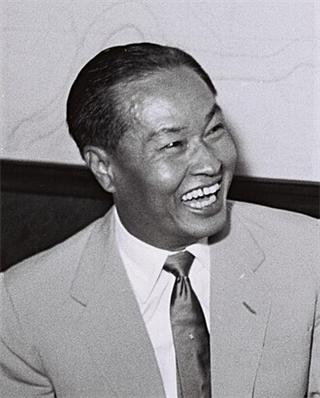
Juntas justify themselves as rescuers. They claim to step in only when civilians have failed, to end corruption, disorder, economic collapse or the threat of revolution, and to stand above parties as neutral guardians of the nation; the Greek colonels of 1967 said they acted to end corruption and demagoguery. Some kept their promise to withdraw. In Burma General Ne Win’s caretaker government, formally invited by Prime Minister U Nu under pressure from the army in 1958, held elections and handed power back in 1960. Turkey’s officers returned power to elected governments in 1961 and 1983, Ghana’s National Liberation Council in 1969 and Nigeria’s military government under Olusegun Obasanjo in 1979, and the Portuguese officers whose coup of 1974 ended the Estado Novo opened the way to free elections in 1975 and 1976.
In the 1960s modernisation theorists gave the case academic form. Morris Janowitz and Lucian Pye argued that in new states the army was often the most modern and disciplined institution, and Samuel P. Huntington wrote in Political Order in Changing Societies (1968) that where landed oligarchies held power, officers drawn from the middle class could act as reformers. Egypt’s Free Officers decreed a land reform in 1952 and Peru’s military government another in 1969, and defenders of South Korea’s military-led governments credit them with the country’s rapid industrialisation from the 1960s.
Comparative research has found that collective military rule has some advantages over other dictatorships. A 2014 review in the Annual Review of Political Science found that military regimes led by a group of officers started fewer international wars than military strongmen and, like civilian dictatorships, were more likely to end in democratisation. Barbara Geddes and others have shown that military regimes are the shortest-lived kind of dictatorship and the most willing to negotiate their own exit, since officers can return to the barracks while personal dictators risk exile, prison or death. Military rulers who step down also face no rival armed force waiting to seize power from them.
Weaknesses
Critics point first to repression. A comparative study of 2014 found that military regimes, together with military strongmen, are more likely than civilian dictatorships to commit human rights abuses and to become embroiled in civil wars. Argentina’s junta of 1976–1983 waged what it called a war against subversion: its forces abducted people to secret detention centres and tortured them, and some prisoners were thrown alive from aircraft into the sea. The national commission that reported in 1984, in Nunca Más, documented almost 9,000 disappearances, and human rights groups estimate up to 30,000. In Chile official commissions recognised more than 3,000 people killed or disappeared under military rule and tens of thousands imprisoned and tortured. Ethiopia’s Derg killed many thousands of suspected opponents in its Red Terror of 1977–1978, and Myanmar’s army killed thousands of protesters in 1988.
Juntas are also unstable. Military regimes are short-lived, and coups breed further coups, a pattern scholars call the coup trap; Bolivia’s long list of juntas and Nigeria’s coup and counter-coup of 1966 are examples. Officers who fall out over policy or promotion can split the armed forces, and politics weakens their fighting power. Samuel Finer argued in The Man on Horseback (1962) that armies can seize power but lack the legitimacy and administrative skill to govern a complex society, so that they must lean on civilians and find it hard either to rule well or to withdraw.
Their record in government has rarely matched their promises. Research on military regimes finds that they seldom bring prosperity, and several left economic wreckage: Argentina’s foreign debt multiplied under the junta, and after a quarter of a century of military-led rule Burma sought and received the United Nations’ status of a least developed country in 1987. Military rulers have also gambled on war. Argentina’s junta invaded the Falkland Islands in 1982 and, defeated, handed power to an elected president in 1983, and the Greek junta’s coup against the president of Cyprus in July 1974 provoked the Turkish invasion of the island and brought the colonels down within days.
Impact & Legacy

The fall of the juntas left lasting precedents. In Greece the leaders of the 1967 coup were tried and sentenced in 1975; in Argentina the Trial of the Juntas in 1985 sent former junta leaders, among them General Jorge Rafael Videla, to prison; and the arrest of Augusto Pinochet in London in 1998 on a Spanish warrant showed that former rulers could be pursued abroad. Truth commissions, from Argentina’s in 1983–1984 to Chile’s in 1990–1991, became a model for countries leaving dictatorship or civil war. Constitutions written under military rule often outlived it: Chile’s constitution of 1980 and Turkey’s of 1982, both much amended, remain in force, and Chilean voters rejected proposed replacements in 2022 and 2023.
Military rule also shaped the study of politics and the rules of international life. Samuel P. Huntington’s The Soldier and the State (1957) argued that a professional officer corps under “objective civilian control” was the best guarantee against military politics, Finer, Alfred Stepan and Eric Nordlinger analysed why officers intervene and how they rule, and Guillermo O’Donnell called the technocratic military regimes of Brazil and Argentina “bureaucratic-authoritarian”. Civilian control of the armed forces became a test of democracy, and regional organisations such as the African Union now suspend members after coups. Governments have also learned coup-proofing, building rival security forces and placing loyalists in command, which makes coups harder but armies weaker.
Military councils still govern several states. In 2026 governments formed by officers after coups ruled Burkina Faso, Guinea-Bissau, Madagascar, Mali, Niger and Sudan, and in Myanmar the armed forces, after seizing power in February 2021, ruled through military councils until 2026. Political scientists observe that coups have become rare outside Africa, and that those since the end of the Cold War have been more likely than earlier ones to lead to elections, though most still replace one authoritarian government with another.
A military junta is government by a council of officers, usually after a coup. Korea’s Goryeo generals ruled this way from 1170, and juntas spread across Latin America, Africa, Asia and southern Europe after 1945. They promised order and often handed power back, but many ruled through terror and fell to new coups, leaving trials and truth commissions as their legacy.
Test yourself
5 questions on this page, from its key events and facts.
The questions open here once the page has loaded.
References
- Finer, S. E. (1962) The Man on Horseback: The Role of the Military in Politics. London: Pall Mall Press.
- Huntington, S. P. (1957) The Soldier and the State: The Theory and Politics of Civil–Military Relations. Cambridge, MA: Belknap Press of Harvard University Press.
- Stepan, A. (1971) The Military in Politics: Changing Patterns in Brazil. Princeton: Princeton University Press.
- Nordlinger, E. A. (1977) Soldiers in Politics: Military Coups and Governments. Englewood Cliffs, NJ: Prentice-Hall.
- Shultz, E. J. (2000) Generals and Scholars: Military Rule in Medieval Korea. Honolulu: University of Hawai'i Press.
- Geddes, B., Wright, J. and Frantz, E. (2018) How Dictatorships Work: Power, Personalization, and Collapse. Cambridge: Cambridge University Press.