
Form of government · Europe
Colonial rule
At a glance
- Colonial rule placed a territory and its people under a distant metropole that ruled them as subjects, through its own officials (direct rule) or through local rulers it controlled (indirect rule).
- From Portugal’s capture of Ceuta in 1415 to the eve of the First World War, European empires spread across the Americas, Africa, Asia and the Pacific through conquest, settlement, slavery and trade.
- Colonised peoples resisted throughout, from the Haitian Revolution to the liberation wars of the 20th century, and most colonies won independence between 1945 and 1975.
Timeline
- 1415Portugal captures Ceuta in North Africa, the first overseas conquest of Europe’s colonial age
- 1521Spanish conquistadors and their Indigenous allies take Tenochtitlan, capital of the Aztec Empire
- 1757The East India Company’s victory at Plassey opens the way to its rule over Bengal
- 1804Haiti declares independence after the revolution of the enslaved against French colonial rule
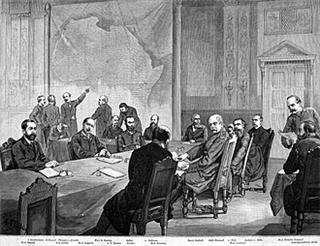
- 1884The Berlin Conference opens and sets rules for the European partition of Africa
- 1947British India becomes independent as India and Pakistan, amid the violence of partition
- 1960The UN General Assembly declares the right of colonial peoples to independence
- 1975Angola and Mozambique win independence after Portugal’s Carnation Revolution
How It Works

Colonial rule is the government of a territory and its people by a distant state, the metropole, which keeps them apart from itself and subordinate to it. The historian Jürgen Osterhammel describes colonialism as a relationship in which “the fundamental decisions affecting the lives of the colonised people are made and implemented by the colonial rulers in pursuit of interests that are often defined in a distant metropolis”, by rulers convinced of their own superiority. The colonised were subjects rather than citizens: unlike an annexed province, a colony was governed under its own laws and institutions, usually with lesser rights for its native inhabitants. Historians distinguish settler colonies, where immigrants took the land and displaced or outnumbered its peoples, as in North America, Australia or Algeria, from colonies of exploitation, where a few officials, soldiers and merchants drew out resources and labour, as in most of Africa and Asia.
At the top stood a metropolitan authority: Spain’s Council of the Indies from 1524, Britain’s Colonial Office, France’s ministry of the colonies, or a chartered company such as the English East India Company (1600) or the Dutch East India Company (1602), which could make war and treaties in Asia. In the colony a viceroy or governor appointed by the metropole held executive power, usually with an executive council of officials and a legislative council, partly appointed and sometimes partly elected; British Crown colonies ranged from those with elected assemblies, such as Bermuda and Jamaica, to those ruled by the governor alone, such as Gibraltar. Separate laws marked out the colonised. France’s indigénat code, introduced in Algeria in 1881, let administrators punish “natives” without trial, and colonial governments raised head and hut taxes and demanded forced labour.
Colonial powers ruled directly or indirectly. Under direct rule, associated with France and its ideal of assimilation, colonial officials administered down to the district. Under indirect rule, set out by Frederick Lugard in The Dual Mandate in British Tropical Africa (1922), existing rulers such as the emirs of the Sokoto Caliphate in Northern Nigeria kept their courts and taxes under British supervision, as the Indian princely states did under the Raj; where no suitable ruler existed, administrators appointed “warrant chiefs”. Historians since the 1970s have shown that the two systems were mixed in practice. Settler colonies such as Canada, Australia and New Zealand won responsible self-government for their settlers in the 19th century, while their Indigenous peoples were ruled under separate laws.
Origins

Colonies are ancient. Phoenician cities planted settlements such as Carthage and Cádiz, Greek cities founded apoikiai, “homes away from home”, around the Mediterranean and the Black Sea, and Rome settled its citizens in coloniae from Cologne to North Africa; the word itself comes from the Latin colonus, a farmer or settler. These were settlements rather than systems of rule over others. Medieval Venice and Genoa built networks of trading posts and island colonies in the eastern Mediterranean, crusaders founded states in the Levant (1098–1291) and German knights conquered the Baltic lands. In the Atlantic, Castile began the conquest of the Canary Islands in 1402, a long war against the islands’ indigenous peoples that ended only in 1496 and that some historians treat as the first recognisably colonial relationship of the modern age.
The European colonial age is conventionally dated from 1415, when the army of John I of Portugal and his sons, among them Prince Henry the Navigator, took the Muslim port of Ceuta on the Moroccan coast. Portuguese seafarers then settled Madeira and the Azores, traded and raided along the West African coast, and began sugar plantations worked by enslaved Africans. Papal bulls such as Dum Diversas (1452) authorised the Portuguese king to subdue “Saracens and pagans” and reduce them to perpetual servitude, and after Christopher Columbus reached the Caribbean for Castile in 1492 the Treaty of Tordesillas (1494) divided the newly found lands between the two Iberian crowns. Better ships and navigation, firearms, and the search for gold, spices and converts drove the expansion.
Colonial rule was debated from the start. The Dominican friar Bartolomé de las Casas denounced the destruction of the Caribbean peoples in his Short Account of the Destruction of the Indies (written 1542, printed 1552), the theologian Francisco de Vitoria questioned the grounds of Spanish dominion in his lectures of 1539, and at Valladolid in 1550–1551 Las Casas debated Juan Ginés de Sepúlveda, who defended the conquest with Aristotle’s theory of natural slavery. Adam Smith argued in The Wealth of Nations (1776) that Britain’s monopoly of colonial trade served merchants rather than the nation. The word colonialism came into wide use only in the 20th century, as critics such as J. A. Hobson in Imperialism (1902) and Vladimir Lenin (1917) tied overseas empire to capitalism and anti-colonial movements made it their target.
Through History
The first great colonial empires were Iberian. Hernán Cortés and his Indigenous allies took Tenochtitlan in 1521, Francisco Pizarro seized the Inca ruler Atahualpa in 1532, and Spain ruled its American lands through the viceroyalties of New Spain and Peru, granting colonists Indigenous labour and tribute in encomiendas and drawing forced labour to the silver mines of Potosí through the mita. War, overwork and above all Old World diseases such as smallpox killed a large majority of the Indigenous peoples of the Americas within a century. Portugal built a chain of fortified trading posts from Goa to Macau and plantations in Brazil, and in the 17th century the Dutch, English and French founded colonies in North America, the Caribbean and Asia. Plantation colonies across the Americas were worked by enslaved Africans: the Atlantic slave trade carried some 12.5 million people from Africa.
The first wave of colonial independence came in the Americas: the thirteen British colonies declared independence in 1776, the enslaved of Saint-Domingue made Haiti independent in 1804, and Spain lost its mainland American empire in the wars of 1808–1833. In Asia the East India Company’s victory at Plassey in 1757 began its rule over Bengal and later most of India, which passed to the British Crown in 1858 after the rebellion of 1857. France conquered Algeria from 1830, at the Berlin Conference of 1884–1885 European powers set rules for partitioning Africa, which they had almost wholly divided by 1914, and new empires joined the old: Japan took Taiwan in 1895 and Korea in 1910, and the United States took the Philippines and Puerto Rico in 1898. On the eve of the First World War some 560 million people lived in colonies, about 70 per cent of them in the British Empire.
The world wars weakened the colonial powers. After 1918 Germany’s colonies and the Ottoman Arab provinces became League of Nations mandates, and resistance grew, from Mahatma Gandhi’s campaigns of civil disobedience in India to risings against conscription and taxes in Africa. After 1945 decolonisation came quickly. India and Pakistan became independent in 1947, Indonesia in 1949 after a war with the Netherlands, Ghana in 1957, first in sub-Saharan Africa, and seventeen African states in 1960, the year the UN General Assembly declared the right of colonial peoples to independence. France fought long wars in Indochina and Algeria, Britain against the Mau Mau rising in Kenya, and Portugal held its African colonies until the Carnation Revolution of 1974, after which Mozambique and Angola became independent in 1975.
Strengths

Colonial rulers and their defenders argued that empire brought order, law and progress. British writers spoke of a Pax Britannica that ended local wars, and Frederick Lugard’s “dual mandate” held that colonial rule should develop Africa’s resources for the world while advancing the welfare of its peoples. Lord Salisbury, explaining why Britain made Zanzibar a protectorate in 1890 rather than a colony, called such protection “cheaper, simpler, less wounding to their self-esteem”, in a passage that described the protected peoples as “half civilized races” and so shows the assumptions behind the case. Colonial governments did suppress the slave trade and slavery in much of Africa and Asia, and built railways, ports, canals and telegraphs that outlasted them: British India acquired one of the largest railway networks in the world, and canal irrigation turned parts of the Punjab into farmland.
Medicine is often cited too. In 1803 the Spanish Crown sent smallpox vaccine to its American and Asian colonies in the arms of 22 orphan boys, vaccinated one after another to keep it alive on the voyage, and organised vaccination there; Waldemar Haffkine developed vaccines against cholera and plague in India in the 1890s; and colonial health services checked the sleeping sickness epidemic in Africa by screening millions of people. Mission and government schools trained many of the lawyers, teachers and journalists who later led independence movements.
Some historians and economists have argued for a more favourable balance than critics allow. Niall Ferguson, in Empire: How Britain Made the Modern World (2003), credited the British Empire with spreading free trade, the rule of law and representative government. Studies of living standards have found mixed results, often an initial decline followed by improvement: Jörg Baten and Laura Maravall found that the average height of Africans fell by about a centimetre with colonisation, then recovered and rose under colonial rule. Daron Acemoglu, Simon Johnson and James Robinson argued that where Europeans settled in numbers they built institutions that protected property and encouraged growth, as in North America and Australia, though the same work finds the opposite where colonisers came only to extract.
Weaknesses
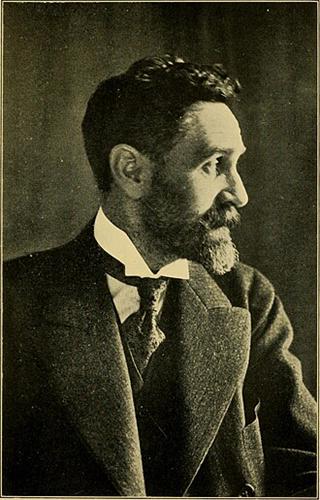
The case against colonial rule begins with its violence. Conquest and the diseases it spread destroyed most of the Indigenous population of the Americas, and plantation colonies rested on the enslavement of millions of Africans. In the Congo Free State Leopold II’s agents enforced rubber quotas by hostage-taking, mutilation and killing, as the British consul Roger Casement reported in 1904. In German South West Africa in 1904–1908 most of the Herero and about half of the Nama died in war, in the desert and in camps, which Germany acknowledged as genocide in 2021, and Italy’s reconquest of Libya in 1929–1934 killed tens of thousands in war and concentration camps. Mike Davis blamed colonial policy for the famines that killed millions in British India in the late 19th century, and Amartya Sen showed that the Bengal famine of 1943 struck without any great fall in food supply. The wars of independence in Algeria and Kenya were fought with mass internment and torture.
Critics also condemn the racial order on which colonial rule rested. Colonial law divided Europeans from “natives” and citizens from subjects, and pseudo-scientific theories of race were used to justify the division. Aimé Césaire’s Discourse on Colonialism (1950) argued that colonisation decivilised and brutalised the coloniser himself, and Frantz Fanon’s The Wretched of the Earth (1961) described the colonial world as a world cut in two and held together by force. Mahmood Mamdani has argued that indirect rule gave chiefs unchecked power over their subjects and hardened ethnic divisions; in Rwanda, Belgian administrators fixed the categories of Hutu and Tutsi on identity cards in the 1930s. Borders drawn by colonial powers cut across peoples, and the partition of India in 1947 was accompanied by mass killing and the flight of some fifteen million people.
Critics point finally to economic extraction. Dadabhai Naoroji argued in Poverty and Un-British Rule in India (1901) that British rule drained India’s wealth through charges and profits sent home, and Walter Rodney’s How Europe Underdeveloped Africa (1972) held that colonialism carried the surplus of African labour to Europe while taking from Africans the power to set their own goals. The Dutch Cultivation System on Java from 1830 forced villagers to grow export crops for the colonial treasury, causing hardship and famine. Even for the metropoles the balance was disputed: Grover Clark calculated in 1936 that the costs of governing and defending colonies outran the trade they brought, while private investors took the profits.
Impact & Legacy
Most of today’s states were once colonies or were shaped by colonial rule, and decolonisation is the main reason the United Nations grew from 51 members in 1945 to 193 in 2011. Colonial borders became national frontiers, which the Organisation of African Unity resolved in 1964 to respect. English, French, Spanish and Portuguese became languages of government across much of the world, and the Commonwealth of Nations, the Francophonie and the Community of Portuguese Language Countries keep old ties alive. Decolonisation also reversed the flow of migration: most of the pieds-noirs left Algeria for France in 1962, and some 800,000 people moved to Portugal from its African colonies after 1974.
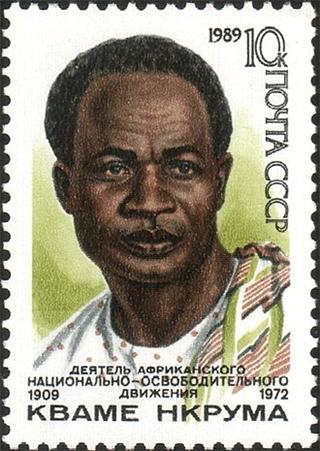
Colonial rule remains one of the most debated subjects in history. Postcolonial scholarship, from Edward Said’s Orientalism (1978) to the Subaltern Studies historians of South Asia, has examined how colonial knowledge and culture sustained rule and how the colonised spoke and acted for themselves. Economists such as Acemoglu, Johnson and Robinson trace present differences in wealth and government to colonial institutions, and the word neocolonialism, used by Jean-Paul Sartre in 1956 and by Kwame Nkrumah, Ghana’s first president, in Neo-Colonialism: The Last Stage of Imperialism (1965), names economic and political control that outlasted formal empire. Most historians now treat colonial rule as a system founded on conquest and racial hierarchy, while continuing to dispute its economic effects, which varied greatly from colony to colony.
Formal colonial rule has not wholly ended. The United Nations’ Special Committee on Decolonization still lists seventeen non-self-governing territories, among them Western Sahara, Gibraltar, New Caledonia and Guam; most have elected governments of their own, and several have voted in referendums to keep their present status. Britain renamed its remaining colonies British Dependent Territories in 1983 and British Overseas Territories in 2002. Former colonial powers have begun to acknowledge past crimes, as Germany did for the Herero and Nama in 2021, and the return of objects taken in colonial wars, such as the Benin Bronzes, has become a public question across Europe.
Colonial rule, the government of territories and peoples by distant states as subjects rather than citizens, carried European power across the world from 1415 and shaped its borders, languages, economies and states. Built on conquest, settlement, slavery and racial hierarchy, and resisted by the colonised throughout, it largely ended in the decolonisation of 1945–1975, though some dependent territories remain.
Test yourself
5 questions on this page, from its key events and facts.
The questions open here once the page has loaded.
References
- Boxer, C. R. (1969) The Portuguese Seaborne Empire, 1415–1825. London: Hutchinson.
- Burbank, J. and Cooper, F. (2010) Empires in World History: Power and the Politics of Difference. Princeton: Princeton University Press.
- Cooper, F. (2005) Colonialism in Question: Theory, Knowledge, History. Berkeley: University of California Press.
- Lugard, F. D. (1922) The Dual Mandate in British Tropical Africa. Edinburgh: William Blackwood and Sons.
- Mamdani, M. (1996) Citizen and Subject: Contemporary Africa and the Legacy of Late Colonialism. Princeton: Princeton University Press.
- Osterhammel, J. (1997) Colonialism: A Theoretical Overview, trans. S. L. Frisch. Princeton: Markus Wiener.