
At a glance
- Under Hammurabi, a small Amorite city-state became the master of Mesopotamia in barely a decade of conquest.
- His Code of 282 laws is the most complete legal collection to survive from the ancient Near East.
- Lacking strong institutions, the empire fragmented soon after his death and ended with a Hittite raid around 1595 BCE.
Rise & Fall
- c. 1894 BCESumu-abum takes control of Babylon and begins building its walls
- c. 1792 BCEHammurabi becomes king of Babylon
- 1764 BCEHammurabi defeats an Elamite-led coalition, launching his conquests
- 1763 BCEHammurabi conquers Larsa, bringing all southern Mesopotamia under his rule
- 1761 BCEHammurabi conquers his former ally Mari
- c. 1754 BCEThe Code of Hammurabi is inscribed
- 1750 BCEHammurabi dies; his son Samsu-iluna soon faces widespread revolt
- c. 1595 BCEHittite king Mursili I sacks Babylon, ending the First Dynasty
Foundation
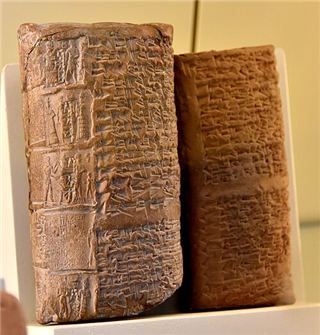
The Old Babylonian Empire grew from unpromising origins: a small Amorite city-state in central Mesopotamia, hemmed in by larger and more established powers, which through patient diplomacy, fortunate timing and the military talent of a single ruler became the dominant power of the ancient Near East within a generation. Around 1894 BCE an Amorite chieftain named Sumu-abum (Sumuabum) took control of Babylon, traditionally from the neighbouring city-state of Kazallu, and began building a defensive wall around the city. For a century, five successive rulers — Sumu-abum, Sumu-la-El, Sabium, Apil-Sin and Sin-muballit — carried out the slow work of turning this minor city into a recognised regional player, completing the walls, digging canals, winning modest victories and surviving in a world dominated by Elam to the east, the rival cities of Isin and Larsa to the south, and the Kingdom of Upper Mesopotamia under Shamshi-Adad I to the north. A diplomatic letter from the archive of Mari captures Babylon's position with laconic precision: “No king is powerful by himself: with Hammurabi, the man of Babylon, go 10 or 15 kings; so with Rim-Sin, the man of Larsa” — Babylon was simply one of several comparable kingdoms, neither dominant nor subordinate. The transformation of this modest polity into the master of Mesopotamia was the work of Hammurabi (r. c. 1792–1750 BCE), who spent his first three decades on the throne in careful preparation — fortifying borders, building administrative capacity and conducting shrewd diplomacy — before launching in 1764 BCE a rapid sequence of conquests that made Babylon the largest Mesopotamian state since the empires of Akkad and Ur.
Socioeconomy
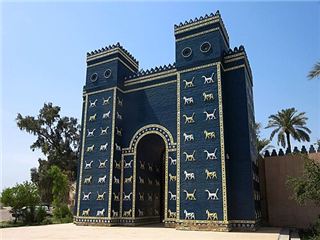
The Old Babylonian economy rested on the agricultural productivity of the Mesopotamian alluvial plain — one of the most fertile zones of the ancient world, watered by the Tigris and Euphrates through an elaborate network of irrigation canals that the Babylonian state maintained and extended. Hammurabi's famous Code, inscribed on a basalt stele now in the Louvre, is as much an economic regulatory document as a legal one: its 282 laws fix wages for labourers and craftsmen and hire rates for oxen, boats and carts, regulate interest on loans of grain and silver, define contracts for partnerships and deposits, and set out the obligations of merchants, tavern keepers and boatmen — offering a remarkably detailed window into the commercial life of early second-millennium Babylonia. Its provisions protecting debtors from creditor abuse, including relief from interest payments when floods or drought destroyed a harvest, reflect a sophisticated understanding of the pressures that could destabilise farming communities. Trade connected Babylon to the Persian Gulf routes that brought copper from Dilmun and Magan, along with stone and timber, compensating for Mesopotamia's lack of these materials. Hammurabi's conquest of Larsa in 1763 BCE, which brought all of southern Mesopotamia — including the ancient cities of Ur, Uruk, Isin and the religious centre of Nippur — under his rule, greatly expanded the kingdom's revenue base and its control of the richest farmland in the region. The rapid unravelling of this economic empire after Hammurabi's death revealed its fragility: the breakaway of the Sealand Dynasty in the south and the loss of influence in Assyria within a generation removed the revenues that had sustained the imperial administration.
Military
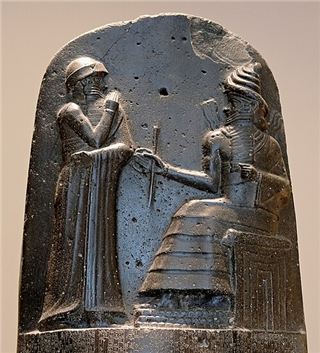
The Babylonian army under Hammurabi represented a significant advance on the city-state forces of the preceding centuries, combining a core of royal troops, many of them soldiers holding land in return for service, with the ability to mobilise allied contingents through the diplomatic network the king had cultivated over three decades. Hammurabi's year-names — the date formulas Babylonian scribes attached to administrative documents — chronicle his campaigns: the early decades record mostly temple building and canal works, but from his thirtieth year onward they document a relentless sequence of victories. The defeat in 1764 BCE of an Elamite invasion, together with its allies from Subartu, Gutium, Eshnunna and Malgium (Malgum), was the turning point, proving that Babylon could confront a multi-power coalition and prevail. The conquests that followed were remarkably swift: Larsa fell in 1763 BCE after a long siege; Mari, a former ally, was conquered in 1761 BCE and the destruction of Mari, with its famous palace, followed shortly afterwards, suggesting that Hammurabi preferred to eliminate dangerous neighbours rather than govern them; and Assyria and the north were brought under pressure in the following years. Hammurabi's most distinctive technique was the use of water as a weapon, a form of ecological warfare: the destruction of Eshnunna around 1755 BCE was achieved by damming and releasing floodwater rather than by direct assault, a method that wrecked the city's agricultural base and avoided the casualties of a prolonged siege. The army's critical weakness was its dependence on the personal authority of its commander: Hammurabi held together a complex web of tributary relationships and alliances through his own prestige, and the rebellions that followed his death exposed how little independent institutional loyalty the system had generated.
Governance & Law
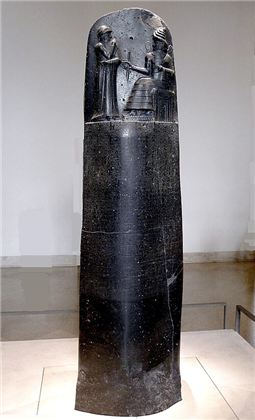
Old Babylonian government, as revealed by the Code of Hammurabi and the tens of thousands of administrative tablets surviving from the period, was among the most sophisticated administrative enterprises of the ancient world, combining centralised royal authority with detailed legal protections for commercial and agricultural life across a large territory. The Code of Hammurabi — 282 laws inscribed on a stele about 2.25 metres high, probably first set up at Sippar and later carried off as booty to Susa — was both a practical legal statement and a political manifesto: its prologue declares that Hammurabi was called by the gods “to make justice appear in the land, to destroy the wicked and the evil, that the strong might not oppress the weak,” framing royal authority as a protective obligation towards the population. The laws addressed almost every aspect of economic and social life: wages, interest rates, medical malpractice, inheritance, adoption, marriage and divorce, slavery, commercial partnerships and the obligations of royal officials. Provincial administration was managed through governors, tax collectors and judicial officials who reported to the palace in Babylon, and Hammurabi's surviving letters — notably to his officials in the south such as Sin-iddinam at Larsa — show the king personally intervening in individual legal cases, land disputes and administrative problems with a degree of engagement that depended on efficient couriers and careful record-keeping. The religious dimension of government was equally important: Hammurabi's promotion of Marduk, Babylon's city god, whom the Code's prologue describes as granted dominion over humankind by the great gods, aligned divine authority with Babylonian political supremacy — a process that culminated centuries later in Marduk's recognition as king of the gods and that long outlived the First Dynasty itself.
Global & Regional Impact
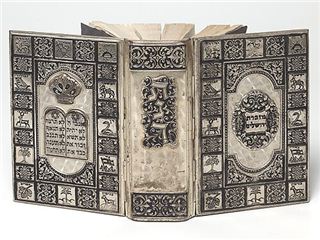
The Old Babylonian Empire's influence on later civilisation was concentrated in two fields of exceptional importance: law and language. The Code of Hammurabi, inscribed around 1754 BCE, is the most complete legal collection to survive from the ancient Near East, and scholars have traced its parallels in the legal sections of the Hebrew Bible — particularly the Covenant Code (Book of the Covenant) in Exodus — whose influence later extended into Western legal thought. The principle of proportional retaliation (lex talionis), protection of debtors from abuse, fixed wage rates and the codification of commercial contract law all appear in forms that recur in later legal systems of the Near East and Mediterranean. The Old Babylonian form of Akkadian, used for law, administration and literature under Hammurabi and his successors, became the classical standard of the language and the basis of the Babylonian that served as the diplomatic lingua franca of the Near East for centuries afterwards: Egyptian pharaohs, Hittite kings and the rulers of smaller states corresponded in it, as the Amarna archive demonstrates. The rise of Marduk, begun under Hammurabi's patronage, became the religious foundation of Babylonian identity through the Kassite, Assyrian and Neo-Babylonian periods: Marduk's primacy came to be so firmly established that later conquerors who wished to legitimise their rule over Babylon were expected to honour him and take part in the New Year (Akitu) festival in his temple. The city of Babylon itself, greatly enlarged under Hammurabi's building programme, remained the pre-eminent city of southern Mesopotamia for well over a thousand years.
Decline & Fall
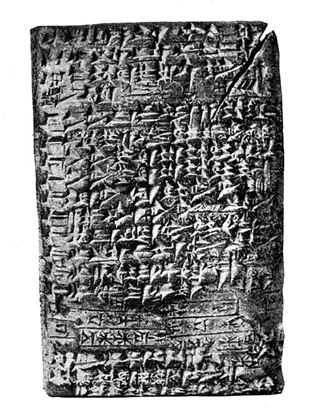
The Old Babylonian Empire's decline followed a striking asymmetry: a century of slow ascent, a decade of rapid conquest under Hammurabi, and then a contraction almost as swift as the rise that preceded it. The fundamental cause was structural: Hammurabi had built an empire through his own personality, diplomatic intelligence and military skill, but had not created the institutions — loyal provincial elites, permanent garrisons, an administrative class with independent attachment to the imperial system — needed to carry it through the transition to less capable successors. About a decade after Hammurabi's death in 1750 BCE, his son Samsu-iluna faced a widespread revolt across the south, led by a pretender styling himself Rim-Sin II and joined, according to Samsu-iluna's own inscriptions, by 26 rebel kings. Samsu-iluna crushed the rising, but only by pulling down the walls of Ur, Uruk and Isin, ruining these cities as administrative centres in the process of reclaiming them. Within a few years two territorial losses had permanently diminished the kingdom: the Sealand Dynasty, founded by Ilum-ma-ili after victories over Samsu-iluna, broke away in the far south and would remain independent for more than two and a half centuries; and in the north a native Assyrian ruler, Puzur-Sin, expelled the Amorite dynasty installed under Shamshi-Adad and ended Babylonian influence at Assur. Later kings made futile attempts at reconquest, most notably Abi-Eshuh's failed campaign against Ilum-ma-ili, in which he tried to dam the Tigris, before the dynasty retreated into a narrower, domestic role. The final blow came with the Hittite sack of Babylon around 1595 BCE, when King Mursili I led a remarkable long-distance raid down the Euphrates, took the city and carried off the cult statues of Marduk and his consort Zarpanitu. The Hittites did not remain — they had no interest in governing Mesopotamia — but their raid ended the First Dynasty, and the Kassites, who had pressed on Babylonia's borders for generations, moved in to establish a ruling dynasty that would govern the country for more than four centuries.
The Old Babylonian Empire's enduring significance lies not in the longevity of its political structure — which began to fragment within a decade or so of Hammurabi's death — but in the Code of Hammurabi itself: 282 laws inscribed on a basalt stele that form the most complete surviving legal collection of the ancient Near East and proclaimed the principle that a king's legitimacy rested on protecting the weak from the strong, a political ideal whose echoes extended from ancient Mesopotamia to the modern world.
References
- Driver, G.R. and Miles, J.C. (1952–1955) The Babylonian Laws. 2 vols. Oxford: Clarendon Press.
- Kuhrt, A. (1995) The Ancient Near East c. 3000–330 BC. London: Routledge.
- Oates, J. (1979) Babylon. Revised edn. London: Thames and Hudson.
- Postgate, J.N. (1992) Early Mesopotamia: Society and Economy at the Dawn of History. London: Routledge.
- Roux, G. (1992) Ancient Iraq. 3rd edn. London: Penguin.
- Van de Mieroop, M. (2005) King Hammurabi of Babylon: A Biography. Oxford: Blackwell.
Connections
Open the full connections map →