Europe
Grand Duchy of Luxembourg
At a glance
- Created by the Congress of Vienna in 1815 and ruled by the Dutch kings until 1890, it lost its western half to Belgium in 1839.
- Iron ore and steel, then banking and investment funds, made a poor farming country one of the richest in the world per head.
- Occupied by Germany in both world wars, it abandoned neutrality and became a founding member and seat of European institutions.
Rise & Fall
- 1815The Congress of Vienna creates the grand duchy under William I of the Netherlands
- 1839The Treaty of London gives the western, French-speaking half to Belgium
- 1867The Treaty of London declares Luxembourg neutral and orders its fortress demolished
- 1890Adolphe of Nassau-Weilburg becomes grand duke, ending the union with the Netherlands
- 1940Germany invades; Grand Duchess Charlotte and the government go into exile
- 1952The High Authority of the European Coal and Steel Community settles in Luxembourg
- 1985The Schengen Agreement is signed at the village of Schengen
Foundation

The Grand Duchy of Luxembourg was created by the Congress of Vienna in 1815 out of the old Duchy of Luxembourg, a province of the Habsburg Netherlands that revolutionary France had annexed in 1795 as the Département des Forêts. The great powers raised it to a grand duchy and gave it to William I of the Netherlands as compensation for the hereditary Nassau lands in Germany that his house surrendered to Prussia. Luxembourg was therefore a personal possession of the House of Orange-Nassau rather than part of the Kingdom of the Netherlands, although William for years governed it much like a Dutch province. It was at the same time a member of the German Confederation, and its capital, one of the strongest fortresses in Europe, became a federal fortress garrisoned by Prussian troops. When the Belgian Revolution broke out in 1830, most of the grand duchy joined the Belgian rising, while the fortified capital remained under William’s control. The Treaty of London of 1839 then divided the country: the larger, French-speaking western part became the Belgian Province of Luxembourg, and the smaller, Luxembourgish-speaking east remained a grand duchy of about 2,600 square kilometres, the territory of the present state.
Socioeconomy

In 1839 the grand duchy was a poor agricultural country of fewer than 200,000 people, many of whom emigrated to France, Belgium and the Americas during the nineteenth century. Its economy turned east in 1842, when it joined the Zollverein, the German customs union, which opened the German market to its farmers and small industries. The decisive change came from the phosphoric iron ore, the minette, of the south around Esch-sur-Alzette. After the Thomas-Gilchrist process of 1879 made such ore usable for steel, blast furnaces and steelworks multiplied, Italian and other foreign workers arrived, and in 1911 several firms merged into ARBED, which became one of Europe’s leading steel producers. After the First World War Luxembourg left the Zollverein and formed the Belgium–Luxembourg Economic Union in 1921, tying its franc to the Belgian currency. Society remained overwhelmingly Catholic, and the spoken language, Luxembourgish, coexisted with French and German, which served as the languages of law, administration and the press; a law of 1984 declared Luxembourgish the national language. From the 1960s, and above all after the steel crisis of 1975, banking, investment funds, insurance and media made Luxembourg one of the richest countries in the world per head, with a large share of foreign residents and cross-border workers.
Military

Luxembourg’s military history is chiefly that of its fortress and of the occupations it suffered. Under the settlement of 1815 the fortress of Luxembourg, called the ‘Gibraltar of the North’, was a federal fortress of the German Confederation held by a Prussian garrison of several thousand men. In 1867 Napoleon III of France negotiated to buy the grand duchy from William III of the Netherlands, provoking the Luxembourg Crisis with Prussia. The powers settled it by the Treaty of London of 1867, which declared Luxembourg perpetually neutral under their collective guarantee, withdrew the Prussian garrison and ordered the fortifications demolished, work that lasted until 1883. Thereafter the state kept only a small volunteer corps. Neutrality did not protect it: Germany occupied the country from August 1914 until 1918 and invaded again on 10 May 1940. The Nazi regime annexed it in all but name under the Gauleiter Gustav Simon, imposed German law and in 1942 introduced conscription of young Luxembourgers into the Wehrmacht, which provoked a general strike that was brutally repressed. American troops liberated most of the country in September 1944, but the north suffered heavily in the Battle of the Bulge that winter. After 1945 Luxembourg introduced conscription for a time, sent volunteers to fight in Korea alongside the Belgian battalion and has since kept a small professional army within NATO.
Governance & Law

Luxembourg has been a constitutional monarchy since the constitution granted by William II in 1841, followed by a more liberal one in 1848 and the revised constitution of 1868, which remained the basis of the state until a new constitution entered into force in 2023. Until 1890 the grand dukes were the kings of the Netherlands, represented in the country by a lieutenant or a governor. When William III died in 1890 leaving only a daughter, Wilhelmina, the Nassau Family Pact of 1783 passed Luxembourg to the other branch of the House of Nassau, and Adolphe, the former Duke of Nassau, became grand duke, giving the country its own dynasty. His son William IV changed the succession law so that his daughter Marie-Adélaïde could succeed in 1912. Her conduct towards the German occupiers discredited her, and she abdicated in 1919 in favour of her sister Charlotte, whose reign was confirmed by a referendum that year; the constitutional revision of 1919 also introduced universal suffrage and placed sovereignty in the nation. Charlotte reigned until 1964, followed by Jean (1964–2000), Henri (2000–2025) and Guillaume. Real power lies with the Chamber of Deputies and the government; after Henri declined in 2008 to sanction a law on euthanasia, the constitution was amended to remove the grand duke’s right of sanction. Long-serving prime ministers such as Pierre Werner and Jean-Claude Juncker have dominated politics.
Global & Regional Impact

Luxembourg’s significance lies above all in its place in European integration. The experience of occupation turned it against neutrality: in 1944 the governments in exile of Belgium, the Netherlands and Luxembourg signed the customs convention that created Benelux, and in 1948 the constitution dropped perpetual neutrality. Luxembourg was a founding member of NATO in 1949, of the European Coal and Steel Community, whose High Authority sat in Luxembourg from 1952, and of the European Economic Community in 1957. The city became one of the three seats of the European institutions, home to the Court of Justice of the European Union, the European Investment Bank, the European Court of Auditors and the secretariat of the European Parliament. Luxembourgers helped shape the process: Joseph Bech was among the founding statesmen, Robert Schuman was born in the city, the Werner Report of 1970, prepared under Pierre Werner, first set out a plan for economic and monetary union, and Gaston Thorn, Jacques Santer and Jean-Claude Juncker each presided over the European Commission. The Schengen Agreement on open borders was signed in 1985 at the Luxembourg village of Schengen. The country has also been a broadcasting pioneer through Radio Luxembourg and the RTL group, and in satellite communications through SES, founded in 1985.
Into the Present
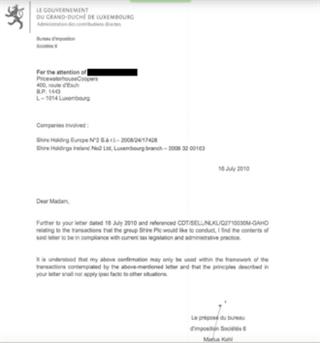
The Grand Duchy has not declined but has been transformed from a fortress state into a prosperous small member of the European Union. The steel crisis that began in 1975 cut employment in the south sharply, and the state responded with a tripartite system of negotiation between government, employers and unions that eased restructuring and became a hallmark of Luxembourg’s politics. ARBED merged into Arcelor in 2002, which became ArcelorMittal in 2006 with its headquarters in Luxembourg. Meanwhile the financial sector, built on the holding company law of 1929, the Eurobond market of the 1960s and later investment funds, became the core of the economy, and Luxembourg grew into one of the largest centres for investment funds in the world. Its tax arrangements for multinational companies drew international criticism, notably in the ‘LuxLeaks’ revelations of 2014, and banking secrecy was largely given up under international pressure. Luxembourg adopted the euro in 1999. Today it has roughly 680,000 inhabitants, nearly half of them foreign citizens, and more than 200,000 workers cross daily from France, Belgium and Germany. It remains the world’s only grand duchy, a parliamentary democracy under a hereditary grand duke with Luxembourgish, French and German as its languages; Grand Duke Guillaume succeeded his father Henri in 2025.
Luxembourg shows how a small fortress state, created by the great powers in 1815 and partitioned in 1839, turned its steel industry, its neutrality’s failure in two world wars and its position between France and Germany into a central role in European integration and global finance.
Test yourself
5 questions on this page, from its key events and facts.
The questions open here once the page has loaded.
References
- Newcomer, J. (1984) The Grand Duchy of Luxembourg: The Evolution of Nationhood, 963 A.D. to 1983. Lanham: University Press of America.
- Kreins, J.-M. (2018) Histoire du Luxembourg: des origines à nos jours. Paris: Presses universitaires de France.
- Pauly, M. (2011) Geschichte Luxemburgs. Munich: C.H. Beck.
Connections
Open the full connections map →