Americas
Republic of Nicaragua
At a glance
- The first state to leave the Central American federation, in 1838, long torn between liberal León and conservative Granada.
- Its possible canal route drew British, filibuster and American interventions, from William Walker in 1856 to US Marines in 1912–1933.
- The Somoza dynasty ruled from 1936 to 1979 until the Sandinista revolution; Daniel Ortega has governed again since 2007.
Rise & Fall
- 1838Nicaragua becomes the first state to leave the Federal Republic of Central America
- 1852Managua is chosen as a compromise capital between León and Granada
- 1856The American filibuster William Walker makes himself president
- 1894José Santos Zelaya incorporates the Mosquito Reserve
- 1912US Marines land, beginning an occupation that lasts until 1933
- 1934Augusto César Sandino is murdered on the orders of Anastasio Somoza García
- 1979The Sandinista revolution overthrows Anastasio Somoza Debayle
- 1990Violeta Barrios de Chamorro defeats Daniel Ortega, ending the Contra war
Foundation

Nicaragua emerged from the break-up of the Federal Republic of Central America, the union formed by the former provinces of the Captaincy General of Guatemala after independence from Spain in 1821 and from Agustín de Iturbide’s Mexican Empire in 1823. As a member state of the federation, Nicaragua was torn by civil wars between the liberal elite of León, the old colonial administrative centre, and the conservative merchants and landowners of Granada on Lake Nicaragua. On 30 April 1838 a constituent assembly declared Nicaragua free of the federation, the first member to leave, and a new constitution followed in November. For the next decades the state, governed by supreme directors with short terms, remained little more than an arena for the León–Granada feud. In 1852 the small town of Managua, lying between the two rivals, was chosen as a compromise capital, and the constitution of 1854, adopted under the conservative Fruto Chamorro, formally proclaimed the Republic of Nicaragua with a president at its head. The state’s territory was also incomplete: the Caribbean Mosquito Coast, home to Miskitu and Creole communities, lay under a British protectorate, and in 1848 British forces seized the port of San Juan del Norte, which they renamed Greytown.
Socioeconomy
Most Nicaraguans lived in the Pacific lowlands and the central highlands, where cattle ranching, subsistence farming of maize and beans, and small exports of indigo and hides sustained a poor, largely mestizo society dominated by a few landowning families of León and Granada. The country’s great asset was geographical: the San Juan River and Lake Nicaragua offered a natural route between the Caribbean and the Pacific. During the California Gold Rush Cornelius Vanderbilt’s Accessory Transit Company carried thousands of travellers across the isthmus by steamboat and stagecoach from 1851, and a canal through Nicaragua remained a dream of investors and governments for more than a century. From the 1870s coffee became the main export, and laws promoting private property displaced indigenous communal landholders, especially around Matagalpa, where an indigenous revolt broke out in 1881. In the twentieth century bananas, gold and timber drew American companies to the Caribbean coast, while the 1950s brought a cotton boom on the Pacific plains. The Somoza family accumulated enormous wealth in land, industry and transport. Nicaragua is today one of the poorest countries in the Americas, with about seven million people, a largely Catholic but increasingly evangelical population, and heavy dependence on remittances from emigrants and on exports of coffee, beef and gold.
Military

Nicaragua’s military history has been dominated by civil war and foreign intervention. In 1855 the León liberals invited the American adventurer William Walker and his band of filibusters to help them against Granada; Walker took Granada in October 1855, made himself president in July 1856 and revoked the ban on slavery. The other Central American states, led by Costa Rica under Juan Rafael Mora, united against him in the National War: Nicaraguan forces defeated his men at the Battle of San Jacinto on 14 September 1856, and Walker surrendered at Rivas in May 1857. United States Marines landed in 1912 to support a conservative government against a liberal rising, in which the nationalist general Benjamín Zeledón was killed, and a legation guard remained until 1925. After a new civil war the Marines returned in 1926, and the liberal general Augusto César Sandino rejected the American-brokered peace of 1927, fighting a guerrilla war in the northern mountains until the Marines left in January 1933. The United States trained a new National Guard, which under Anastasio Somoza García became the pillar of the dictatorship. The Sandinista revolution of 1978–1979 destroyed the Guard, and in the 1980s the Sandinista Popular Army fought the US-backed Contra rebels in a war that killed some 30,000 people.
Governance & Law
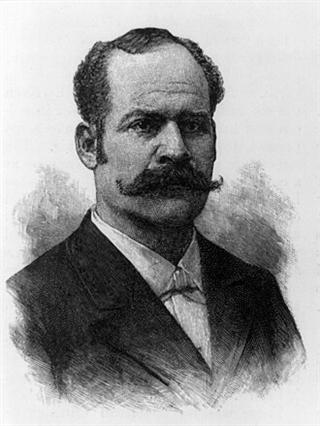
For its first half-century the republic was governed by a narrow elite whose two factions, the Granada-based Conservatives and the León-based Liberals, fought for control of the state and often sought outside allies. Walker’s disaster discredited the Liberals, and from 1857 to 1893 the Conservatives ruled through an unusually orderly succession of presidents, a period known as the Thirty Years. The Liberal revolution of 1893 brought José Santos Zelaya to power; his constitution of 1893, called la Libérrima, separated church and state, and he built railways, schools and a professional army, in 1894 incorporating the Mosquito Reserve into Nicaragua by force. His independent foreign policy and rumoured canal negotiations with other powers alarmed Washington, which helped to force him out in 1909. Under the Bryan–Chamorro Treaty of 1914 Nicaragua granted the United States perpetual rights to build a canal. Anastasio Somoza García, director of the National Guard, had Sandino murdered in February 1934, seized power in 1936 and ruled until he was assassinated in León in 1956; his sons Luis Somoza Debayle and Anastasio Somoza Debayle continued the dynasty until 1979, governing through the Guard, the Liberal Nationalist Party and pliant presidents. The Sandinista government of 1979–1990 created new mass organisations, and the constitution of 1987, much amended since, still provides the framework of the state.
Global & Regional Impact
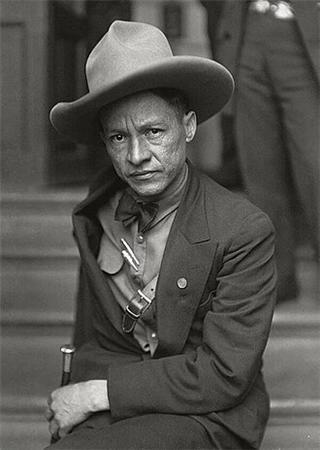
Nicaragua’s place in wider history has come largely from its geography and its revolutions. The prospect of a Nicaraguan canal shaped British and American rivalry in the Caribbean, producing the Clayton–Bulwer Treaty of 1850, and the route remained the main alternative to Panama until the United States Senate chose Panama in 1902. Walker’s invasion left a lasting memory of North American aggression across Central America, where the victory of 1856–1857 is still celebrated as a second independence. The occupation of 1912–1933 and Sandino’s resistance made Nicaragua a symbol of anti-imperialism throughout Latin America, and the revolutionaries of the Sandinista National Liberation Front (FSLN), founded in 1961, took his name. The revolution of 1979 became one of the defining conflicts of the late Cold War: the Reagan administration’s support for the Contras led to the Iran–Contra affair, and in 1986 the International Court of Justice ruled in Nicaragua v. United States that American support for the rebels and the mining of Nicaraguan harbours had violated international law. The Sandinista literacy crusade of 1980 drew international praise. In culture, Nicaragua produced Rubén Darío, whose collection Azul (1888) launched modernismo, the movement that renewed Spanish-language poetry, and later the poet Ernesto Cardenal, a Catholic priest who served as the Sandinista minister of culture.
Into the Present

Nicaragua still exists as a republic, but its modern history has been one of repeated destruction and authoritarian relapse. The Managua earthquake of 23 December 1972 killed some 10,000 people, and the diversion of relief aid under Anastasio Somoza Debayle alienated even much of the business class. The murder of the opposition newspaper editor Pedro Joaquín Chamorro in January 1978 set off a national uprising, and on 19 July 1979 the FSLN entered Managua after Somoza fled. The Sandinista government nationalised the Somoza properties and pursued land reform, but faced the Contra war and a US trade embargo from 1985, and the economy collapsed into hyperinflation. Under the Esquipulas peace process of 1987 the Sandinistas held free elections, and in February 1990 Violeta Barrios de Chamorro, Pedro Joaquín’s widow, defeated Daniel Ortega and ended the war. Liberal governments followed until Ortega returned to the presidency in 2007 after a pact with the former president Arnoldo Alemán. Since then Ortega and his wife, Rosario Murillo, have dismantled checks on their power: protests in April 2018 were suppressed with more than 300 deaths, leading opposition candidates were jailed before the 2021 election, and hundreds of critics have been stripped of their citizenship. A constitutional reform in 2025 made Murillo co-president, leaving Nicaragua an authoritarian state ruled by a single couple.
Nicaragua shows how geography can shape a small state’s fate: its potential canal route drew filibusters, British protectors and American Marines, and its struggles against the Somoza dictatorship and in the Contra war made it a central battleground of anti-imperialism and of the late Cold War in Latin America.
References
- Burns, E.B. (1991) Patriarch and Folk: The Emergence of Nicaragua, 1798–1858. Cambridge, MA: Harvard University Press.
- Gobat, M. (2005) Confronting the American Dream: Nicaragua under U.S. Imperial Rule. Durham, NC: Duke University Press.
- Gobat, M. (2018) Empire by Invitation: William Walker and Manifest Destiny in Central America. Cambridge, MA: Harvard University Press.
- Walter, K. (1993) The Regime of Anastasio Somoza, 1936–1956. Chapel Hill: University of North Carolina Press.
- Kinzer, S. (1991) Blood of Brothers: Life and War in Nicaragua. New York: G.P. Putnam’s Sons.
Connections
Open the full connections map →