Sub-Saharan Africa
Sokoto Caliphate
At a glance
- Born of Usman dan Fodio's Islamic reform jihad of 1804, the Sokoto Caliphate became the largest state in 19th-century West Africa.
- Some thirty emirates shared one Islamic legal culture, a decentralised design that survived for almost a century without succession crises.
- British forces with Maxim guns conquered it in 1903, then governed northern Nigeria through its emirs under indirect rule.
Rise & Fall
- 1804Usman dan Fodio makes his hijra to Gudu and declares jihad against the Hausa kings
- 1808Jihad forces storm Alkalawa, the Gobir capital, killing Sultan Yunfa
- 1817Dan Fodio dies; his son Muhammad Bello becomes Sultan of Sokoto
- 1886Britain charters the Royal Niger Company
- 1900Frederick Lugard proclaims the Protectorate of Northern Nigeria
- 1903British forces take Kano in February and occupy Sokoto in March
- 1903Sultan Attahiru I is killed fighting the British at Burmi in July
Foundation
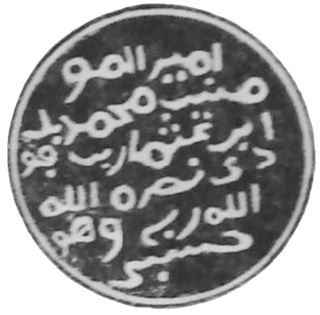
The Sokoto Caliphate emerged not from dynastic ambition or military opportunism but from a deliberate Islamic reform movement rooted in scholarly critique of the Hausa kingdoms of the central Sudan. Its architect, Usman dan Fodio, born in 1754 in Gobir, in what is now north-western Nigeria, was a Fulani scholar of the Qadiriyya Sufi order whose decades of preaching against the syncretic, partly Islamised rule of the Hausa kings had built him a substantial following among both Fulani pastoralists and Hausa Muslim townspeople by the late eighteenth century. The immediate trigger for revolt was political: Sultan Yunfa of Gobir, traditionally described as a former pupil of dan Fodio, turned against the reformer, reportedly attempting to have him killed, and moved to suppress his community. In February 1804 dan Fodio led his followers in a hijra, a migration explicitly modelled on the Prophet Muhammad's flight from Mecca to Medina, to Gudu, where his community acclaimed him Amir al-Mu'minin, Commander of the Faithful. He then declared jihad against the Hausa kings, granting flags to trusted lieutenants who launched uprisings across the Hausa states. His son Muhammad Bello and brother Abdullahi dan Fodio led the campaigns against Gobir, while flagbearers such as Sulaimanu in Kano, Musa in Zaria and Modibbo Adama in Adamawa carved out new emirates; within some five years virtually every major Hausa ruler had been overthrown or subordinated, creating a federation of emirates acknowledging the spiritual and temporal authority of Sokoto. From around 1812 dan Fodio withdrew from active government, entrusting the eastern emirates to Bello and the western to Abdullahi, and he died in 1817, having laid the foundations of the largest state in nineteenth-century West Africa.
Socioeconomy

The Sokoto Caliphate's economy was built on the agricultural productivity of the savannah and semi-arid zones of the central Sudan, where Hausa and Fulani farmers cultivated sorghum, millet, cotton and indigo across a landscape of walled towns and rural villages. The emirate system created a layered fiscal structure: each of the caliphate's thirty or so emirates collected taxes according to Islamic principles, including zakat on produce and livestock, jizya on non-Muslim subjects and kharaj on agricultural land, remitting a portion to Sokoto while retaining the remainder for local administration and military expenditure. Slavery was economically central, and the caliphate became one of the largest slave societies of the nineteenth-century world: plantation estates around cities such as Kano and Zaria relied on enslaved agricultural labour on a scale that some historians have compared with the slave economies of the Americas, notably the antebellum American South, with slave villages (rinji) attached to the estates of emirs, officials and wealthy merchants. Kano was the caliphate's principal commercial metropolis, its textile industry, famed for finely dyed indigo cloth, exporting across trans-Saharan routes to North Africa. Long-distance trade linked the caliphate to Tripoli and other North African termini across the desert, westward to the kola-producing forests of Asante, southward to the Yoruba markets, and eastward to Bornu and the Lake Chad basin, with cloth, leather goods, kola nuts and slaves among the principal commodities of exchange.
Military
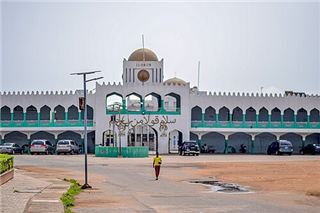
The Sokoto Caliphate's military power rested on the cavalry of the individual emirates, each obliged to provide mounted warriors in times of jihad or external threat, supplemented by infantry levies, archers and, in some emirates, heavy horsemen protected by quilted and chain-mail armour in a tradition that had characterised Sudanic warfare for centuries. The jihad campaigns of 1804–1810 demonstrated the effectiveness of coordinated, ideologically motivated warfare: the flagbearers operated simultaneously across hundreds of kilometres, exploiting Muslim discontent and the political fragmentation of the Hausa states to win rapid victories before coordinated resistance could form. An early victory over the Gobir army at Tabkin Kwotto in 1804 sustained the movement, and the Battle of Alkalawa in 1808, in which the Gobir capital was stormed and Sultan Yunfa killed, ended organised Hausa resistance and secured the caliphate's territorial core. Later operations extended the caliphate southward into Yoruba territory: Ilorin, where the Oyo general Afonja rebelled around 1817 with Fulani and Muslim support, passed under a Fulani emir in the 1820s and, as the Ilorin Emirate, became the caliphate's spearhead against the Oyo Empire. The caliphate's military limitation was structural: it never developed a centralised standing army or significant artillery, relying instead on the combined cavalry of its constituent emirates. This decentralised arrangement proved adequate against regional rivals but wholly insufficient against British forces armed with Maxim guns and breech-loading rifles in the campaigns of 1897–1903, where the technological asymmetry made massed cavalry charges suicidal regardless of the warriors' courage or numbers.
Governance & Law

The Sokoto Caliphate's administration was among the most systematically Islamic of any empire in this dataset, conceived explicitly as the embodiment of Islamic governance as interpreted through Maliki jurisprudence and the Qadiriyya scholarly tradition. The Sultan of Sokoto held authority as Commander of the Faithful, combining spiritual leadership with ultimate temporal sovereignty, but government was deliberately decentralised: each flagbearer and his successors ruled as emir, appointing subordinate officials, administering sharia courts and maintaining local forces, while acknowledging Sokoto's religious primacy and sending annual tribute. A second seat of authority at Gwandu, held by Abdullahi and his descendants, oversaw the western emirates. Dan Fodio's political writings, particularly Bayan Wujub al-Hijra (Exposition of the Obligation of Emigration) and Kitab al-Farq (Book of the Difference), provided the ideological framework, establishing Islamic law as the standard by which rulers were to be judged and, if necessary, removed. Muhammad Bello, Sultan from 1817 to 1837, was himself a prolific scholar and administrator, author of a large body of works on theology, history and government, and his Infaq al-Maysur remains a primary source for the caliphate's early decades. Sharia courts presided over by alkalai (Islamic judges) handled civil and criminal matters, with appeals ultimately referable to Sokoto. The system's durability lay in its institutional redundancy: because authority was distributed across some thirty semi-autonomous emirates embedded in a shared Islamic legal culture, the caliphate could survive the deaths of individual sultans without the succession crises that destroyed more personalised empires.
Global & Regional Impact
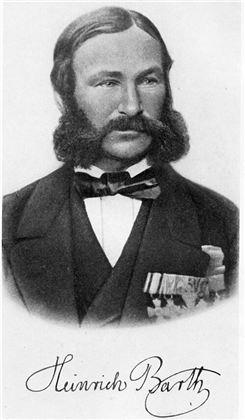
The Sokoto Caliphate's most transformative regional impact was the lasting reconfiguration of the religious, ethnic and political geography of West Africa. The jihad movements it inspired or encouraged reshaped governance across a broad arc of the Sahel and savannah: Seku Amadu's Massina Jihad (1818) and Al-Hajj Umar Tall's Tukulor conquests (1850s–1860s) both drew on the Sokoto example, making dan Fodio's movement the foundational event of nineteenth-century West African Islamic political thought. The destruction of the Oyo Empire was partly a direct consequence of Sokoto expansion: Ilorin's persistent military pressure accelerated Oyo's fragmentation and the abandonment of its capital in the 1830s, reshaping Yoruba political geography and driving population movements that reconfigured the region. Commercially, the caliphate's integration of a vast area intensified long-distance trade: Kano cloth was distributed across the Sahara and much of West Africa, and Heinrich Barth's celebrated travels through the caliphate in the 1850s produced detailed ethnographic and commercial documentation that remains invaluable to historians. The caliphate's educational institutions, from Quranic schools to advanced scholarly circles, produced a literate administrative class and sustained Arabic-language scholarship, including notable writing by dan Fodio's daughter Nana Asma'u, at a level that impressed European visitors. British indirect rule after 1903 deliberately preserved the emirate system's administrative structure, recognising its institutional sophistication, with consequences for the political structure of northern Nigeria that remain visible today.
Decline & Fall

The Sokoto Caliphate's fall was driven not by internal dynastic collapse, constitutional paralysis or economic exhaustion, the structural weaknesses that destroyed most empires in this dataset, but by the overwhelming technological superiority of British imperial expansion at the height of the Scramble for Africa. The caliphate had weathered significant internal tensions during the nineteenth century: frontier wars with Gobir and Kebbi, the prolonged revolt of the Hadejia emirate in the mid-century, occasional succession disputes at the sultanate level, and the chronic resistance and flight that slavery generated. Nevertheless, the decentralised emirate system kept the caliphate functioning for nearly a century. The existential threat came with the chartering of the Royal Niger Company in 1886, whose forces attacked Bida and Ilorin in 1897, and the creation of the Protectorate of Northern Nigeria under Frederick Lugard on 1 January 1900. British forces under Lugard then campaigned against individual emirates: Kontagora and Bida fell in 1901, and Kano in February 1903 after brief engagements in which British casualties were light against defenders who had no answer to Maxim gun fire; Sokoto itself was occupied in March 1903. The last independent Sultan, Muhammadu Attahiru I, refused submission and withdrew eastward with a following of loyalists in a hijra deliberately recalling dan Fodio's foundational migration, before being brought to battle at Burmi in July 1903, where he was killed alongside many of his followers. The British had already installed a more compliant successor at Sokoto, and the caliphate's sovereignty was extinguished, though its emirate institutions were preserved as instruments of British indirect rule.
The Sokoto Caliphate's enduring historical significance rests on its demonstration that a scholar-reformer's ideological vision could build, within a single generation, the largest and one of the most institutionally durable pre-colonial states in West African history, one whose administrative structures proved so robust that its conquerors chose to govern through them rather than dismantle them, embedding them in the foundations of modern Nigeria.
References
- Feinstein, A. (1976) African Revolutionary: The Life and Times of Nigeria's Aminu Kano. New York: Quadrangle.
- Hiskett, M. (1973) The Sword of Truth: The Life and Times of the Shehu Usuman Dan Fodio. New York: Oxford University Press.
- Johnston, H.A.S. (1967) The Fulani Empire of Sokoto. London: Oxford University Press.
- Last, M. (1967) The Sokoto Caliphate. London: Longman.
- Lovejoy, P.E. (1986) Salt of the Desert Sun: A History of Salt Production and Trade in the Central Sudan. Cambridge: Cambridge University Press.
- Usman dan Fodio (1978) Bayan wujub al-hijra 'ala 'l-'ibad. Edited and translated by F.H. El-Masri. Khartoum: Khartoum University Press.
Connections
Open the full connections map →