South & Southeast Asia
Later Pandyan Empire
At a glance
- A revival of the ancient Pandya dynasty of Madurai that overturned Chola rule and became the leading power of south India c. 1250–1310.
- Its ports, above all Kayal, grew rich on pearls and on importing thousands of horses each year from Arabia and the Persian Gulf.
- A succession war and the Delhi Sultanate’s invasions from 1311 destroyed it, and Madurai became a sultanate in 1335.
Rise & Fall
- c. 1205The Chola king Kulottunga III sacks Madurai
- c. 1219Maravarman Sundara Pandya I burns Thanjavur and Uraiyur
- c. 1262Jatavarman Sundara Pandya I defeats and kills the Hoysala Vira Someshvara
- c. 1279Maravarman Kulasekara I defeats Rajendra III, the last Chola king
- c. 1284Pandya forces take the Tooth Relic from Yapahuwa in Sri Lanka
- c. 1292Marco Polo visits the coast of Ma’bar
- 1311Malik Kafur plunders Madurai
- 1323Ulugh Khan annexes Madurai to the Delhi Sultanate
Foundation
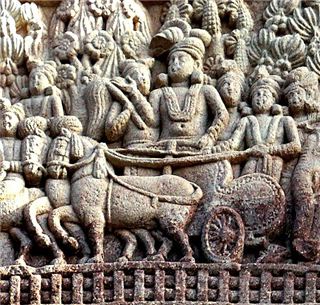
The Pandyas were one of the three ancient Tamil royal lineages, named with the Cholas and the Cheras in the Sangam poems and in Ashoka’s inscriptions, and associated with Madurai on the Vaigai river. After a first period of power in the early medieval centuries, they were conquered by the Chola Empire in the tenth century and spent most of the eleventh and twelfth centuries as subordinate or rebellious princes in the far south of Tamil Nadu. Their revival began in the late twelfth century, when the Chola kings were drawn into Pandya succession disputes and Sri Lankan interventions. Jatavarman Kulasekara I, who ruled from 1190, asserted independence but was crushed by the Chola king Kulottunga III, who invaded c. 1205 and destroyed the Pandya coronation hall at Madurai. The decisive turn came under his brother Maravarman Sundara Pandya I, who ruled from 1216. Around 1219 he invaded the Chola country, burned Thanjavur and Uraiyur and celebrated a victory coronation in the Chola heartland, forcing Rajaraja III to accept him as overlord; the Chola king was restored only through Hoysala intervention. From this point the Pandyas, rather than the Cholas, were the rising power of the Tamil country, a position that grew in the following decades into supremacy across south India.
Socioeconomy
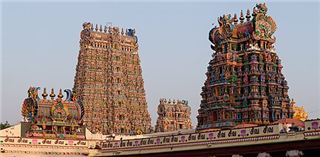
The Pandya country combined the rice lands of the Vaigai and Tamraparni valleys, watered by tanks and channels, with a long coast on the Gulf of Mannar whose pearl fisheries had been famous since antiquity. Marco Polo, who visited the coast of Ma’bar c. 1292, described the pearl divers, the royal share of their catch and a king who wore a necklace of rubies and pearls. The Pandya ports, above all Kayal at the mouth of the Tamraparni, were busy centres of the Indian Ocean trade, exporting pearls, cotton cloth and spices and receiving Chinese silk and porcelain and, above all, horses from Arabia and the Persian Gulf. Both Marco Polo and the Persian historian Wassaf report that thousands of horses were imported every year because they did not breed well in south India and died quickly, and Wassaf describes a merchant family from the Gulf, headed by Jamal al-Din and his brother Taqi al-Din, which controlled much of this trade and held office at the Pandya court. The Yuan court in China exchanged embassies with Ma’bar in the 1280s. Society was organised around temples, Brahmin assemblies, agricultural villages and merchant communities, and the kings lavished wealth on the great temples of Madurai, Srirangam and Chidambaram, where Saiva and Vaishnava devotion was central to public life.
Military
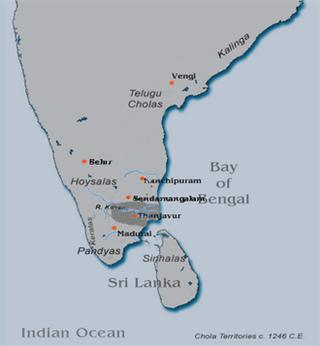
Pandya armies combined infantry, war elephants and a cavalry that depended on imported horses, and the kings spent heavily to keep it supplied. The empire was created through a sequence of campaigns. Maravarman Sundara Pandya I defeated the Cholas c. 1219. In the 1250s and 1260s Jatavarman Sundara Pandya I made the Pandyas paramount in the south: he defeated the Chola king Rajendra III, drove the Hoysalas out of the Tamil country and killed the Hoysala king Vira Someshvara c. 1262, overcame the Telugu Chodas of Nellore and fought the Kakatiyas, performing a victory coronation at Nellore. He also forced the rulers of northern Sri Lanka, including the Kingdom of Jaffna, to pay tribute. His successor Maravarman Kulasekara Pandya I defeated Rajendra III and the Hoysala Ramanatha c. 1279, after which the Chola dynasty disappears from the record. Around 1284 a Pandya army under the commander Aryacakravarti invaded Sri Lanka, took the fortress of Yapahuwa and carried off the Tooth Relic of the Buddha, which King Parakramabahu III later recovered by negotiation, according to the Culavamsa. The Pandyas were less able to resist the armies of the Delhi Sultanate, whose mobile cavalry under Malik Kafur raided Madurai in 1311 while the kingdom was divided by civil war.
Governance & Law

A distinctive feature of Pandya government was the sharing of royal authority among several members of the dynasty at the same time. Inscriptions show co-regents and princes ruling jointly or over parts of the kingdom, and Marco Polo’s report that Ma’bar was ruled by five royal brothers reflects this system, which allowed the dynasty to govern a wide territory but also invited disputes. Kings bore the alternating titles Maravarman and Jatavarman, and their reigns overlapped, which makes the chronology difficult to reconstruct and dependent on careful comparison of inscriptions. The leading rulers were Maravarman Sundara Pandya I, Jatavarman Sundara Pandya I and Maravarman Kulasekara Pandya I, the last ruling for some four decades until c. 1310. Below the kings, the administration largely continued Chola institutions: the territory was divided into valanadus and nadus, Brahmin villages were governed by assemblies called sabhas, other villages by assemblies called urs, and temples managed large endowments of land and gold. Royal orders and grants were recorded in Tamil inscriptions on temple walls. Wassaf’s account of Muslim merchants holding office in the ports suggests that the kings also relied on foreign trading communities to manage customs and the horse trade, which was vital for the army.
Global & Regional Impact

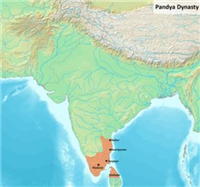
For a few decades in the thirteenth century the Later Pandyan Empire was the dominant power of south India, with influence from Nellore in the north to Sri Lanka in the south, and its victories ended the Chola Empire, which had ruled the Tamil country for more than three centuries. Its ports linked south India with the Persian Gulf, the Arab world and Yuan China, and foreign visitors recorded the wealth of its pearl and horse trades: the accounts of Marco Polo and Wassaf are among the most detailed medieval descriptions of a south Indian kingdom. The Pandyas were great patrons of temples. Jatavarman Sundara Pandya I covered the shrine of the Ranganatha temple at Srirangam with gilded copper and endowed Chidambaram, earning the title ‘the king who covered the temple with gold’, and the dynasty contributed to the early phase of the tall gateway towers, the gopurams, that came to dominate Tamil temple architecture. Its intervention in Sri Lanka contributed to the shift of Sinhalese political centres away from the north and to the rise of the Tamil Kingdom of Jaffna under the Aryacakravarti rulers, who were connected with the Pandya expeditions. After the empire fell, the Pandya name survived through the Tenkasi Pandyas, who ruled in the far south into the sixteenth century.
Decline & Fall

The empire’s collapse began with a succession dispute. According to Wassaf, Maravarman Kulasekara Pandya I favoured his son Vira Pandya, born of a concubine, over the legitimate heir Sundara Pandya, who killed his father c. 1310. The ensuing civil war between the two brothers coincided with the southern campaigns of the Delhi Sultanate. In 1311 Malik Kafur, the general of Alauddin Khalji, marched south from the Hoysala capital, plundered Madurai and other towns and returned to Delhi with enormous treasure, although he did not establish lasting control. The weakened Pandyas were also attacked from Kerala, where the Venad ruler Ravivarman Kulasekhara advanced as far as Kanchipuram. In 1323 an army of the Tughluq dynasty under Ulugh Khan, the future Muhammad bin Tughluq, conquered Madurai and made the Pandya lands the province of Ma’bar. In 1335 its governor, Jalal al-Din Ahsan Shah, rebelled and founded the independent Madurai Sultanate. Pandya princes continued to hold territory in the far south, around Tirunelveli, but by the 1340s they no longer formed a significant power. After the Vijayanagara Empire destroyed the Madurai Sultanate in 1378, the Pandyas survived as Vijayanagara subordinates, later known as the Tenkasi Pandyas.
The Later Pandyan Empire revived an ancient Tamil dynasty, ended the Chola Empire and briefly dominated south India and northern Sri Lanka in the thirteenth century, growing rich on pearls and the horse trade before succession war and the Delhi Sultanate’s invasions destroyed it.
References
- Nilakanta Sastri, K.A. (1929) The Pandyan Kingdom from the Earliest Times to the Sixteenth Century. London: Luzac.
- Nilakanta Sastri, K.A. (1955) A History of South India from Prehistoric Times to the Fall of Vijayanagar. Madras: Oxford University Press.
- Jackson, P. (1999) The Delhi Sultanate: A Political and Military History. Cambridge: Cambridge University Press.
- Karashima, N. (ed.) (2014) A Concise History of South India: Issues and Interpretations. New Delhi: Oxford University Press.
- Marco Polo (1958) The Travels, trans. R. Latham. Harmondsworth: Penguin.
Connections
Open the full connections map →