Americas
Mexico
At a glance
- The republic was restored in 1867 when Benito Juárez defeated the French-backed empire of Maximilian of Habsburg.
- The Revolution of 1910–1920 produced the Constitution of 1917, land reform and a ruling party that held power until 2000.
- Since NAFTA in 1994 and the democratic transition of 2000, Mexico has become a large industrial economy tied to the United States.
Rise & Fall
- 1867Maximilian is executed at Querétaro and Benito Juárez restores the republic
- 1876Porfirio Díaz seizes power under the Plan of Tuxtepec
- 1910Francisco I. Madero’s call to revolt begins the Mexican Revolution
- 1917The Constitution of 1917 is promulgated at Querétaro
- 1929Plutarco Elías Calles founds the National Revolutionary Party
- 1938Lázaro Cárdenas expropriates foreign oil companies
- 1994NAFTA comes into force and the Zapatistas rise in Chiapas
- 2000Vicente Fox’s election ends seven decades of PRI rule
Foundation
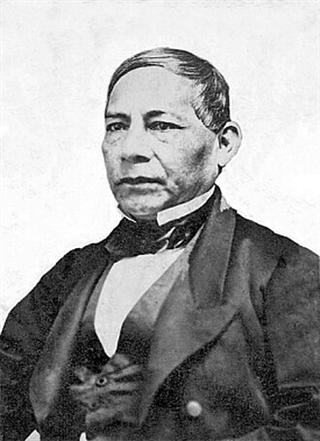
The modern Mexican republic dates from the collapse of the Second Mexican Empire. Liberals and conservatives had fought the War of the Reform of 1858–1861 over the Constitution of 1857, which curbed the privileges of the Catholic Church and the army, and when Benito Juárez suspended payments on foreign debt in 1861, France invaded with the support of Mexican conservatives. Despite a celebrated Mexican victory at the Battle of Puebla on 5 May 1862, French troops took Mexico City in 1863, and in 1864 Archduke Maximilian of Austria accepted the Mexican crown. Juárez kept a republican government alive in the north, and after the American Civil War the United States pressed France to withdraw. Napoleon III recalled his troops in 1866–1867, and republican armies besieged Maximilian at Querétaro, where he surrendered in May 1867 and was shot on 19 June together with the conservative generals Miguel Miramón and Tomás Mejía. Juárez re-entered Mexico City on 15 July 1867. In the period known as the Restored Republic, Juárez and, after his death in 1872, Sebastián Lerdo de Tejada sought to enforce the Reform laws, build railways and curb the regional military chiefs within the constitutional order of 1857.
Socioeconomy

Mexico entered the late nineteenth century as a largely rural country in which haciendas, Indigenous villages and mining districts were the main economic units. Under Porfirio Díaz foreign capital, much of it American and British, built a railway network of some 19,000 kilometres by 1910, linking mines and plantations to the United States border and the ports, and Mexico became a major producer of silver, copper, henequen and, from the 1900s, oil. The Reform laws and the activities of surveying companies stripped many villages of their communal lands, so that by 1910 most rural families owned no land. The Revolution produced Article 27 of the Constitution of 1917, which made subsoil resources national property and allowed land redistribution; under Lázaro Cárdenas in the 1930s some 18 million hectares were distributed, largely as communal ejidos, and the foreign oil companies were expropriated in 1938 to form Pemex. From about 1940 to 1970 import-substituting industrialisation brought sustained growth, known as the Mexican Miracle, and mass migration to Mexico City, Guadalajara and Monterrey. After the debt crisis of 1982 governments opened the economy, and the North American Free Trade Agreement of 1994 tied Mexican manufacturing closely to the United States. Remittances from migrants and tourism are also major sources of income.
Military

The army that defeated Maximilian was a coalition of liberal forces under regional commanders such as Porfirio Díaz, who recaptured Puebla in April 1867, and Mariano Escobedo, the victor at Querétaro. Díaz himself came to power by revolt, overthrowing Lerdo under the Plan of Tuxtepec in 1876, and his regime strengthened the federal army and the rural police, the rurales, which were used against banditry and rebellion, notably in long campaigns against the Yaqui of Sonora and against the Maya of eastern Yucatán, whose stronghold of Chan Santa Cruz fell in 1901. The Revolution that began in November 1910 under Francisco I. Madero destroyed the old federal army. After Madero’s murder in 1913, the Constitutionalists of Venustiano Carranza, Álvaro Obregón and Pancho Villa, together with the Zapatistas of Morelos, defeated Victoriano Huerta, and Obregón then beat Villa at the battles of Celaya in 1915. Perhaps a million or more people died from fighting, disease and hunger in the revolutionary decade. The United States occupied Veracruz in 1914 and sent the Punitive Expedition after Villa in 1916, and the Cristero War of 1926–1929 pitted Catholic rebels against the state. Mexico declared war on the Axis in 1942 and sent Squadron 201 to fight in the Philippines. Since then the armed forces have stayed out of politics, but since 2006 they have been deployed widely against drug cartels.
Governance & Law

The Constitution of 1857 established a federal republic with a strong Congress, but in practice Mexican government revolved around the presidency. Porfirio Díaz, president in 1876–1880 and continuously from 1884 to 1911, preserved constitutional forms while manipulating elections, balancing regional governors and relying on technocratic advisers known as the científicos. The Constitution of 1917, drafted at Querétaro under Carranza, kept the federal structure but added far-reaching provisions on land, labour rights and secular education, and banned presidential re-election. After the assassination of President-elect Obregón in 1928, Plutarco Elías Calles founded the National Revolutionary Party in 1929. Reorganised by Cárdenas in 1938 and renamed the Institutional Revolutionary Party (PRI) in 1946, it won every presidential election until 2000 by combining patronage, corporate organisations of workers and peasants, and control of elections. Each president chose his successor and stepped down after a single six-year term, the sexenio, a rule that gave the system unusual stability. Electoral reforms from 1977, and the creation of the Federal Electoral Institute in 1990, made autonomous in 1996, opened politics to the National Action Party (PAN) and the Party of the Democratic Revolution. Today Mexico is a federal republic of 31 states and Mexico City, with a directly elected president limited to one term.
Global & Regional Impact

Mexico’s revolution of 1910 was the first of the great social revolutions of the twentieth century, and its Constitution of 1917 was among the first in the world to entrench social rights such as land reform, an eight-hour day and the right to strike. The expropriation of foreign oil in 1938 became a model for resource nationalism across the developing world. The cultural programme of José Vasconcelos, minister of education from 1921, sponsored the murals of Diego Rivera, José Clemente Orozco and David Alfaro Siqueiros, which influenced public art in the United States and Latin America, and promoted a celebration of the country’s Indigenous and mestizo heritage that became central to national identity. Mexico gave asylum to Spanish Republicans after 1939 and to Leon Trotsky, and its foreign policy of non-intervention, set out in the Estrada Doctrine of 1930, made it an independent voice during the Cold War. Writers such as Octavio Paz, Nobel laureate in 1990, Juan Rulfo and Carlos Fuentes, and the films of the golden age of Mexican cinema reached a wide audience. The Treaty of Tlatelolco of 1967, promoted by Mexico, created the first nuclear-weapon-free zone in a populated region, and Alfonso García Robles shared the Nobel Peace Prize in 1982 for his disarmament work. With about 130 million people, Mexico is the largest Spanish-speaking country in the world.
Into the Present
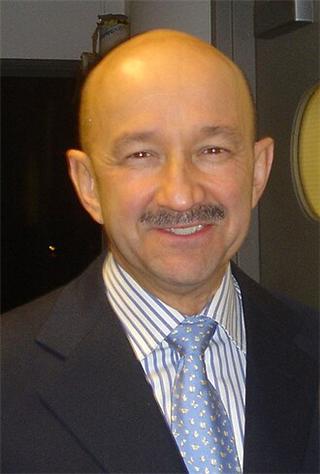
The republic restored in 1867 survives as today’s United Mexican States, transformed above all by the slow end of one-party rule. The PRI system came under strain after soldiers fired on student protesters at Tlatelolco in Mexico City on 2 October 1968, killing dozens and possibly several hundred, and after the oil boom ended in the debt crisis of 1982. The government’s weak response to the Mexico City earthquake of 1985 and the disputed election of 1988, won by Carlos Salinas de Gortari amid accusations of fraud, eroded its authority further. On 1 January 1994, the day NAFTA came into force, the Zapatista Army of National Liberation rose in Chiapas; that year also saw the assassination of the PRI candidate Luis Donaldo Colosio and, in December, a peso crisis that required an international rescue led by the United States. In 2000 Vicente Fox of the PAN won the presidency, the first peaceful transfer of power to an opposition party in modern Mexican history. Since 2006 a militarised campaign against drug cartels has coincided with a steep rise in homicides. Andrés Manuel López Obrador won the presidency in 2018 for his new Morena party, and in 2024 Claudia Sheinbaum became the first woman president. NAFTA was replaced in 2020 by the United States–Mexico–Canada Agreement.
Mexico matters as the republic that defeated a European-imposed monarchy in 1867, went through the first great social revolution of the twentieth century and built one of the world’s most durable one-party systems, before a peaceful transition in 2000 made it a major democratic and industrial economy.
References
- Knight, A. (1986) The Mexican Revolution. 2 vols. Cambridge: Cambridge University Press.
- Katz, F. (1998) The Life and Times of Pancho Villa. Stanford: Stanford University Press.
- Meyer, M.C. and Sherman, W.L. (1979) The Course of Mexican History. New York: Oxford University Press.
- Garner, P. (2001) Porfirio Díaz. Harlow: Longman.
- Krauze, E. (1997) Mexico: Biography of Power. A History of Modern Mexico, 1810–1996. New York: HarperCollins.
Connections
Open the full connections map →