Americas
Canada
At a glance
- Formed on 1 July 1867 by the union of British colonies, with John A. Macdonald as its first prime minister.
- It grew by purchase and union into the world’s second-largest country, tied together by the Canadian Pacific Railway.
- It won full independence gradually, through the Statute of Westminster of 1931 and the Constitution Act, 1982.
Rise & Fall
- 1864The Charlottetown and Quebec conferences agree the terms of Confederation
- 1867The British North America Act creates the Dominion of Canada on 1 July
- 1870Canada acquires Rupert’s Land and creates the province of Manitoba
- 1885The Canadian Pacific Railway is completed and Louis Riel is executed
- 1917The Canadian Corps captures Vimy Ridge
- 1931The Statute of Westminster confirms Canada’s legislative independence
- 1949Newfoundland joins Canada as the tenth province
- 1982The Constitution Act patriates the constitution and adds the Charter of Rights and Freedoms
Foundation
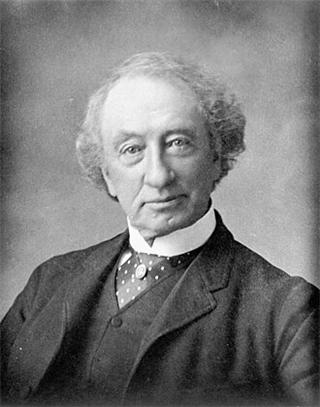
Canada was created by Confederation, the union of British North American colonies agreed at the Charlottetown and Quebec conferences of 1864 and the London Conference of 1866. Its architects, among them John A. Macdonald, George-Étienne Cartier and George Brown, wanted to escape the political deadlock of the Province of Canada, where English-speaking Canada West and French-speaking Canada East had been joined since 1841, to build a railway linking the interior to the Atlantic, and to secure the colonies against the United States, whose army had emerged from the Civil War as one of the largest in the world and from which Fenian raiders crossed the border in 1866. The British Parliament passed the British North America Act, and on 1 July 1867 the Dominion of Canada came into being, uniting Nova Scotia, New Brunswick and the Province of Canada, which was divided into Ontario and Quebec. Macdonald became the first prime minister, and Ottawa, chosen by Queen Victoria in 1857 as capital of the Province of Canada, became the capital of the new dominion. Prince Edward Island and Newfoundland had sent delegates to Quebec but at first stayed out, and the new country of about 3.5 million people occupied only a small part of its future territory.
Socioeconomy
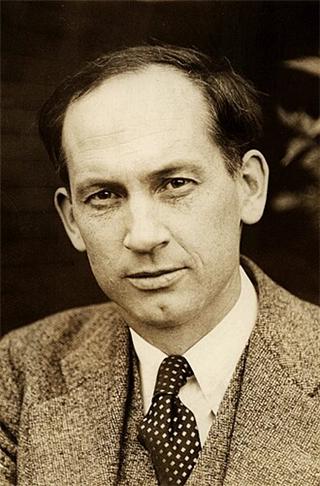
For most of its history Canada’s economy rested on the export of staples, first timber and wheat, then minerals, pulp and paper and, in recent decades, oil and gas, a pattern analysed by the economist Harold Innis. The Canadian Pacific Railway, completed in 1885, and Macdonald’s National Policy of protective tariffs from 1879 were meant to bind the country together from east to west, with the industries of Ontario and Quebec supplying settlers in the west. Large-scale immigration under Wilfrid Laurier’s government after 1896, including Ukrainians, Germans, Scandinavians and Americans as well as Britons, settled the prairies, which became one of the world’s great wheat-growing regions, while Chinese labourers who had helped build the railway faced a head tax from 1885 and near-total exclusion from 1923. Quebec remained a largely Catholic, rural and French-speaking society until the Quiet Revolution of the 1960s secularised and modernised it. First Nations on the prairies lost most of their lands through the numbered treaties of 1871–1921, and many Indigenous children were sent to residential schools, which a Truth and Reconciliation Commission described in 2015 as cultural genocide. After 1945 Canada built a welfare state, including public health insurance in every province by the early 1970s, and its economy became closely integrated with that of the United States, culminating in free trade agreements in 1988 and 1994.
Military
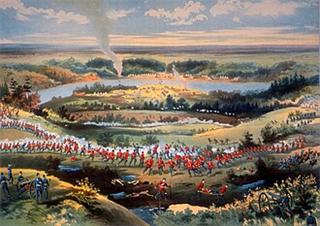
The young dominion relied on Britain for its defence, and its first operations were internal: the Wolseley Expedition to Red River in 1870 after the resistance led by Louis Riel, and the suppression of the North-West Rebellion of 1885, when troops moved west on the unfinished Canadian Pacific Railway defeated the Métis at the Battle of Batoche; Riel was hanged later that year. Canadian volunteers served in the South African War of 1899–1902. In the First World War some 620,000 Canadians enlisted and about 60,000 died; the Canadian Corps won a celebrated victory at the Battle of Vimy Ridge in April 1917 and spearheaded the Hundred Days offensive of 1918, while the conscription crisis of 1917 split English and French Canada. In September 1939 Canada declared war on Germany separately from Britain and went on to enlist more than a million men and women; its army fought in Italy and landed at Juno Beach on D-Day, its navy fought throughout the Battle of the Atlantic, and the British Commonwealth Air Training Plan trained over 130,000 aircrew in Canada. A founding member of NATO in 1949, Canada fought in the Korean War, joined the United States in the North American Air Defence Command in 1958, took part in many United Nations peacekeeping missions, and fought in Afghanistan from 2001.
Governance & Law
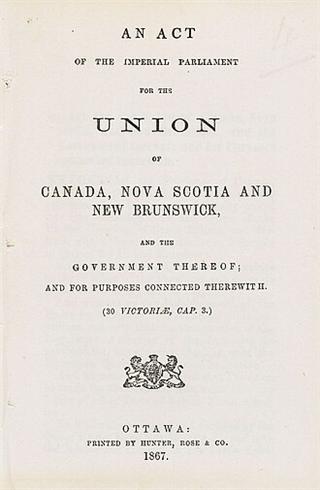
The British North America Act of 1867 created a federation with a parliamentary system on the Westminster model: a Governor General representing the Crown, an elected House of Commons, an appointed Senate, and provinces with their own legislatures and powers over education, property and civil rights, while Quebec kept its French-derived civil law. Macdonald, prime minister in 1867–1873 and 1878–1891, expanded the dominion by acquiring Rupert’s Land and the North-Western Territory from the Hudson’s Bay Company in 1870, creating Manitoba; British Columbia joined in 1871 on the promise of a railway, and Prince Edward Island in 1873. Alberta and Saskatchewan became provinces in 1905, and Newfoundland joined after referendums in 1949. Autonomy grew in stages: Canada signed the Treaty of Versailles in its own right and joined the League of Nations, the Balfour Declaration of 1926 recognised the dominions as equal in status to Britain, and the Statute of Westminster of 1931 gave them legislative independence. Canadian citizenship was created in 1947, and appeals to the Judicial Committee of the Privy Council ended in 1949. The Constitution Act, 1982, patriated the constitution with a domestic amending formula and the Canadian Charter of Rights and Freedoms. The monarch of the United Kingdom remains King of Canada, and federal politics has been dominated by the Liberal and Conservative parties.
Global & Regional Impact
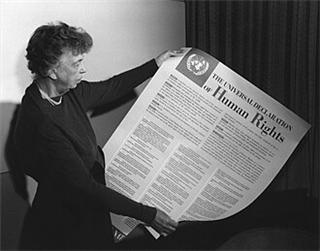
Canada was the first self-governing dominion of the British Empire, and its gradual, negotiated path from colony to independence, through responsible government, Confederation and the Statute of Westminster, became a model for Australia, New Zealand and South Africa and for the later transformation of the empire into the Commonwealth of Nations. Canadian diplomats helped build post-war institutions: Lester B. Pearson won the Nobel Peace Prize in 1957 for proposing the United Nations Emergency Force during the Suez Crisis, which set the pattern for armed peacekeeping, and the lawyer John Peters Humphrey prepared the first draft of the Universal Declaration of Human Rights. Canada adopted official bilingualism in 1969 and in 1971 became the first country to make multiculturalism official policy, approaches that influenced debates elsewhere about diversity and national identity. Its public health care system has been widely studied and debated. Insulin was discovered in Toronto in 1921–1922 by Frederick Banting and Charles Best with their colleagues, and thinkers and writers such as Marshall McLuhan, Margaret Atwood and Alice Munro, Nobel laureate in 2013, reached international audiences. As a long-standing member of the G7, NATO and the Commonwealth, and a major exporter of energy, minerals and food, Canada has exercised the influence of a significant middle power.
Into the Present
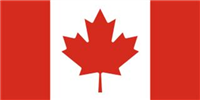
The Dominion of Canada never ended; it became the modern sovereign Canada through gradual constitutional evolution rather than revolution. The term dominion fell out of official use after the Second World War, the Maple Leaf flag replaced the Red Ensign in 1965, and the patriation of the constitution in 1982 removed the last legal power of the British Parliament over Canada, although Quebec’s government never endorsed the settlement. The most serious challenge to the federation came from Quebec nationalism. The Front de libération du Québec carried out bombings and, in the October Crisis of 1970, kidnappings that led Pierre Trudeau to invoke the War Measures Act, and the Parti Québécois held referendums on sovereignty in 1980, defeated by about 60 to 40 per cent, and in 1995, defeated by only 50.6 to 49.4 per cent. The creation of Nunavut in 1999, modern land claims agreements and the recognition of Aboriginal and treaty rights in section 35 of the Constitution Act, 1982, began to reshape relations with Indigenous peoples. Today Canada is a federation of ten provinces and three territories with about 41 million people, the second-largest country in the world by area, and a constitutional monarchy under King Charles III, with an economy deeply integrated with that of the United States.
Canada matters as the first self-governing dominion of the British Empire, a federation that grew from four colonies into the world’s second-largest country and won full independence by peaceful constitutional evolution, while balancing English and French communities and confronting the dispossession of Indigenous peoples.
References
- Bothwell, R. (2006) The Penguin History of Canada. Toronto: Penguin Canada.
- Conrad, M. (2012) A Concise History of Canada. Cambridge: Cambridge University Press.
- Creighton, D. (1955) John A. Macdonald: The Old Chieftain. Toronto: Macmillan.
- Granatstein, J.L. (2002) Canada’s Army: Waging War and Keeping the Peace. Toronto: University of Toronto Press.
- Miller, J.R. (1996) Shingwauk’s Vision: A History of Native Residential Schools. Toronto: University of Toronto Press.
Connections
Open the full connections map →