Islamic Caliphates & Middle East
Buyid dynasty
At a glance
- Three Daylamite brothers took Fars, the Jibal and Iraq between 934 and 945 and ruled them as a family confederation.
- Shia themselves, they kept the Sunni Abbasid caliphs as figureheads in Baghdad for 110 years.
- Under Adud al-Dawla (d. 983) they reached their height; family rivalry then left them prey to the Ghaznavids and Seljuks.
Rise & Fall
- 934Ali ibn Buya takes Fars and makes Shiraz his base
- 945Ahmad ibn Buya enters Baghdad and the brothers receive their titles
- 963Public Ashura mourning and the feast of Ghadir are introduced in Baghdad
- 978Adud al-Dawla defeats Bakhtiyar and unites the Buyid lands
- 983Death of Adud al-Dawla, followed by rivalry among his sons
- 1029Mahmud of Ghazni takes Ray
- 1055Tughril Beg enters Baghdad and ends Buyid rule in Iraq
- 1062The last Buyid prince in Fars is killed by Fadluya
Foundation
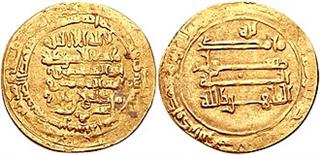
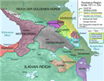
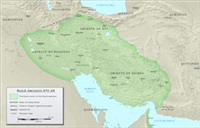
The Buyids came from Daylam, the mountainous region south-west of the Caspian Sea whose hardy infantry had long resisted outside rule and whose men served as mercenaries across Iran in the tenth century. Their father, Buya, was remembered as a man of modest origin, by tradition a fisherman, and his three sons, Ali, Hasan and Ahmad, rose as officers in the service of Mardavij, founder of the Ziyarid dynasty. In 934 Ali defeated the caliph's governor Yaqut and took Fars, making Shiraz his base. After Mardavij was murdered in 935, Hasan fought for years to secure Ray, Isfahan and the Jibal, while Ahmad advanced into Khuzistan and, in December 945, entered Baghdad. The caliph al-Mustakfi gave the brothers the honorific titles by which they are known, Imad al-Dawla, Rukn al-Dawla and Mu'izz al-Dawla, 'support', 'pillar' and 'strengthener' of the state; a few weeks later Mu'izz al-Dawla had him blinded and deposed and installed al-Muti in his place. The Buyids thus became masters of the Abbasid capital and of most of western Iran within a dozen years. Their rise belongs to what Vladimir Minorsky called the 'Iranian intermezzo', the period between Arab and Turkish domination when Iranian dynasties ruled much of the eastern caliphate.
Socioeconomy

The Buyid lands, from Iraq through Khuzistan and Fars to the Jibal, included some of the richest agricultural and urban regions of the Islamic world, but they had suffered from decades of disorder before the brothers arrived. The Iraqi countryside in particular had declined, and the Buyids' reliance on iqta grants, which assigned the tax revenue of land to soldiers in place of salaries, was blamed by contemporaries such as the historian Miskawayh for further damaging cultivation, since the holders had little interest in maintaining irrigation. Fars, the family's heartland, fared better, and Adud al-Dawla invested in it, building the Band-e Amir dam on the Kur river, which irrigated the plain of Marvdasht. Baghdad remained a great city and a centre of trade and scholarship, though torn by riots between Sunni and Shia quarters and between soldiers and townspeople. Trade through the Persian Gulf, with Siraf as its leading port, linked the Buyid lands with India, East Africa and China. The Buyids were Shia, and Mu'izz al-Dawla introduced public mourning for Husayn on Ashura and celebration of the feast of Ghadir in Baghdad in 963. Under their rule Twelver Shia scholarship flourished in Baghdad, with al-Shaykh al-Mufid, al-Sharif al-Murtada and al-Sharif al-Radi, compiler of the Nahj al-Balagha.
Military

The Buyid armies combined two very different forces: Daylamite infantry, the dynasty's own countrymen, fighting with spears, javelins and large shields, and Turkish cavalry, mostly slave soldiers or freedmen, who provided the mobility the Daylamites lacked. The rivalry between these groups, over pay, status and religion, was a constant source of instability; in 974 the Turkish commander Sabuktakin rebelled in Baghdad against Mu'izz al-Dawla's son Izz al-Dawla Bakhtiyar, and the mutiny helped draw Adud al-Dawla into Iraq. The brothers and their heirs fought on many fronts: against the Hamdanids of Mosul in the north, the Samanids of Khurasan and the Ziyarids of Gurgan in the east, and rival dynasties in Kerman and Oman, which Adud al-Dawla subdued in the late 960s. Adud al-Dawla's campaigns were the most successful: in 977–978 he defeated his cousin Bakhtiyar, who was killed at the battle of Qasr al-Jiss in 978, and in 979 he took Mosul from the Hamdanids, while his brother Mu'ayyad al-Dawla drove the Ziyarid ruler Qabus out of Gurgan. Adud also received the rebel Byzantine general Bardas Skleros, who fled to Baghdad, and held him as a bargaining counter with Constantinople. After 983, however, Buyid armies were used mainly against other Buyids.
Governance & Law
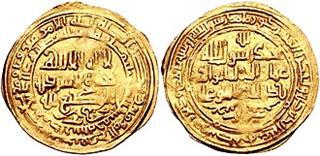
The Buyids ruled as a family confederation rather than a single state. Each brother, and later each son, held his own territory, and the most senior was recognised as head of the family: first Imad al-Dawla at Shiraz until his death in 949, then Rukn al-Dawla at Ray. In Baghdad the Abbasid caliph remained the formal source of legitimate authority for Sunni Muslims, invested the Buyid emirs, and was named in the Friday prayer, but he lost all real power: the emir controlled the army, the treasury and appointments, and the caliph lived on a pension. Adud al-Dawla, who united the Buyid lands from 977 until his death in 983, styled himself shahanshah, 'king of kings', reviving the old Persian royal title, and he became the first ruler to have his own name mentioned after the caliph's in the Friday prayer in Baghdad, a break with tradition. Administration followed Abbasid models, run by capable viziers drawn from the secretarial class, such as Ibn al-Amid, vizier of Rukn al-Dawla, and al-Sahib ibn Abbad, vizier of Mu'ayyad al-Dawla and Fakhr al-Dawla at Ray. The iqta system spread under the Buyids and later became the basis of military administration under the Seljuks. Adud al-Dawla also founded the Adudi hospital in Baghdad, opened around 982.
Global & Regional Impact

The Buyid century was one of the most brilliant periods of Islamic intellectual life, sometimes called a renaissance of Islam. Buyid princes and viziers were generous patrons: the astronomer Abd al-Rahman al-Sufi dedicated his Book of Fixed Stars to Adud al-Dawla, the poet al-Mutanabbi visited his court at Shiraz, the grammarian Abu Ali al-Farisi wrote for him, and Miskawayh, librarian and historian, wrote his universal history The Experiences of the Nations and works of ethics under Buyid patronage. Ibn Sina served the Buyid emir Shams al-Dawla of Hamadan as vizier, and al-Sahib ibn Abbad gathered scholars, including the Mu'tazili theologian Abd al-Jabbar, at Ray. The Buyids also shaped the history of Shia Islam: under their protection Twelver Shiism developed its theology and law in Baghdad, and the public rituals of Ashura and Ghadir took root. Politically, they created the pattern of a secular sultan ruling in the caliph's name, which the Seljuks inherited, and they spread the iqta as the basis of military finance across the Middle East. Their revival of the title shahanshah and of Persian royal imagery reflected a growing Iranian identity within Islamic civilisation that would later flower in Persian literature.
Decline & Fall
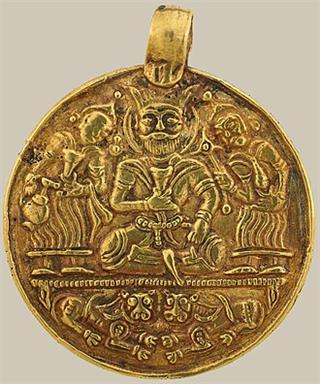
The family structure that had allowed the Buyids to conquer so quickly became the main cause of their decline. After Adud al-Dawla's death in 983 his sons Samsam al-Dawla, Sharaf al-Dawla and Baha al-Dawla fought for the inheritance; Sharaf al-Dawla took Baghdad in 987, and Baha al-Dawla, ruling from 989 to 1012, reunited Iraq and Fars but could not restore Adud's authority. Rival branches held Ray, Hamadan and Isfahan, and local dynasties such as the Kakuyids and the Kurdish Hasanwayhids gained ground. The caliphs, above all al-Qadir, reasserted their own religious authority and championed Sunni orthodoxy. In 1029 Mahmud of the Ghaznavid Empire took Ray and deposed Majd al-Dawla. Abu Kalijar held Fars and Iraq until 1048, but his successors were too weak to resist the Seljuks. In December 1055 Tughril Beg of the Seljuk Empire entered Baghdad, was recognised as sultan by the caliph al-Qa'im, and imprisoned the last Buyid emir of Iraq, al-Malik al-Rahim. The last Buyid prince in Fars, Abu Mansur Fulad Sutun, was overthrown and killed by Fadluya, chief of the Shabankara Kurds, in 1062, ending the dynasty.
The Buyid dynasty, Daylamite Shia emirs who ruled western Iran and Iraq and controlled the Abbasid caliphs from 945 to 1055, created the model of a secular ruler beside a powerless caliph and presided over a remarkable flowering of Islamic science, philosophy and Shia scholarship.
References
- Busse, H. (1969) Chalif und Grosskönig: Die Buyiden im Iraq (945–1055). Beirut: Orient-Institut der DMG; Wiesbaden: Franz Steiner.
- Donohue, J.J. (2003) The Buwayhid Dynasty in Iraq 334 H./945 to 403 H./1012: Shaping Institutions for the Future. Leiden: Brill.
- Frye, R.N. (ed.) (1975) The Cambridge History of Iran, Volume 4: The Period from the Arab Invasion to the Saljuqs. Cambridge: Cambridge University Press.
- Kennedy, H. (2004) The Prophet and the Age of the Caliphates. 2nd edn. Harlow: Pearson Longman.
- Kraemer, J.L. (1986) Humanism in the Renaissance of Islam: The Cultural Revival during the Buyid Age. Leiden: Brill.
- Mottahedeh, R.P. (1980) Loyalty and Leadership in an Early Islamic Society. Princeton: Princeton University Press.
Connections
Open the full connections map →