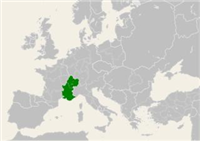
Europe
Kingdom of Arles
At a glance
- Formed around 933 by uniting Upper and Lower Burgundy, it stretched from Lake Geneva to the Mediterranean.
- From 1032 it was the third kingdom of the Holy Roman Empire, beside Germany and Italy.
- Real power lay with counts, bishops and the houses of Savoy and Viennois; France gradually absorbed its lands.
Rise & Fall
- c. 933Rudolf II of Upper Burgundy acquires Lower Burgundy from Hugh of Arles
- 937Conrad the Peaceful succeeds under the protection of Otto I
- c. 973Count William of Provence destroys the Muslim base at Fraxinetum
- 1032Rudolf III dies childless and the kingdom passes to Emperor Conrad II
- 1178Frederick Barbarossa is crowned king at Arles
- 1349The Dauphiné of Viennois passes to the heir of the French throne
- 1365Charles IV is crowned at Arles, the kingdom’s last coronation
- 1378Charles IV makes the French dauphin imperial vicar of the kingdom for life
Foundation

The Kingdom of Arles, often called the Kingdom of Burgundy, was formed by the union of two kingdoms that had emerged from the break-up of the Carolingian Empire. In 879 Count Boso of Vienne was elected king at Mantaille, founding the Kingdom of Lower Burgundy, or Provence, in the Rhône valley; his son Louis the Blind, crowned emperor in 901, was blinded at Verona in 905, and real power passed to his kinsman Hugh of Arles, who became King of Italy in 926. In 888 the Welf Rudolf I had been crowned at the abbey of Saint-Maurice d’Agaune as king of Upper Burgundy, the lands between the Jura and the Pennine Alps around Lake Geneva. His son Rudolf II also ruled Italy for a few years, until Hugh displaced him. Around 933, according to the usual reading of the chronicler Liutprand of Cremona, the two men made a bargain: Rudolf renounced his claims in Italy and Hugh ceded his rights in Lower Burgundy. The date and terms of the agreement are uncertain, and Rudolf’s control of Provence was probably limited. When Rudolf died in 937, Hugh tried to take over the inheritance by marrying his widow Bertha, but Otto I of Germany took Rudolf’s young son Conrad under his protection and secured the throne for him.
Socioeconomy

The kingdom stretched from the Jura and Lake Geneva through the Rhône valley to the Mediterranean coast of Provence, embracing very different landscapes: Alpine valleys and pastures, the vineyards and grain fields of the Rhône corridor, and the olive groves, salt marshes and ports of the south. Its wealth came largely from its position on routes between Italy, France and Germany. The Great St Bernard Pass and other Alpine crossings linked it with Italy, the Rhône carried traffic between the Mediterranean and the north, and cities such as Lyon, Vienne, Arles, Avignon, Geneva and, above all, Marseille grew as commercial centres from the eleventh century. Society was dominated by bishops, abbots and noble families. Great monasteries included Saint-Maurice d’Agaune, Saint-Victor of Marseille, Lérins, Montmajour near Arles and the Cluniac priory of Payerne, associated with Queen Bertha. From the late ninth century Muslim raiders based at Fraxinetum, near modern La Garde-Freinet on the Provençal coast, plundered the region and the Alpine passes, until their capture of Abbot Majolus of Cluny in 972 provoked Count William of Provence to destroy their base. Provence and Burgundy were also centres of the Peace and Truce of God movement, and from 1309 the popes resided at Avignon, which they bought outright in 1348.
Military
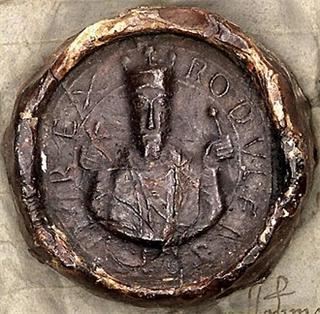
The kingdom never developed a strong royal army. Its kings relied on the service of counts, bishops and vassals, and real military power lay with regional lords. The most important military achievement of the tenth century was not royal but comital: around 973 Count William of Provence, later called the Liberator, and his allies defeated the Muslim garrison of Fraxinetum, after which the counts of Provence distributed the recovered lands among their followers. Defence against the Magyars, who raided Burgundy in the 920s and 930s, also fell largely to local lords and bishops. The succession of 1032 was settled by war. Count Odo II of Blois, a nephew of Rudolf III, claimed the kingdom and invaded, but Emperor Conrad II campaigned in Burgundy in 1033 and 1034, forced Odo to withdraw and received the submission of the Burgundian lords. Thereafter the kingdom’s wars were mostly local struggles among its great lords, such as the long conflict between the counts of Savoy and the dauphins of Viennois in the thirteenth and fourteenth centuries, or imperial expeditions such as Frederick Barbarossa’s, which relied on the Zähringen rectors and on alliances with local nobles rather than on any kingdom-wide levy. Castles, fortified towns and episcopal cities dominated the countryside. By the fourteenth century French royal armies and officials, not imperial ones, were the strongest force along the Rhône.
Governance & Law

Royal government in the Kingdom of Arles was weak from the start. Conrad the Peaceful, who reigned from 937 to 993, owed his throne to Otto I, married Matilda, a daughter of the Carolingian King Louis IV of France, and kept the peace largely through cooperation with bishops and great lords. His sister Adelaide married Otto I in 951 and became empress, tying the kingdom closely to the Ottonian court. The kings resided mostly in Upper Burgundy, around Lake Geneva, and at Vienne, and had little direct authority in Provence. Rudolf III, who ruled from 993 to 1032, tried to strengthen his position by granting counties to loyal bishops, giving the county of Valais to the bishop of Sion in 999 and the county of Vaud to the bishop of Lausanne in 1011, and in agreements from 1006 onwards he recognised his nephew, Emperor Henry II, as his heir. After 1032 Burgundy became the third kingdom of the Holy Roman Empire, beside Germany and Italy. The emperors ruled it through occasional visits, charters and local allies, and from 1127 the dukes of Zähringen held the office of rector of Burgundy, founding towns such as Fribourg and Bern. Frederick Barbarossa’s marriage to Beatrice of Burgundy in 1156 and his coronation at Arles in 1178 renewed imperial claims, and the archbishop of Trier bore the title of arch-chancellor for the kingdom.
Global & Regional Impact

The Kingdom of Arles left a fainter mark on later history than most medieval kingdoms, but its existence shaped the map of western Europe. Because it belonged to the Holy Roman Empire, the lands between the Rhône, the Saône and the Alps remained for centuries outside the Kingdom of France, and their gradual absorption by France, from Lyon in 1312 and the Dauphiné in 1349 to Provence in 1481, was one of the long processes of French state-building. The weakness of royal power allowed new political units to grow within it: the County of Provence, the Dauphiné of Viennois, the Free County of Burgundy, the County of Savoy, which became a major Alpine state and later gave Italy its royal dynasty, and the cities and bishoprics of western Switzerland, whose lands later joined the Swiss Confederation. The marriage of Conrad’s sister Adelaide to Otto I linked Burgundian lands to the Ottonian imperial project, and the kingdom’s incorporation in 1032 made the emperors rulers of a realm whose title, King of Arles, survived long after any real authority had gone. The region was also a cradle of the Peace and Truce of God, proclaimed in Provence and Burgundy in the early eleventh century, and Provence later became, through its troubadours and the Avignon papacy, a major centre of medieval culture.
Decline & Fall

Imperial authority in the Kingdom of Arles faded steadily from the late twelfth century, as the emperors were absorbed by Italy and Germany and France grew stronger along the Rhône. Charles of Anjou, brother of Louis IX of France, acquired the County of Provence by marrying its heiress Beatrice in 1246, bringing it into the orbit of the French royal family and later of the Angevin kings of Naples. Philip IV of France annexed Lyon, formally an imperial city, in 1312, and the popes had settled at Avignon from 1309. In 1349 the last independent dauphin, Humbert II, transferred the Dauphiné of Viennois to the heir of the French throne, and from then on the eldest son of the French king bore the title of dauphin. Emperor Charles IV tried to revive imperial claims and was crowned king at Arles in 1365, the last such coronation. But during his visit to Paris in 1378 he appointed the French dauphin, the future Charles VI, imperial vicar of the kingdom for life, effectively surrendering imperial authority in the Rhône valley. The kingdom ceased to function as a political entity. Its remaining lands passed gradually to France, to Savoy and to the Swiss Confederation, and only the title survived among the emperors’ dignities.
The Kingdom of Arles united Upper and Lower Burgundy in the tenth century and in 1032 became the third crown of the Holy Roman emperors, but its weak monarchy let counts, bishops and dynasties such as Savoy and the dauphins of Viennois take real power, and its lands were gradually absorbed by France, Savoy and the Swiss.
Test yourself
5 questions on this page, from its key events and facts.
The questions open here once the page has loaded.
References
- Fournier, P. (1891) Le royaume d’Arles et de Vienne (1138–1378): étude sur la formation territoriale de la France dans l’est et le sud-est. Paris: Alphonse Picard.
- Poupardin, R. (1907) Le royaume de Bourgogne (888–1038): étude sur les origines du royaume d’Arles. Paris: Honoré Champion.
- Previté-Orton, C.W. (1912) The Early History of the House of Savoy (1000–1233). Cambridge: Cambridge University Press.
- Reuter, T. (1991) Germany in the Early Middle Ages, c. 800–1056. London: Longman.
Connections
Open the full connections map →