Europe
Kingdom of Macedon
At a glance
- Before the 4th century BCE Macedon was a small kingdom centred on Aigai, briefly a vassal of the Achaemenid Empire under Amyntas I and Alexander I, who fought on the Persian side at Plataea in 479 BCE.
- Philip II (359–336 BCE) rebuilt the army around the sarissa-armed phalanx, took the mines of Crenides and Amphipolis, and defeated Athens and Thebes at the Battle of Chaeronea in 338 BCE.
- Elected hegemon of the League of Corinth in 337 BCE, Philip was assassinated by his bodyguard Pausanias of Orestis at his daughter's wedding feast at Aigai in 336 BCE, and Alexander succeeded him.
Rise & Fall
- c. 650 BCEOne of the earliest Argead kings establishes Aigai as the capital, in Robert Malcolm Errington's reckoning.
- 547–498 BCEAmyntas I reigns, the first king of whom much is known; the Persian general Megabazus persuades him to submit as a vassal of the Achaemenid Empire.
- 479 BCEMacedonian soldiers fight on the Persian side at the Battle of Plataea; the Achaemenid withdrawal from Europe soon ends Persian control of Macedonia.
- 413–399 BCEArchelaus I moves the capital north to Pella, improves the coinage and brings Euripides to his court; his assassination plunges the kingdom into chaos.
- 359 BCEBardylis's Illyrians kill Perdiccas III and 4,000 Macedonian troops in battle; Philip II accedes at twenty-four.
- 352 BCEPhilip II defeats Onomarchus at the Battle of Crocus Field and is elected archon of the Thessalian League.
- 338 BCEPhilip II defeats Athens and Thebes at the Battle of Chaeronea and forms the League of Corinth, which elects him hegemon in 337 BCE.
- 336 BCEPhilip II is assassinated by Pausanias of Orestis at Aigai; the army and leading aristocrats proclaim Alexander III king.
Foundation
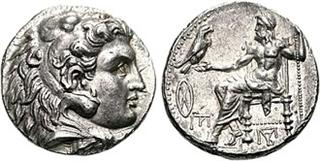
Herodotus and Thucydides record the legend that the Argead kings of Macedon descended from Temenus, king of Argos, and so from Heracles and Zeus. Contradictory traditions name Perdiccas I or Caranus as the dynasty's founder, with five or eight kings before Amyntas I, and little is known of the kingdom before Amyntas's reign (547–498 BCE). Robert Malcolm Errington suggests that one of the earliest Argead kings made Aigai, modern Vergina, the capital in the mid-7th century BCE.
The kingdom first lay along the Haliacmon and Loudias rivers north of Mount Olympus and along the coast of the Thermaic Gulf, bordered by Epirus, Illyria, Paeonia, Thrace and Thessaly. It expanded into Emathia, Pieria, Bottiaea, Almopia, Mygdonia, Crestonia and Bisaltia, inhabited by Thracians and Phrygians among others, and into Eordaea and Upper Macedonia, home of the Greek tribes of the Lyncestae, Orestae and Elimiotae. A year after Darius I invaded Europe, the Persian general Megabazus persuaded Amyntas I to submit as a vassal of the Achaemenid Empire. Macedonia was never made a satrapy, but it supplied troops: Alexander I supported Xerxes I in 480–479 BCE, and Macedonians fought on the Persian side at the Battle of Plataea. The Persian withdrawal from Europe soon afterwards ended Achaemenid control.
Socioeconomy
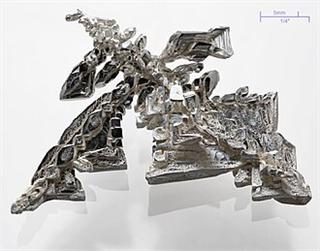
Young Macedonians hunted and fought as a by-product of a transhumant life herding goats and sheep; horse breeding and cattle raising were common, and some farmed, often with irrigation, land reclamation and horticulture supported by the state. The economy and the royal finances rested mainly on logging and on mining copper, iron, gold and silver, and working these materials into finished goods encouraged the growth of towns and a gradual shift away from the rustic Macedonian way of life in the 5th century BCE. Athens valued the region's silver, gold, timber and pitch enough to found Amphipolis on the Strymon in 437/436 BCE to supply its navy.
Silver coinage began under Alexander I to pay royal expenses; Archelaus I raised its silver content and added copper coins to promote commerce, and minting grew greatly under Philip II after the seizure of the Pangaion Hills. Revenue also came from the produce of arable land, timber from the forests and harbour taxes on imports and exports; tariffs existed from at least the reign of Amyntas III, and Callistratus of Aphidnae helped Perdiccas III double the annual customs profit from 20 to 40 talents. State mines, groves, farmland and forests were exploited by the king or leased and granted to the hetairoi and philoi. Society was headed by the king and a martial aristocracy second only to him in power and privilege, and Macedonia seems to have lacked the widespread use of slaves seen in contemporary Greek states.
Military
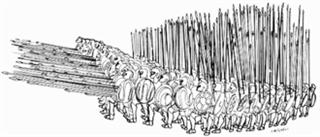
The army was divided between the companion cavalry, the hetairoi, and the foot companions, the pezhetairoi, who may have existed since the reign of Alexander I, with allied troops, foreign levies and mercenaries. The cavalry, noblemen in muscled cuirasses, became renowned in Greece during the Peloponnesian War; the infantry were poorly trained shepherds and farmers. Nicholas Viktor Sekunda puts the army at 10,000 infantry and 600 cavalry when Philip II acceded in 359 BCE.
Philip II made this levy a professional force. He introduced the Macedonian phalanx armed with the long sarissa pike, gave the infantry peltai shields, helmets, greaves and cuirasses or kotthybos stomach bands, formed the elite hypaspistai and the royal bodyguards, the somatophylakes, adopted the Scythian flying-wedge cavalry formation, hired Cretan archers and Thracian, Paeonian and Illyrian javelin throwers and slingers, and employed engineers to build siege engines and bolt-firing artillery. The mines of Crenides, refounded as Philippi in 356 BCE, paid for a permanent standing army and the kingdom's first small navy of triremes. This army beat the Illyrians and Paeonians, took Amphipolis, Pydna and Potidaea in 357–356 BCE, crushed Onomarchus at the Battle of Crocus Field in 352 BCE, destroyed Olynthos in 348 BCE and, after failed sieges of Perinthus and Byzantion in 340 BCE, defeated Athens and Thebes at the Battle of Chaeronea in 338 BCE.
Governance & Law
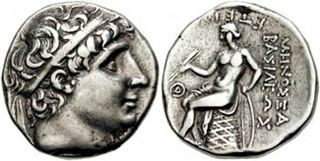
At the head of the state stood the king, the basileus. Before Philip II the monarchy is the only institution the sources attest; from his reign the king was assisted by royal pages conscripted from aristocratic households, bodyguards, companions, friends and an assembly that included members of the army. How far these shared authority is uncertain: council members spoke freely and could press the king, and the assembly apparently judged treason, as when Alexander prosecuted three alleged conspirators in his father's murder. The king was chief judge, supreme commander and high priest; Philip II performed daily sacrifices and may have borrowed Persian institutions such as a royal secretary, a royal archive and a seated throne.
Direct father-to-son succession broke after the assassination of Orestes in 396 BCE, allegedly by his regent Aeropus II; four kings reigned in the chaos of 399–393 BCE before Amyntas III killed Pausanias and claimed the crown. Macedonians traditionally practised monogamy, but Philip II married seven wives to bind the Upper Macedonian aristocracy and his allies, among them Phila of Elimeia, the Illyrian Audata, Philinna of Larissa and Olympias of Epirus, who bore Alexander. Philip was elected archon of the Thessalian League, took Phocis's two seats on the Amphictyonic Council, and in 337 BCE became hegemon and strategos autokrator of the League of Corinth, of which his kingdom was officially not a member.
Global & Regional Impact
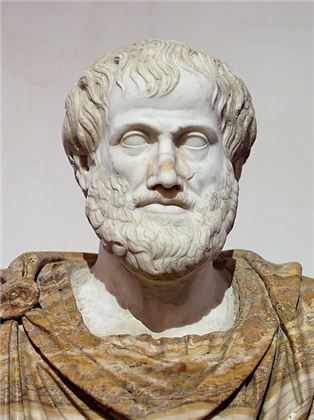
Though on the periphery of Archaic and Classical Greece, the Argead court drew the Greek world to it. Archelaus I was crowned at Olympia and Delphi for chariot racing and received the painter Zeuxis, the architect Callimachus, the poets Choerilus, Timotheus and Agathon, and Euripides. Aristotle moved to Macedonia, tutored the young Alexander and served Philip II as a diplomat. The royal tombs at Vergina, with murals of Hades abducting Persephone, golden coffins and arms, and the bronze Derveni Krater show an elite that imported Greek artistic traditions while keeping older funerary rites.
Philip II's reign, with his son's, saw the demise of Classical Greece and the birth of Hellenistic civilization. His League of Corinth, uniting the major city-states except Sparta under a Macedonian hegemon for a war presented as punishment of the Persians and the liberation of the Greek cities of Asia Minor, was the model Antigonus III Doson revived a century later. His army, coinage and standing force were the instruments with which Alexander overthrew the Achaemenid Empire and carried Greek language and culture to the Indus. The kingdom also left a lasting argument over whether the Macedonians were Greeks: scholars such as Hatzopoulos and N. G. L. Hammond hold that the distinction was political, monarchy against city-state democracy, contrived after the League of Corinth of 337 BCE.
Decline & Fall
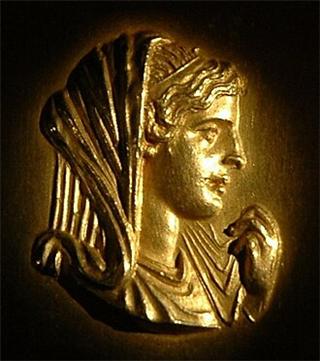
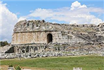
The Argead kingdom did not fall in 336 BCE; it became the core of an empire. Philip II's last years were troubled at home. His marriage to Cleopatra Eurydice, niece of the general Attalus, and talk at the wedding feast of new heirs infuriated Alexander and his mother Olympias, who fled to Epirus until Alexander was recalled to Pella. To reconcile with Olympias he married their daughter Cleopatra to her brother Alexander I of Epirus, and at the wedding feast in the theatre of Aigai in 336 BCE he was assassinated by his bodyguard Pausanias of Orestis.
Alexander III was at once proclaimed king by an assembly of the army and leading aristocrats, and buried his father at Aigai. The League of Corinth revolted at the news, was quelled by force and diplomacy, and elected Alexander hegemon for the invasion of Persia. In 335 BCE he subdued the Triballi and the Illyrians, then razed Thebes, killing 6,000 and taking 30,000 prisoners, and the next year crossed to Asia. The Argead line ended in the wars of the Diadochi: Philip III Arrhidaeus was executed by Olympias in 317 BCE and the boy Alexander IV put to death by Cassander in 311/310 BCE, and the Antipatrid and Antigonid dynasties held the throne until Rome abolished the monarchy in 168 BCE. The diffusion of Greek culture that Philip's kingdom made possible was, in Errington's judgement, a precondition for Rome's expansion into the East and the basis of the Byzantine Empire.
The Kingdom of Macedon under the Argead dynasty grew from a small realm at Aigai, briefly a Persian vassal and long a pawn between Athens and Sparta, into the master of Greece: Philip II's reformed army and diplomacy won Chaeronea and the League of Corinth, and his assassination in 336 BCE handed the kingdom to Alexander, who made it the core of an empire.
Test yourself
5 questions on this page, from its key events and facts.
The questions open here once the page has loaded.
References
- R. Malcolm Errington, A History of Macedonia (University of California Press, 1990)
- N. G. L. Hammond, The Macedonian State: Origins, Institutions, and History (Clarendon Press, 1989)
Connections
Open the full connections map →