Europe
Swiss Confederation
At a glance
- A federal republic of twenty-six cantons, created by Napoleon in 1803 and turned into a federal state by the constitution of 1848.
- Its permanent neutrality, recognised in 1815, kept it out of every European war since and made Geneva a centre of diplomacy.
- Referendums and popular initiatives give its citizens an unusually direct say in law-making at federal and cantonal level.
Rise & Fall
- 1803Napoleon's Act of Mediation creates a confederation of nineteen cantons
- 1815The great powers recognise Switzerland's perpetual neutrality
- 1847Federal troops under General Dufour win the Sonderbund War
- 1848The Federal Constitution creates a federal state with Bern as federal city
- 1863The International Committee of the Red Cross is founded in Geneva
- 1874Constitutional revision introduces the optional referendum on federal laws
- 1971Women gain the right to vote in federal elections
- 2002Switzerland joins the United Nations after a popular vote
Foundation
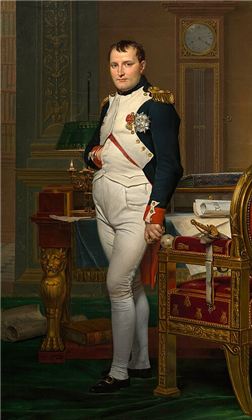
The Swiss Confederation in its modern form was created by Napoleon Bonaparte. The centralised Helvetic Republic, imposed by France in 1798, had collapsed into civil strife by 1802, and Napoleon summoned Swiss delegates to Paris and dictated the Act of Mediation, signed on 19 February 1803. It restored a confederation of largely self-governing cantons, now nineteen: the thirteen members of the Old Swiss Confederacy and six new cantons formed from former subject and allied lands, namely St. Gallen, Graubünden, Aargau, Thurgau, Ticino and Vaud. A federal Diet met in turn in six directorial cantons, whose chief magistrate served for the year as Landammann of Switzerland. The settlement left the country a French protectorate, bound by a defensive alliance to supply regiments to Napoleon. After his defeat at the Battle of Leipzig, Allied armies crossed Swiss territory in December 1813 and the Mediation regime collapsed. The so-called Long Diet, sitting in Zurich from 1814 to 1815, negotiated a new Federal Treaty, sworn on 7 August 1815, which bound twenty-two cantons together, including the newly admitted Valais, Neuchâtel and Geneva. On 20 November 1815 the great powers formally recognised Switzerland's perpetual neutrality and the inviolability of its territory, the foundation on which the later state was built.
Socioeconomy

Switzerland was one of the first parts of continental Europe to industrialise, despite having few raw materials and no coast. Mechanised cotton spinning spread through the north-east in the early nineteenth century, silk weaving flourished around Zurich and ribbon-making in Basel, and watchmaking was concentrated in the Jura valleys and Geneva. Engineering firms such as Escher Wyss in Zurich built turbines, locomotives and steamships, while dye works in Basel grew into a chemical and pharmaceutical industry that included Hoffmann-La Roche, founded in 1896. The railway age began with the line from Zurich to Baden in 1847, the Gotthard Railway with its long tunnel opened in 1882, and the main lines were nationalised as the Swiss Federal Railways in 1902. Alpine tourism grew rapidly after the mid-century, encouraged by mountaineering feats such as Edward Whymper's first ascent of the Matterhorn in 1865. Private banking, long established in Geneva and Basel, expanded into a major financial centre, and the Banking Act of 1934 made bank secrecy a criminal matter. Society remained divided between Protestant and Catholic regions and between German, French, Italian and Romansh speakers. Poor rural districts sent many emigrants overseas until the late nineteenth century, after which Switzerland became a country of immigration; today about a quarter of its residents are foreign nationals.
Military

Swiss defence rested on a militia in which adult men served in the army for short periods and kept their equipment at home. Under the Mediation, Swiss regiments fought for Napoleon, and several were nearly destroyed covering the retreat across the Berezina in 1812. The only war fought on Swiss soil in the period was the Sonderbund War of November 1847, in which federal troops under General Guillaume-Henri Dufour defeated the league of seven Catholic cantons in less than a month, at a cost of roughly a hundred dead. Afterwards the federal state ended the old trade in mercenaries: cantonal service contracts were forbidden by the 1848 constitution and foreign recruitment by a federal law of 1859, leaving the Pontifical Swiss Guard in the Vatican as the main survival. The army was placed under stronger federal control by the military organisation of 1874. Neutrality was enforced by mobilisation rather than by alliances. In February 1871 about 87,000 men of the defeated French Army of the East under General Bourbaki were disarmed and interned. In both world wars the army mobilised under an elected general, Ulrich Wille in 1914 and Henri Guisan in 1939; in 1940 Guisan announced the strategy of the National Redoubt, a defence of the Alpine core. A 1989 initiative to abolish the army won about 36 per cent of the vote, and conscription for men continues.
Governance & Law
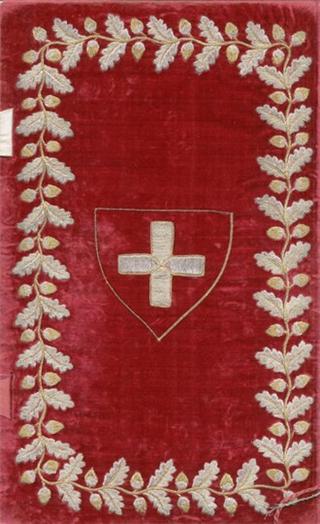
The Federal Treaty of 1815 created only a loose league of sovereign cantons with a weak Diet. During the Regeneration of the 1830s liberal movements won new constitutions in most cantons, and conflict between liberal and conservative cantons, sharpened by religion, culminated in the Sonderbund War. The Federal Constitution of 12 September 1848 then turned the league into a federal state. Legislative power passed to a Federal Assembly of two equal chambers, partly modelled on the United States Congress: the National Council, elected by population, and the Council of States, with two members per canton. Executive power was given to a seven-member Federal Council, elected by parliament and governing collegially, with a president who rotates each year, and Bern became the federal city. The total revision of 1874 added the optional referendum on federal laws and strengthened the Federal Supreme Court in Lausanne, and the popular initiative for constitutional amendments followed in 1891. Proportional representation for the National Council, adopted in 1918, ended the long Radical majority, and from 1959 the four largest parties shared the Federal Council by the so-called magic formula. Men alone voted until 1971. A revised Federal Constitution came into force in 2000. The twenty-six cantons keep wide powers over taxation, schooling, police and churches, and two still hold open-air assemblies, the Landsgemeinde.
Global & Regional Impact

Switzerland's influence has been out of proportion to its size. Its combination of federalism, multilingual coexistence and frequent referendums has been studied as a model for divided societies, and its permanent neutrality, recognised in 1815 and maintained through two world wars, made it a meeting place for diplomacy. Geneva became the centre of international humanitarian law after Henry Dunant and four fellow citizens founded the International Committee of the Red Cross in 1863, and the first Geneva Convention was signed there in 1864. The Universal Postal Union was established at Bern in 1874, the League of Nations met in Geneva from 1920, and after 1945 the city hosted the European office of the United Nations, the World Health Organization and many other bodies, while CERN was founded beside it in 1954. The Federal Polytechnic School in Zurich, founded in 1855 and now ETH Zurich, became one of the leading technical universities, and in 1905 Albert Einstein, then a clerk at the patent office in Bern, published his papers on relativity. Zurich saw the birth of Dada at the Cabaret Voltaire in 1916, and Swiss authors such as Gottfried Keller, Max Frisch and Friedrich Dürrenmatt, the psychiatrist Carl Gustav Jung and the architect Le Corbusier gained wide reputations.
Into the Present

The Swiss Confederation still exists, and its history since 1848 is one of continuity rather than decline. After 1945 it combined neutrality with close economic ties to Western Europe and became one of the world's richest countries per head. Old debates were reopened in the 1990s, when the Independent Commission of Experts chaired by Jean-François Bergier examined Swiss gold dealings with Nazi Germany and the restrictive treatment of refugees; its final report appeared in 2002, and the major banks agreed in 1998 to a settlement over dormant accounts of Holocaust victims. In a referendum on 6 December 1992 voters narrowly rejected membership of the European Economic Area, and the country chose instead a series of bilateral treaties with the European Union, including free movement of persons from 2002 and participation in the Schengen area from 2008. Switzerland joined the United Nations in 2002 after a popular vote. The global financial crisis of 2008 required a federal rescue of UBS and, under American and international pressure, Switzerland accepted the automatic exchange of tax information, ending traditional bank secrecy towards foreign authorities; in 2023 Credit Suisse was taken over by UBS with government support. Today the confederation has twenty-six cantons, about nine million inhabitants and four national languages, and it remains outside the European Union while debating the ratification of a new package of bilateral agreements signed with it in 2026.
Created by Napoleon's Act of Mediation in 1803 and remade as a federal state in 1848, the Swiss Confederation became a model of permanent neutrality, federalism and direct democracy, and through Geneva and the Red Cross a centre of international humanitarian law and diplomacy.
Test yourself
5 questions on this page, from its key events and facts.
The questions open here once the page has loaded.
References
- Church, C.H. and Head, R.C. (2013) A Concise History of Switzerland. Cambridge: Cambridge University Press.
- Steinberg, J. (2015) Why Switzerland? 3rd edn. Cambridge: Cambridge University Press.
- Remak, J. (1993) A Very Civil War: The Swiss Sonderbund War of 1847. Boulder: Westview Press.
- Kriesi, H. and Trechsel, A.H. (2008) The Politics of Switzerland: Continuity and Change in a Consensus Democracy. Cambridge: Cambridge University Press.
Connections
Open the full connections map →