Encyclopedia: A
2,700 entries under A · page 19 of 27: Antisuyu – Apil-Sin
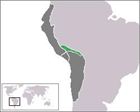 AntisuyuPlaceAntisuyu was the north-eastern quarter of the Inca Empire, covering the eastern slopes of the Andes and the edge of the Amazonian forest beyond Cusco.
 AntiumPlaceAntium was an ancient town on the coast of Latium, at modern Anzio south of Rome.
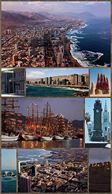 AntofagastaPlaceAntofagasta is a port city in northern Chile and capital of the Antofagasta Region, on the edge of the Atacama Desert.
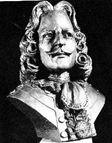 Antoine de Lamothe CadillacPersonAntoine de Lamothe Cadillac was a French adventurer and colonial officer in North America.
 Antoine III de GramontPersonAntoine III de Gramont was a French noble, sovereign lord of Bidache and Marshal of France from 1641.
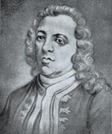 Antoine Lefebvre de La BarrePersonAntoine Lefebvre de La Barre was a French colonial administrator who established a lasting French settlement at Cayenne in French Guiana in 1664.
 Antoine of VaudémontPersonAntoine of Vaudémont was count of Vaudémont and a member of the house of Lorraine.
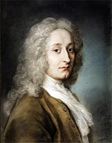 Antoine WatteauPersonAntoine Watteau was a French painter born in Valenciennes, which had become French only a few years earlier.
 Antoine, Duke of BrabantPersonAntoine of Burgundy was duke of Brabant and Limburg from 1406 until 1415, a younger son of Philip the Bold of Burgundy.
 Antoine-Martin Chaumont de La GalaizièrePersonAntoine-Martin Chaumont de La Galaizière was a French administrator who governed Lorraine as chancellor for Stanisław Leszczyński from 1737 to 1766.
- Antoine-Simon Le Page du PratzPersonAntoine-Simon Le Page du Pratz was a French settler, engineer and naturalist who lived in Louisiana from 1718 to 1734, part of that time near the Natchez.
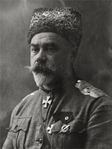 Anton DenikinPersonAnton Denikin was a Russian general and a leading commander of the White movement in the Russian Civil War.
 Anton Florian, Prince of LiechtensteinPersonAnton Florian was prince of Liechtenstein from 1718 to 1721.
- Anton Günther, Count of OldenburgPersonAnton Günther was Count of Oldenburg from 1603 until his death in 1667, and from 1647 also of Delmenhorst.
 Anton HolovatyPersonAnton Holovaty was a Cossack officer of the former Zaporozhian Host who helped form the Black Sea Cossack Host under Russian rule.
 Anton KorošecPersonAnton Korošec was a Slovene Catholic priest and politician who presided over the State of Slovenes, Croats and Serbs proclaimed in October 1918.
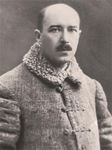 Anton LutskevichPersonAnton Lutskevich was a Belarusian politician and publicist, a founder of the Belarusian national movement.
- Anton SlutskyPersonAnton Slutsky was a Bolshevik who became chairman of the council of people's commissars of the Soviet Socialist Republic of Taurida, proclaimed in Crimea in March 1918.
 Anton WebernPersonAnton Webern was an Austrian composer and a member of the Second Viennese School with Arnold Schoenberg and Alban Berg.
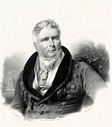 Antoni RadziwiłłPersonPrince Antoni Radziwiłł was a Polish-Lithuanian aristocrat, composer and patron of the arts who married Princess Louise of Prussia.
 Antonie van LeeuwenhoekPersonAntonie van Leeuwenhoek was a Dutch draper and self-taught scientist of Delft.
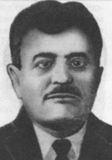 Antonín JanoušekPersonAntonín Janoušek was a Czech communist who headed the Slovak Soviet Republic, proclaimed at Prešov in June 1919 with the support of the Hungarian Soviet Republic.
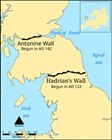 Antonine WallWork / monumentThe Antonine Wall was a Roman turf rampart built across the Forth–Clyde isthmus of central Scotland from 142 on the orders of Emperor Antoninus Pius.
 Antoninus PiusPersonAntoninus Pius was Roman emperor from 138 to 161, adopted heir of Hadrian and adoptive father of Marcus Aurelius.
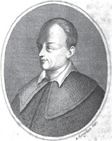 Antonio BeccadelliPersonAntonio Beccadelli (1394–1471), called Panormita after his native Palermo, was an Italian humanist and poet.
 Antonio Canales RosilloPersonAntonio Canales Rosillo was a Mexican lawyer and federalist soldier from Tamaulipas.
 Antonio Cánovas del CastilloPersonAntonio Cánovas del Castillo was a Spanish conservative statesman and historian who designed the Bourbon Restoration of 1874 and its Constitution of 1876.
- Antonio Carreño de ValdésPersonAntonio Carreño de Valdés was a Spanish officer who led the expedition from Manila to northern Taiwan in 1626.
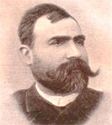 Antonio CecchiPersonAntonio Cecchi was an Italian explorer and colonial official.
- António Coelho GuerreiroPersonAntónio Coelho Guerreiro was a Portuguese administrator who arrived at Lifau in 1702 as the first governor appointed for Timor and Solor.
- António CorreiaPersonAntónio Correia was a Portuguese commander who led a Portuguese and Hormuzi force against Bahrain in 1521.
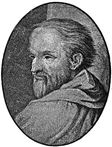 Antonio da CorreggioPersonAntonio Allegri, known as Correggio after his home town, was an Italian painter of the High Renaissance who worked mainly in Parma.
 Antonio da Sangallo the YoungerPersonAntonio da Sangallo the Younger was a Florentine architect of the High Renaissance, active mainly in Rome.
 António da Silva PortoPersonAntónio Francisco Ferreira da Silva Porto was a Portuguese trader and explorer who settled at Belmonte in the Viye (Bié) kingdom of central Angola in the 1840s and led…
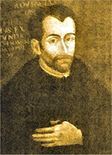 António de AndradePersonAntónio de Andrade was a Portuguese Jesuit missionary and explorer who in 1624 crossed the Himalaya from India and became one of the first Europeans to enter Tibet.
- Antonio de BerríoPersonAntonio de Berrío was a Spanish conquistador and governor who devoted his last years to the search for El Dorado on the Orinoco.
 Antonio de MendozaPersonAntonio de Mendoza was a Castilian noble who became the first viceroy of New Spain in 1535.
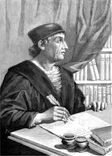 Antonio de NebrijaPersonAntonio de Nebrija was a Castilian humanist who taught at the universities of Salamanca and Alcalá.
- Antonio de NoliPersonAntonio de Noli was a Genoese navigator in Portuguese service who was among the discoverers of the Cape Verde islands around 1460.
 António de Oliveira SalazarPersonAntónio de Oliveira Salazar was the authoritarian leader of Portugal from 1932 to 1968, heading the Estado Novo regime.
 Antônio de Sousa NetoPersonAntônio de Sousa Neto was a gaúcho general of the Ragamuffin War in southern Brazil.
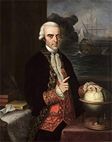 Antonio de UlloaPersonAntonio de Ulloa (1716–1795) was a Spanish naval officer and scientist who took part in the French geodesic mission to Peru from 1735, and whose account of the voyage…
- Antonio Gálvez ArcePersonAntonio Gálvez Arce, known as Antoñete, was a Spanish federalist politician from Murcia.
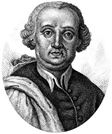 Antonio GenovesiPersonAntonio Genovesi (1713–1769) was a Neapolitan philosopher and economist and a leading figure of the Italian Enlightenment.
- Antônio Gonçalves da CruzPersonAntônio Gonçalves da Cruz, known as Cabugá, was a merchant of Recife and a leader of the Pernambucan revolt of 1817 against Portuguese rule in Brazil.
 Antonio Guzmán BlancoPersonAntonio Guzmán Blanco was a Venezuelan general and statesman who dominated the country from 1870 to 1888 as president or through allies.
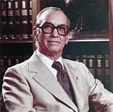 Antonio Guzmán FernándezPersonAntonio Guzmán Fernández was President of the Dominican Republic from 1978 to 1982 for the Dominican Revolutionary Party.
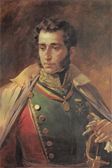 Antonio José de SucrePersonAntonio José de Sucre was a Venezuelan general and Simón Bolívar's closest lieutenant in the Spanish American wars of independence.
 Antonio López de Santa AnnaPersonAntonio López de Santa Anna was a Mexican general and politician who dominated the country's affairs from the 1820s to the 1850s and served as president several times.
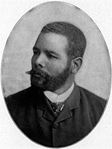 Antonio MaceoPersonAntonio Maceo was a Cuban general of the wars of independence, nicknamed the 'Bronze Titan'.
 Antonio NariñoPersonAntonio Nariño was a New Granadan revolutionary who translated and printed the Declaration of the Rights of Man in 1794 and was imprisoned for it.
- Antonio PérezPersonAntonio Pérez was secretary of state to Philip II of Spain.
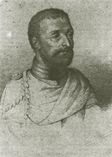 Antonio PigafettaPersonAntonio Pigafetta was a Venetian scholar who sailed with Ferdinand Magellan in 1519 and was one of the few survivors of the first circumnavigation of the world.
- Antônio Rolim de MouraPersonAntônio Rolim de Moura was a Portuguese nobleman and the first governor of the Captaincy of Mato Grosso in western Brazil.
 Antonio RosettiPersonAntonio Rosetti, born Anton Rösler in Bohemia, was a composer and double-bass player.
- António Vicente da CruzPersonAntónio Vicente da Cruz, known as Bonga, was a member of the Afro-Portuguese Da Cruz family who ruled Massangano on the Zambezi in present-day Mozambique in the…
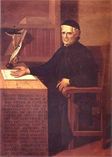 António VieiraPersonAntónio Vieira (1608–1697) was a Portuguese Jesuit missionary, diplomat and preacher, considered a master of classical Portuguese prose.
 Antonio VivaldiPersonAntonio Vivaldi was a Venetian composer, violinist and priest, one of the leading composers of the Baroque.
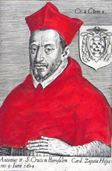 Antonio ZapataPersonAntonio Zapata was a rancher and federalist military leader from Guerrero, Tamaulipas, who commanded cavalry for the Republic of the Rio Grande, a short-lived breakaway…
 António, Prior of CratoPersonAntónio, Prior of Crato, was an illegitimate grandson of King Manuel I of Portugal and a claimant to the throne after the death of Cardinal-King Henry in 1580.
- Antony BekPersonAntony Bek was bishop of Durham from 1284 and a leading servant of Edward I of England.
 AntsirananaPlaceAntsiranana, formerly Diego Suarez, is a port city at the northern tip of Madagascar, on one of the world's largest natural harbours.
 AntwerpPlaceAntwerp is a port city in present-day Belgium that was the leading commercial centre of northern Europe in the early sixteenth century.
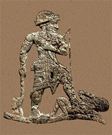 AnubaniniPersonAnubanini was a king of the Lullubi, a mountain people of the Zagros, in the late third millennium BCE.
- Anum-muttabbilPersonAnum-muttabbil was a ruler of the Mesopotamian city of Der, east of the Tigris, around the start of the 2nd millennium BCE.
- Anura Kumara DissanayakePersonAnura Kumara Dissanayake (born 1968) is a Sri Lankan politician who became president of Sri Lanka in September 2024.
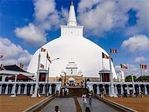 AnuradhapuraPlaceAnuradhapura is a city in north-central Sri Lanka that was the island's first great capital, from about the 4th century BCE until the 11th century CE.
- Anushtegin GharchaiPersonAnushtegin Gharchai was a Turkic slave commander in the service of the Seljuks who was appointed governor of Khwarazm in the late eleventh century.
- Anushteginid dynastyStateThe Anushteginid dynasty was the ruling house of the Khwarazmian Empire, descended from Anushtegin Gharchai.
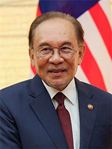 Anwar IbrahimPersonAnwar Ibrahim is a Malaysian politician who was deputy prime minister under Mahathir Mohamad until his dismissal and imprisonment in 1998.
 Anwar SadatPersonAnwar Sadat was president of Egypt from 1970 until his assassination in 1981.
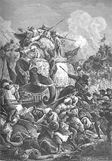 Anwaruddin KhanPersonAnwaruddin Khan was Nawab of the Carnatic, ruling from Arcot, from 1744 to 1749, installed by Asaf Jah I, the Nizam of Hyderabad.
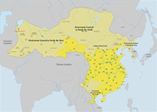 Anxi ProtectorateInstitutionThe Anxi Protectorate, or Protectorate General to Pacify the West, was the Tang dynasty's military government for the Tarim Basin and the lands farther west.
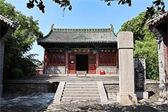 AnyangPlaceAnyang is a city in northern Henan province, China, near the site of Yin, the last capital of the Shang dynasty.
 Anyi peoplePeople / groupThe Anyi are an Akan people living mainly in south-eastern Côte d'Ivoire and neighbouring western Ghana.
 Anzac DayEventAnzac Day, 25 April, is the national day of remembrance in Australia and New Zealand, marking the anniversary of the landing of the Australian and New Zealand Army…
 ANZUSTreaty · 1951ANZUS is the security treaty signed by Australia, New Zealand and the United States in San Francisco on 1 September 1951, each pledging to act against a common danger…
- Aodh Buidhe O'NeillPersonAodh Buidhe O'Neill was a king of Tír Eoghain in Ulster in the 13th century, who ruled with the backing of the Anglo-Norman earls of Ulster and was killed in 1283.
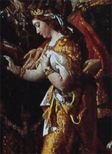 Aoife MacMurroughPersonAoife MacMurrough was the daughter of Diarmait Mac Murchada, king of Leinster.
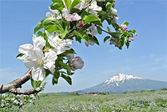 Aomori PrefecturePlaceAomori Prefecture is the northernmost prefecture of Honshu, Japan, with its capital at Aomori, facing Hokkaido across the Tsugaru Strait.
- AonlaPlaceAonla is a town in the Bareilly district of Uttar Pradesh, India.
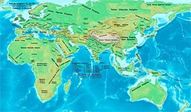 AorsiPeople / groupThe Aorsi were a Sarmatian people of the steppes between the Don, the Volga and the Caspian Sea from about the second century BCE.
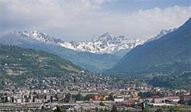 AostaPlaceAosta is the capital of the Aosta Valley in north-western Italy.
 Aosta ValleyPlaceThe Aosta Valley is a mountainous region of north-western Italy, bordering France and Switzerland and drained by the Dora Baltea.
- ApachePeople / groupThe Apache are a group of culturally related Indigenous peoples of the American Southwest and northern Mexico, speaking Southern Athabaskan languages.
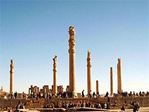 ApadanaWork / monumentThe Apadana is the great audience hall of Persepolis, begun by Darius I around 515 BCE and completed under Xerxes I.
 ApahidaPlaceApahida is a village near Cluj-Napoca in Transylvania, Romania, known for princely graves of the late 5th century.
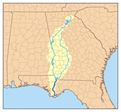 Apalachicola RiverPlaceThe Apalachicola River flows south through the Florida Panhandle into the Gulf of Mexico, formed where the Chattahoochee and Flint rivers meet at the Georgia border.
- Apama (wife of Magas)PersonApama was a daughter of the Seleucid king Antiochus I who married Magas, ruler of Cyrene, and drew him into the Seleucid alliance against Ptolemy II.
 Apamea, SyriaPlaceApamea was an ancient city on the Orontes river in western Syria, founded around 300 BCE by Seleucus I and named after his wife Apama.
- AparajitavarmanPersonAparajitavarman was the last important king of the Pallava dynasty of Kanchipuram.
- ApartheidReligion / ideaApartheid (Afrikaans for "separateness") was the system of institutionalised racial segregation and white minority rule imposed in South Africa by the National Party…
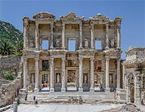 ApasaPlaceApasa was the capital of the Bronze Age kingdom of Arzawa in western Anatolia, known from Hittite texts.
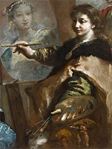 ApellesPersonApelles was the most celebrated painter of ancient Greece, active in the 4th century BCE.
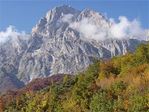 ApenninesPlaceThe Apennines are the mountain range that runs about 1,200 kilometres down the length of the Italian peninsula, from Liguria to Calabria.
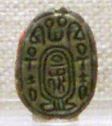 ApepiPersonApepi was a Hyksos king of the Fifteenth Dynasty of Egypt who ruled from Avaris in the eastern Delta for some forty years in the 16th century BCE, the best-attested…
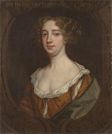 Aphra BehnPersonAphra Behn (1640–1689) was an English playwright, poet and novelist, one of the first Englishwomen to earn a living by writing.
- Aphsad inscriptionWork / monumentThe Aphsad inscription is a Sanskrit stone inscription of the 7th century found at Aphsad, near Nawada in Bihar, India.
- ApiaPlaceApia is the capital and largest town of Samoa, on the north coast of Upolu.
- Apil-SinPersonApil-Sin was an early king of the First Dynasty of Babylon in the nineteenth century BCE and the grandfather of Hammurabi.