
Egypt & North Africa
Aghlabid emirate
At a glance
- The Aghlabids were independent in all but name, yet paid the Abbasid caliph 800,000 dirhams a year and named him in the Friday khutba.
- Their conquest of Sicily, begun in 827 under the qadi Asad ibn al-Furat, took Palermo in 831, Syracuse in 878 and Taormina only in 902.
- Ziyadat Allah I rebuilt the Great Mosque of Kairouan in 836; its minaret is the oldest surviving in North Africa and its teak minbar the oldest in the world.
Rise & Fall
- 800Harun al-Rashid appoints Ibrahim I ibn al-Aghlab hereditary emir of Ifriqiya; he founds al-Abbasiyya outside Kairouan.
- 824The Arab jund revolts under Mansur ibn Nasr al-Tunbudhi and occupies Tunis and Kairouan; Ziyadat Allah I crushes the rebellion in 827 with Ibadi Berber help.
- 827Asad ibn al-Furat leads the Aghlabid conquest of Sicily, invited by the Byzantine rebel Euphemios.
- 836Ziyadat Allah I completely rebuilds the Great Mosque of Kairouan.
- 870The Aghlabids conquer Malta.
- 876Ibrahim II moves his residence from al-Abbasiyya to the new palace-city of Raqqada.
- 902Ibrahim II dies besieging Cosenza; Abu Abdallah al-Shi'i takes Mila, the first blow to Aghlabid rule in Africa.
- 909The Kutama rout the Aghlabid army near al-Aribus on 18 March; Ziyadat Allah III flees to Egypt and Abu Abdallah enters Raqqada on 25 March.
Foundation

In 800 the Abbasid caliph Harun al-Rashid appointed Ibrahim I ibn al-Aghlab, the son of a Khurasani Arab commander of the Banu Tamim tribe, hereditary emir of Ifriqiya, in answer to the anarchy that had followed the fall of the Muhallabids in that province. Perhaps 100,000 Arabs then lived in Ifriqiya, most of them immigrants from Syria and Iraq, but the Berbers remained the great majority. Ibrahim's charge covered what is now eastern Algeria, Tunisia and Tripolitania, and in theory the whole Maghreb west of Cyrenaica, since the territory granted him was never demarcated. Though independent in all but name, the dynasty never ceased to recognise Abbasid overlordship: it paid an annual tribute of 800,000 dirhams and had the caliph's suzerainty proclaimed in the khutba at Friday prayers.
After pacifying the country, Ibrahim founded a new capital, al-Abbasiyya, outside Kairouan in 800 and built it between 801 and 810. He did so partly to distance himself from the Malikite jurists and theologians, who condemned the luxurious life of the Aghlabids, disliked their Mu'tazilite theology and Hanafi law, and objected to the unequal treatment of the Muslim Berbers. His line ruled for eleven reigns: Abdallah I (812–817), Ziyadat Allah I (817–838), al-Aghlab, Muhammad I, Ahmad I, Ziyadat Allah II, Muhammad II, Ibrahim II (875–902), Abdallah II and Ziyadat Allah III (903–909).
Socioeconomy

Ifriqiya under the Aghlabids was a land of Berber cultivators ruled by an Arab minority. The emirs built up the irrigation of the region and improved the public buildings and mosques of its towns; the Aghlabid Reservoirs of Kairouan survive as an example of their practical works. Agriculture and the trans-Saharan trade were further developed under their rule, bringing economic expansion and a growing urban population, and the campaigns in Sicily that began in 827 brought new revenues to the state. Slaves were obtained through the trans-Saharan trade, through Mediterranean commerce and from raids on Sicily and Italy; 5,000 black Zanj slaves are recorded as part of the garrison of al-Abbasiyya.
The court lived richly enough to draw the censure of the Maliki scholars, and the emirs answered by publicly dispensing charity to the poor and by sponsoring the construction and expansion of mosques. Their building combined Abbasid and Byzantine traditions into a style of their own, heavy and almost fortress-like even in its mosques. The Great Mosque of Kairouan, rebuilt by Ziyadat Allah I in 836, has an enormous courtyard, a hypostyle prayer hall and a thick three-storey minaret perhaps modelled on Roman lighthouses, the oldest surviving in North Africa; its mihrab is faced with carved marble and lustre tiles and stands beside the oldest surviving minbar in the world, of carved teak, both believed to be imports from Abbasid Iraq.
Military
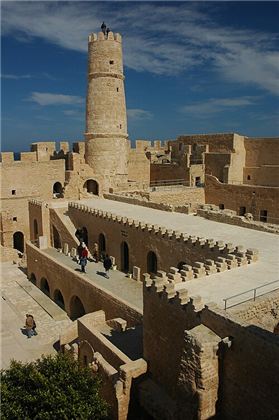
The Aghlabid army had two main elements: the jund, Arab troops descended from the tribesmen of the early conquests, and soldiers recruited from slaves, raised partly to counterbalance the jund. The jund rose in 824 under Mansur ibn Nasr al-Tunbudhi, who held a fortress near Tunis; by September the rebels had occupied Tunis and Kairouan, and after Mansur was killed Amir ibn Nafi' inflicted a severe defeat on Ziyadat Allah I. The emir prevailed only in 827, with the help of the Ibadite Berbers of the Nafwaza region. In 838/839 the Ibadi province of Qastiliya revolted and Tozeur had to be retaken. Ribats guarded the coast at Sousse and Monastir, and the Ribat of Sousse and the Ribat of Monastir still stand.
The conquest of Sicily, begun in 827 under the qadi Asad ibn al-Furat at the invitation of the Byzantine rebel Euphemios, gave the restless jund a new outlet. A fleet from the Umayyad Emirate of Córdoba under Asba' ibn Wakil joined the Aghlabids despite their rivalry; Ibn Kathir records 300 ships in all. Palermo fell in 831 and became the base of Muslim rule; Messina followed in 842 or 843, Syracuse in 878 and Taormina in 902, though pockets of Christian resistance held out until 967. From 835 Aghlabid forces campaigned in Calabria and Apulia, taking Amantea, Taranto and Bari, but the destruction of a Muslim fleet off Ostia in 849 halted the advance, and Malta was conquered in 870.
Governance & Law
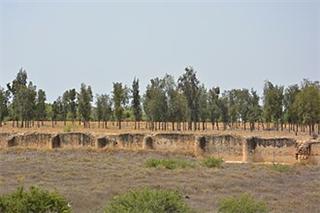
The emir ruled as a hereditary vassal of the Abbasid caliph, whose name was spoken in the Friday prayers. Residence shifted from al-Abbasiyya to Raqqada, the palace-city Ibrahim II founded in 876 with a mosque, baths, a market and several palaces, where he and his successors lived in the Qasr al-Fath except for periods spent in Tunis. Succession passed within the family, from brother to brother as often as from father to son, and ended in violence: Abdallah II was assassinated on 27 July 903, a year after his accession.
Religion set the dynasty against its subjects. The Aghlabids adopted the Mu'tazilite rationalist doctrine after the caliph al-Ma'mun (813–833) made it official in Baghdad, and imposed it as the state doctrine of Ifriqiya, though the Maliki majority rejected its teaching that the Qur'an was created rather than God's eternal word. The qadi of Kairouan was a Hanafi who endorsed the createdness of the Qur'an, and the emirs consistently favoured Iraqis as their higher-ranking judges, while the viziers were Malikis. Unable and unwilling to alter their government to suit the Maliki leaders, the emirs instead drew them into the orbit of the state with appointments to high religious offices, and persecuted some who resisted, such as Sahsun under Muhammad I (841–856). Abroad, they kept strained relations with the Ibadi Rustamids of Tahert, tense relations with the Zaydi Shi'ite Idrisids of Fez, and a hostile stance towards the Umayyads of Córdoba.
Global & Regional Impact
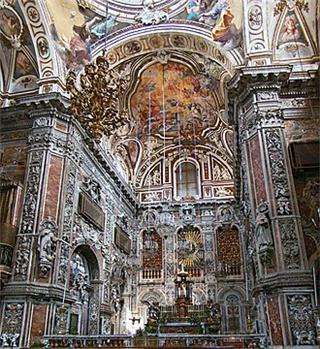
The Aghlabids carried Islam across the central Mediterranean. Their conquest of Sicily, pursued from west to east over 75 years, made Palermo the capital of Muslim rule on the island and Messina a base for the Italian mainland; a Muslim force raided Rome in 846, though it is not certain that it came from Aghlabid territory. Many of the Muslim bands on the peninsula had only tenuous allegiance to the dynasty, serving Naples, the Lombard rulers or Radelchis I of Benevento, and the Emirate of Bari (847–871) had rulers of its own. Whether Sardinia was ever occupied is disputed: Corrado Zedda argues for a limited coastal foothold, while Alex Metcalfe and, according to Fabio Pinna, most Sardinian historians and archaeologists hold that the evidence supports only raids.
At home the dynasty left some of the oldest Islamic-era monuments of the region. The Great Mosque of Kairouan, the Great Mosque of Sousse, the Great Mosque of Sfax, the ribats of Sousse and Monastir and the reservoirs of Kairouan survive to the present, and the Kairouan mosque's dome, carved minbar and lustre-tiled mihrab remain landmarks of early Islamic art. The Aghlabids also fixed Ifriqiya's religious politics: their Mu'tazilite and Hanafi establishment, set against a Maliki majority, and their reliance on Zanj slave soldiers against the Arab jund, shaped the province the Fatimids inherited in 909, and the conquest of Sicily they began outlived them by more than a century.
Decline & Fall
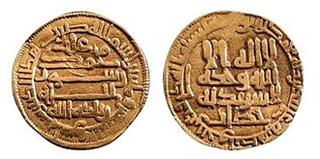
Decline began under Ibrahim II (875–902), who had to repel an attack by the Tulunids of Egypt and put down a Berber revolt. In 893 the Isma'ili Fatimid movement began among the Kutama Berbers, led by Abu Abdallah al-Shi'i. In 902 Ibrahim II became the only Aghlabid emir to lead a campaign in Sicily and Italy in person; while he was away Abu Abdallah captured Mila, and a punitive expedition of 12,000 men from Tunis drove him from Tazrut to Ikjan. Ibrahim died in October 902 besieging Cosenza. His son Abdallah II was assassinated on 27 July 903, and Ziyadat Allah III took power in Tunis.
These troubles let Abu Abdallah retake Mila and capture Setif by late 904, and later Aghlabid attempts to crush him had little success. In 907 Ziyadat Allah III moved his court back to Raqqada and fortified it, but the heavily fortified city of Baghaya, on the Roman road into the central Maghreb, fell to the Kutama and opened a hole in Ifriqiya's defences. A battle near Dar Madyan in 908 was indecisive. On 25 February 909 Abu Abdallah marched from Ikjan with an army put at 200,000 men. Near al-Aribus on 18 March the Kutama horsemen outflanked the Aghlabid army under the prince Ibrahim Ibn Abi al-Aghlab and routed it. Ziyadat Allah III packed his treasures and fled towards Egypt, the people of Kairouan refused a last stand, and on 25 March 909 Abu Abdallah entered the city. That year his forces brought Abdallah al-Mahdi from Sijilmasa to Ifriqiya and founded the Fatimid Caliphate.
The Aghlabid emirate ruled Ifriqiya from 800 to 909 as hereditary vassals of the Abbasids, conquering Sicily and Malta, raising the Great Mosque of Kairouan and the ribats of the coast, and imposing Mu'tazilite doctrine on a Maliki majority, until the Kutama Berbers of the Fatimid movement routed its army and took Raqqada.
Test yourself
5 questions on this page, from its key events and facts.
The questions open here once the page has loaded.
References
- Jamil M. Abun-Nasr, A History of the Maghrib in the Islamic Period (Cambridge University Press, 1987)
- Alex Metcalfe, The Muslims of Medieval Italy (Edinburgh University Press, 2009)
Connections
Open the full connections map →