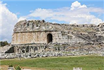
Europe
Boeotian League
At a glance
- A federation of the cities of Boeotia in central Greece, led by Thebes, with a common coinage stamped with the Boeotian shield.
- Its fifth-century constitution of eleven districts and a representative council of 660 is one of the best documented in Greece.
- Under Epaminondas and Pelopidas it broke Spartan power at Leuctra in 371 BCE and briefly led Greece.
Rise & Fall
- 479 BCEBoeotians fight on the Persian side and are defeated at the Battle of Plataea
- 447 BCEVictory over Athens at Coronea leads to the refounding of the league
- 424 BCEPagondas defeats the Athenians at the Battle of Delium
- 386 BCEThe King’s Peace dissolves the league
- 379 BCEPelopidas and the exiles liberate Thebes and rebuild the league
- 371 BCEEpaminondas defeats Sparta at the Battle of Leuctra
- 335 BCEAlexander the Great destroys Thebes
- 171 BCERoman envoys break up the league
Foundation
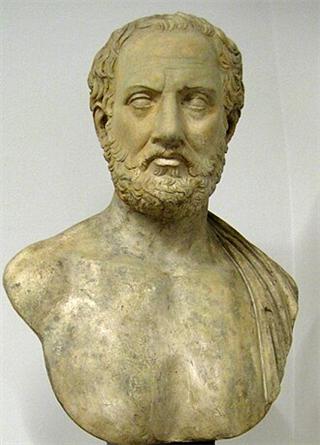
Boeotia, the fertile plain of central Greece between Attica and Phocis, held a dozen or more independent cities, of which Thebes was the largest, followed by Orchomenus, Thespiae, Tanagra and Plataea. The Boeotians shared an Aeolic dialect, a tradition of common descent and cults such as that of Athena Itonia near Coronea and Poseidon at Onchestus, which gave a basis for joint action. In the second half of the sixth century BCE Thebes began to draw its neighbours into a federation, and a common coinage stamped with the figure-of-eight Boeotian shield appeared around this time. Resistance was strong where Thebes was feared: Plataea, according to Thucydides, placed itself under Athenian protection, traditionally in 519 BCE, and in 506 BCE the Boeotians and Chalcidians were defeated by Athens. During the Persian invasion of 480–479 BCE Thebes and most Boeotian cities took the Persian side, and Boeotians fought for Mardonius at the Battle of Plataea in 479 BCE. Afterwards the victorious Greeks besieged Thebes and executed its pro-Persian leaders, and the federation lost its cohesion. Between the Battle of Oenophyta in 457 BCE and 447 BCE Athens dominated Boeotia, until Boeotian exiles defeated an Athenian army at the Battle of Coronea in 447 BCE. The federal state was then refounded on a more formal footing.
Socioeconomy

Boeotia was one of the best farming regions of Greece, with wheat and barley lands around Lake Copais and the Theban and Tanagran plains, good horse pasture and the eels of Lake Copais, a delicacy prized at Athens. Its wealth rested on landowners, and the federal constitution of the late fifth century reserved full rights in the member cities to citizens who met a property qualification, generally understood as the hoplite census. Athenian writers mocked the Boeotians as heavy, rustic and fond of food, a stereotype that the region’s cultural record contradicts. Pindar of Thebes was the greatest choral lyric poet of the fifth century, Corinna of Tanagra was remembered as his rival, and the much earlier poet Hesiod had lived at Ascra below Mount Helicon. The sanctuary of the Muses on Helicon, the oracle of Trophonius at Lebadea and the oracle of Apollo Ptoios near Acraephia drew visitors from across Greece. Under Theban leadership in the fourth century Pythagorean teaching reached the elite through Lysis of Tarentum, who taught Epaminondas. In the Hellenistic period Tanagra gave its name to the painted terracotta figurines found in its graves. Trade was modest compared with Corinth or Athens, as Boeotia had few good harbours, but the federal coinage circulated widely in central Greece.
Military
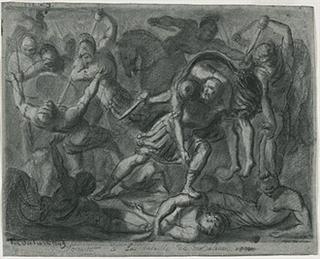
Boeotian strength lay in its heavy infantry and cavalry. Under the fifth-century constitution each of the eleven districts supplied about 1,000 hoplites and 100 horsemen, giving a federal army of some 11,000 hoplites and 1,100 cavalry. At the Battle of Delium in 424 BCE the Theban commander Pagondas drew up the Thebans 25 ranks deep and used cavalry to break the Athenian line, an early sign of the tactics that later made Thebes famous. In the Corinthian War Boeotian forces killed the Spartan commander Lysander at the Battle of Haliartus in 395 BCE and fought Agesilaus II at the Battle of Coronea in 394 BCE. After 378 BCE Thebes formed the Sacred Band, an elite unit of 300 men, and Pelopidas used it to defeat a larger Spartan force at the Battle of Tegyra in 375 BCE. At the Battle of Leuctra in 371 BCE Epaminondas massed his left wing 50 ranks deep against the Spartan king Cleombrotus I, who was killed, shattering the reputation of Spartan arms. Epaminondas then invaded Laconia, built a fleet in 364 BCE and died winning the Battle of Mantinea in 362 BCE. At the Battle of Chaeronea in 338 BCE Philip II of Macedon defeated Thebes and Athens, and the Sacred Band was destroyed.
Governance & Law
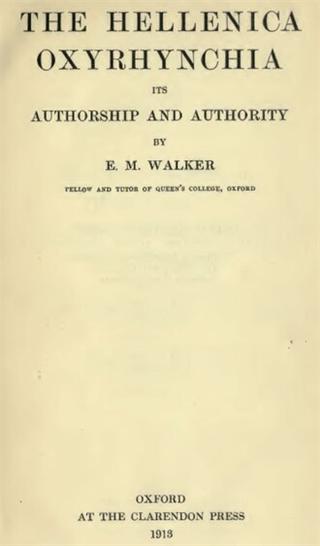
The constitution of the refounded league is described by the Hellenica Oxyrhynchia, a historical fragment found in Egypt that covers the years around 395 BCE. Boeotia was divided into eleven districts, each of which elected one boeotarch, sent 60 members to a federal council of 660 and supplied troops, taxes and judges in proportion. Thebes controlled four districts, two of its own and two that it had taken over after destroying Plataea in 427 BCE, while Orchomenus and Thespiae each held two with their dependent towns, Tanagra one, and smaller cities shared the rest. Each member city was governed by four councils of propertied citizens that took turns to prepare business, and the federal council met on the Cadmea at Thebes. After the King’s Peace dissolved the league in 386 BCE and the Spartan Phoebidas seized the Cadmea, the citadel of Thebes, in 382 BCE, Theban exiles led by Pelopidas recovered the city in the winter of 379–378 BCE. The new state was more democratic and more Theban: an assembly of all Boeotian citizens meeting at Thebes elected seven boeotarchs, and smaller cities lost much of their independence, while Plataea, Thespiae and Orchomenus were destroyed for resisting. The Hellenistic league kept boeotarchs and a federal assembly under an annual federal archon.
Global & Regional Impact
The Boeotian League is among the best documented Greek federal states, or koina, and its representative council, proportional to the military and financial contributions of each district, is a rare example of representation in the ancient world. For a decade after Leuctra the Theban-led league transformed Greek politics. Epaminondas freed Messenia from Spartan control and founded the city of Messene in 369 BCE, and the Thebans supported the new Arcadian federation and its capital at Megalopolis, permanently breaking Sparta’s hold on the Peloponnese. Pelopidas extended Theban influence into Thessaly and Macedonia, and the young Philip II spent several years as a hostage at Thebes in the 360s BCE, where he probably observed Theban methods of war. In this way the Theban hegemony helped to prepare the rise of Macedon that ended it. The tactics of Leuctra, with a deep, weighted wing and the coordination of infantry and cavalry, were studied by later commanders from Philip and Alexander the Great to modern military theorists. Boeotia also gave Greek literature Hesiod, Pindar and, under Roman rule, Plutarch of Chaeronea, whose lives of Pelopidas and Epaminondas, the latter now lost, shaped the later image of the Theban heroes.
Decline & Fall
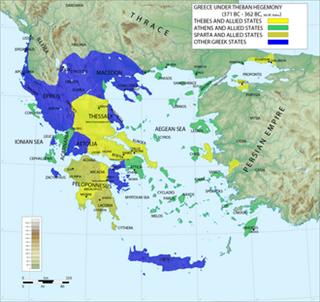
Theban supremacy did not outlast its leaders. Pelopidas was killed at the Battle of Cynoscephalae in 364 BCE fighting Alexander of Pherae, and the death of Epaminondas at Mantinea in 362 BCE left Thebes without a commander of his stature. The Third Sacred War against Phocis from 356 to 346 BCE drained Boeotian resources and drew in Philip II of Macedon, who became the arbiter of central Greece. After the Battle of Chaeronea in 338 BCE a Macedonian garrison occupied the Cadmea, and when Thebes revolted in 335 BCE Alexander the Great destroyed the city and sold its population into slavery, with the approval of Boeotian cities that Thebes had oppressed. The league was reorganised without Thebes, and Plataea and Orchomenus were restored. Cassander rebuilt Thebes in 316 BCE, and it rejoined the league in the third century BCE, probably in the 280s. The Hellenistic league was a second-rank power that shifted between Macedon, the Aetolian League and the Achaean League, and was defeated by the Aetolians near Chaeronea around 245 BCE. Polybius described a society weakened by debt and public feasting. When Boeotian cities leaned towards Perseus of Macedon, Roman envoys led by Quintus Marcius Philippus persuaded them to break away separately, and the league was dissolved in 171 BCE.
The Boeotian League was one of the earliest and best documented federal states in Greece, with a representative council and a strong citizen army, and under Epaminondas and Pelopidas it broke Spartan power at Leuctra in 371 BCE and briefly made Thebes the leading state in Greece.
References
- Beck, H. and Funke, P. (eds) (2015) Federalism in Greek Antiquity. Cambridge: Cambridge University Press.
- Buckler, J. (1980) The Theban Hegemony, 371–362 BC. Cambridge, MA: Harvard University Press.
- Buckler, J. and Beck, H. (2008) Central Greece and the Politics of Power in the Fourth Century BC. Cambridge: Cambridge University Press.
- Larsen, J.A.O. (1968) Greek Federal States: Their Institutions and History. Oxford: Clarendon Press.
- Mackil, E. (2013) Creating a Common Polity: Religion, Economy, and Politics in the Making of the Greek Koinon. Berkeley: University of California Press.
Connections
Open the full connections map →