
Form of government · Americas
Federation
At a glance
- In a federation a constitution divides power between a central government and member states, each governing its citizens directly in its own fields; neither can abolish the other.
- It differs from a confederation, a league of sovereign states whose common council acts through them, and from a unitary state, whose regions hold only the powers the centre grants.
- Pioneered by the United States in 1789 and adopted by Switzerland, Canada, Germany, Australia and India, federations are now home to about 40 per cent of the world’s people.
Timeline
- 1789The Constitution of the United States takes effect, turning a confederation into the first modern federation
- 1848After the Sonderbund War, Switzerland’s new constitution turns its confederacy into a federal state
- 1861Seceding southern states form the Confederate States of America, and the American Civil War begins
- 1867The British North America Act unites three colonies in the federal Dominion of Canada
- 1871The German Empire is founded as a federation of 25 states under the king of Prussia
- 1901After referendums in each colony, six Australian colonies federate as the Commonwealth of Australia
- 1950India’s constitution comes into force, making the country a “Union of States”
- 1991The Soviet Union, a federation of fifteen union republics, is dissolved
How It Works
In a federation sovereignty is divided between two orders of government: a federal or central government and the governments of the member units, called states, provinces, cantons or Länder. Each order acts directly on citizens within the fields the constitution assigns it, and the existence and powers of the units are entrenched, so that neither level can alter them alone, only through the procedure for amending the constitution. Foreign affairs, defence, currency and trade between the units usually belong to the federal government, education, policing and local government often to the units. Where the constitution is silent, the remaining powers belong to the units in the United States, Switzerland, Germany and Australia, but to the centre in Canada and India. A federal constitution normally declares itself supreme, as Article VI of the Constitution of the United States does, and a supreme or constitutional court settles disputes between the levels.
The units share in the central government as well as running their own. Most federations have a parliament of two chambers, one representing the people as a whole by population and the other the units: the senates of the United States and Australia give every state the same number of seats whatever its population, and the German Bundesrat is made up of members of the state governments. Amending the constitution usually needs the units’ consent: three-quarters of the American states must ratify an amendment, Swiss and Australian amendments need a majority of the voters and a majority of the cantons or states, and Germany’s Basic Law forbids any amendment that would abolish its federal structure. Some federations give all units the same powers; others are asymmetric, as Malaysia is, where Sabah and Sarawak joined on special terms.
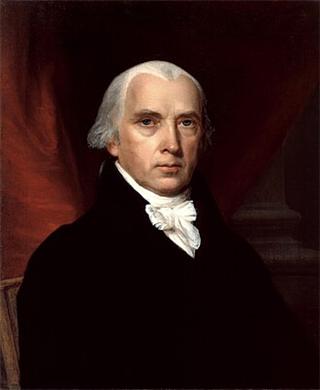
A federation differs from a confederation, a permanent league of sovereign states created by treaty, whose common council usually decides by unanimity and depends on the member states to carry out its decisions; the jurist Emer de Vattel held that states so united each remained a “perfect state”, and members of a confederation keep, in principle, the right to leave. It differs equally from a unitary state such as France or Japan, whose regional governments hold only the powers the centre delegates and could in law withdraw; the devolved governments of the United Kingdom and Spain lie in between. James Madison called the American Constitution “neither a national nor a federal Constitution, but a composition of both”.
Origins

The word comes from the Latin foedus, a treaty or covenant, and until the late 18th century “federal” and “confederal” meant the same thing: a league of independent states bound by treaty. Such leagues are ancient. The cities of Hellenistic Greece formed the Aetolian and Achaean Leagues, and the Achaean League, refounded around 280 BCE, had a common assembly, an annually elected general, a common coinage and a shared citizenship; the historian Polybius, himself an Achaean, wrote that the Peloponnese lacked only a single wall to be one city. In North America the Haudenosaunee, or Iroquois Confederacy, founded before European contact at a date still debated, joined five nations, later six, under a Grand Council of fifty chiefs.
In late medieval and early modern Europe the Old Swiss Confederacy grew from the Federal Charter of 1291 among Uri, Schwyz and Unterwalden into a web of pacts among thirteen cantons by 1513, whose delegates met in a diet, the Tagsatzung, and the Dutch Republic rested on the Union of Utrecht of 1579, under which each province kept its sovereignty and sent delegates to the States General. The German political thinker Johannes Althusius described society in his Politica of 1603 as a series of associations, from the family and the guild to the province and the commonwealth, each consenting to the larger, and is often called the father of modern federalism. Montesquieu in 1748 praised the “confederate republic” as joining the internal freedom of small republics to the external strength of a large monarchy.
The modern federation was invented to remedy a confederation’s weakness. The thirteen American states had united under the Articles of Confederation, in force from 1781, in “a firm league of friendship” whose Congress could not tax, could act on individuals only through the states, and needed every state’s consent to amend the Articles. Its Congress was chronically short of money, and Shays’ Rebellion in Massachusetts in 1786–1787 exposed its helplessness. The Constitutional Convention of 1787 created a government that acted directly on citizens, with powers listed in the constitution, and settled the conflict between large and small states by the Great Compromise: representation by population in the House of Representatives and equal representation of the states in the Senate. The Constitution took effect in 1789.
Through History

The American federation was tested from the start. In McCulloch v. Maryland in 1819 the Supreme Court read the federal government’s powers broadly, and in 1832 South Carolina claimed the right to nullify a federal tariff, backing down when Congress lowered the tariff and President Andrew Jackson threatened force. Whether a state could leave the Union was settled by war: after the election of Abraham Lincoln in 1860, eleven southern states seceded to protect slavery and formed the Confederate States of America, and their defeat in the American Civil War of 1861–1865 was followed by the Fourteenth Amendment, which bound the states to respect their citizens’ rights. In Texas v. White in 1869 the Supreme Court called the United States “an indestructible Union, composed of indestructible States”. Over the following century federal power grew through the income tax of 1913, the New Deal and the civil rights laws of the 1960s.
Other states followed the American example. Mexico adopted a federal constitution in 1824; the Federal Republic of Central America broke apart by the end of the 1830s; Argentina wavered between federal and unitary rule before its federal constitution of 1853; Venezuela became a federation after the Federal War of 1859–1863 and Brazil after the fall of its monarchy in 1889. In Europe the Swiss turned their confederacy into a federal state in 1848, after defeating a separate league of seven Catholic cantons in the brief Sonderbund War of 1847. Otto von Bismarck’s German Empire of 1871 was a federation of 25 monarchies and free cities dominated by Prussia, and Austria became a federation in 1920. Within the British Empire, Canada federated under the British North America Act of 1867 and Australia in 1901, after referendums in each colony, while India, whose constitution of 1950 calls it a “Union of States”, Pakistan, Nigeria and Malaya became federations around the time of their independence.
The 20th century also produced federations in name only and federations that failed. The Soviet Union, founded in 1922 as a union of Soviet republics with a formal right of secession, was in practice governed from Moscow by the Communist Party, and Nazi Germany stripped the German states of their powers in 1934. Singapore was expelled from Malaysia in 1965, and the Soviet Union, Yugoslavia and Czechoslovakia broke apart along their internal borders between 1991 and 1993. Federal constitutions have since been used to end or prevent conflict, as in Bosnia and Herzegovina in 1995, Iraq in 2005 and Nepal in 2015.
Strengths

The founders of the American federation argued that it secured liberty twice over. In The Federalist No. 51 James Madison wrote that in “the compound republic of America” power was divided between two governments and then within each, so that “a double security arises to the rights of the people”; in No. 10 he argued that a large union embracing many interests would be harder for any one faction to capture than a small state. Their inspiration, Montesquieu’s confederate republic, promised a state strong enough to defend itself yet close enough to its citizens to keep them free. Alexis de Tocqueville, who toured the United States in 1831–1832, judged that its federal system joined the advantages of a great nation to those of a small one, and that local self-government taught citizens liberty as primary schools teach knowledge.
Later defenders added experiment and the management of diversity. Justice Louis Brandeis of the Supreme Court of the United States wrote in 1932 that “a single courageous State may, if its citizens choose, serve as a laboratory; and try novel social and economic experiments without risk to the rest of the country.” Federations have held together peoples of different languages and faiths: Switzerland unites speakers of German, French, Italian and Romansh in 26 cantons, Canada has kept French-speaking Quebec within a largely English-speaking country, and India redrew its states along linguistic lines in 1956. Proponents argue that a state divided into self-governing units can be both large and diverse without a central government turning tyrannical, and that dividing power makes it harder for a would-be dictator to seize it all; for this reason the Western Allies required the constitution of West Germany, adopted in 1949, to be federal.
Its defenders also point to its record of endurance. The United States has kept its federal constitution since 1789, Switzerland since 1848, Canada since 1867 and Australia since 1901, and federations now hold about 40 per cent of the world’s population, including several of its largest democracies. The political scientist Daniel Elazar summed up their appeal as “self-rule plus shared rule”: the units govern their own affairs while sharing in the government of the whole.
Weaknesses

The gravest charge is that federations make secession easier. Their units have their own governments, legislatures and loyalties, and some scholars argue that this turns them into states in waiting. The United States fought the deadliest war in its history, with some 620,000 to 750,000 dead, when eleven states claimed the right to leave; Nigeria’s federation was torn by the secession of Biafra in 1967–1970, in which hundreds of thousands died, most of them from famine; and the communist federations broke apart along the boundaries of their republics, Yugoslavia in a series of wars. Federations created by colonial powers, such as the West Indies Federation and the Federation of Rhodesia and Nyasaland, failed within a few years, and in the 19th century Gran Colombia and the Federal Republic of Central America had dissolved.
A second charge is that the rights of the units can shelter injustice. In the United States the doctrine of states’ rights was invoked to defend slavery and then the racial segregation of the southern states, and federal troops had to enforce the Supreme Court’s ruling against segregated schools in Brown v. Board of Education of 1954, as at Little Rock, Arkansas, in 1957. The political scientist William Riker concluded in 1964 that the main beneficiaries of American federalism had been white Southerners, and that anyone who disapproved of racism should disapprove of federalism. The looser unions that preceded the form fared worse: the Old Swiss Confederacy and the Dutch Republic were often paralysed by quarrels among their members, and Madison and Hamilton cited both in The Federalist as warnings.
Critics also point to cost and complexity. Two orders of government mean duplicated administrations, disputes over taxes and responsibilities, and unequal services between rich and poor units. The German political scientist Fritz Scharpf described a “joint-decision trap” in Germany and the European Community, where the need for agreement between levels of government blocked reform. Federal arrangements can also be hollow: the Soviet constitution’s federal forms and right of secession meant little while the Communist Party ruled from Moscow. Finally, power has tended to drain towards the centre in most federations, through constitutional amendment, court rulings and federal spending, so that some Americans see in their country a far more unitary state than its founders intended.
Impact & Legacy

The federation has become one of the main forms of the modern state. More than two dozen countries are federations, among them the United States, Canada, Mexico, Brazil, Argentina, Germany, Austria, Switzerland, Belgium, Russia, India, Pakistan, Malaysia, Nigeria, Ethiopia and Australia, and together they hold about 40 per cent of humanity. Others have moved towards the form from the opposite direction: Belgium became a federation through reforms between 1970 and 1993, and Spain’s autonomous communities have made it, in some scholars’ view, a federation in all but name. The words themselves have shifted: in the United States of the 1780s a Federalist was a supporter of a stronger central government, while in Europe since 1945 federalists have been those who want a federal union of European states. In 1999 the government of Canada founded the Forum of Federations in Ottawa, an international network through which federal countries compare their experience.
Federal ideas have also reached beyond the nation state. In a speech at Zürich in 1946 Winston Churchill called for “a kind of United States of Europe”, and the European Union, whose law takes precedence over national law within its fields, is analysed by many scholars as a federal system, although its member states remain the masters of its treaties and Germany’s Federal Constitutional Court described it in 2009 as an association of sovereign states, a Staatenverbund. Peace settlements have used federal constitutions to share power among former enemies, as in Bosnia and Herzegovina, though critics fear that such arrangements can entrench the divisions they are meant to bridge.
Scholars have refined the definition since Kenneth Wheare described federal government in 1946 as a method of dividing powers so that the general and regional governments are each, within a sphere, co-ordinate and independent. William Riker saw federations as bargains struck by politicians seeking defence or expansion, and Daniel Ziblatt has argued that strong pre-existing regional governments explain why Germany united as a federation in 1871 and Italy as a unitary state. Historians still debate how far the Haudenosaunee Confederacy influenced the American founders: Donald Grinde and Bruce Johansen argue for a strong influence, while Elisabeth Tooker and others find the evidence slight.
A federation divides sovereignty by constitution between a central government and self-governing member states, neither of which can abolish the other. Ancient leagues, the Swiss and Dutch confederacies and the Haudenosaunee foreshadowed it, but the United States created the first modern federation in 1789; copied across the world, it is praised for joining unity to self-government and blamed for secession and inequality.
Test yourself
5 questions on this page, from its key events and facts.
The questions open here once the page has loaded.
References
- Elazar, D. J. (1987) Exploring Federalism. Tuscaloosa: University of Alabama Press.
- Hamilton, A., Madison, J. and Jay, J. (1987) The Federalist Papers. Edited by I. Kramnick. Harmondsworth: Penguin.
- Riker, W. H. (1964) Federalism: Origin, Operation, Significance. Boston: Little, Brown.
- Tocqueville, A. de (2000) Democracy in America. Translated by H. C. Mansfield and D. Winthrop. Chicago: University of Chicago Press.
- Watts, R. L. (2008) Comparing Federal Systems. 3rd edn. Montreal and Kingston: McGill-Queen's University Press.
- Wheare, K. C. (1946) Federal Government. London: Oxford University Press.