Form of government · Europe
One-party state
At a glance
- In a one-party state a single party controls government by law or in practice; other parties are banned or allowed only as junior allies, and elections offer no real choice of rulers.
- The form began in Soviet Russia between 1918 and 1921, spread to Fascist Italy and Nazi Germany, and after 1945 to the communist states and many newly independent countries in Africa and Asia.
- Most one-party states became multi-party systems after 1989–1991, but communist parties still rule China, Vietnam, Laos, Cuba and North Korea, and dominant-party systems remain common.
Timeline
- 1918The Bolsheviks dissolve the Constituent Assembly and expel rival socialist parties from the soviets
- 1921The Tenth Congress of the Russian Communist Party bans factions as the last rival parties are suppressed
- 1926Mussolini’s government dissolves every party except the National Fascist Party
- 1933Germany’s Law against the Formation of New Parties makes the Nazi Party the only legal party
- 1949The Chinese Communist Party wins the civil war and proclaims the People’s Republic of China on 1 October
- 1965Tanzania becomes a one-party state by law, with rival candidates of the ruling party in most constituencies
- 1990The Soviet Union amends Article 6 of its constitution, ending the Communist Party’s monopoly of power
- 2000Mexico’s Institutional Revolutionary Party loses the presidency after 71 years in power
How It Works

A one-party state is one in which a single political party controls the state and other parties are outlawed or allowed only limited, controlled participation in elections. Some one-party states permit minor parties that accept the ruling party’s leadership, as China does with eight small parties and as East Germany did with its allied bloc parties; others allow independent candidates, chosen with care. Party membership is usually a minority of the population, though Mobutu Sese Seko’s Zaire enrolled every citizen in its ruling movement. Real power lies less in the formal constitution than in the party, which recruits, trains and promotes the people who run the state.
In the communist model the party congress elects a central committee, which elects a politburo to make policy and a secretariat to carry it out, headed by a general secretary. Under democratic centralism the decisions of higher bodies bind lower ones, and debate ends once a line is fixed. Party committees shadow every ministry, factory, army unit and university, and the party controls appointments to key posts through lists known as the nomenklatura. The legislature, in theory the supreme organ of state power, meets briefly: the Supreme Soviet sat for two or three days twice a year. Trade unions, youth leagues and women’s organisations serve as “transmission belts” between party and people, and the armed forces answer to the party; in Mao Zedong’s words, “the party commands the gun”. Fascist regimes differed: in Benito Mussolini’s Italy the party was subordinated to the state, and in Adolf Hitler’s Germany party and state agencies competed under a leader who stood above both.
Political scientists such as Giovanni Sartori distinguish the one-party system, where no other party may compete, from the hegemonic party system, where minor parties exist but can never win, and from the predominant-party system, where one party keeps winning free and competitive elections, as the Indian National Congress did after independence. In a multi-party system power can change hands through elections; in a one-party state the only competition is inside the party, and change at the top comes through its internal politics, purges or a leader’s death.
Origins

The one-party state was born in revolutionary Russia. Vladimir Lenin had argued in What Is to Be Done? (1902) for a disciplined vanguard party of professional revolutionaries to lead the working class. After the Bolsheviks seized power in November 1917 they outlawed the liberal Constitutional Democrats, and in January 1918 they dissolved the Constituent Assembly, in which the Socialist Revolutionaries had won the most seats. In June 1918 the Mensheviks and the Socialist Revolutionaries were expelled from the soviets, and after the Left Socialist Revolutionaries, briefly the Bolsheviks’ partners, rose in July 1918, they too were suppressed. During the Civil War the remaining parties were alternately tolerated and repressed by the Cheka, the political police. In March 1921, as sailors at Kronstadt rebelled, the Tenth Party Congress banned factions inside the Communist Party itself, and by 1922 the last organised opposition parties had been broken, their leaders imprisoned, exiled or put on trial.
Within a decade other movements followed. Mussolini’s Fascists, in power from 1922, dissolved all other parties in November 1926; from 1928 voters could only approve or reject a single list, and the Grand Council of Fascism became an organ of the state. Mussolini summed up the aim as “everything within the state, nothing outside the state, nothing against the state”. In Turkey Mustafa Kemal’s Republican People’s Party, founded in 1923, governed alone and closed the opposition parties that appeared in 1924–1925 and 1930. In Germany Hitler’s government banned or forced the dissolution of every other party, and on 14 July 1933 made the Nazi Party the only legal one. In China the Kuomintang proclaimed in 1928 a period of political tutelage under its sole rule.
Thinkers soon tried to name the new form. Italian opponents of Mussolini coined the word “totalitarian” in the 1920s, and Mussolini and the philosopher Giovanni Gentile adopted it with pride. After 1945 Hannah Arendt’s The Origins of Totalitarianism (1951) and Carl Friedrich and Zbigniew Brzezinski’s Totalitarian Dictatorship and Autocracy (1956) made a single mass party, usually led by one man, a defining feature of totalitarian rule, alongside an official ideology, terror, and control of the economy, the media and the armed forces.
Through History
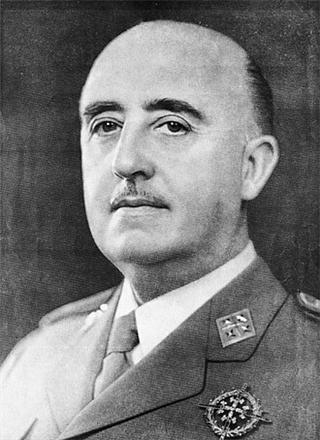
The form spread in two great waves. Between the wars it was adopted in Mongolia, which became a communist people’s republic in 1924, in Portugal’s Estado Novo, whose National Union was the only permitted political organisation, and in Francisco Franco’s Spain, where the movements supporting him were merged into a single party in 1937; in 1940 Japan’s parties dissolved themselves into the Imperial Rule Assistance Association. Mexico developed a different model: the National Revolutionary Party, founded in 1929 and later renamed the Institutional Revolutionary Party, allowed small opposition parties but held the presidency for 71 years.
After 1945 the Soviet Union helped communist parties take power across Eastern Europe. In Hungary the other parties had been absorbed or dissolved by 1949, while East Germany, Poland and Czechoslovakia kept subordinate allied parties. The Chinese Communist Party proclaimed the People’s Republic of China on 1 October 1949, and communist parties came to rule North Korea, Vietnam, Cuba and Laos. Many newly independent states in Africa and Asia adopted single-party rule, arguing that national unity and development came before competition: Ghana under Kwame Nkrumah from 1964, Tanzania under Julius Nyerere from 1965, Zambia from 1972 and Kenya from 1982, as well as Egypt, Algeria, Tunisia, Ivory Coast and Burma. In 1975 the Shah of Iran replaced the country’s parties with a single one, the Rastakhiz Party.
The late 20th century brought the form’s retreat. Economic stagnation and Mikhail Gorbachev’s reforms led to the revolutions of 1989, which ended communist rule in Eastern Europe; in March 1990 the Soviet Union amended Article 6 of its constitution, and in December 1991 the Soviet Union itself dissolved. Most African one-party states adopted multi-party constitutions in the early 1990s, and in Zambia in 1991 Kenneth Kaunda’s party lost power in a multi-party election. Taiwan’s Kuomintang lifted martial law in 1987 and lost the presidency in 2000, the same year as Mexico’s Institutional Revolutionary Party. China and Vietnam, by contrast, opened their economies to the market from 1978 and 1986 while keeping single-party rule.
Strengths

Lenin and his successors argued that the working class needed a single, disciplined vanguard to take power and then to defend it: “the proletariat needs the Party first of all as its General Staff”, Joseph Stalin wrote in The Foundations of Leninism (1924). Leaders of new nations made a different case. Julius Nyerere argued in the early 1960s that rival parties suited societies divided by class, whereas in a newly independent country without such divisions they would only foster faction and tribalism, and that a single national party could still be democratic if voters chose among its candidates. In Tanzania’s election of 1965 voters in most constituencies had a choice of two candidates of the ruling party, and several ministers lost their seats.
Political scientists have found that single-party regimes are the most durable kind of dictatorship. Samuel P. Huntington argued in Political Order in Changing Societies (1968) that what modernising countries most lacked was strong institutions, and that a strong party, even a single one, could supply the order that coups and personal rulers could not. Barbara Geddes found that single-party regimes last longer than military or personal dictatorships, and Steven Levitsky and Lucan Way have argued that where a revolutionary party built the army, as in China, the armed forces have not attempted coups even after disasters such as the Great Leap Forward. Beatriz Magaloni showed how Mexico’s ruling party kept power for seven decades through elections, patronage and the co-optation of rivals rather than open terror.
Defenders also point to economic and social results. The Soviet Union industrialised rapidly and achieved near-universal literacy, and the economist Michael Ellman notes that communist states compared well with Western states on some health indicators, such as infant mortality and life expectancy; Amartya Sen observed that several made large gains in life expectancy. Since its reforms began in 1978 China has achieved rapid growth that has lifted hundreds of millions of people out of extreme poverty while keeping single-party rule, and Vietnam has followed a similar path since 1986. Supporters argue that freedom from electoral cycles lets such governments plan for decades.
Weaknesses
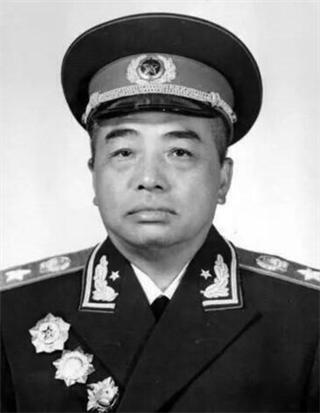
Critics argue that a one-party state removes the means by which a people can change its rulers or correct their mistakes. Without a legal opposition, a free press or independent courts, power answers only to the party, and the party to its leaders. Milovan Djilas, once among the leaders of communist Yugoslavia, argued in The New Class (1957) that the party bureaucracy had become a new privileged ruling class, and his prison sentence was lengthened for publishing the book abroad. Friedrich Hayek and Milton Friedman held that central planning by an unchecked state bred inefficiency and stagnation, and the Hungarian economist János Kornai analysed the chronic shortages of the planned economies.
Many of the 20th century’s worst crimes were committed by one-party regimes. In the Soviet Union millions died in the famine of 1932–1933, which struck Ukraine and Kazakhstan hardest; about 680,000 people were shot in the Great Terror of 1937–1938, and millions passed through the Gulag labour camps. Nazi Germany murdered six million Jews in the Holocaust. In China the Great Leap Forward led to a famine in 1959–1961 that killed tens of millions; when the defence minister Peng Dehuai criticised the policy at the Lushan Conference in 1959 he was purged, and officials went on inflating harvest figures. The Khmer Rouge regime in Cambodia killed or starved to death between a fifth and a quarter of the population from 1975 to 1979. Amartya Sen has argued that no substantial famine has occurred in a functioning democracy with a free press, because governments that must face elections and criticism cannot ignore starvation.
The form also has chronic weaknesses. Succession is uncertain; collective leadership has repeatedly given way to personal rule and the cults of leaders such as Stalin, Mao and Kim Il Sung; and officials who owe their posts to their superiors have every reason to hide failures. Many post-colonial one-party states became vehicles for patronage and corruption, as in Mobutu’s Zaire. By the 1970s and 1980s the economies of the Eastern Bloc had stagnated and fallen further behind Western Europe, a decline that helped bring the system down in 1989–1991.
Impact & Legacy

The collapse of 1989–1991 left both memorials and debate. Monuments to the victims of communist regimes stand in most Eastern European capitals, and museums such as the House of Terror in Budapest document both Nazi and communist rule, while scholars such as Kristen Ghodsee have recorded nostalgia for the security and welfare of the old regimes among those who lost most in the transition. Historians long debated whether the totalitarian model described the Soviet Union adequately: from the 1970s social historians stressed how much the party’s control depended on bargaining and improvisation, while the opening of the archives after 1991 confirmed the scale of its repression.
Former ruling parties often survived the change. Reformed communist parties won free elections in Lithuania in 1992, Poland in 1993 and Hungary in 1994, and several former single parties remain in power under multi-party constitutions, among them Tanzania’s Chama Cha Mapinduzi, Mozambique’s FRELIMO and Angola’s MPLA; scholars now study dominant-party and “electoral authoritarian” regimes alongside one-party states. Communist parties still rule China, Vietnam, Laos, Cuba and North Korea, and their constitutions give the party the leading role: Vietnam’s names the Communist Party “the leading force of the state and society”, and in 2018 China added to the first article of its constitution that the leadership of the Communist Party is the defining feature of socialism with Chinese characteristics. In Eritrea the People’s Front for Democracy and Justice is the only legal party.
The one-party state remains a central case for political science. Its survival in China, through rapid economic change and the protests of 1989, led the political scientist Andrew Nathan to speak of “authoritarian resilience”, while its collapse in Europe is often cited as evidence that such systems adapt poorly. The contrast between single-party rule and multi-party democracy, between unity under one organisation and competition among several, remains one of the main dividing lines in the comparison of modern governments.
The one-party state, in which a single party monopolises power, emerged in Soviet Russia after 1917 and became the form of communist, fascist and many post-colonial regimes. Its defenders claimed unity, stability and development; its record includes famines, terror and stagnation as well as rapid industrialisation. Most such states fell around 1990, but communist parties still rule several countries and dominant parties remain common.
Test yourself
5 questions on this page, from its key events and facts.
The questions open here once the page has loaded.
References
- Schapiro, L. (1955) The Origin of the Communist Autocracy: Political Opposition in the Soviet State, First Phase, 1917–1922. London: G. Bell and Sons.
- Friedrich, C. J. and Brzezinski, Z. K. (1956) Totalitarian Dictatorship and Autocracy. Cambridge, MA: Harvard University Press.
- Huntington, S. P. and Moore, C. H. (eds) (1970) Authoritarian Politics in Modern Society: The Dynamics of Established One-Party Systems. New York: Basic Books.
- Sartori, G. (1976) Parties and Party Systems: A Framework for Analysis. Cambridge: Cambridge University Press.
- Magaloni, B. (2006) Voting for Autocracy: Hegemonic Party Survival and its Demise in Mexico. Cambridge: Cambridge University Press.
- Brown, A. (2009) The Rise and Fall of Communism. London: Bodley Head.