Europe
Duchy of Milan
At a glance
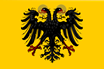
- An imperial duchy created in 1395 for Gian Galeazzo Visconti, who briefly controlled much of northern and central Italy.
- Under the Sforza it was one of Renaissance Europe’s richest courts, where Leonardo da Vinci painted the Last Supper.
- Fought over in the Italian Wars, it was ruled by Spain from 1535 and Austria from 1706 until Napoleon ended it in 1796–1797.
Rise & Fall
- 1395Gian Galeazzo Visconti buys the ducal title from Wenceslas
- 1402Gian Galeazzo dies of plague as his armies encircle Florence
- 1447Death of Filippo Maria Visconti; the Golden Ambrosian Republic is proclaimed
- 1450Francesco Sforza enters Milan as duke
- c. 1495Leonardo da Vinci begins the Last Supper in Santa Maria delle Grazie
- 1499Louis XII of France conquers the duchy
- 1535Death of Francesco II Sforza; the duchy passes to Charles V
- 1796Napoleon enters Milan; the Transpadane Republic replaces the duchy
Foundation
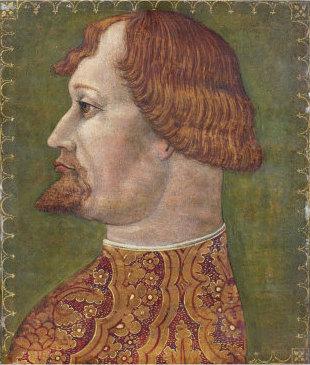
The Duchy of Milan grew out of the signoria, or lordship, that the Visconti family had built over Milan and the cities of Lombardy since the late thirteenth century. In 1385 Gian Galeazzo Visconti seized sole power by arresting and imprisoning his uncle Bernabò, and in 1395 he purchased the title of duke from the King of the Romans, Wenceslas, for a large sum, reportedly 100,000 florins. The investiture turned a personal lordship into a hereditary imperial fief and gave the Visconti a legitimacy that the communal traditions of Lombard cities had long denied them. Gian Galeazzo used the duchy as the base for the most ambitious expansion in late medieval Italy. He had already taken Verona and Vicenza in 1387 and Padua in 1388; he then acquired Pisa in 1399, received the submission of Siena and Perugia in 1399–1400 and took Bologna in 1402. By the summer of 1402 Florence seemed isolated, but Gian Galeazzo died of plague in September of that year, and his state broke apart in the hands of his young sons. Its core in Lombardy, with Milan and Pavia, nonetheless survived and remained one of the largest and richest states of the Italian peninsula.
Socioeconomy
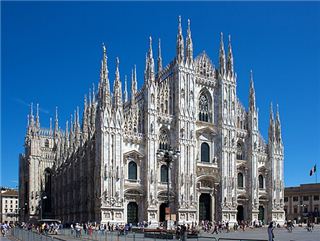
Milan was one of the largest cities in Europe, with probably some 100,000 inhabitants in the fifteenth century, set in the irrigated plain of the Po valley. Canals such as the Naviglio Grande carried water and goods, and Cistercian and lay landowners turned the lowlands into meadows, rice fields and dairy farms; rice cultivation spread in the later fifteenth century. The city’s armourers were famous across Europe, supplying helmets and plate armour to princes and mercenary captains, while wool, fustian and above all silk, promoted by the Sforza, employed thousands of workers. Merchants and bankers traded through Genoa and across the Alpine passes to Switzerland, Germany and Flanders. Religious life centred on the Ambrosian rite, unique to the archdiocese, and on great building projects: Gian Galeazzo began Milan Cathedral in 1386 and the Certosa di Pavia in 1396, and Francesco Sforza founded the Ospedale Maggiore, designed by Filarete, in 1456. Under Spanish rule the economy suffered from heavy taxation and the plague of 1630, while the Counter-Reformation archbishop Charles Borromeo reshaped parish life. Austrian rule in the eighteenth century brought a land survey, the Theresian cadastre, completed in 1760, and renewed agricultural prosperity.
Military
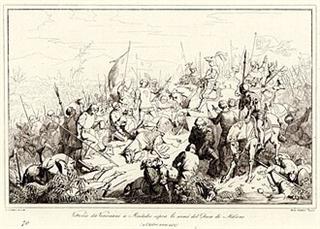
The Visconti and Sforza relied on condottieri, professional captains who hired out their companies under contract, and on the wealth of Lombardy to pay them. Under Filippo Maria Visconti (r. 1412–1447) captains such as Francesco Bussone da Carmagnola and Niccolò Piccinino reconquered much of Lombardy, but Carmagnola later served Venice and defeated Milan at the Battle of Maclodio in 1427; Venice gained Brescia and Bergamo, and its frontier stayed on the Adda River for centuries. Milan ruled Genoa from 1421 to 1435. Francesco Sforza, himself the most successful condottiere of his age, won the duchy in 1450 by blockading the city. The Peace of Lodi of 1454 then stabilised Italian rivalries for forty years. The French invasions changed everything: Louis XII, claiming the duchy through his grandmother Valentina Visconti, conquered it in 1499, and Ludovico Sforza was captured at Novara in 1500. Swiss pikemen restored the Sforza in 1512 and won at Novara in 1513, but Francis I of France defeated them at the Battle of Marignano in 1515. Imperial forces drove out the French, and the Battle of Pavia in 1525, fought near the duchy’s second city, ended with Francis I a prisoner of Charles V.
Governance & Law
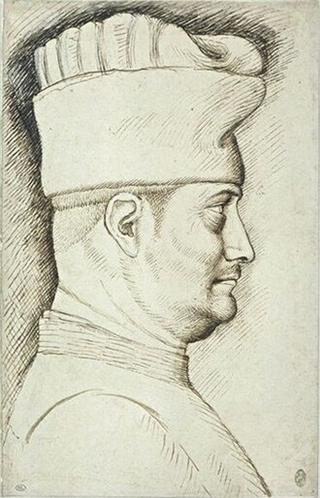
Visconti and Sforza dukes ruled through a privy council and a council of justice, a chancery staffed by trained secretaries and a network of podestà and commissioners in the subject cities, which kept their own statutes and councils. Historians such as Jane Black have stressed that the dukes claimed a ‘plenitude of power’ that allowed them to override local law, though in practice they negotiated with urban elites and feudatories. Milanese ambassadors resident at foreign courts made the duchy a pioneer of permanent diplomacy. After the death of Filippo Maria in 1447 without a legitimate son, citizens proclaimed the Golden Ambrosian Republic, but it collapsed in 1450 and Francesco Sforza, husband of Filippo Maria’s daughter Bianca Maria, entered Milan as duke. His son Galeazzo Maria was assassinated in 1476; Ludovico Sforza, known as il Moro, governed as regent for his nephew from 1480 and as duke from 1494. Louis XII created the Senate of Milan in 1499, a supreme court that survived until 1786. After the last Sforza duke, Francesco II, died in 1535, Charles V kept the duchy and invested his son Philip; Spanish governors, the Senate and the Council of Italy in Madrid ruled it until 1706.
Global & Regional Impact

The Duchy of Milan was one of the great centres of the Italian Renaissance. Ludovico Sforza’s court employed Leonardo da Vinci from about 1482 to 1499; there he painted the Last Supper in the refectory of Santa Maria delle Grazie, c. 1495–1498, designed a colossal equestrian monument to Francesco Sforza and filled notebooks with engineering and anatomical studies. Donato Bramante built the tribune of Santa Maria delle Grazie, and the University of Pavia, founded under the Visconti in 1361, trained lawyers and physicians for the duchy. The Visconti library at Pavia was among the finest in Europe. Politically, the Milanese claim of the house of Orléans drew France into Italy and made the duchy the cockpit of the Italian Wars, while the Peace of Lodi and the Italic League of 1455 offered an early model of a balance of power. Under Spain, Milan was the hinge of Habsburg strategy, the starting point of the Spanish Road that took troops north to Flanders. In the eighteenth century Austrian Lombardy became a centre of the Italian Enlightenment: Pietro Verri’s journal Il Caffè and Cesare Beccaria’s On Crimes and Punishments (1764) influenced penal reform across Europe, and the Teatro alla Scala opened in 1778.
Decline & Fall

The duchy lost its independence in the Italian Wars. After 1535 it became a province of the Habsburg monarchy, confirmed to Spain by the Treaty of Cateau-Cambrésis in 1559, and its revenues and soldiers served wars fought elsewhere. Heavy taxation, troop billeting and the plague of 1630, which killed perhaps half the population of the city and is the setting of Alessandro Manzoni’s novel The Betrothed, weakened Lombardy in the seventeenth century. During the War of the Spanish Succession Austrian troops occupied Milan in 1706, and the Treaty of Rastatt in 1714 confirmed Austrian rule. Savoy, a wartime ally of Austria, obtained Alessandria, Novara, Tortona and other western districts in stages between 1707 and 1748. Under Maria Theresa and Joseph II reforming ministers modernised taxation and administration, and in 1786 the old Senate was abolished. The end came with the French Revolutionary Wars: after Napoleon Bonaparte’s victory at the Battle of Lodi he entered Milan on 15 May 1796. The Transpadane Republic was set up in November 1796 and merged into the Cisalpine Republic in 1797, and Austria renounced Lombardy in the Treaty of Campo Formio that October. After 1815 Lombardy was ruled by Austria as part of the Kingdom of Lombardy–Venetia.
The Duchy of Milan was the richest state of Renaissance northern Italy, where the Visconti and Sforza built a strong court and bureaucracy and Leonardo painted the Last Supper, and whose disputed succession made it the main prize of the Italian Wars and later a pillar of Spanish and Austrian power in Italy.
References
- Black, J. (2009) Absolutism in Renaissance Milan: Plenitude of Power under the Visconti and the Sforza, 1329–1535. Oxford: Oxford University Press.
- Gamberini, A. (ed.) (2015) A Companion to Late Medieval and Early Modern Milan: The Distinctive Features of an Italian State. Leiden: Brill.
- Lubkin, G. (1994) A Renaissance Court: Milan under Galeazzo Maria Sforza. Berkeley: University of California Press.
- Welch, E.S. (1995) Art and Authority in Renaissance Milan. New Haven: Yale University Press.
- D’Amico, S. (2012) Spanish Milan: A City within the Empire, 1535–1706. New York: Palgrave Macmillan.
Connections
Open the full connections map →