Central & East Asia
Hunnic Empire
At a glance
- By 370 the Huns had reached the Volga; their conquest of the Alans and Goths drove thousands of Goths to seek refuge across the Lower Danube in 376.
- Under Attila, sole ruler from 445, the Eastern Roman Empire agreed in 449 to pay an annual tribute of 2,100 pounds of gold; in 451 he invaded Gaul and in 452 Italy.
- After Attila died in 453 the Gepid king Ardaric's Germanic coalition defeated his sons at the Battle of Nedao, and the last king Dengizich was killed in Thrace in 469.
Rise & Fall
- 370The Huns arrive on the Volga, setting the Goths and Alans moving westward.
- 395The Huns make their first large-scale attack on the Eastern Roman Empire, overrunning Armenia and pillaging Cappadocia and Thrace, and invade the Sasanian Empire, where they are badly defeated.
- 435The brothers Attila and Bleda force the Eastern Roman Empire to sign the Treaty of Margus, granting the Huns trade rights and an annual tribute.
- 447Attila, sole ruler since Bleda's death in 445, invades the Balkans and Thrace; the war ends in 449 with a tribute of 2,100 pounds of gold a year.
- 451Attila's forces enter Gaul, attack Metz and besiege Orléans; a combined Roman and Visigothic army fights them at the Battle of the Catalaunian Plains.
- 453Attila dies of a haemorrhage on his wedding night, having sacked northern Italy the year before and met Pope Leo I near Mantua.
- 454At the Battle of Nedao the Gepid king Ardaric leads a Germanic coalition against Attila's son Ellak; the Huns lose many of their Germanic vassals.
- 469Dengizich is defeated and killed in Thrace; the Huns are absorbed by other peoples such as the Bulgars.
Foundation
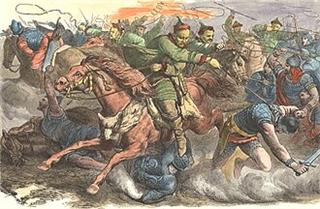
The Huns were a nomadic people first reported east of the Volga River, in what was then Scythia; their origins are uncertain, probably in Central Asia, and classical sources say they appeared in Europe suddenly around 370. Since the 18th century historians have debated a link with the Xiongnu of Mongolia, and there is no consensus. Roman writers equated them with earlier steppe peoples and caricatured them as monsters; Jordanes records that the Goths held them to be the offspring of unclean spirits and witches.
Their history in the fourth century is unclear, and the Huns left no sources of their own. The Romans became aware of them when their invasion of the Pontic steppes forced thousands of Goths to seek refuge across the Lower Danube in 376. The Huns conquered the Alans, most of the Greuthungi or Eastern Goths, and then most of the Thervingi or Western Goths. In 395 they launched their first large-scale attack on the Eastern Roman Empire, striking Thrace, overrunning Armenia, pillaging Cappadocia and entering Syria, while an invasion of the Sasanian Empire came close to Ctesiphon before a Persian counter-attack defeated it. Uldin, the first Hun named in contemporary sources, fought for the Romans against Radagaisus, beheaded the Goth Gainas around 400–401 and pillaged Thrace in 408, until the Romans bought off his subordinates and he vanished from history.
Socioeconomy
The Huns practised pastoral nomadism within defined territories, moving between summer pastures and fixed winter quarters; Their herds held cattle, horses and goats, and sheep, whose bones fill Hun-period graves, must have been the greater part. Ammianus Marcellinus says most of their diet was meat; they drank mare's milk and probably made cheese and kumis. Ancient sources deny them any agriculture, but Hyun Jin Kim classes the Huns as agro-pastoralists. Elites practised polygamy, commoners probably monogamy; Priscus saw women moving freely among men, and Bleda's widow commanded a village through which Roman envoys rode. Artificial cranial deformation marks 50 to 80 per cent of Hun-period burials in the Carpathian basin.
As contact with Rome grew, the economy came to rest on tribute, plunder and trade. The Huns received great quantities of gold as mercenaries and as tribute, and Denis Sinor argued that under Attila they depended almost entirely on plunder and Roman payments; Roman gold coins circulated throughout their empire, though the European Huns struck none of their own. Captives were ransomed or sold to Roman slave dealers, and slaves managed herds, served in households and, if educated, worked as administrators or architects. Trade with Rome was strictly regulated and, according to Priscus, held at a fair once a year, horses, furs and slaves going for weapons, linen, grain, wine and silk.
Military
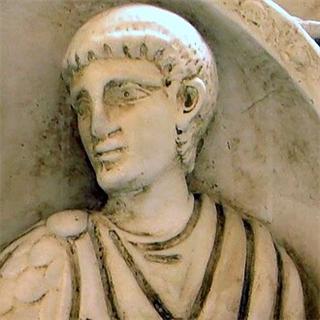
The Huns' main method of warfare was mounted archery. Ammianus describes them entering battle in wedge-shaped masses, fighting from a distance with arrows, then closing with swords and throwing plaited nooses to entangle their enemies. Their composite 'Hun-type' bow, 120 to 150 centimetres long, shot larger arrows with iron three-lobed heads; princes were buried with golden ceremonial bows from the Rhine to the Dnieper. They used whips rather than spurs, and no stirrups have been found in their graves, so they preferred the bow to close combat. Armour was probably lamellar and rare, and the feigned retreat was a favourite stratagem. They fortified camps with wagons and could besiege walled cities, as in the campaign of 441.
Hunnic armies fought almost always alongside Germanic or Iranian subjects; at the Catalaunian Plains Attila placed his subject peoples on the wings and the Huns in the centre. They were not always effective in pitched battle, losing at Toulouse in 439, barely winning at the Utus in 447, probably losing or drawing at the Catalaunian Plains in 451 and losing at Nedao. War and its threat were tools to extort Rome. When the Romans breached the Treaty of Margus in 440, Attila and Bleda razed Margus, Singidunum and Viminacium; in 443, after defeating the Romans at the Battle of Chersonesus, they forced Theodosius II to the Peace of Anatolius. In 451 they besieged Orléans until Flavius Aetius relieved it, and in 452 Attila sacked cities across northern Italy.
Governance & Law

The structure of Hunnic rule is debated. Ammianus wrote that the Huns of his day had no kings but leading men for war, taking decisions in a general council on horseback. Peter Heather sees a loose confederation that developed a ranking hierarchy; E. A. Thompson argues that permanent kingship arose only with the invasion of Europe; Peter Golden holds that even under Attila 'it can hardly be called a state, much less an empire'; Kim argues for a centralised order inherited from the Xiongnu. The Huns usually had two rulers at once: Attila and Bleda ruled jointly from 434, and Attila appointed his son Ellac co-king. Priscus calls Attila king or emperor, but the native title is unknown.
Priscus also names five 'picked men', logades, in Attila's government, chosen by birth or merit, whom Thompson saw as the hinge of administration, each commanding detachments and collecting tribute from a part of the empire; Maenchen-Helfen thought them simply prominent individuals, and Kim suggests Roman defectors may have staffed a kind of bureaucracy. Subject peoples, Goths, Gepids, Sarmatians, Heruli, Alans, Rugii, Suevi and Sciri, kept their own kings, and those recognised as ethnic Huns had more rights. Of religion almost nothing is known: Jordanes records the sword of Mars as Attila's title to rule the world, divination and probably shamans are attested, and Attila tolerated Nicene and Arian Christians among his subjects.
Global & Regional Impact
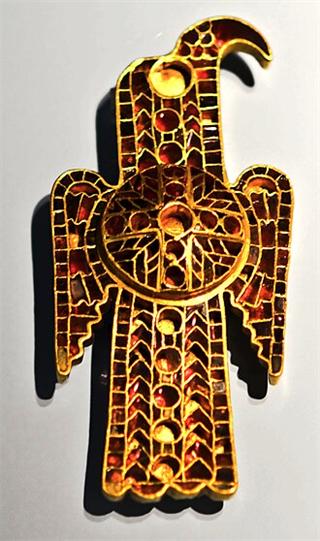
The Huns may have set the Great Migration in motion, a contributing factor in the collapse of the Western Roman Empire. Their arrival on the Volga by 370 pushed Goths and Alans westward and sent thousands of Goths over the Danube in 376, and by 430 they had built a vast if short-lived empire on Rome's Danubian frontier under whose hegemony Goths, Gepids, Sarmatians, Heruli, Suebi, Sciri and Rugii kept their own kingdoms. The eastern court paid them, from the Treaty of Margus in 435 to the 2,100 pounds of gold a year agreed in 449. Their rulers' prestige outlived them: post-Hunnic steppe peoples claimed descent from Attila, and Byzantine and western writers went on calling later steppe peoples 'Huns' for centuries.
Archaeologically the Huns left little that is certainly theirs: about 200 plausible burials as of 2005, copper cauldrons deposited near water, polychrome cloisonné jewellery and gold diadems. Their memory lived on in legend. Christian hagiography made them antagonists of saints: Attila turned back by Pope Leo I and the apostles, Saint Ursula and her virgins killed at Cologne. Germanic heroic legend placed Attila at the centre of the Nibelung and Dietrich von Bern cycles. Medieval Hungarian chroniclers, first Simon of Kéza in 1282–1285, claimed the Hungarians and Székelys as the Huns' descendants, a fiction mainstream scholarship rejects but which still shapes Hungarian nationalism. Allied propaganda called Germans 'Huns' in the First World War.
Decline & Fall

Attila's last years brought the empire to its height and its edge. He claimed Honoria, sister of Valentinian III, as his bride with half the Western Roman Empire as dowry, and in 451 entered Gaul, where Romans and Visigoths fought him at the Catalaunian Plains. In 452 he crossed the Alps and razed cities in northern Italy until the envoys Gennadius Avienus, Trigetius and Pope Leo I met him near Mantua and won his promise to withdraw. When the eastern emperor Marcian stopped the tribute, Attila planned to attack Constantinople, but in 453 he died of a haemorrhage on his wedding night. Jordanes describes the funeral: horsemen circling the silk tent singing the strava, the coffin buried secretly and the slaves who dug the grave killed.
His death set the Germanic vassals against the Hunnic ruling body. Ellak, his favoured son and ruler of the Akatziri, met the Gepid king Ardaric's coalition at the Battle of Nedao, around 454, and the Amali Goths under Valamir revolted the same year; many Germanic vassals were lost and the Huns were driven from Pannonia. New Oghur Turkic-speaking peoples arrived from the east, and in 463 the Saragurs defeated the Akatziri. Dengizich attacked the Romans in 467 without his brother Ernak, was besieged, and was defeated by the general Aspar. In 469 Dengizich was defeated and killed in Thrace, and the Huns were absorbed by peoples such as the Bulgars; Kim argues they lived on under Ernak as the Kutrigur and Utigur Hunno-Bulgars.
The Huns, nomadic horse-archers of uncertain origin, reached the Volga by 370, drove the Goths into the Roman Empire and from the Hungarian Plain extorted gold from Constantinople, culminating under Attila in the invasions of Gaul and Italy in 451–452. His death in 453 loosed their Germanic vassals, and after Dengizich's death in 469 the Huns vanished into other peoples.
Test yourself
5 questions on this page, from its key events and facts.
The questions open here once the page has loaded.
References
- Otto J. Maenchen-Helfen, The World of the Huns: Studies in Their History and Culture (University of California Press, 1973)
- Hyun Jin Kim, The Huns (Routledge, 2016)
- Peter Heather, The Fall of the Roman Empire: A New History of Rome and the Barbarians (Oxford University Press, 2005)
Connections
Open the full connections map →