Ancient Near East
Sidon
At a glance
- Glass and purple dye were Sidon's two pivotal industries; a considerable mound of broken Murex trunculus shells near the southern harbour shows the scale of the dye works.
- Sidon's navy fought with the Persian fleet at the Battle of Salamis in 480 BCE, and from the mid-5th century BCE warships were a prominent feature of the city's coins.
- Cambyses II of Persia rewarded Sidon for supporting his conquest of Egypt with the territories of Dor, Joppa and the Plain of Sharon.
Rise & Fall
- c. 1350 BCESidon, part of the Egyptian Empire, is ruled by Zimredda during the Amarna period, as Egypt's hold on the Levant weakens and the coastal cities fight for dominance.
- 7th century BCEThe Temple of Eshmun, to the Phoenician god of healing, is built north of the city near the Awali River.
- 6th century BCEAfter Nebuchadnezzar II's subjection of the city to the Neo-Babylonian Empire, Sidon passes to the Achaemenid Empire.
- 480 BCESidon's navy plays a significant role at the Battle of Salamis, aligned with the Persian fleet against the Greeks.
- 5th century BCEEshmunazar II reigns as 'king of the Sidonians'; his sarcophagus, found in 1855, names Eshmun and Baal Sidon as the chief gods of the city.
- 351 BCEArtaxerxes III invades Phoenicia at the end of the Persian era.
- 333 BCEAlexander the Great occupies Sidon, beginning its Hellenistic period.
Foundation

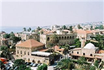
Sidon sits on a mainland promontory of the Lebanese coast about 40 km from Tyre to the south and Beirut to the north, with two harbours. Its Phoenician name, Sidun, probably meant 'fishery' or 'fishing town', Hellenised by the Greeks as Sidon. People lived here from the deepest prehistory: the Sidon II site holds Acheulean stone tools and Sidon III a Heavy Neolithic assemblage from just before pottery. The tell of the ancient city, Sidon IV, lies beneath the ruined Castle of St Louis, with an unbroken sequence from Early Bronze I to III on bedrock from about 3200 BCE and a modest third-millennium settlement of houses and tombs.
In the late Middle Bronze IIA the port, Sidon Level 4, traded with Egypt of the late 12th and early 13th dynasties, and excavations at Tell el-Burak, 9 km to the south, have shown Sidon to have been the great power of the coast in the Middle Bronze Age, a 'Kingdom of Sidon' controlling el-Burak and much surrounding territory. The city first appears in historical texts in the middle of the second millennium BCE. By about 1350 BCE it belonged to the Egyptian Empire and was ruled by Zimredda of Sidon, while the Amarna letters record the rivalry of the coastal cities, Abimilku of Tyre to the south and Rib-Hadda of Byblos to the north, as Egypt's grip loosened and the Hittites became overlords in the north. In the Book of Genesis Sidon is the first-born son of Canaan.
Socioeconomy
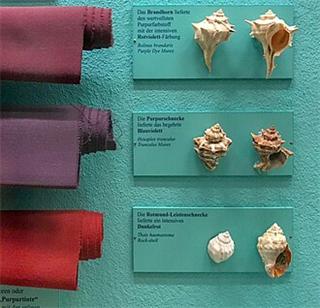
Sidon was one of the most important Phoenician cities and may have been the oldest; from it and the other ports a great Mediterranean commercial empire was founded, and tradition held that a colonising party from Sidon went out to found Tyre, which grew into a rival, each claiming to be the metropolis, the mother city, of Phoenicia. Homer praised the skill of its craftsmen in glass and purple dye and the embroidery of its women. Two industries carried the city: glass was made on an extensive scale, and purple dye nearly matched it in importance. The dye came from Murex trunculus shells, broken open to extract a pigment so rare that it became synonymous with royalty, and a considerable mound of the discarded shells was found near the southern harbour.
The city's maritime strength showed in its coinage, on which warships became a prominent feature from the mid-5th century BCE. The Phoenician inscription on the sarcophagus of King Eshmunazar II, discovered in 1855, calls him 'king of the Sidonians' and says his mother was a priestess of Ashtart, 'the goddess of the Sidonians', naming Eshmun and Baal Sidon, 'Lord of Sidon', as the chief gods and giving Ashtart the title Ashtart-Shem-Baal, 'Ashtart the name of the Lord', a title also found in an Ugaritic text. The Temple of Eshmun, to the god of healing, was built in the 7th century BCE north of the city near the Awali River.
Military

Sidon's power lay on the water, and its history is one of conquerors. Throughout antiquity it fell in turn to Assyrians, Babylonians, Egyptians, Persians, Greeks and Romans; its position on a promontory with two harbours did not save it from Nebuchadnezzar II, who made it part of the Neo-Babylonian Empire, nor from the Achaemenid Empire, which took the Phoenician cities in the 6th century BCE. In the Amarna age, around 1350 BCE, the Lebanese coastal city-states fought for dominance as Egypt declined: the Akkar Plain rebelled with Hittite support to become the kingdom of Amurru, the Mitanni Empire that had dominated Syria fell apart under the campaigns of Suppiluliuma I of Hatti, and Tutankhamun and his general Horemheb scrambled to keep Egypt's hold on the southern Levant.
The Sidonian fleet was the city's chief contribution to its overlords' wars. At the Battle of Salamis in 480 BCE its navy played a significant role on the Persian side against the Greeks, and from the middle of the 5th century BCE warships were stamped on its coins. Such service had its reward: for supporting Cambyses II's conquest of Egypt the Persian king granted Sidon Dor, Joppa and the Plain of Sharon. At the end of the Persian era, in 351 BCE, Artaxerxes III invaded Phoenicia, and in 333 BCE Alexander the Great occupied the city.
Governance & Law
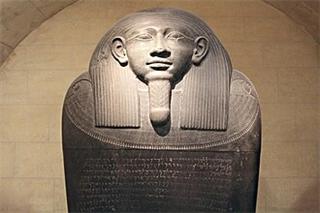
Sidon was a kingdom under its own kings for most of its ancient history, whatever empire stood over it. In the Amarna period its ruler Zimredda answered to Egypt; under the Achaemenids a Sidonian king still reigned, and the sarcophagus of Eshmunazar II, probably of the 5th century BCE, shows kingship and the priesthood of Ashtart joined in one family. Persian influence was profound and can be seen in the changed architectural style of the city; under the Persians Sidon eclipsed Tyre to become the paramount city in Phoenicia, and Cambyses II enlarged its territory with Dor, Joppa and the Plain of Sharon. Under Alexander's successors it enjoyed relative autonomy.
The Hellenistic necropolis has yielded the Alexander Sarcophagus, likely the tomb of King Abdalonymus rather than of Alexander, the Lycian tomb and the Sarcophagus of the Crying Women, all now in the Archaeological Museum of Istanbul. Under Roman domination the city kept minting its own silver coins; Herod, king of Judaea, built it a theatre, and in the reign of Elagabalus it became a Roman colony, renamed Colonia Aurelia Pia Sidon in honour of its imperial sponsor. The Hebrew Bible, which calls Sidon the mother city of Tyre and says the Sidonians long oppressed Israel, records Solomon's marriage alliance with the Sidonians and names Jezebel a daughter of King Ithobaal I of Sidon. In Byzantine times, after the earthquake of 551 CE, the law school of Berytus took refuge in the city.
Global & Regional Impact
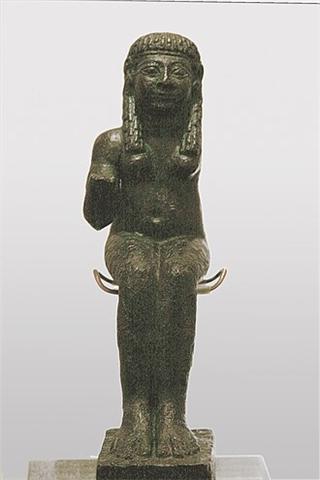
From Sidon and its sister ports the Phoenician commercial world spread across the Mediterranean, and Sidon's own claim to be the metropolis of Phoenicia rested on the tradition that its colonists founded Tyre. Its glass and its purple, the colour of royalty, made its name a byword in Homer, and its gods travelled: Ashtart's title at Sidon matches one found at Ugarit. The Bible remembers the city as the first home of the Phoenicians on the coast of Canaan, 'great' from its commercial relations, famous for its manufactures and arts, and from the time of David waning as Tyre, its 'virgin daughter', rose; Elijah sojourned there, Jesus visited the coasts of Tyre and Sidon, and Paul's ship put in at Sidon on the way to Rome.
Sidon's fleet weighed in the wars of empires at Salamis, and its favour with Cambyses II shows how the Persian kings used the Phoenician cities. In the Hellenistic age it gave the Greek world Antipater of Sidon, the poet, Zeno of Sidon, the Epicurean philosopher, Dorotheus of Sidon, the astrologer, and Boethus of Sidon, the Peripatetic. Ernest Renan's Mission de Phénicie of 1860 and the Ottoman excavations from 1887 made its necropoleis central to the recovery of Phoenician antiquity, and the royal sarcophagi in Istanbul and the finds in the National Museum in Beirut remain its best-known legacy. In 2024 UNESCO gave the archaeological sites of Sidon enhanced protection.
Decline & Fall

The independent Phoenician city ended with the Persian Empire. Artaxerxes III invaded Phoenicia in 351 BCE, and in 333 BCE Alexander the Great occupied Sidon, opening its Hellenistic period. Under the Diadochi the city kept a relative autonomy, with kings such as Abdalonymus, and under Rome it prospered, embellished by Herod with a theatre, sheltering enough Jews in 66 CE that local pagans hesitated to attack them, and raised to colonial rank under Elagabalus. The earthquake of 551 CE destroyed most of the cities of Phoenice, and in 636 the Muslim conquest of the Levant took the city.
Sidon's later centuries were a cycle of capture and ruin. On 4 December 1110 Baldwin I of Jerusalem and Sigurd I of Norway took it after a siege and made it the centre of the Lordship of Sidon; Saladin captured it in 1187, German crusaders restored it in 1197, the Ayyubids destroyed it in 1249 and the Mongols under Kitbuqa in 1260. Under the Ottomans from the early 16th century it became capital of the Sidon Eyalet and regained much of its commerce, the Hammud family monopolising cotton in the 18th century; Charles Napier's squadron bombarded it on 26 September 1840. Today Sidon, or Saida, is the third-largest city of Lebanon and capital of the South Governorate, with some 80,000 people in the city and more than a quarter of a million in its metropolitan area; the ancient basin is a fishing port, and the tell of Phoenician Sidon lies under the Crusader castle.
Sidon, a Phoenician port with two harbours, grew from a Middle Bronze Age kingdom trading with Egypt into one of the great cities of Phoenicia, famed for glass and purple dye; its fleet served Persia at Salamis in 480 BCE, and it became the paramount Phoenician city before Alexander took it in 333 BCE.
Test yourself
4 questions on this page, from its key events and facts.
The questions open here once the page has loaded.
References
- Pierre Briant, From Cyrus to Alexander: A History of the Persian Empire (Eisenbrauns, 2002)
- Josette Elayi, 'Pouvoirs locaux et organisation du territoire des cités phéniciennes sous l'Empire perse achéménide', Espacio, Tiempo y Forma 10 (Editorial UNED, 1997)
- Maria Eugenia Aubet, The Phoenicians and the West: Politics, Colonies and Trade, 2nd ed. (Cambridge University Press, 2001)
- Glenn Markoe, Phoenicians (University of California Press, 2000)
- Sabatino Moscati, The World of the Phoenicians (Phoenix Giant, 1999)
Connections
Open the full connections map →