Encyclopedia: M
2,409 entries under M · page 12 of 25: Médéa – Men (deity)
 MédéaPlaceMédéa is a city in the Tell Atlas of northern Algeria, about 80 km south-west of Algiers.
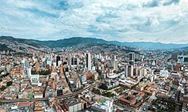 MedellínPlaceMedellín is Colombia's second-largest city and the capital of Antioquia department, in the Aburrá Valley of the Andes.
- Medellín CartelPeople / groupThe Medellín Cartel was a Colombian drug-trafficking network based in Medellín that dominated the cocaine trade to the United States in the 1980s.
- MedesPeople / groupThe Medes were an ancient Iranian people of north-western Iran.
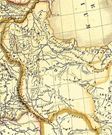 Media (region)PlaceMedia was an ancient region of north-western Iran, centred on the Zagros mountains and the city of Ecbatana, modern Hamadan.
 Media AtropatenePlaceMedia Atropatene was a kingdom in north-western Iran, roughly corresponding to present-day Iranian Azerbaijan.
 Median EmpireStateThe Median Empire was the state of the Medes in western Iran, which rose to power in the seventh century BCE.
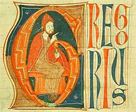 Medieval InquisitionInstitutionThe Medieval Inquisition was a series of papal tribunals established from the 1230s to combat heresy, above all the Cathars and Waldensians of southern France and…
 MedinaPlaceMedina is a city in the Hejaz region of Arabia, the second holiest city of Islam.
 Medina del CampoPlaceMedina del Campo is a town in the province of Valladolid in central Spain.
- Medina ElviraPlaceMedina Elvira (Madinat Ilbira) was a city of al-Andalus near modern Atarfe, north-west of Granada, and the capital of the Elvira district under the Umayyads.
 MedinaceliPlaceMedinaceli is a small hilltop town in the province of Soria, Castile, Spain, above the Jalón valley.
- MédinePlaceMédine is a village on the Senegal River near Kayes in western Mali, just below the Felou Falls.
 Medinet HabuPlaceMedinet Habu is an archaeological site on the west bank of the Nile at Thebes, modern Luxor, in Egypt, dominated by the mortuary temple of Ramesses III, built in the…
 Medinet MadiPlaceMedinet Madi is an archaeological site in the south-western Faiyum of Egypt, the ancient town of Dja, later Narmouthis.
 MedismTermMedism was the Greek term for collaborating with or siding with the Persian Empire, whose people the Greeks often called Medes.
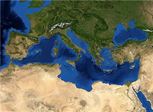 MediterraneanPlaceThe Mediterranean Sea lies between southern Europe, North Africa and western Asia.
- MedjayPeople / groupThe Medjay were a people of the Eastern Desert of Nubia, known from Egyptian texts from the Old Kingdom onwards.
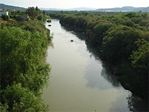 MedjerdaPlaceThe Medjerda, the ancient Bagradas, is the longest river of Tunisia, rising in north-eastern Algeria and flowing about 450 km to the Gulf of Tunis.
- MedmaPlaceMedma was an ancient Greek city on the Tyrrhenian coast of Calabria, southern Italy, at modern Rosarno.
- Medo-Babylonian allianceReligion / ideaThe Medo-Babylonian alliance was the coalition between the Medes under Cyaxares and the Babylonians under Nabopolassar in the late seventh century BCE.
 Medo-Babylonian conquest of the Assyrian EmpireWar · 626–609 BCEThe Medo-Babylonian conquest of the Assyrian Empire was the war of 626–609 BCE in which Babylonia under Nabopolassar, joined from 615 BCE by the Medes under Cyaxares…
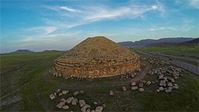 MedracenWork / monumentThe Medracen is a royal mausoleum of the Numidian kings near Batna in north-eastern Algeria.
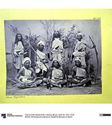 MeenaPeople / groupThe Meena, also written Mina, are a community of Rajasthan and neighbouring regions of India and one of the state's largest scheduled tribes.
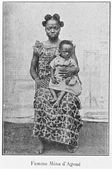 Meena peoplePeople / groupThe Meenas are a people of Rajasthan and neighbouring parts of India, recognised today as a Scheduled Tribe in Rajasthan.
- Meenakshi of MaduraiPersonMeenakshi was the last ruler of the Madurai Nayak dynasty, governing as queen from the early 1730s after the death of her husband Vijaya Ranga Chokkanatha.
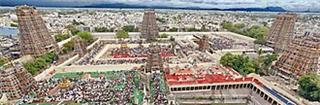 Meenakshi TempleWork / monumentThe Meenakshi Temple (Meenakshi Amman Temple) is a Hindu temple complex in the centre of Madurai, Tamil Nadu, dedicated to the goddess Meenakshi and her consort…
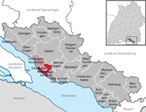 MeersburgPlaceMeersburg is a small town on the north shore of Lake Constance in Baden-Württemberg, Germany.
 MeerutPlaceMeerut is a city in western Uttar Pradesh, India, about 70 kilometres north-east of Delhi.
 MefitisReligion / ideaMefitis was an Italic goddess associated with sulphurous springs and vapours, waters and fertility, worshipped especially by the Samnites, Hirpini and Lucanians.
- Mefo billsTermMefo bills were promissory notes devised by Hjalmar Schacht to finance German rearmament in secret from 1934.
 MegabazusPersonMegabazus was a Persian general of Darius I in the late 6th century BCE.
 Megali IdeaReligion / ideaThe Megali Idea, or Great Idea, was the aim of Greek nationalism to unite all Greek-inhabited lands in one state, with Constantinople as its capital.
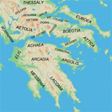 MegaridPlaceThe Megarid was the small territory of the ancient Greek city of Megara, on the isthmus between Attica and the Corinthia.
- MegasthenesPersonMegasthenes was a Greek historian and diplomat sent by the Seleucid king Seleucus I as envoy to the court of Chandragupta Maurya at Pataliputra around 300 BCE.
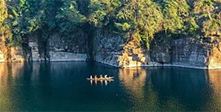 MeghalayaPlaceMeghalaya is a state in north-eastern India, formed from Assam in 1972, with its capital at Shillong.
- Megüjin SeultüPersonMegüjin Seultü was a chief of the Tatars of eastern Mongolia.
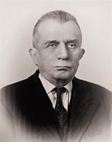 Mehdi FrashëriPersonMehdi Frashëri was an Albanian politician who served as prime minister in 1935 to 1936.
- Mehdi II of TarkiPersonMehdi II was shamkhal of Tarki, ruler of the Kumyk principality on the Caspian coast of Dagestan, in the early 19th century.
- Mehdi Qoli KhanPersonMehdi Qoli Khan was the last khan of Karabakh, succeeding his father Ibrahim Khalil Khan in 1806 under Russian overlordship.
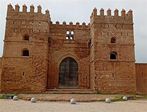 MehdyaPlaceMehdya, known to Europeans as La Mamora, is a town at the mouth of the Sebou river on the Atlantic coast of Morocco.
- Meher KapısıWork / monumentMeher Kapısı, the Gate of Mithra, is a Urartian rock niche cut into a hillside near Van in eastern Turkey under Ishpuini and Menua around 800 BCE.
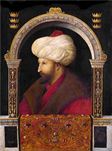 Mehmed IIPersonMehmed II was an Ottoman sultan who conquered Constantinople in 1453, ending the Byzantine Empire.
 Mehmed IVPersonMehmed IV was Ottoman sultan from 1648 to 1687, coming to the throne aged six.
- Mehmed IV GirayPersonMehmed IV Giray was khan of Crimea in 1641–1644 and again in 1654–1666.
- Mehmed Pasha BushatiPersonMehmed Pasha Bushati was an Ottoman Albanian governor, from a powerful family of Shkodër, who was appointed governor of the sanjak of Scutari in 1757.
 Mehrab KhanPersonMehrab Khan was the Khan of Kalat, ruler of the Baloch and Brahui tribal confederacy of Balochistan, from 1817 to 1839.
 MehrangarhWork / monumentMehrangarh is a fort above the city of Jodhpur in Rajasthan, India, founded in 1459 by Rao Jodha of the Rathore dynasty as the new capital of Marwar.
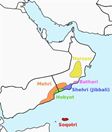 Mehri languageTermMehri is a Modern South Arabian language spoken by the Mahra people of eastern Yemen and western Oman, and by migrants in the Gulf states.
 Mehsana districtPlaceMehsana district is a district of northern Gujarat, India, with its headquarters at Mehsana.
- Meic UilleimPeople / groupThe Meic Uilleim, or MacWilliams, were descendants of William fitz Duncan, a grandson of Malcolm III, who claimed the Scottish throne.
 MeidumPlaceMeidum is an archaeological site in Egypt on the desert edge west of the Nile, about 100 km south of Cairo.
 MeifodPlaceMeifod is a village in the Vyrnwy valley of Montgomeryshire, mid Wales.
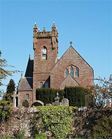 MeiglePlaceMeigle is a village in Strathmore, Perthshire, Scotland, with one of the most important collections of early medieval carved stones in Europe.
 Meiji ConstitutionWork / monumentThe Meiji Constitution was the constitution of the Empire of Japan, promulgated in 1889.
 Meiji RestorationRevolution · 1868The Meiji Restoration was the political revolution of 1868 that ended the Tokugawa Shogunate and restored direct imperial rule under Emperor Meiji.
- Meilyr BrydyddPersonMeilyr Brydydd was a Welsh court poet, the earliest of the Poets of the Princes whose work survives.
 Meinhard II of Gorizia-TyrolPersonMeinhard II was count of Gorizia and Tyrol who, in the family division of 1271, took Tyrol and left Gorizia to his brother Albert.
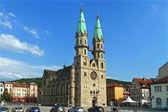 MeiningenPlaceMeiningen is a town in southern Thuringia, Germany, on the Werra between the Thuringian Forest and the Rhön.
- Meiningen EnsemblePeople / groupThe Meiningen Ensemble was the theatre company of the court of Saxe-Meiningen, directed by Duke George II with Ludwig Chronegk and Ellen Franz.
 MeinwerkPersonMeinwerk was bishop of Paderborn from 1009 to 1036, a Saxon noble and kinsman of Emperor Henry II.
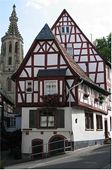 MeisenheimPlaceMeisenheim is a small town on the Glan in Rhineland-Palatinate, with a well-preserved medieval centre.
 MeissenPlaceMeissen is a town on the Elbe in Saxony, Germany, north-west of Dresden.
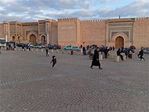 MeknesPlaceMeknes is a city in northern Morocco, founded as a Berber settlement in the 10th century.
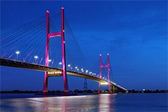 Mekong DeltaPlaceThe Mekong Delta is the region of southern Vietnam where the Mekong River divides into many channels before reaching the South China Sea.
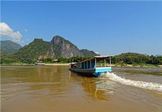 Mekong RiverPlaceThe Mekong is a major river of South-East Asia, flowing from Tibet through China, Laos, Thailand, Cambodia and Vietnam.
 Melayu Islam BerajaReligion / ideaMelayu Islam Beraja, or Malay Islamic Monarchy, is the national ideology of Brunei, proclaimed at independence in 1984.
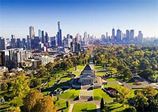 MelbournePlaceMelbourne is the capital of Victoria and the second-largest city of Australia, on Port Phillip Bay at the mouth of the Yarra River.
 Melchior NdadayePersonMelchior Ndadaye was the first democratically elected president of Burundi and its first Hutu head of state.
 Melchor PachecoPersonMelchor Pacheco was a Spanish conquistador who, with his kinsman Gaspar Pacheco, led the conquest of the eastern provinces of Yucatán in 1544.
- Meléndez–Quiñónez dynastyPeople / groupThe Meléndez–Quiñónez dynasty was the family group that held the presidency of El Salvador from 1913 to 1927: the brothers Carlos and Jorge Meléndez and their…
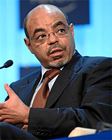 Meles ZenawiPersonMeles Zenawi was leader of the Tigray People's Liberation Front and of the EPRDF coalition that overthrew the Derg in 1991.
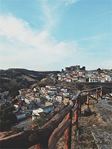 MelfiPlaceMelfi is a town in Basilicata, southern Italy, on a hill near Monte Vulture.
 Melian DialogueWork / monumentThe Melian Dialogue is a passage in Thucydides' History of the Peloponnesian War recounting negotiations between Athenian envoys and the leaders of Melos in 416 BCE.
- Melik Shahnazar IIPersonMelik Shahnazar II was the Armenian melik of Varanda, one of the five melikdoms of Karabakh, in the mid-eighteenth century.
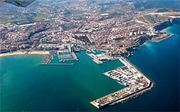 MelillaPlaceMelilla is a Spanish autonomous city on the Mediterranean coast of north-east Morocco.
- MelingoiPeople / groupThe Melingoi were a Slavic tribe that settled on the slopes of Mount Taygetus in the Peloponnese in the early Middle Ages.
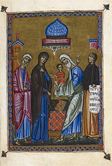 Melisende PsalterWork / monumentThe Melisende Psalter is an illuminated psalter made in the scriptorium of the Church of the Holy Sepulchre in Jerusalem around 1131–1143, probably for Queen Melisende.
 Melisende, Queen of JerusalemPersonMelisende was Queen of Jerusalem from 1131 to 1153, the eldest daughter of Baldwin II.
 Melissus of SamosPersonMelissus of Samos was a Greek philosopher of the Eleatic school and a statesman of his island in the fifth century BCE.
 MelkPlaceMelk is a town on the Danube in Lower Austria, at the western end of the Wachau valley.
 MelkotePlaceMelkote is a hill town in Mandya district, Karnataka, and a major centre of Sri Vaishnavism.
 Mellifont AbbeyInstitutionMellifont Abbey, in County Louth, was the first Cistercian monastery in Ireland, founded in 1142 by Saint Malachy with monks from Clairvaux, under the patronage of…
- MellitusPersonMellitus was a member of the Gregorian mission sent to England in 601, who became the first bishop of London in 604 under King Sæberht of Essex.
- Melmoth OsbornPersonSir Melmoth Osborn was a British colonial official in Natal and Zululand.
- MelnikPlaceMelnik is a small town in south-western Bulgaria, near the Struma valley, set among sandstone pillars known as the Melnik pyramids.
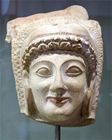 MelqartReligion / ideaMelqart was the chief god of the Phoenician city of Tyre, whose name means 'king of the city'.
 Melrose AbbeyWork / monumentMelrose Abbey is a ruined Cistercian abbey in the Scottish Borders, founded by David I in 1136, the first Cistercian house in Scotland.
 MeluhhaPlaceMeluhha was a land known to ancient Mesopotamians, generally identified with the Indus Valley civilisation.
 Melus of BariPersonMelus of Bari was a Lombard nobleman of Apulia who led revolts against Byzantine rule in southern Italy.
- Melville HerskovitsPersonMelville Herskovits was an American anthropologist who founded the first major African studies programme in the United States at Northwestern University in 1948.
 Melvin EvansPersonMelvin Evans was a physician and politician from the United States Virgin Islands.
 Mem and ZinWork / monumentMem and Zin is an epic poem in Kurmanji Kurdish written by Ahmad Khani and completed in 1692.
- Mem de SáPersonMem de Sá was the third governor-general of Portuguese Brazil, serving from 1557 until his death in 1572.
- MemaStateMema was a Soninke kingdom on the middle Niger in West Africa.
- Memnon of HeracleaPersonMemnon of Heraclea was a Greek historian, probably of the 1st or 2nd century CE, who wrote a history of his city, Heraclea Pontica.
 Memory of the World ProgrammeInstitutionThe Memory of the World Programme is an initiative launched by UNESCO in 1992 to protect the world's documentary heritage and make it accessible.
- MempawahPlaceMempawah is a coastal town in West Kalimantan, Indonesia, north of Pontianak, and the seat of a regency of the same name.
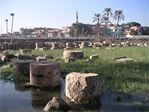 Memphis, EgyptPlaceMemphis was the capital of ancient Egypt for much of its history, founded around 3100 BCE where the Nile valley meets the Delta, south of modern Cairo.
 Men (deity)Religion / ideaMen was a moon god worshipped widely in Anatolia, especially in Phrygia and Pontus, in the Hellenistic and Roman periods.