Encyclopedia: M
2,409 entries under M · page 14 of 25: Mesoamerican Long Count calendar – Middle Francia
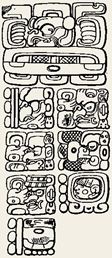 Mesoamerican Long Count calendarTermThe Mesoamerican Long Count calendar counts the days elapsed since a fixed starting date in 3114 BCE, using units based on twenty.
 MesolcinaPlaceThe Mesolcina, or Misox in German, is an Italian-speaking valley in the south of Graubünden, Switzerland, running from the San Bernardino Pass towards Bellinzona.
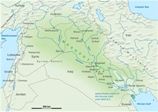 MesopotamiaPlaceMesopotamia is the region between and around the Tigris and Euphrates rivers, mainly in present-day Iraq.
 Mesrop MashtotsPersonMesrop Mashtots was an Armenian monk and scholar who created the Armenian alphabet around 405 with the support of King Vramshapuh and the Catholicos Sahak.
 Messali HadjPersonMessali Hadj (1898–1974) was a founder of Algerian nationalism who led the North African Star, then the Algerian People's Party and the Movement for the Triumph of…
 Messapic languageTermMessapic was an extinct Indo-European language of the Messapians of south-eastern Italy, in the Salento peninsula of Apulia.
 MesseniansPeople / groupThe Messenians were the people of Messenia in the south-western Peloponnese.
 Messiah (Handel)Work / monumentMessiah is an English-language oratorio by George Frideric Handel, with a text compiled from the Bible by Charles Jennens.
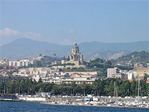 MessinaPlaceMessina is a port city in north-eastern Sicily, Italy, on the strait that separates the island from the mainland.
 MestaInstitutionThe Mesta was the association of sheep owners of Castile, chartered by Alfonso X in 1273.
- Mestwin IIPersonMestwin II (Mściwój II) was the last duke of Pomerelia from the native Samborides dynasty, ruling the whole of Gdańsk Pomerania from 1271 to 1294.
 Mesud IPersonMesud I was sultan of the Seljuk Sultanate of Rum from 1116 to 1156, the son of Kilij Arslan I.
 Mesud IIPersonMesud II was the last sultan of the Seljuk Sultanate of Rum, reigning intermittently from 1284 until his death around 1308.
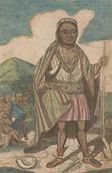 MetacomPersonMetacom, also called Metacomet and known to the English as King Philip, was a sachem of the Wampanoag and a son of Massasoit.
 MetagenesPersonMetagenes was a Cretan architect of the sixth century BCE, the son of Chersiphron of Knossos, with whom he built the archaic Temple of Artemis at Ephesus.
- Metamorphosis insectorum SurinamensiumWork / monumentMetamorphosis insectorum Surinamensium is an illustrated book by the German-born naturalist and artist Maria Sibylla Merian, published in Amsterdam in 1705.
- MetapolitefsiEventThe Metapolitefsi was the transition from military dictatorship to democracy in Greece after the fall of the colonels' junta in July 1974.
- MethodismReligion / ideaMethodism is a Protestant movement that began in the 18th-century evangelical revival led by John and Charles Wesley within the Church of England, and became separate…
- MethoniPlaceMethoni is a small port town in Messenia, on the south-western tip of the Peloponnese in Greece, dominated by a great sea fortress.
 MétisPeople / groupThe Métis are an Indigenous people of Canada and the northern United States who arose from the unions of fur traders, mostly French and Scottish, with First Nations…
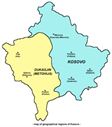 MetohijaPlaceMetohija is the western part of Kosovo, a fertile basin drained by the White Drin that includes the towns of Peć, Prizren and Gjakova.
- Metrodorus of ChiosPersonMetrodorus of Chios was a Greek philosopher of the fourth century BCE in the atomist tradition of Democritus.
- MetsukeInstitutionMetsuke were inspectors or censors in the Tokugawa Shogunate who monitored officials, daimyo and samurai for misconduct or disloyalty.
- MetulumPlaceMetulum was the main stronghold of the Iapydes, an Iron Age people of the north-western Balkans, in what is now Croatia.
 MetzPlaceMetz is a city in Lorraine, north-eastern France, where the Seille joins the Moselle.
- Meurig ap TewdrigPersonMeurig ap Tewdrig was a king of Glywysing and Gwent in south-east Wales, probably in the 6th or 7th century.
 Meurthe-et-MosellePlaceMeurthe-et-Moselle is a department of north-eastern France in the Grand Est region, with its prefecture at Nancy.
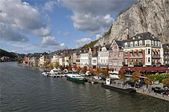 MeusePlaceThe Meuse (Dutch: Maas) is a river of western Europe, about 925 km long, which rises on the Langres plateau in north-eastern France and flows through Belgium and the…
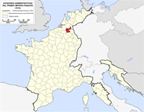 Meuse-InférieurePlaceMeuse-Inférieure was a department of the French Republic and Empire from 1795 to 1814, named after the lower Meuse and centred on Maastricht.
- Mewar Praja MandalPeople / groupThe Mewar Praja Mandal was a people's association founded in 1938 by Manikya Lal Varma in the princely state of Mewar (Udaipur) to campaign for civil liberties…
 MexicaPeople / groupThe Mexica were the Nahuatl-speaking people who founded Tenochtitlan on Lake Texcoco and led the Aztec Triple Alliance.
 Mexican RevolutionRevolution · War · 1910–1920The Mexican Revolution was the series of revolts and civil wars that began in November 1910 with Francisco Madero's call to rise against Porfirio Díaz.
 Mexican War of IndependenceWar · 1810–1821The Mexican War of Independence was the armed conflict of 1810–1821 that ended Spanish rule in New Spain.
 Mexican–American WarWar · 1846–1848The Mexican–American War was fought between the United States and Mexico from 1846 to 1848, following the American annexation of Texas and a border dispute.
 MexicoPlaceMexico is a country in North America whose central valley was the heartland of the Aztec Empire.
 Mexico CityPlaceMexico City is the capital of Mexico, built on the ruins of the Aztec capital Tenochtitlan.
- Mežotne hillfortPlaceMežotne hillfort is an earthwork fortress on the bank of the Lielupe in southern Latvia.
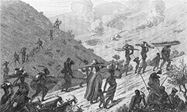 MfecaneWarThe Mfecane was a period of widespread warfare, migration and state formation in southern Africa in the early nineteenth century, associated with the rise of the Zulu…
 MfenguPeople / groupThe Mfengu are a Xhosa-speaking people of the Eastern Cape in South Africa, formed largely from refugees who fled into Xhosa lands from the wars of the 1820s in Natal.
- MgungundlovuPlaceMgungundlovu was the royal capital of the Zulu king Dingane, built around 1829 in the Emakhosini valley in KwaZulu-Natal.
- MhlanganaPersonMhlangana was a son of the Zulu chief Senzangakhona and a half-brother of Shaka.
- Mhlathuze RiverPlaceThe Mhlathuze is a river in northern KwaZulu-Natal, South Africa, flowing east to the Indian Ocean near Richards Bay.
- Mhlatuze RiverPlaceThe Mhlatuze is a river in KwaZulu-Natal, South Africa, flowing east to the Indian Ocean at Richards Bay.
- MhlontloPersonMhlontlo was a king of the Mpondomise in the Eastern Cape of South Africa.
 Mi'kmaqPeople / groupThe Mi'kmaq are an Indigenous people of the Atlantic region of North America, living in what are now Nova Scotia, Prince Edward Island, New Brunswick, the Gaspé…
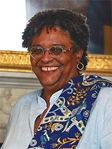 Mia MottleyPersonMia Mottley is a Barbadian lawyer and politician who became the first woman prime minister of Barbados in May 2018, when her Barbados Labour Party won every seat in…
 Miami peoplePeople / groupThe Miami are an Algonquian-speaking Native American people who in the 18th century lived around the headwaters of the Maumee and Wabash rivers in present-day Indiana…
- Mian Nur Muhammad KalhoroPersonMian Nur Muhammad Kalhoro was the most powerful ruler of the Kalhora dynasty of Sindh, governing from 1719 until his death in 1755.
- Mian Yar Muhammad KalhoroPersonMian Yar Muhammad Kalhoro was the founder of Kalhora rule in Sindh.
- Miangul Abdul WadudPersonMiangul Abdul Wadud, known as Badshah Sahib, was the founder of the princely state of Swat.
- Miangul JahanzebPersonMiangul Jahanzeb was the second and last Wali of Swat, ruling from 1949 until the state was merged into Pakistan in 1969.
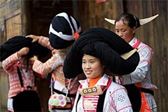 Miao peoplePeople / groupThe Miao are an ethnic group of southern China, living mainly in Guizhou, Hunan, Yunnan, Sichuan and Guangxi, and officially one of China's largest minorities.
- Mibambwe IV RutarindwaPersonMibambwe IV Rutarindwa was king of Rwanda from 1895 to 1896, the chosen heir and co-ruler of Kigeli IV Rwabugiri.
 Micah (prophet)PersonMicah was a Hebrew prophet from Moresheth in the Shephelah of Judah, active in the late 8th century BCE under the kings Jotham, Ahaz and Hezekiah.
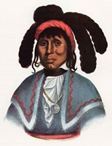 MicanopyPersonMicanopy was a principal chief of the Seminole in Florida.
- Michael Aung-ThwinPersonMichael Aung-Thwin is a historian of Myanmar, long a professor at the University of Hawaii.
- Michael CollinsPersonMichael Collins was an Irish revolutionary leader.
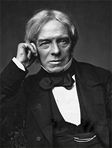 Michael FaradayPersonMichael Faraday was an English scientist who discovered electromagnetic induction in 1831, the principle behind electric generators and transformers.
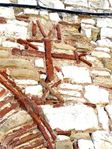 Michael I Komnenos DoukasPersonMichael I Komnenos Doukas was the founder of the Despotate of Epirus, a Byzantine successor state set up after the Fourth Crusade.
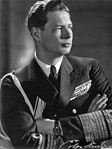 Michael I of RomaniaPersonMichael I of Romania was the last king of Romania, reigning as a child from 1927 to 1930 and again from 1940 to 1947.
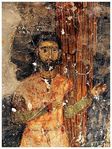 Michael II AsenPersonMichael II Asen was tsar of Bulgaria from 1246 to 1256, a son of Ivan Asen II and Irene Komnene Doukaina.
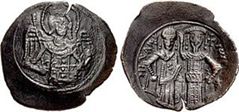 Michael II Komnenos DoukasPersonMichael II Komnenos Doukas was ruler of the Despotate of Epirus from about 1230 until his death around 1268.
 Michael Joseph SavagePersonMichael Joseph Savage was the first Labour prime minister of New Zealand, serving from 1935 until his death in 1940.
- Michael ManleyPersonMichael Manley was Prime Minister of Jamaica from 1972 to 1980 and from 1989 to 1992, and leader of the People's National Party founded by his father Norman Manley.
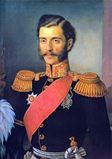 Michael ObrenovićPersonMichael Obrenović (Mihailo Obrenović III) was prince of Serbia from 1839 to 1842 and again from 1860 until his assassination in 1868.
 Michael of RussiaPersonMichael of Russia (Mikhail Fyodorovich Romanov) was the first tsar of the Romanov dynasty, elected by an assembly of the land in 1613 to end the Time of Troubles; the…
- Michael PanaretosPersonMichael Panaretos was a Greek official and historian of the Empire of Trebizond in the fourteenth century, who served Emperor Alexios III at court and on embassies.
 Michael ShishmanPersonMichael Shishman was tsar of Bulgaria from 1323 to 1330 and founder of the Shishman dynasty, the last ruling house of medieval Bulgaria.
 Michael SomarePersonMichael Somare was the founding prime minister of Papua New Guinea.
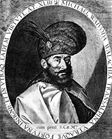 Michael the BravePersonMichael the Brave (Mihai Viteazul) was prince of Wallachia from 1593 to 1601.
 Michael VentrisPersonMichael Ventris was an English architect and amateur linguist who deciphered Linear B, the script of the Mycenaean palaces.
- Michael VickeryPersonMichael Vickery was an American historian of Cambodia and mainland Southeast Asia.
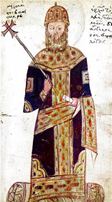 Michael VIII PalaiologosPersonMichael VIII Palaiologos was a Byzantine emperor who reigned from 1259 to 1282 and founded the Palaiologan dynasty.
 Michel ColombePersonMichel Colombe was a French sculptor from Tours, the leading sculptor in France at the beginning of the Renaissance.
 Michel Le TellierPersonMichel Le Tellier was a French statesman who served as secretary of state for war from 1643 to 1677 and later as chancellor of France.
 Michel MicomberoPersonMichel Micombero was a Burundian army officer who became the country's first president.
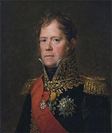 Michel NeyPersonMichel Ney was a French soldier and one of Napoleon's marshals, created Duke of Elchingen in 1808 for his victory there in 1805 and later Prince of the Moskva for his…
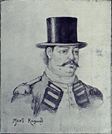 Michel RaymondPersonMichel Raymond was a French soldier of fortune who commanded a large French-trained corps in the service of Nizam Ali Khan of Hyderabad.
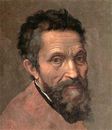 MichelangeloPersonMichelangelo Buonarroti (1475–1564) was a Florentine sculptor, painter, architect and poet, one of the greatest artists of the Italian Renaissance.
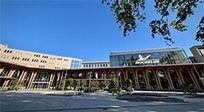 MichelinInstitutionMichelin is a French tyre manufacturer founded in 1889 by the brothers André and Édouard Michelin in Clermont-Ferrand.
- Micheon of GoguryeoPersonMicheon of Goguryeo was the fifteenth king of Goguryeo, reigning from 300 to 331.
 Michiel de RuyterPersonMichiel de Ruyter was a Dutch admiral, the most celebrated commander of the Dutch navy.
 MichigameaPeople / groupThe Michigamea were an Algonquian-speaking people who belonged to the Illinois Confederation.
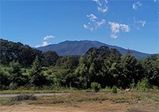 MichoacánPlaceMichoacán is a state of western Mexico, stretching from the Pacific coast to the volcanic highlands, with its capital at Morelia.
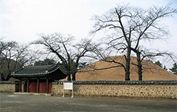 Michu of SillaPersonMichu was king of Silla from 262 to 284, according to the Samguk sagi.
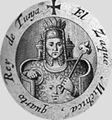 MichuáPersonMichuá was a zaque, ruler of the northern Muisca of Hunza in the Colombian highlands, in the late 15th century.
- MicionPersonMicion of Kephisia was an Athenian statesman who, with his brother Eurycleides, directed the city's affairs in the later third century BCE.
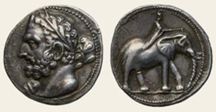 MicipsaPersonMicipsa was king of Numidia from 148 to 118 BCE, the eldest legitimate son of Masinissa.
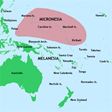 MicronesiaPlaceMicronesia is a region of the western Pacific Ocean made up of thousands of small islands, including the Mariana, Caroline, Marshall and Gilbert Islands and Nauru.
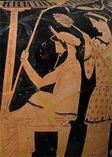 MidasPersonMidas was a king of Phrygia in the late 8th century BCE, ruling from Gordion.
- MiddelburgPlaceMiddelburg is the capital of the Dutch province of Zeeland, on the former island of Walcheren.
 Middle AgesReligion / ideaThe Middle Ages is the period of European history between the end of the Western Roman Empire in the 5th century and the beginning of the early modern era around 1500.
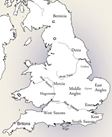 Middle AnglesPeople / groupThe Middle Angles were a group of Anglian peoples in the east Midlands of England, around the Fens and the Nene and Welland valleys.
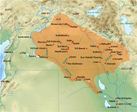 Middle Assyrian EmpireStateThe Middle Assyrian Empire was the phase of Assyrian history that began when Ashur-uballit I asserted independence from Mitanni in the fourteenth century BCE.
 Middle AtlasPlaceThe Middle Atlas is a mountain range in central Morocco, part of the Atlas system, running north-east from the High Atlas towards the Taza gap.
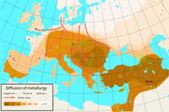 Middle Bronze AgeReligion / ideaThe Middle Bronze Age is the archaeological period of roughly 2000 to 1550 BCE in the Levant.
 Middle EastPlaceThe Middle East is the region of western Asia and north-eastern Africa including the Levant, Mesopotamia, Arabia, Iran, Anatolia and Egypt.
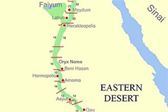 Middle EgyptPlaceMiddle Egypt is the stretch of the Nile valley between the Delta and Thebes, roughly from Memphis to Asyut, including the Fayum and cities such as Herakleopolis and…
- Middle Elamite periodReligion / ideaThe Middle Elamite period, from about 1500 to 1100 BCE, was the phase of Elamite history in which kings ruling from Susa styled themselves kings of Anshan and Susa.
 Middle FranciaStateMiddle Francia was the central kingdom created by the Treaty of Verdun in 843, when the Carolingian Empire was divided among the sons of Louis the Pious.