Encyclopedia: M
2,409 entries under M · page 2 of 25: Madras State – Maharana
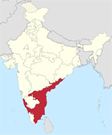 Madras StateStateMadras State was the successor of the Madras Presidency in independent India, a province from 1947 and a state of the Republic from 1950.
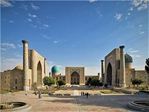 MadrasaInstitutionA madrasa is an Islamic institution of higher learning, typically teaching law, theology and related sciences.
- Madrasa al-FirdawsWork / monumentThe Madrasa al-Firdaws is an Islamic college and Sufi lodge outside the walls of Aleppo, in Syria, founded in 1235–1236 by Dayfa Khatun, regent of the Ayyubid…
- Madrasa al-Shamma'iyyaInstitutionThe Madrasa al-Shamma'iyya is a college in the medina of Tunis, founded by the Hafsid ruler Abu Zakariya Yahya I in the mid-13th century near the Zaytuna Mosque.
 Madrasa of GranadaInstitutionThe Madrasa of Granada (Madrasa Yusufiyya) was founded in 1349 by the Nasrid emir Yusuf I as the city's first public institution of higher learning, teaching law…
 MadridPlaceMadrid is the capital of Spain, in the centre of the Iberian peninsula.
 Madrid Protocol of 1885Treaty · 1885The Madrid Protocol of 1885 was an agreement signed on 7 March 1885 by Britain, Germany and Spain.
 Madriu-Perafita-Claror ValleyPlaceThe Madriu-Perafita-Claror Valley is a glacial valley in south-eastern Andorra, covering almost a tenth of the country's territory.
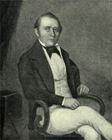 Mads LangePersonMads Lange was a Danish trader who ran a large trading post at Kuta in southern Bali from the late 1830s under the protection of the raja of Badung.
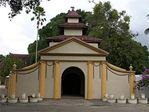 MaduraPlaceMadura is an island off the north-east coast of Java, in Indonesia's East Java province, separated from Java by the narrow Madura Strait.
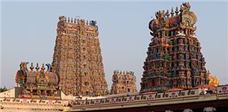 MaduraiPlaceMadurai is an ancient city in southern India, the capital of the Pandya kingdom.
- Madurai Nayak dynastyStateThe Madurai Nayak dynasty ruled much of present-day Tamil Nadu from 1529 to 1736.
 Madurai SultanateStateThe Madurai Sultanate was a Muslim kingdom in the southern Tamil country, founded in 1335 when the governor Jalal-ud-din Ahsan Khan rebelled against the Delhi Sultanate.
- MadyesPersonMadyes was a Scythian king named by Herodotus as the son of Protothyes.
- MaeandriusPersonMaeandrius was the secretary of Polycrates, tyrant of Samos, and took control of the island after his master's murder around 522 BCE.
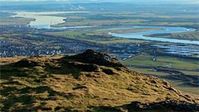 MaeataePeople / groupThe Maeatae were a confederation of peoples in Scotland near the Antonine Wall, recorded by Cassius Dio around 200 CE, when they and the Caledonians fought the Romans…
 Maeda clanPeople / groupThe Maeda clan was a Japanese samurai family that ruled the Kaga domain, the largest domain of the Edo period, assessed at over one million koku.
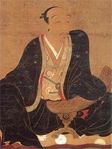 Maeda ToshiiePersonMaeda Toshiie was a Japanese warlord of the Sengoku period and founder of the Kaga domain.
 Maeda ToshinagaPersonMaeda Toshinaga was a Japanese daimyo, eldest son of Maeda Toshiie and second lord of the Kaga domain.
 Maeda TsunanoriPersonMaeda Tsunanori was the fifth lord of the Kaga domain, ruling from Kanazawa for most of the later 17th century.
 Máedóc of FernsPersonMáedóc of Ferns, also known as Aidan or Mogue, was an Irish saint who founded the monastery of Ferns in County Wexford around 600.
 Máel Sechnaill mac DomnaillPersonMáel Sechnaill mac Domnaill was King of Mide and High King of Ireland from 980 to 1002 and again from 1014 to 1022.
- Máel Sechnaill mac Máele RuanaidPersonMáel Sechnaill mac Máele Ruanaid was king of Mide and, from 846, high king of Ireland, of the Clann Cholmáin.
 Maelgwn GwyneddPersonMaelgwn Gwynedd was king of Gwynedd in north-west Wales in the 6th century.
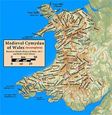 MaelorPlaceMaelor was a medieval district of north-east Wales, divided into Maelor Gymraeg, or Welsh Maelor, around Wrexham and Maelor Saesneg, or English Maelor, east of the Dee.
 MaeotiansPeople / groupThe Maeotians were ancient peoples living along the eastern shore of the Sea of Azov, which the Greeks called Lake Maeotis, and in the lower Kuban valley.
- MaevaPlaceMaeva is a village on the island of Huahine in the Society Islands, beside the lagoon of Lake Fauna Nui.
 Mafra National PalaceWork / monumentMafra National Palace is a huge baroque palace, basilica and Franciscan friary at Mafra, north-west of Lisbon, built for King John V from 1717 and paid for with…
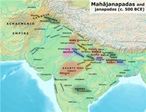 MagadhaPlaceMagadha was an ancient kingdom in the eastern Ganges plain, in present-day Bihar, with its capital at Pataliputra.
- Magadhi PrakritTermMagadhi Prakrit was the Middle Indo-Aryan vernacular of ancient Magadha in eastern India.
- MagahiTermMagahi is an Indo-Aryan language spoken by more than 12 million people, mainly in southern Bihar and neighbouring parts of Jharkhand in India.
- MaganPlaceMagan was an ancient land known to Mesopotamian sources, generally identified with present-day Oman and adjacent coasts.
 Magar peoplePeople / groupThe Magars are one of the largest indigenous peoples of Nepal, living mainly in the western and central hills.
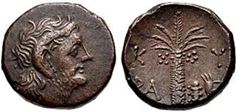 Magas of CyrenePersonMagas was ruler of Cyrene, a son of Ptolemy I's queen Berenice I by an earlier marriage.
 MagdalaPlaceMagdala, or Amba Mekdela, is a mountain fortress in the Wollo highlands of northern Ethiopia.
 Magdalena RiverPlaceThe Magdalena is the principal river of Colombia, flowing about 1,500 km north between the Central and Eastern Cordilleras to the Caribbean near Barranquilla.
- MagdalensbergPlaceThe Magdalensberg is a mountain in Carinthia, Austria, whose summit and slopes hold the remains of a large Celtic and early Roman settlement.
 MagdeburgPlaceMagdeburg is a city on the Elbe and the capital of Saxony-Anhalt, Germany.
 Magdeburg BördePlaceThe Magdeburg Börde is a fertile lowland in Saxony-Anhalt, Germany, stretching west of Magdeburg and the Elbe.
 Magellan's CrossWork / monumentMagellan's Cross is a Christian cross planted by the expedition of Ferdinand Magellan in Cebu, Philippines, in April 1521, at the baptism of Rajah Humabon and his people.
- Maghan Kon FattaPersonMaghan Kon Fatta is the king of the Manding town of Niani remembered in the oral epic of Sundiata as the father of Sundiata Keita.
 MaghrebPlaceThe Maghreb is the region of north-west Africa comprising present-day Morocco, Algeria, Tunisia and Libya.
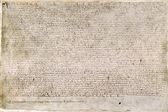 Magna CartaWork / monumentMagna Carta is the charter of liberties that rebellious barons forced King John of England to accept at Runnymede in June 1215.
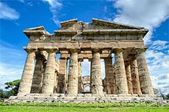 Magna GraeciaPlaceMagna Graecia, Latin for Great Greece, was the name given to the coastal areas of southern Italy settled by Greek colonists from the 8th century BCE.
- MagnatesPeople / groupMagnates were the great noble landowners of the Polish-Lithuanian Commonwealth, whose vast estates gave them enormous wealth and influence.
 MagnentiusPersonMagnentius was a Roman usurper who seized power in the West in January 350 after the murder of Emperor Constans, ruling Gaul, Britain, Spain, Italy and Africa.
- Magnetic compassTermThe magnetic compass is a navigational instrument that uses a magnetised needle to indicate direction.
- MagnisPlaceMagnis was a small walled Roman town at Kenchester, west of Hereford in England, on the road along the Welsh border.
 MagnitogorskPlaceMagnitogorsk is an industrial city in the southern Urals of Russia, built from 1929 around a huge iron and steel works beside Magnitnaya, the 'magnetic mountain' of…
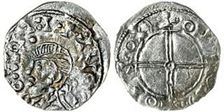 Magnus BarefootPersonMagnus Barefoot, or Magnus III, was king of Norway from 1093 to 1103.
- Magnus DecentiusPersonMagnus Decentius was a relative, probably the brother, of the Roman usurper Magnentius, who made him Caesar in 350 and gave him command in Gaul.
 Magnus ErikssonPersonMagnus Eriksson (1316–1374) inherited the crown of Norway and was elected king of Sweden in 1319 as a three-year-old, uniting the two kingdoms under one king.
 Magnus ErlendssonPersonMagnus Erlendsson was an Earl of Orkney who shared rule of the islands with his cousin Håkon Paulsson.
- Magnus ErlingssonPersonMagnus Erlingsson (1156–1184) was king of Norway from 1161, a son of the powerful nobleman Erling Skakke and a grandson of King Sigurd the Crusader through his mother.
- Magnus Lagabøte's Land LawWork / monumentMagnus Lagabøte's Land Law (Landsloven) was the national law code issued for Norway by King Magnus VI in 1274, replacing the separate laws of the regional assemblies.
 Magnus MaximusPersonMagnus Maximus was a Roman general of Spanish origin who, as commander in Britain, was proclaimed emperor by his troops in 383.
- Magnus OlafssonPersonMagnus Olafsson was the last king of Mann and the Isles of the Crovan dynasty, reigning from 1254 to 1265.
- Magnus the GoodPersonMagnus the Good was king of Norway from 1035 and of Denmark from 1042 to 1047, the son of Olaf II, Norway's patron saint.
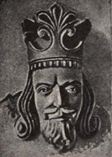 Magnus VI of NorwayPersonMagnus VI, called the Lawmender, was King of Norway from 1263 to 1280.
 Magnus, Duke of HolsteinPersonMagnus, Duke of Holstein, was a younger brother of Frederick II of Denmark, who bought him the bishoprics of Ösel-Wiek and Courland in 1559.
- Mago (agricultural writer)PersonMago was a Carthaginian writer on agriculture who composed a large treatise on farming.
- Mago IPersonMago I was a Carthaginian leader of the sixth century BCE, active around 550 to 530 BCE, and founder of the Magonid dynasty.
- Magonid dynastyStateThe Magonid dynasty was a leading family of Carthage, founded by Mago I in the sixth century BCE.
- Maguire dynastyPeople / groupThe Maguires, Mág Uidhir, were the ruling family of Fermanagh in Ireland from the late 13th century to the early 17th, with their seat at Enniskillen.
 Magway RegionPlaceMagway Region is an administrative region of central Myanmar, in the dry zone along the Irrawaddy, with its capital at Magway.
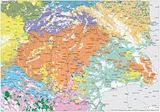 MagyarisationTermMagyarisation was the policy of spreading the Hungarian language and identity among the non-Hungarian peoples of the Kingdom of Hungary, pursued especially after the…
- MagyarsPeople / groupThe Magyars are the Hungarian people, who settled the Carpathian Basin in the late ninth century.
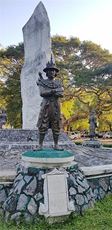 Maha BandulaPersonMaha Bandula was a Burmese general of the Konbaung dynasty who led campaigns in Manipur and Assam and on the frontier of British Bengal.
- Maha ManikyaPersonMaha Manikya was a ruler of Tripura in the early 15th century, usually seen as the first historically attested king of the Manikya dynasty.
 Maha SinghPersonMaha Singh was chief of the Sukerchakia misl, one of the Sikh confederacies of the Punjab, from the early 1770s until his death in 1790.
 Maha Sura SinghanatPersonMaha Sura Singhanat, born Bunma and known in the Thonburi period as Chao Phraya Surasi, was a Siamese general and the younger brother of Rama I.
- Maha Thammaracha IIPersonMaha Thammaracha II was king of Sukhothai in the later fourteenth century, the son of Li Thai.
- Maha Thammaracha IIIPersonMaha Thammaracha III, also known as Sai Lue Thai, was king of Sukhothai from about 1398 to 1419, as a vassal of Ayutthaya.
- Maha Thammaracha IVPersonMaha Thammaracha IV was the last king of Sukhothai, ruling from 1419 to 1438 as a vassal of Ayutthaya after King Intharacha settled a succession dispute in his favour.
- Maha ThammarachathiratPersonMaha Thammarachathirat was king of Ayutthaya from 1569 to 1590.
 Maha YazawinWork / monumentThe Maha Yazawin (Great Chronicle) is the first national chronicle of Burma, compiled by U Kala and completed around 1724 under the Restored Toungoo dynasty.
 MahabadPlaceMahabad is a city in West Azerbaijan province in north-western Iran, south of Lake Urmia, with a mainly Kurdish population.
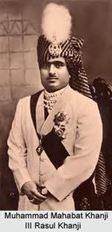 Mahabat Khanji IIIPersonMahabat Khanji III was the last ruling Nawab of Junagadh, from 1911 to 1948.
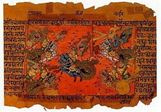 MahabharataWork / monumentThe Mahabharata is one of the two great Sanskrit epics of ancient India, traditionally attributed to the sage Vyasa and composed over several centuries between roughly…
- Mahadhammayaza DipatiPersonMahadhammayaza Dipati was the last king of the Toungoo dynasty of Burma, reigning from 1733 to 1752.
 Mahadji ScindiaPersonMahadji Scindia was the Maratha ruler of Gwalior and the most powerful Indian chief of the late 18th century.
 MahajangaPlaceMahajanga, formerly Majunga, is a port city on the north-west coast of Madagascar at the mouth of the Betsiboka River.
- MahajirstvoEventThe Mahajirstvo is the name given to the mass emigration and deportation of Muslim peoples of the north-western Caucasus, including the Abkhaz and Circassians, to the…
 MahakaccanaPersonMahakaccana was one of the leading disciples of the Buddha, praised in the Pali texts as foremost in explaining briefly stated teachings in detail.
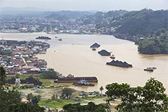 Mahakam RiverPlaceThe Mahakam River is the main river of East Kalimantan on Borneo, flowing about 900 kilometres from the interior highlands to the Makassar Strait.
 Mahakuta group of templesWork / monumentThe Mahakuta group of temples is a complex of Shaiva temples near Badami in northern Karnataka, India, built by the Chalukyas of Badami in the sixth and seventh…
- Mahamati PrannathPersonMahamati Prannath was a religious teacher from Jamnagar in Gujarat who led the Pranami sect, a Krishna-centred devotional movement founded by his guru Devchandra.
 MahamatraInstitutionMahamatra was a title for senior officials in the Maurya Empire.
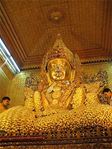 Mahamuni BuddhaWork / monumentThe Mahamuni Buddha is a seated bronze image of the Buddha, the most revered statue in Myanmar.
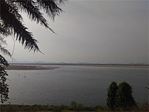 MahanadiPlaceThe Mahanadi is a major river of east-central India, about 850 kilometres long, rising in Chhattisgarh and flowing through Odisha to the Bay of Bengal.
- MahanagaPersonMahanaga was, according to the Mahavamsa, a brother of King Devanampiya Tissa of Anuradhapura who in the 3rd century BCE fled south after an attempt on his life and…
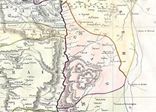 MahanaimPlaceMahanaim was a town in Gilead, east of the Jordan, mentioned in the Hebrew Bible.
- MahanandinPersonMahanandin was, according to the Puranas, the last king of the Shishunaga dynasty of Magadha, reigning in the 4th century BCE.
 Mahapadma NandaPersonMahapadma Nanda was the founder of the Nanda dynasty of Magadha, who around 345 BCE overthrew the last Shishunaga king.
 Mahaparinirvana SutraWork / monumentThe Mahaparinirvana Sutra, or Nirvana Sutra, is a Mahayana Buddhist scripture set during the last days of the Buddha.
- MaharajaTermMaharaja ('great king') is a Sanskrit royal title used across South Asia, originally for major sovereigns and later by many Hindu and Sikh rulers of princely states.
 Maharaja Sayajirao University of BarodaInstitutionThe Maharaja Sayajirao University of Baroda is a public university in Vadodara, Gujarat, founded in 1949 and named after Sayajirao Gaekwad III.
- Maharaja SukaramaPersonMaharaja Sukarama was a king of Negara Daha in southern Borneo known from the Hikayat Banjar chronicle.
- MaharajadhirajaInstitutionMaharajadhiraja, meaning 'great king of kings', was an Indian imperial title.
- MaharanaTermMaharana, 'great rana', was the royal title of the rulers of Mewar, whose capital was Chittor and from 1559 Udaipur, and of a few other Rajput states such as Porbandar.