Encyclopedia: R
1,108 entries under R · page 5 of 12: Red Square – Rensselaerswyck
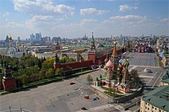 Red SquarePlaceRed Square is the main square of Moscow, lying along the eastern wall of the Kremlin between it and the old merchant quarter of Kitay-gorod.
- Red SticksPeople / groupThe Red Sticks were the traditionalist faction of the Creek (Muscogee) people who, inspired by prophets and by Tecumseh's call to resist American expansion, rose…
 Red Terror (Hungary)EventThe Red Terror in Hungary was the campaign of repression carried out by the Hungarian Soviet Republic in 1919 against its real and supposed enemies.
 Red Tower (Alanya)Work / monumentThe Red Tower is an octagonal defensive tower by the harbour of Alanya on Turkey's Mediterranean coast, built in 1226 by order of the Seljuk sultan Kayqubad I.
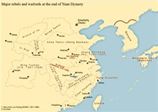 Red Turban RebellionRevolt · c. 1351–1368The Red Turban Rebellion was a series of uprisings against Mongol rule in China, beginning in 1351 under the influence of White Lotus millenarian beliefs and lasting to…
 Red ViennaEventRed Vienna was the period from 1919 to 1934 when the Social Democrats governed the city of Vienna.
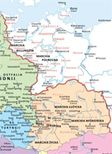 RedariiPeople / groupThe Redarii were a West Slavic tribe of the Lutician federation, living around the Tollensesee and Lake Lieps in modern Mecklenburg, Germany.
 RedbadPersonRedbad, also Radbod, was king of the Frisians from about 680 until his death in 719.
 RededyaPersonRededya was a prince of the Kasogs, the Circassians of the north-western Caucasus.
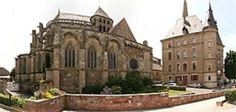 Redon AbbeyInstitutionRedon Abbey, the Benedictine abbey of Saint-Sauveur at Redon in eastern Brittany, was founded in 832 by the monk Conwoion with the support of Nominoe.
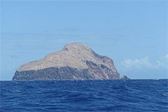 RedondaPlaceRedonda is a small, uninhabited rocky island in the Caribbean, part of Antigua and Barbuda, lying between Montserrat and Nevis.
- Reform Act 1832Work / monumentThe Reform Act 1832, known as the Great Reform Act, reformed the electoral system of England and Wales.
- RegaPlaceThe Rega is a river in Pomerania, north-western Poland, about 170 km long, which flows north into the Baltic Sea near Mrzeżyno.
- Regency Council (Kingdom of Poland)InstitutionThe Regency Council was the governing body of the Kingdom of Poland created by Germany and Austria-Hungary during the First World War.
- Regency period (Brazil)EventThe Regency period was the era from 1831 to 1840 when Brazil was governed by regents on behalf of the young Pedro II after his father's abdication.
 Regeneration (Colombia)Religion / ideaThe Regeneration was the political movement led by Rafael Núñez in Colombia from the 1880s that replaced the federal, liberal order of the United States of Colombia…
 Regeneration (Switzerland)EventThe Regeneration was the period of Swiss history from 1830 to 1848 in which liberal movements, encouraged by the July Revolution in France, won new constitutions in…
- Reggia CarrareseWork / monumentThe Reggia Carrarese was the palace of the Carrara lords of Padua, built in the 14th century in the centre of the city.
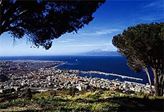 Reggio CalabriaPlaceReggio Calabria is the largest city of Calabria in southern Italy, on the Strait of Messina facing Sicily.
 Reggio EmiliaPlaceReggio Emilia is a city in Emilia-Romagna, northern Italy, on the Via Emilia between Parma and Modena, founded by the Romans as Regium Lepidi.
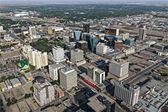 Regina, SaskatchewanPlaceRegina is the capital of the Canadian province of Saskatchewan.
- Reginald DyerPersonReginald Dyer was a British Indian Army officer who ordered the Jallianwala Bagh massacre at Amritsar on 13 April 1919.
 Reginald Grey, 3rd Baron Grey de RuthynPersonReginald Grey, 3rd Baron Grey de Ruthyn, was an English marcher lord holding Ruthin in north-east Wales.
 Reginald I, Count of GueldersPersonReginald I was Count of Guelders from 1271 to 1318.
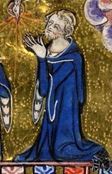 Reginald II, Duke of GueldersPersonReginald II, called the Black, was Count of Guelders from 1326 and its first duke from 1339, when Emperor Louis IV raised it to a duchy.
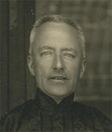 Reginald JohnstonPersonReginald Johnston was a Scottish colonial official and scholar of China.
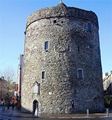 Reginald's TowerWork / monumentReginald's Tower is a round stone tower on the quay of Waterford, Ireland, at the apex of the old walled town.
- Reginar III, Count of HainautPersonReginar III was count of Hainaut in the mid-tenth century, a grandson of Reginar Longneck.
- Reginar IV, Count of MonsPersonReginar IV was a son of the exiled Reginar III who fought for decades to recover his family's lands in Hainaut.
- Reginar, Duke of LorrainePersonReginar Longneck was the leading noble of Lotharingia at the end of the 9th century.
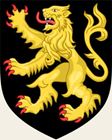 ReginaridsPeople / groupThe Reginarids were a noble family of Lotharingia descended from Reginar Longneck (died 915), who held counties in Hainaut and the Hesbaye.
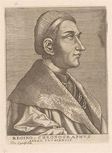 Regino of PrümPersonRegino of Prüm was a Frankish monk, abbot of Prüm from 892 to 899 and later head of St.
- Regional autonomy and warlordismHistorical factorRegional autonomy and warlordism are a recurring cause of imperial decline, as provincial governors, generals or local lords accumulate independent military and fiscal…
 Règlement Organique (Mount Lebanon)Work / monumentThe Règlement Organique was the statute agreed in 1861 between the Ottoman government and Britain, France, Austria, Prussia and Russia after the civil war of 1860 in…
 RegniPeople / groupThe Regni or Regnenses were the people of the Roman civitas centred on Noviomagus Reginorum, modern Chichester, in what is now Sussex.
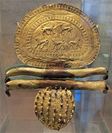 Regolini-Galassi tombWork / monumentThe Regolini-Galassi tomb is an Etruscan chamber tomb in the Sorbo necropolis of Caere (Cerveteri), found intact in 1836 by the priest Alessandro Regolini and General…
- Regreg WarWar · 1404–1406The Regreg War was a civil war in the Majapahit kingdom of Java, fought from 1404 to 1406 between the western court of King Wikramawardhana and the eastern court of…
 Regulamentul OrganicWork / monumentRegulamentul Organic was the quasi-constitutional law introduced in Wallachia in 1831 and Moldavia in 1832 while the principalities were under Russian occupation after…
- Regulating Act of 1773Work / monumentThe Regulating Act of 1773 was the first act of the British Parliament to regulate the East India Company's government in India.
- Regulations on the Siberian KirgizWork / monumentThe Regulations on the Siberian Kirgiz were a Russian statute of 1822 drafted by Mikhail Speransky as part of his reform of Siberian government; Kirgiz was then the…
 Regulator MovementRevolt · 1765–1771The Regulator Movement was an uprising of backcountry farmers in North Carolina, with a parallel movement in South Carolina, in the late 1760s and early 1770s.
 RehoboamPersonRehoboam was the son of Solomon and, according to the Hebrew Bible, the first king of Judah after the division of the united monarchy around 930 BCE.
- RehobothPlaceRehoboth is a town in the Hardap Region of central Namibia, south of Windhoek.
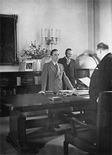 Reich Chamber of CultureInstitutionThe Reich Chamber of Culture was set up in September 1933 under Joseph Goebbels to control cultural life in Nazi Germany.
 Reich Ministry for the Occupied Eastern TerritoriesInstitutionThe Reich Ministry for the Occupied Eastern Territories was the Nazi German ministry created in July 1941 under Alfred Rosenberg to govern Soviet lands placed under…
 Reich Ministry of Public Enlightenment and PropagandaInstitutionThe Reich Ministry of Public Enlightenment and Propaganda was created in March 1933 under Joseph Goebbels to control German culture and public opinion.
 Reich ProtectorTermReich Protector, in German Reichsprotektor, was the title of the highest German official in the Protectorate of Bohemia and Moravia from 1939 to 1945, who held real…
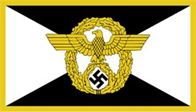 Reich Security Main OfficeInstitutionThe Reich Security Main Office (RSHA) was formed in September 1939 by Heinrich Himmler to combine the Security Police, including the Gestapo and the criminal police…
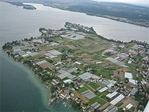 Reichenau IslandPlaceReichenau is an island in Lake Constance, in south-western Germany, joined to the mainland by a causeway.
 ReichsdeputationshauptschlussEventThe Reichsdeputationshauptschluss, or Imperial Recess, was the final resolution of an imperial deputation adopted at Regensburg in 1803.
- ReichskommissarTermA Reichskommissar, or Reich Commissioner, was in Nazi Germany an official appointed to govern an occupied territory as a civil administrator answerable directly to…
- ReichsratInstitutionThe Reichsrat was the parliament of the Austrian half of the Austro-Hungarian Empire, sitting in Vienna.
- ReichstagInstitutionThe Reichstag was the national parliament of the German Empire, elected by universal male suffrage.
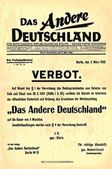 Reichstag Fire DecreeEventThe Reichstag Fire Decree was an emergency decree issued by President Paul von Hindenburg on 28 February 1933, the day after the Reichstag building was set on fire.
 ReichswehrInstitutionThe Reichswehr was the armed forces of the Weimar Republic and of Germany's first years under Hitler.
- Reign of TerrorEventThe Reign of Terror was the period of the French Revolution, from September 1793 to July 1794, in which the revolutionary government used mass arrests and executions…
 ReimsPlaceReims is a city in Champagne, north-eastern France, the Durocortorum of the Remi and later capital of the Roman province of Belgica.
 Reinhard HeydrichPersonReinhard Heydrich was a senior SS officer, head of the Reich Security Main Office and one of the main architects of the Holocaust, who chaired the Wannsee Conference in…
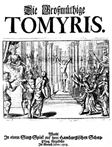 Reinhard KeiserPersonReinhard Keiser (1674–1739) was a German composer who worked for most of his career at Hamburg's Oper am Gänsemarkt, which he also directed.
- Reinhard von DalwigkPersonReinhard von Dalwigk was chief minister of the Grand Duchy of Hesse from 1850 to 1871.
- ReinheitsgebotWork / monumentThe Reinheitsgebot ('purity order') is the name given to the Bavarian beer ordinance issued at Ingolstadt on 23 April 1516 by Dukes William IV and Louis X.
 Reinsurance TreatyTreatyThe Reinsurance Treaty was a secret agreement between the German Empire and Russia, concluded by Bismarck in 1887, in which each promised neutrality in most wars…
- Reisner PapyriWork / monumentThe Reisner Papyri are four administrative papyri of the early Twelfth Dynasty of Egypt, found in a tomb at Naga ed-Deir by George Reisner's expedition and now in the…
- ReitiaReligion / ideaReitia was a goddess of the ancient Veneti of north-eastern Italy, known from votive inscriptions and offerings.
- Reja de San MillánWork / monumentThe Reja de San Millán is a document of 1025 preserved by the monastery of San Millán de la Cogolla, listing the villages of Álava that owed the monastery a yearly…
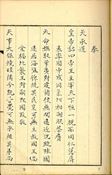 Rekidai HōanWork / monumentThe Rekidai Hōan is the collected diplomatic correspondence of the Ryukyu Kingdom, written in classical Chinese and covering the years 1424 to 1867.
- Relación de MichoacánWork / monumentThe Relación de Michoacán is a manuscript of about 1540, compiled by the Franciscan friar Jerónimo de Alcalá from the accounts of Purépecha nobles and priests for…
- Relaciones GeográficasWork / monumentThe Relaciones Geográficas were reports on the towns of Spain's American colonies compiled in answer to a questionnaire issued in 1577 under Philip II.
- Reliance on mercenariesHistorical factorReliance on mercenaries is a recurring structural feature of empires that hire foreign or professional soldiers instead of relying on citizen or subject levies.
- Relic of the tooth of the BuddhaWork / monumentThe Relic of the tooth of the Buddha is a tooth venerated in Sri Lanka as a remnant of the Buddha, said to have been brought from Kalinga in the 4th century CE.
- Religious legitimacyHistorical factorReligious legitimacy is a recurring source of imperial strength, as rulers claim divine sanction or a sacred role to justify their authority and command loyalty.
- Religious persecution and sectarian strifeHistorical factorReligious persecution and sectarian strife are a recurring cause of imperial weakness, as conflict between faiths or within a faith alienates subjects and divides elites.
- Religious pluralismReligion / ideaReligious pluralism is the coexistence of several religions within a single society or state.
- Religious toleranceReligion / ideaReligious tolerance is the acceptance by a state of religious beliefs and practices different from those of its rulers.
- RemaclusPersonRemaclus was a 7th-century monk and missionary from Aquitaine, first abbot of Solignac and later active as a bishop in the Meuse region.
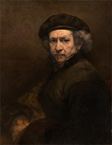 RembrandtPersonRembrandt van Rijn was a Dutch painter, draughtsman and etcher, born in Leiden, who worked in Amsterdam from the early 1630s.
- RemonstrantsPeople / groupThe Remonstrants are a Dutch Protestant movement that followed the teaching of Jacobus Arminius, who rejected strict Calvinist predestination.
- RenaissanceReligion / ideaThe Renaissance was a period of cultural revival in Europe from the fourteenth to the sixteenth century, beginning in Italy and centred on the recovery of classical…
- Renaissance of the 12th centuryReligion / ideaThe Renaissance of the 12th century was a period of intellectual revival in western Europe marked by the recovery of Greek and Arabic learning, the growth of cathedral…
 Renaud de DammartinPersonRenaud de Dammartin was count of Dammartin and, through his marriage to Countess Ida in 1191, count of Boulogne.
- RenaultInstitutionRenault is a French car maker founded in 1899 by Louis Renault and his brothers at Boulogne-Billancourt near Paris.
 Rendel ConstitutionWork / monumentThe Rendel Constitution was the constitution introduced in Singapore in 1955 on the recommendations of a commission led by Sir George Rendel.
 RendleshamPlaceRendlesham is a village in Suffolk, England, in the Deben valley.
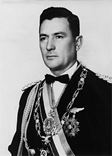 René BarrientosPersonRené Barrientos was a Bolivian air force general who, as vice-president, overthrew President Víctor Paz Estenssoro in November 1964.
 René DescartesPersonRené Descartes was a French philosopher and mathematician who spent most of his working life in the Dutch Republic.
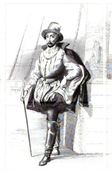 René Goulaine de LaudonnièrePersonRené Goulaine de Laudonnière was a French Huguenot explorer who led the second French expedition to Florida.
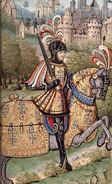 René II, Duke of LorrainePersonRené II was count of Vaudémont and from 1473 duke of Lorraine.
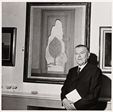 René MagrittePersonRené Magritte was a Belgian surrealist painter whose witty images questioned the relation between pictures, words and reality.
- René MillonPersonRené Millon was an American archaeologist who directed the Teotihuacan Mapping Project from 1962, which surveyed the whole ancient city and produced a detailed map of…
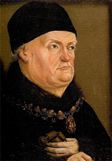 René of AnjouPersonRené of Anjou was Duke of Anjou, Count of Provence and Duke of Bar, and by marriage Duke of Lorraine, as well as titular king of Naples, Sicily and Jerusalem.
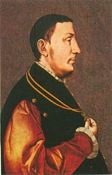 René of ChalonPersonRené of Chalon was prince of Orange and a leading noble of the Habsburg Netherlands, where he served Charles V as stadtholder of Holland, Zeeland and Utrecht.
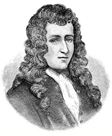 René-Robert Cavelier, Sieur de La SallePersonRené-Robert Cavelier, Sieur de La Salle, was a French explorer in North America.
- Renewed Land OrdinanceWork / monumentThe Renewed Land Ordinance was the constitution imposed by Ferdinand II on Bohemia in 1627 and on Moravia in 1628 after the defeat of the Bohemian Revolt.
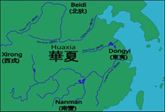 RenfangPeople / groupThe Renfang were a people to the east of the Shang heartland, in the region of present-day Shandong and the Huai River, named in late Shang oracle-bone inscriptions.
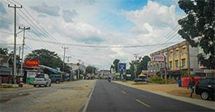 RengatPlaceRengat is a town on the Indragiri River in Riau province, Sumatra, Indonesia, and the capital of Indragiri Hulu Regency.
 Renier de HuyPersonRenier de Huy was a goldsmith and bronze-caster of the Mosan region, active in the early twelfth century.
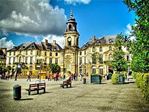 RennesPlaceRennes is the capital of Brittany in north-western France, at the confluence of the Ille and the Vilaine.
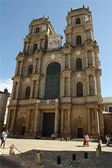 Rennes CathedralWork / monumentRennes Cathedral, dedicated to Saint Peter, is the cathedral of Rennes, capital of Brittany.
 RennyoPersonRennyo was the eighth head of the Hongan-ji, the main temple of the True Pure Land school of Japanese Buddhism.
 RensselaerswyckPlaceRensselaerswyck was the most successful patroonship of New Netherland, a vast estate around Fort Orange on both banks of the upper Hudson River, founded in 1630 by the…