Encyclopedia: S
2,800 entries under S · page 22 of 28: Space Race – St. Bartholomew's Day Massacre
- Space RaceEventThe Space Race was the competition between the United States and the Soviet Union, from the late 1950s to the mid-1970s, to achieve the first feats of spaceflight.
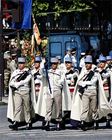 SpahisInstitutionThe Spahis were light cavalry regiments of the French Army recruited mainly among the Arab and Berber populations of North Africa, first organised in Algeria in 1834.
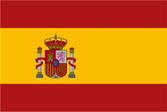 SpainPlaceSpain is a country on the Iberian Peninsula.
 SpandauPlaceSpandau is a district of Berlin, Germany, at the confluence of the Havel and the Spree.
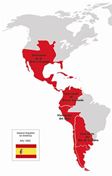 Spanish AmericaPlaceSpanish America refers to the territories in the Americas colonised and ruled by Spain, stretching from present-day California to Patagonia.
 Spanish American wars of independenceWar · 1808–1826The Spanish American wars of independence were the conflicts from 1808 to 1826 in which most of Spain's American colonies won independence.
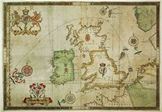 Spanish ArmadaCampaign · 1588The Spanish Armada was the fleet sent by Philip II of Spain in 1588 to invade England.
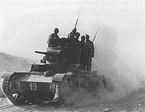 Spanish Civil WarWar · 1936–1939The Spanish Civil War was fought between the Second Spanish Republic and the Nationalist rebels led by Francisco Franco, who rose in July 1936.
 Spanish conquest of Iberian NavarreWar · 1512–1524The Spanish conquest of Iberian Navarre was the invasion of the Kingdom of Navarre south of the Pyrenees by Ferdinand II of Aragon, beginning in 1512.
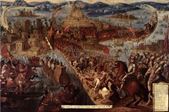 Spanish conquest of the Aztec EmpireCampaign · 1519–1521The Spanish conquest of the Aztec Empire was the campaign led by Hernán Cortés from 1519 to 1521, in alliance with Indigenous peoples such as the Tlaxcalans.
 Spanish conquest of the Inca EmpireCampaign · 1532–1535The Spanish conquest of the Inca Empire was the campaign led by Francisco Pizarro from 1532 to 1535.
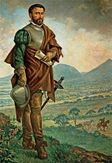 Spanish conquest of the MuiscaWar · 1537–1540The Spanish conquest of the Muisca was the subjugation of the Muisca Confederation of the Colombian highlands by conquistadors led by Gonzalo Jiménez de Quesada from…
 Spanish Constitution of 1931Work / monumentThe Spanish Constitution of 1931 was approved by the Cortes on 9 December 1931 as the founding law of the Second Spanish Republic.
 Spanish EmpireStateThe Spanish Empire was one of the largest empires in history, built from the late fifteenth century with the conquest of much of the Americas, the Philippines and…
 Spanish Golden AgeReligion / ideaThe Spanish Golden Age, or Siglo de Oro, was a period of flourishing in Spanish literature and art in the 16th and 17th centuries, under the Habsburg kings.
 Spanish InquisitionInstitutionThe Spanish Inquisition was a church tribunal under royal control, authorised by Pope Sixtus IV in 1478 at the request of Isabella I and Ferdinand II.
- Spanish languageTermThe Spanish language is a Romance language that originated in Castile.
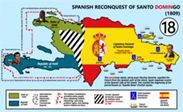 Spanish reconquest of Santo DomingoWar · 1808–1809The Spanish reconquest of Santo Domingo was the campaign of 1808–1809 in which Dominican creoles led by Juan Sánchez Ramírez, with British naval help, drove the French…
 Spanish TownPlaceSpanish Town is a town in southern Jamaica founded by the Spanish around 1534 as Villa de la Vega, the capital of Spanish Jamaica.
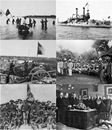 Spanish–American WarWar · 1898The Spanish–American War was fought in 1898 between Spain and the United States, arising from the Cuban struggle for independence.
 Spanish–Portuguese War (1776–1777)War · 1776–1777The Spanish–Portuguese War of 1776–1777 was fought over the borderlands of the Río de la Plata and southern Brazil.
 SpardaPlaceSparda was the Achaemenid Persian satrapy of Lydia, created after Cyrus the Great conquered the kingdom of Croesus around 546 BCE, with its seat at Sardis.
- SpargapeithesPersonSpargapeithes was a king of the Agathyrsi, a people living in what is now Transylvania, in the 5th century BCE.
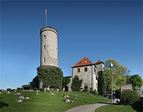 SparrenburgWork / monumentThe Sparrenburg is a castle on a ridge of the Teutoburg Forest above Bielefeld, built by the counts of Ravensberg in the first half of the 13th century.
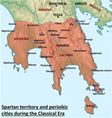 SpartaStateSparta was a city-state in the southern Peloponnese of ancient Greece, famous for its military society.
 Spartacist uprisingRevolt · 1919The Spartacist uprising was a general strike and armed rising in Berlin from 5 to 12 January 1919, led by the newly founded Communist Party of Germany and other…
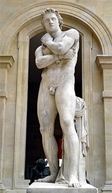 SpartacusPersonSpartacus was a Thracian gladiator who led the largest slave revolt against the Roman Republic, the Third Servile War of 73–71 BCE.
- SpartiatesPeople / groupThe Spartiates were the full citizens of ancient Sparta, also called homoioi (peers).
- Spartocid dynastyStateThe Spartocid dynasty ruled the Bosporan Kingdom on both sides of the Kerch Strait from 438 BCE until about 108 BCE.
- Spartocus IPersonSpartocus I was the founder of the Spartocid dynasty of the Bosporan Kingdom, who took power at Panticapaeum in 438 BCE after the Archaeanactids and ruled until 433…
- Spartocus IIIPersonSpartocus III was king of the Bosporan Kingdom in the eastern Crimea and the Taman peninsula from about 304 to 284 BCE, succeeding his father Eumelus.
- Spearthrower OwlPersonSpearthrower Owl is the name given by scholars to a powerful lord named in Maya inscriptions as the father of Yax Nuun Ayiin I, who became king of Tikal in 379 after…
 Special administrative regions of ChinaTermThe special administrative regions of China are Hong Kong and Macau, created under the principle of 'one country, two systems' when Britain returned Hong Kong in 1997…
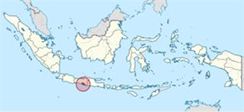 Special Region of YogyakartaPlaceThe Special Region of Yogyakarta is a province of Indonesia in south-central Java, with its capital at the city of Yogyakarta.
 The Spectator (1711)Work / monumentThe Spectator was a daily periodical published in London in 1711 and 1712, founded by Joseph Addison and Richard Steele.
 SpeicherstadtWork / monumentThe Speicherstadt is a warehouse district in the port of Hamburg, built from 1883 after the city agreed to join the German customs union while keeping a free port.
 SpessartPlaceThe Spessart is a range of low, densely wooded hills in north-western Bavaria and southern Hesse, Germany, enclosed on three sides by the River Main.
 SpetsesPlaceSpetses is a small Greek island off the eastern coast of the Peloponnese, near the entrance to the Argolic Gulf.
- SphodriasPersonSphodrias was a Spartan commander who, while governing Thespiae in 378 BCE, launched an unauthorised night raid into Attica aimed at the Piraeus.
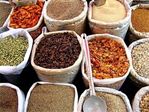 Spice tradeTermThe spice trade was the long-distance commerce in spices such as pepper, cinnamon, cloves and nutmeg from South and Southeast Asia.
 Špilberk CastlePlaceŠpilberk Castle stands on a hill above Brno in Moravia.
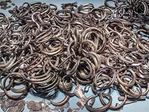 Spillings HoardWork / monumentThe Spillings Hoard is the largest Viking Age silver hoard ever found, discovered on a farm at Spillings in northern Gotland in 1999.
- SpinaPlaceSpina was an Etruscan port on the Po delta near modern Comacchio, in north-eastern Italy, founded in the late 6th century BCE.
 Spinning jennyTermThe spinning jenny is a multi-spindle spinning frame invented in 1764–1765 by James Hargreaves at Stanhill, Oswaldtwistle, in Lancashire, England.
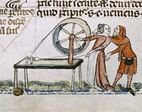 Spinning wheelTermThe spinning wheel is a device in which a hand- or foot-turned wheel drives the spindle that spins fibres into thread or yarn; its origin is disputed, and some scholars…
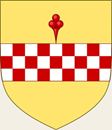 Spinola familyPeople / groupThe Spinola were one of the great noble families of Genoa, rivals and at times allies of the Doria, Fieschi and Grimaldi.
- Spirit mediumTermA spirit medium is a person believed to be possessed by and speak for ancestral or other spirits.
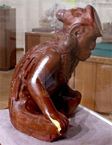 Spiro MoundsPlaceSpiro Mounds is an archaeological site on the Arkansas River in eastern Oklahoma, a centre of the Caddoan Mississippian culture from about 800 to 1450.
 SpišPlaceSpiš, Hungarian Szepes and German Zips, is a historical region of north-eastern Slovakia below the High Tatras.
 SpitiPlaceSpiti is a high desert valley of the Spiti River in Himachal Pradesh, India, on the border with Tibet.
- Split of the XiongnuEventThe split of the Xiongnu took place in 48 CE, when the confederation divided into the Southern Xiongnu, who accepted Han client status, and the Northern Xiongnu.
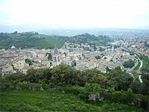 SpoletoPlaceSpoleto is a hill town in Umbria, central Italy, the Roman Spoletium.
 Spratly IslandsPlaceThe Spratly Islands are a scattered group of more than a hundred small islands, reefs and atolls in the southern South China Sea.
- SpreePlaceThe Spree is a river in eastern Germany, about 400 kilometres long, rising in Saxony near the Czech border and flowing through Lusatia and the Spreewald marshes to…
 Spurius Cassius VecellinusPersonSpurius Cassius Vecellinus was a Roman statesman of the early Republic, three times consul.
 Sputnik 1Work / monumentSputnik 1 was the first artificial Earth satellite, launched by the Soviet Union from Baikonur on 4 October 1957.
- Spyridon Georgios TheotokisPersonSpyridon Georgios Theotokis was a Corfiot nobleman who became the first head of the Septinsular Republic, presiding over its senate from 1800.
 Sranan TongoTermSranan Tongo is an English-based creole language that arose among enslaved Africans in Suriname in the seventeenth century, during the English period of the colony, and…
 SrebrenicaPlaceSrebrenica is a town in eastern Bosnia and Herzegovina near the Drina, whose name comes from the silver mined there.
 Sremski KarlovciPlaceSremski Karlovci is a town on the Danube in Syrmia, now in Serbia.
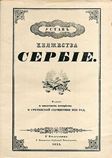 Sretenje ConstitutionWork / monumentThe Sretenje Constitution was the first constitution of modern Serbia, adopted at Kragujevac on 15 February 1835, the feast of Sretenje (Candlemas).
 Sri Baduga MaharajaPersonSri Baduga Maharaja, born Jayadewata, was king of Sunda in western Java from 1482 to 1521.
- Sri Bata ShajaPersonSri Bata Shaja was a ruler of the Rajahnate of Butuan in north-eastern Mindanao.
 Sri GuptaPersonSri Gupta was the founder of the Gupta dynasty.
- Sri JayabupatiPersonSri Jayabupati was a king of Sunda in western Java in the early eleventh century, known from the Sanghyang Tapak inscriptions of 1030 near Sukabumi.
- Sri JayanasaPersonSri Jayanasa was an early ruler of Srivijaya in the late seventh century.
 Sri Jayawardenepura KottePlaceSri Jayawardenepura Kotte is the legislative capital of Sri Lanka, a city on the south-eastern edge of Colombo.
 Sri Kesari WarmadewaPersonSri Kesari Warmadewa was the first known king of the Warmadewa dynasty of Bali.
- Sri Krishna VijayaWork / monumentThe Sri Krishna Vijaya is a Bengali narrative poem on the life of Krishna by Maladhar Basu, based on the Bhagavata Purana and composed between 1473 and 1480 under…
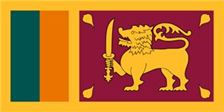 Sri LankaPlaceSri Lanka is an island off the southern tip of India.
 Sri Lankan TamilsPeople / groupSri Lankan Tamils are the Tamil-speaking people native to northern and eastern Sri Lanka, with Jaffna as their cultural centre.
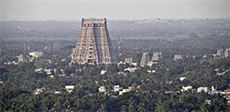 Sri VaishnavismReligion / ideaSri Vaishnavism is a Hindu tradition devoted to the god Vishnu and his consort Lakshmi, or Sri, which grew from the Tamil devotional hymns of the Alvars.
 Sri Vikrama RajasinhaPersonSri Vikrama Rajasinha was the last king of Kandy, reigning from 1798 to 1815, of the South Indian Nayak dynasty.
 Srimanta SankardevPersonSankardev was an Assamese saint, scholar, playwright and social reformer.
 Srimara SrivallabhaPersonSrimara Srivallabha was a king of the first Pandyan empire in southern India.
 SrinagarPlaceSrinagar is the largest city of the Kashmir valley, on the Jhelum River and the shores of Dal Lake, and the summer capital of Jammu and Kashmir in India.
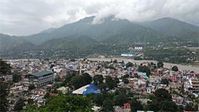 Srinagar, UttarakhandPlaceSrinagar is a town on the Alaknanda River in Pauri Garhwal district of Uttarakhand, India.
 SrinathaPersonSrinatha was a Telugu poet who served the Reddi king Pedakomati Vema of Kondavidu in the late 14th and early 15th centuries.
 Sriram Chandra Bhanj DeoPersonSriram Chandra Bhanj Deo was Maharaja of Mayurbhanj, a princely state in Odisha, from 1882 to 1912.
- Sriranga IIIPersonSriranga III was the last emperor of Vijayanagara, of the Aravidu dynasty, who came to the throne in 1642.
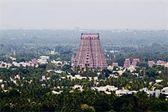 SrirangamPlaceSrirangam is a river island and temple town between the Kaveri and Kollidam rivers at Tiruchirappalli in Tamil Nadu, India.
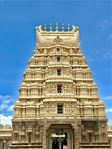 SrirangapatnaPlaceSrirangapatna, historically Seringapatam, is a town on an island in the Kaveri river near Mysore in southern India.
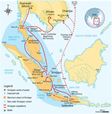 SrivijayaStateSrivijaya was a maritime empire based at Palembang in Sumatra from the seventh century to around the thirteenth century.
- Srivijayan invasion of MedangCampaign · 990 CEThe Srivijayan invasion of Medang was a military campaign by Srivijaya against the Javanese kingdom of Medang in 990 CE.
 SS Kaiser Wilhelm der GrosseWork / monumentSS Kaiser Wilhelm der Grosse was a transatlantic liner of Norddeutscher Lloyd, built at Stettin and launched in 1897.
- Ssang GiPersonSsang Gi was a Chinese official of the Later Zhou dynasty who came to Korea with an embassy in 956 and stayed in the service of King Gwangjong of Goryeo.
 Ssangseong PrefectureStateSsangseong Prefecture was an administrative district set up by the Mongols in 1258 in north-eastern Korea, around modern Kumya and Yonghung, after local Korean…
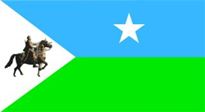 SSC-KhatumoPeople / groupSSC-Khatumo is a political and military administration formed in 2023 by Dhulbahante leaders in the Sool, Sanaag and Cayn areas of northern Somalia, who reject…
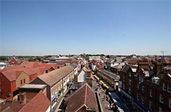 St AlbansPlaceSt Albans is a city in Hertfordshire, England, north of London, beside the site of the Roman town of Verulamium.
 St AndrewsPlaceSt Andrews is a town on the coast of Fife in eastern Scotland, known earlier as Cennrigmonaid.
 St Angelo FortWork / monumentSt Angelo Fort is a coastal fort at Kannur, on the Malabar coast of Kerala, India, built by the first Portuguese viceroy, Francisco de Almeida, in 1505 with the…
 St Donatian's CathedralWork / monumentSt Donatian's Cathedral was the principal church of Bruges, standing on the Burg square beside the counts' residence.
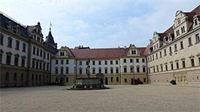 St Emmeram's AbbeyPlaceSt Emmeram's Abbey in Regensburg, Bavaria, was a Benedictine monastery founded in the 8th century over the grave of the martyred bishop Emmeram.
- St George's Cathedral, Yuryev-PolskyWork / monumentSt George's Cathedral in Yuryev-Polsky, Russia, was built between 1230 and 1234 by Prince Sviatoslav Vsevolodovich, the last great white-stone church of Vladimir-Suzdal…
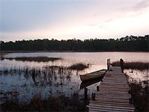 St Johns RiverPlaceThe St Johns River is the longest river in Florida, flowing north for about 500 km before turning east to the Atlantic near Jacksonville.
 St Magnus CathedralWork / monumentSt Magnus Cathedral in Kirkwall, Orkney, was founded in 1137 by Earl Rögnvald Kali Kolsson in honour of his uncle, the martyred Earl Magnus.
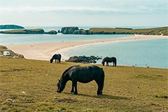 St Ninian's IslePlaceSt Ninian's Isle is a small island off the west coast of mainland Shetland, joined to it by a sand bar.
 St Vitus CathedralWork / monumentSt Vitus Cathedral is the cathedral of Prague, within Prague Castle.
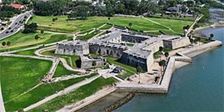 St. Augustine, FloridaPlaceSt. Augustine is a city on the Atlantic coast of north-east Florida, founded in 1565 by Pedro Menéndez de Avilés, who went on to destroy the French Huguenot colony at…
 St. Bartholomew's Day MassacreEventThe St. Bartholomew's Day Massacre was the killing of Huguenots in Paris and other French cities in 1572, during the French Wars of Religion.