Encyclopedia: C
2,007 entries under C · page 9 of 21: Charles the Fat – Chen Youliang
 Charles the FatPersonCharles the Fat was a Carolingian ruler who briefly reunited the realms of the Carolingian Empire between 881 and 888 CE.
 Charles the GoodPersonCharles the Good was count of Flanders from 1119 until 1127.
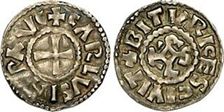 Charles the SimplePersonCharles the Simple was a Carolingian King of West Francia, crowned in 893 and sole king from 898.
- Charles the YoungerPersonCharles the Younger was the eldest son of Charlemagne and his queen Hildegard.
 Charles Theodore, Elector of BavariaPersonCharles Theodore was a Wittelsbach prince of the Sulzbach line who inherited the Electoral Palatinate in 1742 and the Electorate of Bavaria in 1777.
- Charles Town, JamaicaPlaceCharles Town is a Maroon community in the parish of Portland in north-eastern Jamaica, near the coastal town of Buff Bay.
 Charles UniversityInstitutionCharles University in Prague was founded by Charles IV in 1348, the first university in Central Europe.
 Charles V, Holy Roman EmperorPersonCharles V was a Habsburg ruler who became king of Spain as Charles I in 1516 and Holy Roman Emperor in 1519.
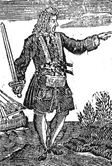 Charles VanePersonCharles Vane was an English pirate who operated from Nassau in the Bahamas between 1716 and 1719.
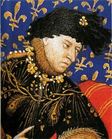 Charles VI of FrancePersonCharles VI, called the Beloved and later the Mad, was King of France from 1380 to 1422.
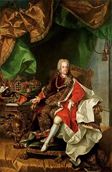 Charles VI, Holy Roman EmperorPersonCharles VI was Holy Roman Emperor from 1711 to 1740 and the last male Habsburg of the senior line.
 Charles VII of FrancePersonCharles VII was King of France from 1422.
 Charles VII, Holy Roman EmperorPersonCharles VII, born Charles Albert, was Elector of Bavaria from 1726.
 Charles VIII of FrancePersonCharles VIII was King of France from 1483, governed in his minority by his sister Anne of France and her husband Peter of Bourbon.
 Charles Vyner BrookePersonCharles Vyner Brooke was the third and last White Rajah of Sarawak, ruling from 1917.
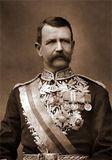 Charles WarrenPersonSir Charles Warren was a British army officer and archaeologist.
 Charles X GustavPersonCharles X Gustav was king of Sweden in the mid-seventeenth century and a gifted military commander.
 Charles XI of SwedenPersonCharles XI was king of Sweden in the late seventeenth century.
 Charles XII of SwedenPersonCharles XII was king of Sweden from 1697 to 1718 and a commander of great tactical skill.
 Charles XIII of SwedenPersonCharles XIII was King of Sweden from 1809, after the deposition of his nephew Gustav IV Adolf, and King of Norway from November 1814.
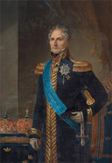 Charles XIV JohnPersonCharles XIV John, born Jean-Baptiste Bernadotte, was a French marshal under Napoleon who was elected heir to the Swedish throne in 1810.
 Charles, Duke of Lower LorrainePersonCharles (953–c. 993) was a Carolingian prince, younger son of the West Frankish king Louis IV and brother of King Lothair.
 Charles, Margrave of BurgauPersonCharles of Burgau was the son of Archduke Ferdinand II of Austria and Philippine Welser.
- Charles, Prince of IsenburgPersonCharles was Prince of Isenburg-Birstein from 1803.
 Charles, Prince of Nassau-UsingenPersonCharles was Prince of Nassau-Usingen from 1718.
 Charles, Prince of VianaPersonCharles, Prince of Viana (1421–1461), was the son of Blanche I of Navarre and John II of Aragon and the rightful heir to Navarre.
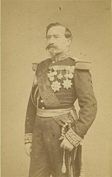 Charles-Denis BourbakiPersonCharles-Denis Bourbaki was a French general of Greek descent who commanded the Imperial Guard in 1870 and then the Army of the East in the Franco-Prussian War.
- Charles-Godefroy de La Tour d'AuvergnePersonCharles-Godefroy de La Tour d'Auvergne was a French nobleman, Duke of Bouillon from 1730 and the last viscount of Turenne.
- Charles-Jacques PoncetPersonCharles-Jacques Poncet was a French physician working in Cairo who travelled through the Funj Sultanate to Ethiopia in 1698–1700 to treat the emperor Iyasu I.
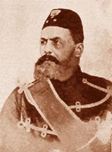 Charles-Marie David de MayrenaPersonCharles-Marie David de Mayrena was a French adventurer who in 1888 proclaimed himself King Marie I of the Sedang in the Central Highlands of Vietnam.
 Charles-Maurice de TalleyrandPersonCharles-Maurice de Talleyrand was a French bishop turned diplomat who served as foreign minister under the Directory, Napoleon and the restored Bourbons.
- CharlesfortPlaceCharlesfort was a short-lived French Huguenot outpost built in 1562 by Jean Ribault on Parris Island, in present-day South Carolina.
 Charleston, South CarolinaPlaceCharleston, founded in 1670 as Charles Town, is a port city in South Carolina.
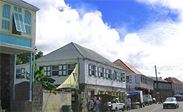 Charlestown, Saint Kitts and NevisPlaceCharlestown is the capital of the island of Nevis in Saint Kitts and Nevis, on its western coast.
- Charlotte AmaliePlaceCharlotte Amalie is the capital of the United States Virgin Islands, on the island of St Thomas.
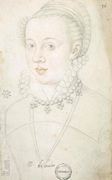 Charlotte de La MarckPersonCharlotte de La Marck was the heiress of the La Marck family's principality of Sedan and duchy of Bouillon.
- Charlotte HarborPlaceCharlotte Harbor is a large estuary on the Gulf coast of south-western Florida, fed by the Peace and Myakka rivers.
 Charlotte of Mecklenburg-StrelitzPersonCharlotte of Mecklenburg-Strelitz (1744–1818) was the wife of George III and queen consort of Great Britain and Ireland from 1761.
 Charlotte Stanley, Countess of DerbyPersonCharlotte Stanley, Countess of Derby, born Charlotte de La Trémoille, was a French Huguenot noblewoman who married James Stanley, later 7th Earl of Derby, in 1626.
 Charlotte, Grand Duchess of LuxembourgPersonCharlotte was Grand Duchess of Luxembourg from 1919 to 1964, succeeding her sister Marie-Adélaïde, who abdicated after being accused of pro-German conduct.
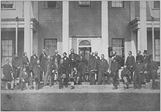 Charlottetown ConferenceEventThe Charlottetown Conference was a meeting of delegates from the Province of Canada, Nova Scotia, New Brunswick and Prince Edward Island, held at Charlottetown in…
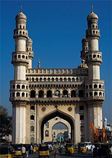 CharminarWork / monumentThe Charminar is a monument and mosque in the centre of Hyderabad, India, built in 1591 by Muhammad Quli Qutb Shah of the Golconda Sultanate when he founded the city.
 CharondasPersonCharondas was a lawgiver of the Greek city of Catana in Sicily, probably in the 6th century BCE.
- CharrouxPlaceCharroux is a village in the Vienne department of western France that grew around a Benedictine abbey founded in the late 8th century and renowned for its relics.
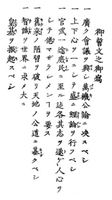 Charter OathWork / monumentThe Charter Oath was a statement of five principles promulgated in 1868 at the start of the Meiji era in Japan in the name of the young emperor.
 Charter of CarnaroWork / monumentThe Charter of Carnaro was the constitution of the Italian Regency of Carnaro, proclaimed by Gabriele D'Annunzio in Fiume in September 1920 and drafted largely by the…
 Charter of KortenbergWork / monumentThe Charter of Kortenberg was granted on 27 September 1312 by the dying Duke John II of Brabant to secure the succession of his young son.
- Chartered companyInstitutionA chartered company was a trading enterprise granted a charter by a state giving it monopoly rights and often governmental powers, such as making war and administering…
- Charterhouse of ChampmolInstitutionThe Charterhouse of Champmol was a Carthusian monastery outside Dijon, founded in 1383 by Philip the Bold as the burial place of the Valois dukes of Burgundy.
 ChartismReligion / ideaChartism was a working-class movement for political reform in the United Kingdom, named after the People's Charter of 1838 and active until 1857.
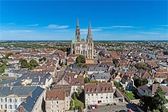 ChartresPlaceChartres is a city on the River Eure in northern France, the Gallo-Roman Autricum, chief town of the Carnutes.
- CharyapadaWork / monumentThe Charyapada is a collection of mystical songs by Buddhist poets of the Vajrayana and Sahajiya traditions, usually dated between the eighth and twelfth centuries.
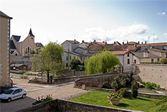 Chasseneuil-du-PoitouPlaceChasseneuil-du-Poitou is a small town north of Poitiers in western France.
 Chasseurs d'AfriqueInstitutionThe Chasseurs d'Afrique were light cavalry regiments of the French Armée d'Afrique, first raised in Algeria in 1831 and recruited mainly from Frenchmen and European…
 ChastanaPersonChastana was a Saka ruler of western India in the early 2nd century CE who founded the Kardamaka line of the Western Satraps, with his capital at Ujjain.
- Château CliquePeople / groupThe Château Clique was the name given to the small group of wealthy English-speaking merchants, officials and seigneurs who dominated the appointed councils of Lower…
 Château de Châlus-ChabrolPlaceChâlus-Chabrol is a castle at Châlus in the Limousin, in west-central France.
- Château de RipailleWork / monumentThe Château de Ripaille is a castle and former priory near Thonon-les-Bains on the southern shore of Lake Geneva, in Savoy.
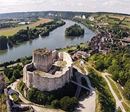 Château GaillardPlaceChâteau Gaillard is a ruined castle above the Seine at Les Andelys in Normandy, built in 1196–1198 by Richard I of England to guard the duchy against Philip II of France.
 Château-SalinsPlaceChâteau-Salins is a small town in the Moselle department of north-eastern France, in the Seille valley.
 ChâteaubriantPlaceChâteaubriant is a town in the Loire-Atlantique department of western France, on the old border between Brittany and Anjou.
 Chattahoochee RiverPlaceThe Chattahoochee is a river of the south-eastern United States, rising in the Blue Ridge Mountains of Georgia and forming part of the boundary between Georgia and…
- ChattuariiPeople / groupThe Chattuarii were a Germanic people of the lower Rhine, mentioned by Roman writers from the 1st century CE.
 Chaturbhuj Temple, GwaliorWork / monumentThe Chaturbhuj Temple is a small rock-cut Vishnu temple in Gwalior Fort, dedicated in 876 CE under the Pratihara king Mihira Bhoja by Alla, the commander of the fort.
- Chaturvarga ChintamaniWork / monumentThe Chaturvarga Chintamani is a vast Sanskrit digest of Hindu religious law and ritual compiled in the 13th century by Hemadri, minister of the Seuna Yadava kings.
 Chaubise RajyaPeople / groupThe Chaubise Rajya, the 'twenty-four kingdoms', were a group of small hill principalities in the Gandaki region of western Nepal, many ruled by dynasties claiming…
 Chaubisi RajyaStateThe Chaubisi Rajya ("twenty-four kingdoms") were a group of small hill principalities in the Gandaki basin of west-central Nepal, among them Lamjung, Tanahun, Kaski and…
- ChauhanPeople / groupThe Chauhans are a Rajput clan of northern and western India, descended in tradition from the Chahamana dynasties that ruled Shakambhari and Ajmer, whose best-known…
 ChaulPlaceChaul is a former port town on the Konkan coast in Raigad district, Maharashtra, India, south of Mumbai.
 Chaulukya dynastyPeople / groupThe Chaulukya dynasty, also called the Solankis, ruled Gujarat from Anahilapataka (Patan) from about 940 to 1244.
- Chauri Chaura incidentEventThe Chauri Chaura incident took place on 4 February 1922 at Chauri Chaura in the Gorakhpur district of the United Provinces of British India.
 Chausath Yogini Temple, JabalpurWork / monumentThe Chausath Yogini Temple at Bheraghat near Jabalpur in central India is a circular open-air shrine of the 10th century built on a hill above the Narmada.
- ChauthInstitutionChauth was a levy of one quarter of the land revenue, collected by the Marathas from territories outside their direct rule.
- ChavandPlaceChavand is a village in the Udaipur district of Rajasthan that served as the capital of Maharana Pratap of Mewar in the last years of his struggle against the Mughals…
 Chavda dynastyStateThe Chavda dynasty ruled northern Gujarat in western India from the 8th century until the mid-10th century.
 ChavundarayaPersonChavundaraya was a minister and military commander of the Western Ganga kings Marasimha II and Rachamalla IV in the late 10th century.
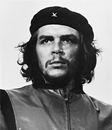 Che GuevaraPersonErnesto 'Che' Guevara was an Argentine-born Marxist revolutionary, a leader of the Cuban Revolution with Fidel Castro and later a minister in Cuba.
- ChebarPlaceThe Chebar was a canal near Nippur in southern Babylonia, called the 'great canal' in cuneiform records of the Persian period.
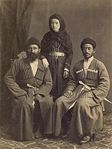 ChechensPeople / groupThe Chechens are a North Caucasian people of the Nakh group, living mainly in Chechnya in the Russian Federation.
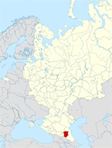 ChechnyaPlaceChechnya is a republic of the Russian Federation in the North Caucasus, with its capital at Grozny.
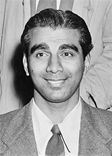 Cheddi JaganPersonCheddi Jagan was a Guyanese politician of Indian descent who founded the People's Progressive Party.
 Chedworth Roman VillaPlaceChedworth Roman Villa is the site of one of the largest Roman villas in Britain, near Cirencester in Gloucestershire, England, discovered in 1864.
 ChefchaouenPlaceChefchaouen is a town in the Rif mountains of north-western Morocco.
- Cheitharol KumbabaWork / monumentThe Cheitharol Kumbaba is the royal chronicle of Manipur, kept by court scribes in the Meitei language and script.
 ChekaInstitutionThe Cheka, the All-Russian Extraordinary Commission, was the first Soviet secret police, founded in December 1917 under Felix Dzerzhinsky to fight counter-revolution…
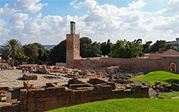 ChellahPlaceChellah is a walled necropolis and ancient site on the edge of Rabat, Morocco, above the south bank of the Bou Regreg estuary.
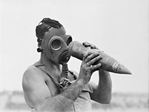 Chemical weaponsTermChemical weapons are toxic substances used in war to kill or injure, such as mustard gas.
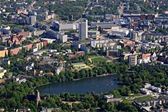 ChemnitzPlaceChemnitz is a city in Saxony, Germany, which grew in the 19th century into one of the leading centres of German textile and machine-building industry, nicknamed the…
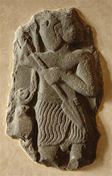 ChemoshReligion / ideaChemosh was the national god of the Moabites, the people of the Iron Age kingdom of Moab east of the Dead Sea.
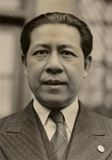 Chen GongboPersonChen Gongbo was a founding member of the Chinese Communist Party who later joined the Kuomintang and followed Wang Jingwei into collaboration with Japan.
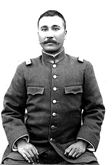 Chen JiongmingPersonChen Jiongming was a Chinese military leader and governor of Guangdong.
- Chen Li (Chen Han)PersonChen Li was the son and heir of Chen Youliang, the rebel who founded the Chen Han state in central China.
- Chen Li (Han dynasty)PersonChen Li was a Western Han official who served as governor of Zangke commandery in the south-west.
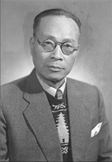 Chen MingshuPersonChen Mingshu was a Chinese general from Guangdong and a former commander of the Nineteenth Route Army.
- Chen ShengPersonChen Sheng was a conscript leader who began the first great rising against the Qin dynasty in 209 BCE.
 Chen ShubaoPersonChen Shubao was the last emperor of the Chen dynasty, reigning from 582 to 589.
- Chen Shui-bianPersonChen Shui-bian is a Taiwanese lawyer and politician of the Democratic Progressive Party who served as mayor of Taipei and as president of the Republic of China from…
- Chen WanPersonChen Wan, also called Tian Wan, was a prince of the State of Chen who fled to Qi in 672 BCE after a succession dispute at home.
 Chen YonghuaPersonChen Yonghua was the chief minister of Zheng Jing, ruler of the Kingdom of Tungning on Taiwan.
- Chen YouliangPersonChen Youliang was a Chinese rebel leader of the late Yuan period, the son of a fisherman, who rose as an officer in Xu Shouhui's Red Turban regime on the middle Yangtze.