Encyclopedia: M
2,409 entries under M · page 24 of 25: Muscovite–Lithuanian Wars – Mysia
- Muscovite–Lithuanian WarsWar · 1487–1537The Muscovite–Lithuanian Wars were a series of wars from 1487 to 1537 between the Grand Duchy of Moscow and the Grand Duchy of Lithuania, allied with Poland, over the…
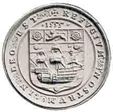 Muscovy CompanyInstitutionThe Muscovy Company was an English trading company chartered in 1555 after Richard Chancellor's voyage to the White Sea opened direct contact with the court of Ivan IV.
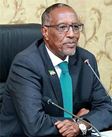 Muse Bihi AbdiPersonMuse Bihi Abdi is a Somaliland politician and former air force officer who was president of Somaliland from 2017 to 2024.
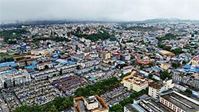 Muse, MyanmarPlaceMuse is a town in northern Shan State, Myanmar, on the Shweli river opposite the Chinese town of Ruili in Yunnan.
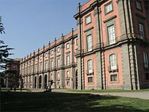 Museo di CapodimonteInstitutionThe Museo di Capodimonte is an art museum in Naples, housed in the Royal Palace of Capodimonte, begun in 1738 by Charles of Bourbon to display the Farnese collection he…
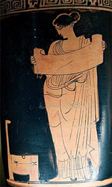 MusesReligion / ideaThe Muses were the Greek goddesses of poetry, music and the arts, daughters of Zeus and Mnemosyne, usually counted as nine.
- Mushegh of KarsPersonMushegh was the first king of Kars and a younger brother of Ashot III of Bagratid Armenia.
- Mushika dynastyPeople / groupThe Mushika dynasty ruled northern Kerala, in the region around Ezhimala and Kannur north of the Chera kingdom, in the early medieval period.
- MushikavamsaWork / monumentThe Mushikavamsa is a Sanskrit poem composed in the 11th century by the court poet Atula in northern Kerala.
- Musi RiverPlaceThe Musi River is a river in southern Sumatra on which the city of Palembang stands.
- MuskerryPlaceMuskerry is a region of central County Cork, Ireland, west of the city of Cork, preserved in the baronies of East and West Muskerry.
- MusketTermThe musket is a muzzle-loading, smoothbore firearm that became the standard infantry weapon in many armies from the sixteenth to the nineteenth century.
 Muslim conquest of PersiaWar · 633–654The Muslim conquest of Persia was the conquest of the Sasanian Empire by the Rashidun Caliphate between 633 and the early 650s.
- Muslim conquest of the Levant and EgyptCampaign · 637–642 CEThe Muslim conquest of the Levant and Egypt refers to the Arab campaigns that took Syria, Palestine and Egypt from Byzantine control in the seventh century.
 Muslim conquest of the MaghrebWar · 647–709The Muslim conquest of the Maghreb was the conquest of North Africa west of Egypt by the Rashidun and Umayyad caliphates between 647 and 709.
 Muslim conquest of TransoxianaWar · 673–751The Muslim conquest of Transoxiana was the gradual conquest of the lands between the Oxus and Jaxartes rivers in Central Asia by the Umayyad and early Abbasid…
 Muslim ibn QurayshPersonMuslim ibn Quraysh, called Sharaf al-Dawla, was the Uqaylid emir of Mosul from 1061 to 1085 and one of the leading Arab princes of Iraq and Syria under Seljuk…
- Muslim League of EritreaPeople / groupThe Muslim League of Eritrea was a political party founded in 1946 by Ibrahim Sultan Ali during the British administration of Eritrea.
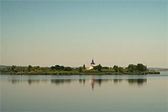 MušovPlaceMušov is a former village in southern Moravia, Czech Republic, now flooded by the Nové Mlýny reservoirs, whose surroundings hold important remains of the Roman period.
 Al-Musta'liPersonAl-Musta'li (1074–1101) was the ninth Fatimid caliph, ruling from 1094 to 1101.
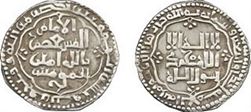 al-Musta'simPersonAl-Musta'sim was the last Abbasid caliph to rule from Baghdad.
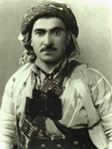 Mustafa BarzaniPersonMustafa Barzani was a Kurdish nationalist leader who led the Kurdish movement in Iraq for much of the 20th century.
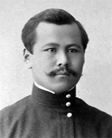 Mustafa ChokayPersonMustafa Chokay was a Kazakh lawyer and politician who headed the Turkestan Autonomy, proclaimed at Kokand in 1917 within a hoped-for democratic Russian federation.
 Mustafa Kemal AtatürkPersonMustafa Kemal Atatürk was an Ottoman army officer who led the Turkish national movement after the First World War and became the founding president of the Republic of…
- Mustafa Khan of ShirvanPersonMustafa Khan was the last khan of Shirvan, ruling from 1792.
- Mustafa Pasha BushatiPersonMustafa Pasha Bushati was the last hereditary pasha of Scutari (Shkodër) from the Bushati family, which had ruled northern Albania almost independently since 1757.
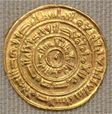 Al-Mustansir BillahPersonAl-Mustansir Billah was an Abbasid caliph of Baghdad in the thirteenth century.
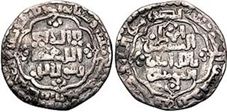 Al-Mustansir IPersonAl-Mustansir I was the Abbasid caliph in Baghdad from 1226 to 1242, one of the last before the Mongol conquest.
- Mustansirite HardshipEventThe Mustansirite Hardship was a prolonged crisis in Fatimid Egypt from 1064 to 1071, caused by seven consecutive years of catastrophically low Nile floods.
- Mustapha BouchelaghemPersonMustapha Bouchelaghem was bey of the West (Mascara) in Ottoman Algeria in the early 18th century.
- Mustapha BoumezragPersonMustapha Boumezrag was the last bey of Titteri, the Ottoman province of central Algeria governed from Médéa.
 Mustapha HarunPersonMustapha Harun was a Malaysian politician from Sabah of Suluk and Bajau descent.
 Al-MustarshidPersonAl-Mustarshid was the Abbasid caliph from 1118 to 1135 who tried to free the caliphate from Seljuk control by raising his own army.
 Musunuri NayakasPeople / groupThe Musunuri Nayakas were Telugu chiefs who led the revolt that drove the Delhi Sultanate out of the Kakatiya lands of Andhra and Telangana in the 1330s.
- Al-Mutahhar ibn Sharaf al-DinPersonAl-Mutahhar ibn Sharaf al-Din (c. 1503–1572) was a Zaydi leader in Yemen, son of Imam al-Mutawakkil Yahya Sharaf al-Din.
 MutahhartenPersonMutahharten was the ruler of Erzincan in eastern Anatolia in the late 14th and early 15th centuries, after serving as a governor under the Eretnids.
- MutambukaPersonMutambuka was Omugabe, or king, of Nkore in the mid-nineteenth century, one of the rulers under whom the kingdom became an expanding power.
 Al-Mutamid ibn AbbadPersonAl-Mutamid ibn Abbad (1040–1095) was the last Abbadid king of the Taifa of Seville, ruling from 1069 to 1091, and one of the finest poets of al-Andalus.
- Mutapa EmpireStateThe Mutapa Empire, also known as the Mwene Mutapa state, was a Shona kingdom that emerged in the mid-fifteenth century between the Zambezi and Limpopo rivers, in…
- Mutara II RwogeraPersonMutara II Rwogera was mwami, or king, of Rwanda in the first half of the 19th century.
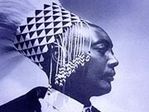 Mutara III RudahigwaPersonMutara III Rudahigwa was mwami (king) of Rwanda from 1931 to 1959, installed by the Belgian administration of Ruanda-Urundi in place of his father.
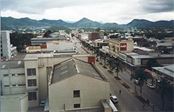 MutarePlaceMutare, called Umtali until 1982, is a city in eastern Zimbabwe near the border with Mozambique.
- MutasaTermMutasa is the hereditary title of the rulers of Manyika, a Shona kingdom in the highlands on the border of present-day Zimbabwe and Mozambique.
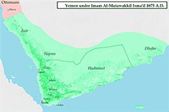 Al-Mutawakkil Isma'ilPersonAl-Mutawakkil Isma'il was the Zaydi imam of Yemen from 1644 to 1676 and the most powerful ruler of the Qasimid state.
- Al-Mutawakkil Yahya Sharaf al-DinPersonAl-Mutawakkil Yahya Sharaf al-Din was Zaydi imam of Yemen from 1506 to 1555.
 Mutesa I of BugandaPersonMutesa I was kabaka of Buganda from 1856 to 1884.
 Mutesa II of BugandaPersonMutesa II was kabaka of Buganda from 1939.
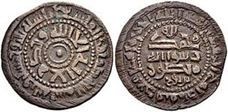 al-MutiPersonAl-Muti was the Abbasid caliph from 946 to 974, placed on the throne by the Buyid ruler Mu'izz al-Dawla after the blinding and deposition of al-Mustakfi.
- Mutimir of SerbiaPersonMutimir was Prince of Serbia in the second half of the 9th century, a member of the Vlastimirović dynasty and son of Vlastimir.
- MutombokoEventThe Mutomboko is an annual ceremony of the Lunda people of the Luapula valley in Zambia, held each July at Mwansabombwe, the seat of the Mwata Kazembe.
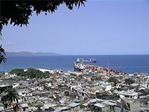 MutsamuduPlaceMutsamudu is the capital of the island of Anjouan in the Comoros and the country's second-largest town.
 Mutsu MunemitsuPersonMutsu Munemitsu was a Japanese statesman from the Kii domain who served as foreign minister from 1892 to 1896.
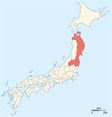 Mutsu ProvincePlaceMutsu Province was an old province of Japan covering most of northern Honshu, the largest in the country.
- Al-MuwaffaqPersonAl-Muwaffaq was an Abbasid prince, son of the caliph al-Mutawakkil, who held real power during the reign of his brother al-Mu'tamid from the 870s until his death in 891.
- Muwatalli IIPersonMuwatalli II was a king of the Hittite Empire in the early thirteenth century BCE.
 Muyeol of SillaPersonMuyeol, born Kim Chunchu, was king of Silla from 654 to 661, the first king from the 'true bone' rank.
- MuzaPlaceMuza was an ancient port on the Red Sea coast of south-western Arabia, near modern Mocha in Yemen.
 Muzaffar al-Din GökböriPersonMuzaffar al-Din Gökböri was the ruler of Erbil in northern Iraq from 1190 to 1233, son of Zayn al-Din Ali Kuchuk.
 Muzaffar JungPersonMuzaffar Jung was a grandson of Asaf Jah I who claimed the throne of Hyderabad after 1748 with French support.
 Muzaffar Shah IPersonMuzaffar Shah I, born Zafar Khan, was the founder of the Gujarat Sultanate.
- Muzaffar Shah I of PerakPersonMuzaffar Shah I was the first sultan of Perak, reigning from about 1528 to 1549.
- Muzaffar Shah of MalaccaPersonMuzaffar Shah was sultan of Malacca from about 1445 to 1459, the first of its rulers to use the title sultan.
- Al-Muzaffar Yusuf IPersonAl-Muzaffar Yusuf I was the second sultan of the Rasulid dynasty of Yemen, reigning from 1249 to 1295.
 Muzaka familyPeople / groupThe Muzaka were an Albanian noble family of the Myzeqe plain and Berat.
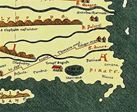 MuzirisPlaceMuziris was an ancient port on the Malabar Coast of south-western India, probably near modern Pattanam in Kerala.
 MuzoPlaceMuzo is a town in the department of Boyacá, Colombia, in the western foothills of the Eastern Cordillera.
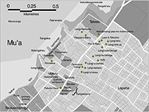 MuʻaPlaceMuʻa is a town on the shore of the lagoon of Tongatapu, the main island of Tonga.
- Mwaant YaavInstitutionMwaant Yaav (also written Mwata Yamvo) is the title of the paramount ruler of the Lunda Empire in central Africa, taken by each king from the late seventeenth century…
- Mwaant Yaav IPersonMwaant Yaav I was a ruler of the Lunda Empire in central Africa, associated with the period c. 1665–1700.
- Mwai KibakiPersonMwai Kibaki was president of Kenya from 2002 to 2013.
- Mwamba (Bemba title)TermMwamba is the title of one of the senior chiefs of the Bemba of north-eastern Zambia, who rules a large territory next to that of the Chitimukulu, the paramount.
 Mwambutsa IVPersonMwambutsa IV was mwami (king) of Burundi from 1915 to 1966, reigning under Belgian rule and into independence in 1962.
- Mwana PwoWork / monumentMwana Pwo, "young woman", is a type of wooden dance mask of the Chokwe people of Angola, the Democratic Republic of the Congo and Zambia.
- Mwanawina IIIPersonMwanawina III was Litunga, king of the Lozi of Barotseland, from 1948 until his death in 1968, and a son of Lewanika.
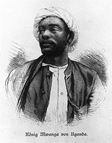 Mwanga IIPersonMwanga II was kabaka (king) of Buganda from 1884, succeeding Mutesa I.
- Mwari cultReligion / ideaThe Mwari cult is a Shona religious tradition centred on the high god Mwari, with oracular shrines in the Matopos Hills of present-day Zimbabwe.
- Mwata YamvoTermMwata Yamvo is the title of the paramount ruler of the Lunda Empire, centred in the south of the present Democratic Republic of the Congo.
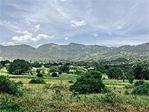 MwembePlaceMwembe was the town of the Yao chiefs called Mataka on the highlands east of Lake Malawi, in what is now Niassa province of northern Mozambique.
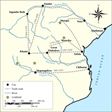 Mwene MutapaInstitutionMwene Mutapa was the title of the king of the Mutapa Empire, a term from which the state itself took its name.
- Mwezi IV GisaboPersonMwezi IV Gisabo was mwami (king) of Burundi from about 1852 to 1908, the last to rule before effective colonial control.
- Mỵ ChâuPersonMỵ Châu is a princess of Vietnamese legend, daughter of King An Dương Vương of Âu Lạc.
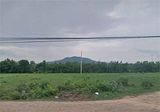 Mỹ SơnPlaceMỹ Sơn is a group of ruined Hindu temples in a valley of Quảng Nam province, central Vietnam, built by the kings of Champa from the 4th to the 13th century.
- My ThoPlaceMy Tho is a city in the Mekong delta of southern Vietnam, capital of Tien Giang province, on the northern branch of the Mekong.
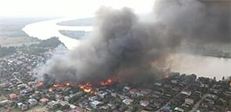 Myanmar civil war (2021–present)War · 2021–presentThe Myanmar civil war is the armed conflict that followed the military coup of February 2021, in which the army overthrew Aung San Suu Kyi's elected government.
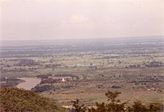 Myitnge RiverPlaceThe Myitnge, or Dokhtawady, is a river of central Myanmar that rises in the Shan Hills and flows west to join the Irrawaddy just south of Mandalay.
 Mykhailo HrushevskyPersonMykhailo Hrushevsky was a Ukrainian historian, author of a multi-volume History of Ukraine-Rus', and a leader of the national movement.
- Mykola RyabovolPersonMykola Ryabovol was a Kuban Cossack politician and chairman of the Kuban Rada in the Kuban People's Republic during the Russian Civil War.
 Mykola SkrypnykPersonMykola Skrypnyk was a Ukrainian Bolshevik who served in the People's Secretariat of the Soviet Ukrainian government formed in Kharkiv in December 1917.
 MykonosPlaceMykonos is a small island of the Cyclades in the Aegean Sea, Greece.
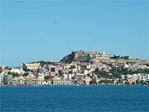 MylaePlaceMylae was an ancient Greek city on the north coast of Sicily, founded by settlers from Zancle in the 8th century BCE on the site of modern Milazzo.
- Mynyddog MwynfawrPersonMynyddog Mwynfawr was a ruler of the Gododdin, the Brittonic people of south-east Scotland, known from the early Welsh poem Y Gododdin attributed to Aneirin.
- MyocheongPersonMyocheong was a Korean Buddhist monk and geomancer of the Goryeo period.
- Myos HormosPlaceMyos Hormos was a port on the Red Sea coast of Egypt, at Quseir al-Qadim north of modern Quseir.
- Myot HillPlaceMyot Hill is a small hill near Denny, south of Stirling in central Scotland, crowned by the remains of a hillfort.
 MyraPlaceMyra was a city of ancient Lycia, near modern Demre in southern Turkey, and one of the six largest members of the Lycian League.
- MyrcinusPlaceMyrcinus was an ancient town of the Edonians in Thrace, near the lower Strymon river and the later site of Amphipolis.
- MyrrhTermMyrrh is an aromatic resin obtained from trees native to north-east Africa and southern Arabia, prized in antiquity for incense, perfume and embalming.
- MyrsilusPersonMyrsilus was a tyrant of Mytilene on Lesbos around 600 BCE, during the city's struggles between aristocratic factions.
- Myscellus of RhypesPersonMyscellus of Rhypes was the legendary founder (oikist) of Croton in southern Italy, around 710 BCE.
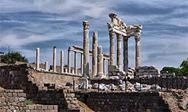 MysiaPlaceMysia is a historical region of north-western Anatolia, lying south of the Sea of Marmara and bordering the Troad, Lydia and Bithynia.